Shahbazi M et al. (JUL 2013)
Journal of the Neurological Sciences 330 1–2 85--93
Inhibitory effects of neural stem cells derived from human embryonic stem cells on differentiation and function of monocyte-derived dendritic cells
Neural stem cells (NSCs) possess immunosuppressive characteristics,but effects of NSCs on human dendritic cells (DCs),the most important antigen presenting cells,are less well studied. We used an in vitro approach to evaluate the effects of human NSCs on differentiation of human blood CD14+ monocytes into DCs. NSCs derived from H1 human embryonic stem cells (hESC-NSCs) and human ReNcell NSC line,as well as human bone marrow derived mesenchymal stem cells (MSCs),were tested. We observed that in response to treatment with interleukin-4 and granulocyte macrophage colony-stimulating factor CD14+ monocytes co-cultured with NSCs were able to down-regulate CD14 and up-regulate the differentiation marker CD1a,whereas MSC co-culture strongly inhibited CD1a expression and supported prolonged expression of CD14. A similar difference between NSCs and MSCs was noted when lipopolysaccharides were included to induce maturation of monocyte-derived DCs. However,when effects on the function of derived DCs were investigated,NSCs suppressed the elevation of the DC maturation marker CD83,although not the up-regulation of costimulatory molecules CD80,CD86 and CD40,and impaired the functional capacity of the derived DCs to stimulate alloreactive T cells. We did not observe any obvious difference between hESC-NSCs and ReNcell NSCs in inhibiting DC maturation and function. Our data suggest that although human NSCs are less effective than human MSCs in suppressing monocyte differentiation into DCs,these stem cells can still affect the function of DCs,ultimately regulating specific immune responses.
View Publication
产品号#:
05850
05857
05870
05875
85850
85857
85870
85875
70025
70025.1
70025.2
70025.3
70047
70047.1
70047.2
70048
70048.1
70048.2
产品名:
mTeSR™1
mTeSR™1
冻存的人外周血单个核细胞
冻存的人外周血单个核细胞
冻存的人外周血单个核细胞
冻存的人外周血单个核细胞
Jiang P et al. (JUL 2013)
Nature communications 4 2196
hESC-derived Olig2+ progenitors generate a subtype of astroglia with protective effects against ischaemic brain injury.
Human pluripotent stem cells (hPSCs) have been differentiated to astroglia,but the utilization of hPSC-derived astroglia as cell therapy for neurological diseases has not been well studied. Astroglia are heterogeneous,and not all astroglia are equivalent in promoting neural repair. A prerequisite for cell therapy is to derive defined cell populations with superior therapeutic effects. Here we use an Olig2-GFP human embryonic stem cell (hESC) reporter to demonstrate that hESC-derived Olig2(+) progenitors generate a subtype of previously uncharacterized astroglia (Olig2PC-Astros). These Olig2PC-Astros differ substantially from astroglia differentiated from Olig2-negative hESC-derived neural progenitor cells (NPC-Astros),particularly in their neuroprotective properties. When grafted into brains subjected to global ischaemia,Olig2PC-Astros exhibit superior neuroprotective effects and improved behavioural outcome compared to NPC-Astros. Thus,this new paradigm of human astroglial differentiation is useful for studying the heterogeneity of human astroglia,and the unique Olig2PC-Astros may constitute a new cell therapy for treating cerebral ischaemia and other neurological diseases.
View Publication


 EasySep™小鼠TIL(CD45)正选试剂盒




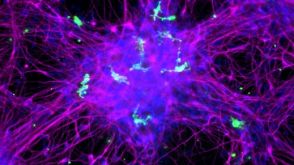 实验方案How to Co-Culture Human Pluripotent Stem Cell (hPSC)-Derived Forebrain Neurons and Microglia
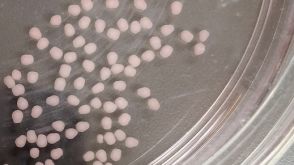 实验方案How to Dissociate 3D Neural Organoids into a Single-Cell Suspension

 沪公网安备31010102008431号