Marigil M et al. (JAN 2017)
PloS one 12 1 e0170501
Development of a DIPG Orthotopic Model in Mice Using an Implantable Guide-Screw System.
OBJECTIVE In this work we set to develop and to validate a new in vivo frameless orthotopic Diffuse Intrinsic Pontine Glioma (DIPG) model based in the implantation of a guide-screw system. METHODS It consisted of a guide-screw also called bolt,a Hamilton syringe with a 26-gauge needle and an insulin-like 15-gauge needle. The guide screw is 2.6 mm in length and harbors a 0.5 mm central hole which accepts the needle of the Hamilton syringe avoiding a theoretical displacement during insertion. The guide-screw is fixed on the mouse skull according to the coordinates: 1mm right to and 0.8 mm posterior to lambda. To reach the pons the Hamilton syringe is adjusted to a 6.5 mm depth using a cuff that serves as a stopper. This system allows delivering not only cells but also any kind of intratumoral chemotherapy,antibodies or gene/viral therapies. RESULTS The guide-screw was successfully implanted in 10 immunodeficient mice and the animals were inoculated with DIPG human cell lines during the same anesthetic period. All the mice developed severe neurologic symptoms and had a median overall survival of 95 days ranging the time of death from 81 to 116 days. Histopathological analysis confirmed tumor into the pons in all animals confirming the validity of this model. CONCLUSION Here we presented a reproducible and frameless DIPG model that allows for rapid evaluation of tumorigenicity and efficacy of chemotherapeutic or gene therapy products delivered intratumorally to the pons.
View Publication
产品号#:
05711
05712
05750
05751
05710
100-1281
产品名:
NeuroCult™ SM1 神经添加物
NeuroCult™ NS-A 基础培养基(人)
NeuroCult™ NS-A 扩增试剂盒(人)
NeuroCult™ SM1 神经添加物
Gundemir S et al. (SEP 2016)
Neuro-Oncology now157
The complex role of transglutaminase 2 in glioblastoma proliferation
BACKGROUND Glioblastomas (GBMs) are a heterogeneous group of primary brain tumors. These tumors are resistant to therapeutic interventions and invariably recur after surgical resection. The multifunctional protein transglutaminase 2 (TG2) has been shown to promote cell survival in a number of different tumors. There is also evidence that TG2 may be a pro-survival factor in GBMs. However,the roles that TG2 plays in facilitating GBM survival and proliferation have not yet been clearly delineated . METHODS The functions of TG2 are often cell- and context-specific. Therefore,in this study we examined the ability of TG2 to facilitate GBM proliferation using colony formation assays and 5-ethynyl-2'-deoxyuridine (EdU) incorporation in several different GBM cell lines as well as neurospheres derived from patient tumors representing the 3 major subtypes of GBM tumors (mesenchymal,proneural,and classical) and maintained in the absence of serum. TG2 knockdown or selective TG2 inhibitors were used to modulate TG2 expression and activity. RESULTS We show that TG2 plays differential roles in the proliferative process depending on the cell type. In most,but not all,GBM models TG2 plays a crucial role in the proliferative process,and some but not all TG2 inhibitors were highly effective at reducing proliferation in a large subset of the GBM models. CONCLUSION Our results show that TG2 plays an important-but notoriously context-specific-role in GBM cell biology. Nonetheless,as future studies unravel the genetic fingerprints" that make TG2 inhibitors effective this information could be exploited to develop TG2 inhibitors into personalized GBM therapies.
View Publication
产品号#:
05750
05751
产品名:
NeuroCult™ NS-A 基础培养基(人)
NeuroCult™ NS-A 扩增试剂盒(人)
Pollak J et al. (MAR 2017)
PLOS ONE 12 3 e0172884
Ion channel expression patterns in glioblastoma stem cells with functional and therapeutic implications for malignancy
Ion channels and transporters have increasingly recognized roles in cancer progression through the regulation of cell proliferation,migration,and death. Glioblastoma stem-like cells (GSCs) are a source of tumor formation and recurrence in glioblastoma multiforme,a highly aggressive brain cancer,suggesting that ion channel expression may be perturbed in this population. However,little is known about the expression and functional relevance of ion channels that may contribute to GSC malignancy. Using RNA sequencing,we assessed the enrichment of ion channels in GSC isolates and non-tumor neural cell types. We identified a unique set of GSC-enriched ion channels using differential expression analysis that is also associated with distinct gene mutation signatures. In support of potential clinical relevance,expression of selected GSC-enriched ion channels evaluated in human glioblastoma databases of The Cancer Genome Atlas and Ivy Glioblastoma Atlas Project correlated with patient survival times. Finally,genetic knockdown as well as pharmacological inhibition of individual or classes of GSC-enriched ion channels constrained growth of GSCs compared to normal neural stem cells. This first-in-kind global examination characterizes ion channels enriched in GSCs and explores their potential clinical relevance to glioblastoma molecular subtypes,gene mutations,survival outcomes,regional tumor expression,and experimental responses to loss-of-function. Together,the data support the potential biological and therapeutic impact of ion channels on GSC malignancy and provide strong rationale for further examination of their mechanistic and therapeutic importance.
View Publication
Mü et al. (NOV 2016)
Molecular systems biology 12 11 889
Single-cell sequencing maps gene expression to mutational phylogenies in PDGF- and EGF-driven gliomas.
Glioblastoma multiforme (GBM) is the most common and aggressive type of primary brain tumor. Epidermal growth factor (EGF) and platelet-derived growth factor (PDGF) receptors are frequently amplified and/or possess gain-of-function mutations in GBM However,clinical trials of tyrosine-kinase inhibitors have shown disappointing efficacy,in part due to intra-tumor heterogeneity. To assess the effect of clonal heterogeneity on gene expression,we derived an approach to map single-cell expression profiles to sequentially acquired mutations identified from exome sequencing. Using 288 single cells,we constructed high-resolution phylogenies of EGF-driven and PDGF-driven GBMs,modeling transcriptional kinetics during tumor evolution. Descending the phylogenetic tree of a PDGF-driven tumor corresponded to a progressive induction of an oligodendrocyte progenitor-like cell type,expressing pro-angiogenic factors. In contrast,phylogenetic analysis of an EGFR-amplified tumor showed an up-regulation of pro-invasive genes. An in-frame deletion in a specific dimerization domain of PDGF receptor correlates with an up-regulation of growth pathways in a proneural GBM and enhances proliferation when ectopically expressed in glioma cell lines. In-frame deletions in this domain are frequent in public GBM data.
View Publication
产品号#:
05750
05751
产品名:
NeuroCult™ NS-A 基础培养基(人)
NeuroCult™ NS-A 扩增试剂盒(人)
Wee S et al. (DEC 2014)
PloS one 9 12 e115698
Selective calcium sensitivity in immature glioma cancer stem cells.
Tumor-initiating cells are a subpopulation in aggressive cancers that exhibit traits shared with stem cells,including the ability to self-renew and differentiate,commonly referred to as stemness. In addition,such cells are resistant to chemo- and radiation therapy posing a therapeutic challenge. To uncover stemness-associated functions in glioma-initiating cells (GICs),transcriptome profiles were compared to neural stem cells (NSCs) and gene ontology analysis identified an enrichment of Ca2+ signaling genes in NSCs and the more stem-like (NSC-proximal) GICs. Functional analysis in a set of different GIC lines regarding sensitivity to disturbed homeostasis using A23187 and Thapsigargin,revealed that NSC-proximal GICs were more sensitive,corroborating the transcriptome data. Furthermore,Ca2+ drug sensitivity was reduced in GICs after differentiation,with most potent effect in the NSC-proximal GIC,supporting a stemness-associated Ca2+ sensitivity. NSCs and the NSC-proximal GIC line expressed a larger number of ion channels permeable to potassium,sodium and Ca2+. Conversely,a higher number of and higher expression levels of Ca2+ binding genes that may buffer Ca2+,were expressed in NSC-distal GICs. In particular,expression of the AMPA glutamate receptor subunit GRIA1,was found to associate with Ca2+ sensitive NSC-proximal GICs,and decreased as GICs differentiated along with reduced Ca2+ drug sensitivity. The correlation between high expression of Ca2+ channels (such as GRIA1) and sensitivity to Ca2+ drugs was confirmed in an additional nine novel GIC lines. Calcium drug sensitivity also correlated with expression of the NSC markers nestin (NES) and FABP7 (BLBP,brain lipid-binding protein) in this extended analysis. In summary,NSC-associated NES+/FABP7+/GRIA1+ GICs were selectively sensitive to disturbances in Ca2+ homeostasis,providing a potential target mechanism for eradication of an immature population of malignant cells.
View Publication
产品号#:
05750
05751
产品名:
NeuroCult™ NS-A 基础培养基(人)
NeuroCult™ NS-A 扩增试剂盒(人)
Stapelberg M et al. (FEB 2014)
Free Radical Biology and Medicine 67 41--50
Indoleamine-2,3-dioxygenase elevated in tumor-initiating cells is suppressed by mitocans
Tumor-initiating cells (TICs) often survive therapy and give rise to second-line tumors. We tested the plausibility of sphere cultures as models of TICs. Microarray data and microRNA data analysis confirmed the validity of spheres as models of TICs for breast and prostate cancer as well as mesothelioma cell lines. Microarray data analysis revealed the Trp pathway as the only pathway upregulated significantly in all types of studied TICs,with increased levels of indoleamine-2,3-dioxygenase-1 (IDO1),the rate-limiting enzyme of Trp metabolism along the kynurenine pathway. All types of TICs also expressed higher levels of the Trp uptake system consisting of CD98 and LAT1 with functional consequences. IDO1 expression was regulated via both transcriptional and posttranscriptional mechanisms,depending on the cancer type. Serial transplantation of TICs in mice resulted in gradually increased IDO1. Mitocans,represented by α-tocopheryl succinate and mitochondrially targeted vitamin E succinate (MitoVES),suppressed IDO1 in TICs. MitoVES suppressed IDO1 in TICs with functional mitochondrial complex II,involving transcriptional and posttranscriptional mechanisms. IDO1 increase and its suppression by VE analogues were replicated in TICs from primary human glioblastomas. Our work indicates that IDO1 is increased in TICs and that mitocans suppress the protein.
View Publication


 EasySep™小鼠TIL(CD45)正选试剂盒




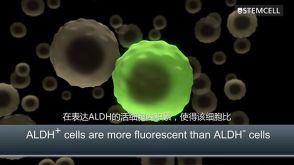
 技术公告Identification of Viable Stem and Progenitor Cells with ALDEFLUOR™

 沪公网安备31010102008431号