Ben-David U et al. (SEP 2014)
Nature communications 5 4825
Aneuploidy induces profound changes in gene expression, proliferation and tumorigenicity of human pluripotent stem cells.
Human pluripotent stem cells (hPSCs) tend to acquire genomic aberrations in culture,the most common of which is trisomy of chromosome 12. Here we dissect the cellular and molecular implications of this trisomy in hPSCs. Global gene expression analyses reveal that trisomy 12 profoundly affects the gene expression profile of hPSCs,inducing a transcriptional programme similar to that of germ cell tumours. Comparison of proliferation,differentiation and apoptosis between diploid and aneuploid hPSCs shows that trisomy 12 significantly increases the proliferation rate of hPSCs,mainly as a consequence of increased replication. Furthermore,trisomy 12 increases the tumorigenicity of hPSCs in vivo,inducing transcriptionally distinct teratomas from which pluripotent cells can be recovered. Last,a chemical screen of 89 anticancer drugs discovers that trisomy 12 raises the sensitivity of hPSCs to several replication inhibitors. Together,these findings demonstrate the extensive effect of trisomy 12 and highlight its perils for successful hPSC applications.
View Publication
产品号#:
05850
05857
05870
05875
07909
85850
85857
85870
85875
产品名:
IV型胶原酶(1mg /mL)
mTeSR™1
mTeSR™1
Vanden Bempt M et al. (MAR 2016)
Leukemia March 8 Epub ahead of print
Generation of the Fip1l1–Pdgfra fusion gene using CRISPR/Cas genome editing
Sulforaphane targets pancreatic tumour-initiating cells by NF-kappaB-induced antiapoptotic signalling.
BACKGROUND AND AIMS: Emerging evidence suggests that highly treatment-resistant tumour-initiating cells (TICs) play a central role in the pathogenesis of pancreatic cancer. Tumour necrosis factor-related apoptosis-inducing ligand (TRAIL) is considered to be a novel anticancer agent; however,recent studies have shown that many pancreatic cancer cells are resistant to apoptosis induction by TRAIL due to TRAIL-activated nuclear factor-kappaB (NF-kappaB) signalling. Several chemopreventive agents are able to inhibit NF-kappaB,and favourable results have been obtained--for example,for the broccoli compound sulforaphane-in preventing metastasis in clinical studies. The aim of the study was to identify TICs in pancreatic carcinoma for analysis of resistance mechanisms and for definition of sensitising agents. METHODS: TICs were defined by expression patterns of a CD44(+)/CD24(-),CD44(+)/CD24(+) or CD44(+)/CD133(+) phenotype and correlation to growth in immunodeficient mice,differentiation grade,clonogenic growth,sphere formation,aldehyde dehydrogenase (ALDH) activity and therapy resistance. RESULTS: Mechanistically,specific binding of transcriptionally active cRel-containing NF-kappaB complexes in TICs was observed. Sulforaphane prevented NF-kappaB binding,downregulated apoptosis inhibitors and induced apoptosis,together with prevention of clonogenicity. Gemcitabine,the chemopreventive agents resveratrol and wogonin,and the death ligand TRAIL were less effective. In a xenograft model,sulforaphane strongly blocked tumour growth and angiogenesis,while combination with TRAIL had an additive effect without obvious cytotoxicity in normal cells. Freshly isolated patient tumour cells expressing markers for TICs could be sensitised by sulforaphane for TRAIL-induced cytotoxicity. CONCLUSION: The data provide new insights into resistance mechanisms of TICs and suggest the combination of sulforaphane with TRAIL as a promising strategy for targeting of pancreatic TICs.
View Publication


 EasySep™小鼠TIL(CD45)正选试剂盒




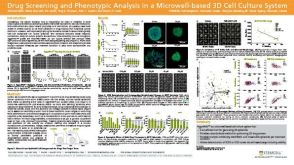 科学海报Drug Screening and Phenotypic Analysis in a Microwell-based 3D Cell Culture System



 沪公网安备31010102008431号