Kulkarni O et al. (FEB 2009)
The Journal of pharmacology and experimental therapeutics 328 2 371--7
Anti-Ccl2 Spiegelmer permits 75% dose reduction of cyclophosphamide to control diffuse proliferative lupus nephritis and pneumonitis in MRL-Fas(lpr) mice.
Cyclophosphamide (CYC) can control diffuse proliferative lupus nephritis (DPLN) by potent immunosuppression but remains associated with serious and life-threatening complications. Drugs that specifically target mediators of DPLN may help to reduce CYC dose and side effects. Monocyte chemoattractant protein (MCP-1)/CCL2 mediates monocyte and T cell recruitment in DPLN and Ccl2-specific l-enantiomeric RNA Spiegelmer mNOX-E36 neutralizes the biological effects of murine Ccl2 in vitro and in vivo. We injected MRL(lpr/lpr) mice with DPLN from 14 weeks of age with vehicle,weekly 30 mg/kg CYC (full dose),monthly 30 mg/kg CYC (one-fourth full dose),pegylated control Spiegelmer,pegylated anti-Ccl2 Spiegelmer (3/week),pegylated anti-Ccl2 Spiegelmer plus CYC one-fourth full dose and mycophenolate mofetil. At week 24,DPLN and autoimmune lung injury were virtually abolished with CYC full dose but not with CYC one-fourth full dose. The CYC one-fourth full dose/Spiegelmer combination was equipotent to CYC full dose on kidney and lung injury. CD3(+)CD4(-)CD8(-) and CD3(+)CD4(+)CD25(+) T cells and serum interleukin-12p40 and tumor necrosis factor-alpha levels were all markedly affected by CYC full dose but not by CYC one-fourth full dose. No additive effects of anti-Ccl2 Spiegelmer were noted on bone marrow colony-forming unit-granulocyte macrophage counts and 7/4(high) monocyte counts,lymphoproliferation,and spleen T cell depletion. In summary,anti-Ccl2 Spiegelmer permits 75% dose reduction of CYC for controlling DPLN and pneumonitis in MRL-Fas(lpr) mice,sparing suppressive effects of full-dose CYC on myelosuppression and T cell depletion. We propose anti-Ccl2 Spiegelmer therapy as a novel strategy to reduce CYC toxicity in the treatment of severe lupus.
View Publication
产品号#:
03134
产品名:
MethoCult™ M3134
Clendening JW et al. (AUG 2010)
Proceedings of the National Academy of Sciences of the United States of America 107 34 15051--6
Dysregulation of the mevalonate pathway promotes transformation.
The importance of cancer metabolism has been appreciated for many years,but the intricacies of how metabolic pathways interconnect with oncogenic signaling are not fully understood. With a clear understanding of how metabolism contributes to tumorigenesis,we will be better able to integrate the targeting of these fundamental biochemical pathways into patient care. The mevalonate (MVA) pathway,paced by its rate-limiting enzyme,hydroxymethylglutaryl coenzyme A reductase (HMGCR),is required for the generation of several fundamental end-products including cholesterol and isoprenoids. Despite years of extensive research from the perspective of cardiovascular disease,the contribution of a dysregulated MVA pathway to human cancer remains largely unexplored. We address this issue directly by showing that dysregulation of the MVA pathway,achieved by ectopic expression of either full-length HMGCR or its novel splice variant,promotes transformation. Ectopic HMGCR accentuates growth of transformed and nontransformed cells under anchorage-independent conditions or as xenografts in immunocompromised mice and,importantly,cooperates with RAS to drive the transformation of primary mouse embryonic fibroblasts cells. We further explore whether the MVA pathway may play a role in the etiology of human cancers and show that high mRNA levels of HMGCR and additional MVA pathway genes correlate with poor prognosis in a meta-analysis of six microarray datasets of primary breast cancer. Taken together,our results suggest that HMGCR is a candidate metabolic oncogene and provide a molecular rationale for further exploring the statin family of HMGCR inhibitors as anticancer agents.
View Publication
产品号#:
03434
03444
产品名:
MethoCult™ GF M3434
MethoCult™ GF M3434
Hassane DC et al. (DEC 2010)
Blood 116 26 5983--90
Chemical genomic screening reveals synergism between parthenolide and inhibitors of the PI-3 kinase and mTOR pathways.
We have previously shown that the plant-derived compound parthenolide (PTL) can impair the survival and leukemogenic activity of primary human acute myeloid leukemia (AML) stem cells. However,despite the activity of this agent,PTL also induces cellular protective responses that likely function to reduce its overall cytotoxicity. Thus,we sought to identify pharmacologic agents that enhance the antileukemic potential of PTL. Toward this goal,we used the gene expression signature of PTL to identify compounds that inhibit cytoprotective responses by performing chemical genomic screening of the Connectivity Map database. This screen identified compounds acting along the phosphatidylinositol 3-kinase and mammalian target of rapamycin pathways. Compared with single agent treatment,exposure of AML cells to the combination of PTL and phosphatidylinositol 3-kinase/mammalian target of rapamycin inhibitors significantly decreased viability of AML cells and reduced tumor burden in vitro and in murine xenotransplantation models. Taken together,our data show that rational drug combinations can be identified using chemical genomic screening strategies and that inhibition of cytoprotective functions can enhance the eradication of primary human AML cells.
View Publication
产品号#:
04534
04544
产品名:
MethoCult™ H4534 Classic(不含 EPO)
MethoCult™ H4534 Classic(不含 EPO)
Cai S et al. (APR 2005)
Cancer research 65 8 3319--27
Mitochondrial targeting of human O6-methylguanine DNA methyltransferase protects against cell killing by chemotherapeutic alkylating agents.
DNA repair capacity of eukaryotic cells has been studied extensively in recent years. Mammalian cells have been engineered to overexpress recombinant nuclear DNA repair proteins from ectopic genes to assess the impact of increased DNA repair capacity on genome stability. This approach has been used in this study to specifically target O(6)-methylguanine DNA methyltransferase (MGMT) to the mitochondria and examine its impact on cell survival after exposure to DNA alkylating agents. Survival of human hematopoietic cell lines and primary hematopoietic CD34(+) committed progenitor cells was monitored because the baseline repair capacity for alkylation-induced DNA damage is typically low due to insufficient expression of MGMT. Increased DNA repair capacity was observed when K562 cells were transfected with nuclear-targeted MGMT (nucl-MGMT) or mitochondrial-targeted MGMT (mito-MGMT). Furthermore,overexpression of mito-MGMT provided greater resistance to cell killing by 1,3-bis (2-chloroethyl)-1-nitrosourea (BCNU) than overexpression of nucl-MGMT. Simultaneous overexpression of mito-MGMT and nucl-MGMT did not enhance the resistance provided by mito-MGMT alone. Overexpression of either mito-MGMT or nucl-MGMT also conferred a similar level of resistance to methyl methanesulfonate (MMS) and temozolomide (TMZ) but simultaneous overexpression in both cellular compartments was neither additive nor synergistic. When human CD34(+) cells were infected with oncoretroviral vectors that targeted O(6)-benzylguanine (6BG)-resistant MGMT (MGMT(P140K)) to the nucleus or the mitochondria,committed progenitors derived from infected cells were resistant to 6BG/BCNU or 6BG/TMZ. These studies indicate that mitochondrial or nuclear targeting of MGMT protects hematopoietic cells against cell killing by BCNU,TMZ,and MMS,which is consistent with the possibility that mitochondrial DNA damage and nuclear DNA damage contribute equally to alkylating agent-induced cell killing during chemotherapy.
View Publication
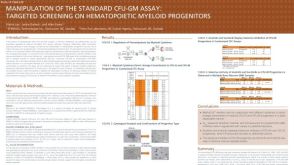
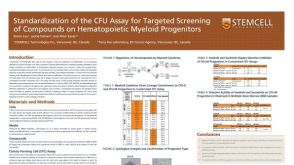
Scoring CFU-GM colonies in vitro by data fusion: a first account.
OBJECTIVE: In vitro models of hematopoiesis used in investigative hematopathology and in safety studies on candidate drugs,involve clonogenic assays on colony-forming unit granulocyte macrophage (CFU-GM). These assays require live and unstained colonies to be counted. Most laboratories still rely on visual scoring,which is time-consuming and error-prone. As a consequence,automated scoring is highly desired. An algorithm that recognizes and scores CFU-GM colonies by data fusion has been developed. Some preliminary results are presented in this article. METHODS: CFU-GM assays were carried out on hematopoietic progenitors (human umbilical cord blood cells) grown in methylcellulose. Colony images were acquired by a digital camera and stored. RESULTS: The classifier was designed to process images of layers sampled from a three-dimensional (3D) domain and forming a stack. Structure and texture information was extracted from each image. Classifier training was based on a 3D colony model applied to the image stack. The number of scored colonies (assigned class) was required to match the count supplied by the human expert (class of belonging). The trained classifier was validated on one more stack and then applied to a stack with overlapping colonies. Scoring in distortion- and caustic-affected border areas was also successfully demonstrated. Because of hardware limitations,compact colonies in some cases were missed. CONCLUSIONS: The industry's scoring methods all rely on structure alone and process 2D data. Instead,the classifier here fuses data from a whole stack and is capable,in principle,of high-throughput screening.
View Publication
产品号#:
产品名:
Ball CR et al. (SEP 2007)
Blood 110 6 1779--87
Stable differentiation and clonality of murine long-term hematopoiesis after extended reduced-intensity selection for MGMT P140K transgene expression.
Efficient in vivo selection increases survival of gene-corrected hematopoietic stem cells (HSCs) and protects hematopoiesis,even if initial gene transfer efficiency is low. Moreover,selection of a limited number of transduced HSCs lowers the number of cell clones at risk of gene activation by insertional mutagenesis. However,a limited clonal repertoire greatly increases the proliferation stress of each individual clone. Therefore,understanding the impact of in vivo selection on proliferation and lineage differentiation of stem-cell clones is essential for its clinical use. We established minimal cell and drug dosage requirements for selection of P140K mutant O6-methylguanine-DNA-methyltransferase (MGMT P140K)-expressing HSCs and monitored their differentiation potential and clonality under long-term selective stress. Up to 17 administrations of O6-benzylguanine (O6-BG) and 1,3-bis(2-chloroethyl)-1-nitroso-urea (BCNU) did not impair long-term differentiation and proliferation of MGMT P140K-expressing stem-cell clones in mice that underwent serial transplantation and did not lead to clonal exhaustion. Interestingly,not all gene-modified hematopoietic repopulating cell clones were efficiently selectable. Our studies demonstrate that the normal function of murine hematopoietic stem and progenitor cells is not compromised by reduced-intensity long-term in vivo selection,thus underscoring the potential value of MGMT P140K selection for clinical gene therapy.
View Publication
Pfeifer A et al. (SEP 2001)
Proceedings of the National Academy of Sciences of the United States of America 98 20 11450--5
Delivery of the Cre recombinase by a self-deleting lentiviral vector: efficient gene targeting in vivo.
The Cre recombinase (Cre) from bacteriophage P1 is an important tool for genetic engineering in mammalian cells. We constructed lentiviral vectors that efficiently deliver Cre in vitro and in vivo. Surprisingly,we found a significant reduction in proliferation and an accumulation in the G(2)/M phase of Cre-expressing cells. To minimize the toxic effect of Cre,we designed a lentiviral vector that integrates into the host genome,expresses Cre in the target cell,and is subsequently deleted from the genome in a Cre-dependent manner. Thus,the activity of Cre terminates its own expression (self-deleting). We showed efficient modification of target genes in vitro and in the brain after transduction with the self-deleting vectors. In contrast to sustained Cre expression,transient expression of Cre from the self-deleting vector induced significantly less cytotoxicity. Such a self-deleting Cre vector is a promising tool for the induction of conditional gene modifications with minimal Cre toxicity in vivo.
View Publication
产品号#:
09600
09650
产品名:
StemSpan™ SFEM
StemSpan™ SFEM
Lee H-Y et al. (JUN 2015)
Nature 522 7557 474--7
PPAR-α and glucocorticoid receptor synergize to promote erythroid progenitor self-renewal.
Many acute and chronic anaemias,including haemolysis,sepsis and genetic bone marrow failure diseases such as Diamond-Blackfan anaemia,are not treatable with erythropoietin (Epo),because the colony-forming unit erythroid progenitors (CFU-Es) that respond to Epo are either too few in number or are not sensitive enough to Epo to maintain sufficient red blood cell production. Treatment of these anaemias requires a drug that acts at an earlier stage of red cell formation and enhances the formation of Epo-sensitive CFU-E progenitors. Recently,we showed that glucocorticoids specifically stimulate self-renewal of an early erythroid progenitor,burst-forming unit erythroid (BFU-E),and increase the production of terminally differentiated erythroid cells. Here we show that activation of the peroxisome proliferator-activated receptor α (PPAR-α) by the PPAR-α agonists GW7647 and fenofibrate synergizes with the glucocorticoid receptor (GR) to promote BFU-E self-renewal. Over time these agonists greatly increase production of mature red blood cells in cultures of both mouse fetal liver BFU-Es and mobilized human adult CD34(+) peripheral blood progenitors,with a new and effective culture system being used for the human cells that generates normal enucleated reticulocytes. Although Ppara(-/-) mice show no haematological difference from wild-type mice in both normal and phenylhydrazine (PHZ)-induced stress erythropoiesis,PPAR-α agonists facilitate recovery of wild-type but not Ppara(-/-) mice from PHZ-induced acute haemolytic anaemia. We also show that PPAR-α alleviates anaemia in a mouse model of chronic anaemia. Finally,both in control and corticosteroid-treated BFU-E cells,PPAR-α co-occupies many chromatin sites with GR; when activated by PPAR-α agonists,additional PPAR-α is recruited to GR-adjacent sites and presumably facilitates GR-dependent BFU-E self-renewal. Our discovery of the role of PPAR-α agonists in stimulating self-renewal of early erythroid progenitor cells suggests that the clinically tested PPAR-α agonists we used may improve the efficacy of corticosteroids in treating Epo-resistant anaemias.
View Publication


 EasySep™小鼠TIL(CD45)正选试剂盒




 科学海报Manipulation of the Standard CFU-GM Assay Targeted Screening of Hematopoietic Myeloid Progenitors


 沪公网安备31010102008431号