Baatz JE et al. (JUL 2014)
In vivo (Athens,Greece) 28 4 411--423
Cryopreservation of viable human lung tissue for versatile post-thaw analyses and culture.
Clinical trials are currently used to test therapeutic efficacies for lung cancer,infections and diseases. Animal models are also used as surrogates for human disease. Both approaches are expensive and time-consuming. The utility of human biospecimens as models is limited by specialized tissue processing methods that preserve subclasses of analytes (e.g. RNA,protein,morphology) at the expense of others. We present a rapid and reproducible method for the cryopreservation of viable lung tissue from patients undergoing lobectomy or transplant. This method involves the pseudo-diaphragmatic expansion of pieces of fresh lung tissue with cryoprotectant formulation (pseudo-diaphragmatic expansion-cryoprotectant perfusion or PDX-CP) followed by controlled-rate freezing in cryovials. Expansion-perfusion rates,volumes and cryoprotectant formulation were optimized to maintain tissue architecture,decrease crystal formation and increase long-term cell viability. Rates of expansion of 4 cc/min or less and volumes ranging from 0.8-1.2 × tissue volume were well-tolerated by lung tissue obtained from patients with chronic obstructive pulmonary disease or idiopathic pulmonary fibrosis,showing minimal differences compared to standard histopathology. Morphology was greatly improved by the PDX-CP procedure compared to simple fixation. Fresh versus post-thawed lung tissue showed minimal differences in histology,RNA integrity numbers and post-translational modified protein integrity (2-dimensional differential gel electrophoresis). It was possible to derive numerous cell types,including alveolar epithelial cells,fibroblasts and stem cells,from the tissue for at least three months after cryopreservation. This new method should provide a uniform,cost-effective approach to the banking of biospecimens,with versatility to be amenable to any post-acquisition process applicable to fresh tissue samples.
View Publication
产品号#:
05850
05857
05870
05875
85850
85857
85870
85875
产品名:
mTeSR™1
mTeSR™1
Ting S et al. (SEP 2014)
Stem Cell Research 13 2 202--213
An intermittent rocking platform for integrated expansion and differentiation of human pluripotent stem cells to cardiomyocytes in suspended microcarrier cultures
The development of novel platforms for large scale production of human embryonic stem cells (hESC) derived cardiomyocytes (CM) becomes more crucial as the demand for CMs in preclinical trials,high throughput cardio toxicity assays and future regenerative therapeutics rises. To this end,we have designed a microcarrier (MC) suspension agitated platform that integrates pluripotent hESC expansion followed by CM differentiation in a continuous,homogenous process.Hydrodynamic shear stresses applied during the hESC expansion and CM differentiation steps drastically reduced the capability of the cells to differentiate into CMs. Applying vigorous stirring during pluripotent hESC expansion on Cytodex 1 MC in spinner cultures resulted in low CM yields in the following differentiation step (cardiac troponin-T (cTnT): 22.83. ??. 2.56%; myosin heavy chain (MHC): 19.30. ??. 5.31%). Whereas the lower shear experienced in side to side rocker (wave type) platform resulted in higher CM yields (cTNT: 47.50. ??. 7.35%; MHC: 42.85. ??. 2.64%). The efficiency of CM differentiation is also affected by the hydrodynamic shear stress applied during the first 3. days of the differentiation stage. Even low shear applied continuously by side to side rocker agitation resulted in very low CM differentiation efficiency (cTnT. textless. 5%; MHC. textless. 2%). Simply by applying intermittent agitation during these 3. days followed by continuous agitation for the subsequent 9. days,CM differentiation efficiency can be substantially increased (cTNT: 65.73. ??. 10.73%; MHC: 59.73. ??. 9.17%). These yields are 38.3% and 39.3% higher (for cTnT and MHC respectively) than static culture control.During the hESC expansion phase,cells grew on continuously agitated rocker platform as pluripotent cell/MC aggregates (166??88??105??m2) achieving a cell concentration of 3.74??0.55??106cells/mL (18.89??2.82 fold expansion) in 7days. These aggregates were further differentiated into CMs using a WNT modulation differentiation protocol for the subsequent 12days on a rocking platform with an intermittent agitation regime during the first 3days. Collectively,the integrated MC rocker platform produced 190.5??58.8??106 CMs per run (31.75??9.74 CM/hESC seeded). The robustness of the system was demonstrated by using 2 cells lines,hESC (HES-3) and human induced pluripotent stem cell (hiPSC) IMR-90. The CM/MC aggregates formed extensive sarcomeres that exhibited cross-striations confirming cardiac ontogeny. Functionality of the CMs was demonstrated by monitoring the effect of inotropic drug,Isoproterenol on beating frequency.In conclusion,we have developed a simple robust and scalable platform that integrates both hESC expansion and CM differentiation in one unit process which is capable of meeting the need for large amounts of CMs. ?? 2014.
View Publication
产品号#:
05850
05857
05870
05875
85850
85857
85870
85875
产品名:
mTeSR™1
mTeSR™1
Graham B et al. (JUL 2014)
International Journal of Environmental Research and Public Health 11 7 7524--7536
Enhancement of arsenic trioxide-mediated changes in human induced pluripotent stem cells (IPS)
Induced pluripotent stem cells (IPS) are an artificially derived type of pluripotent stem cell,showing many of the same characteristics as natural pluripotent stem cells. IPS are a hopeful therapeutic model; however there is a critical need to determine their response to environmental toxins. Effects of arsenic on cells have been studied extensively; however,its effect on IPS is yet to be elucidated. Arsenic trioxide (ATO) has been shown to inhibit cell proliferation,induce apoptosis and genotoxicity in many cells. Based on ATOs action in other cells,we hypothesize that it will induce alterations in morphology,inhibit cell viability and induce a genotoxic effect on IPS. Cells were treated for 24 hours with ATO (0-9 µg/mL). Cell morphology,viability and DNA damage were documented. Results indicated sufficient changes in morphology of cell colonies mainly in cell ability to maintain grouping and ability to remain adherent. Cell viability decreased in a dose dependent manner. There were significant increases in tail length and moment as well as destruction of intact DNA as concentration increased. Exposure to ATO resulted in a reproducible dose dependent sequence of events marked by changes in morphology,decrease of cell viability,and induction of genotoxicity in IPS.
View Publication
产品号#:
05850
05857
05870
05875
85850
85857
85870
85875
产品名:
mTeSR™1
mTeSR™1
Fuhrmann G et al. (MAY 2015)
Journal of controlled release : official journal of the Controlled Release Society 205 35--44
Active loading into extracellular vesicles significantly improves the cellular uptake and photodynamic effect of porphyrins
Extracellular vesicles (EVs) are phospholipid-based particles endogenously produced by cells. Their natural composition and selective cell interactions make them promising drug carriers. However,in order to harness their properties,efficient exogenous drug encapsulation methods need to be investigated. Here,EVs from various cellular origins (endothelial,cancer and stem cells) were produced and characterised for size and composition. Porphyrins of different hydrophobicities were employed as model drugs and encapsulated into EVs using various passive and active methods (electroporation,saponin,extrusion and dialysis). Hydrophobic compounds loaded very efficiently into EVs and at significantly higher amounts than into standard liposomes composed of phosphocholine and cholesterol using passive incubation. Moreover,loading into EVs significantly increased the cellular uptake by textgreater60% and the photodynamic effect of hydrophobic porphyrins in vitro compared to free or liposome encapsulated drug. The active encapsulation techniques,with the saponin-assisted method in particular,allowed an up to 11 fold higher drug loading of hydrophilic porphyrins compared to passive methods. EVs loaded with hydrophilic porphyrins induced a stronger phototoxic effect than free drug in a cancer cell model. Our findings create a firm basis for the development of EVs as smart drug carriers based on straightforward and transferable methods.
View Publication
产品号#:
05850
05857
05870
05875
85850
85857
85870
85875
产品名:
mTeSR™1
mTeSR™1
Kia R et al. (MAR 2015)
Toxicological Sciences 144 1 173--185
MicroRNA-122: a novel hepatocyte-enriched in vitro marker of drug-induced cellular toxicity.
Emerging hepatic models for the study of drug-induced toxicity include pluripotent stem cell-derived hepatocyte-like cells (HLCs) and complex hepatocyte-non-parenchymal cellular coculture to mimic the complex multicellular interactions that recapitulate the niche environment in the human liver. However,a specific marker of hepatocyte perturbation,required to discriminate hepatocyte damage from non-specific cellular toxicity contributed by non-hepatocyte cell types or immature differentiated cells is currently lacking,as the cytotoxicity assays routinely used in in vitro toxicology research depend on intracellular molecules which are ubiquitously present in all eukaryotic cell types. In this study,we demonstrate that microRNA-122 (miR-122) detection in cell culture media can be used as a hepatocyte-enriched in vitro marker of drug-induced toxicity in homogeneous cultures of hepatic cells,and a cell-specific marker of toxicity of hepatic cells in heterogeneous cultures such as HLCs generated from various differentiation protocols and pluripotent stem cell lines,where conventional cytotoxicity assays using generic cellular markers may not be appropriate. We show that the sensitivity of the miR-122 cytotoxicity assay is similar to conventional assays that measure lactate dehydrogenase activity and intracellular adenosine triphosphate when applied in hepatic models with high levels of intracellular miR-122,and can be multiplexed with other assays. MiR-122 as a biomarker also has the potential to bridge results in in vitro experiments to in vivo animal models and human samples using the same assay,and to link findings from clinical studies in determining the relevance of in vitro models being developed for the study of drug-induced liver injury.
View Publication
产品号#:
05850
05857
05870
05875
07920
85850
85857
85870
85875
07922
产品名:
ACCUTASE™
mTeSR™1
mTeSR™1
ACCUTASE™
Crook JM et al. (MAR 2015)
Expert review of neurotherapeutics 15 3 295--304
The potential of induced pluripotent stem cells in models of neurological disorders: implications on future therapy.
There is an urgent need for new and advanced approaches to modeling the pathological mechanisms of complex human neurological disorders. This is underscored by the decline in pharmaceutical research and development efficiency resulting in a relative decrease in new drug launches in the last several decades. Induced pluripotent stem cells represent a new tool to overcome many of the shortcomings of conventional methods,enabling live human neural cell modeling of complex conditions relating to aberrant neurodevelopment,such as schizophrenia,epilepsy and autism as well as age-associated neurodegeneration. This review considers the current status of induced pluripotent stem cell-based modeling of neurological disorders,canvassing proven and putative advantages,current constraints,and future prospects of next-generation culture systems for biomedical research and translation.
View Publication
产品号#:
05850
05857
05870
05875
85850
85857
85870
85875
产品名:
mTeSR™1
mTeSR™1
Easley CA et al. (MAY 2015)
Stem Cell Research 14 3 347--355
Assessing reproductive toxicity of two environmental toxicants with a novel in vitro human spermatogenic model
Environmental influences and insults by reproductive toxicant exposure can lead to impaired spermatogenesis or infertility. Understanding how toxicants disrupt spermatogenesis is critical for determining how environmental factors contribute to impaired fertility. While current animal models are available,understanding of the reproductive toxic effects on human fertility requires a more robust model system. We recently demonstrated that human pluripotent stem cells can differentiate into spermatogonial stem cells/spermatogonia,primary and secondary spermatocytes,and haploid spermatids; a model that mimics many aspects of human spermatogenesis. Here,using this model system,we examine the effects of 2-bromopropane (2-BP) and 1,2,dibromo-3-chloropropane (DBCP) on in vitro human spermatogenesis. 2-BP and DBCP are non-endocrine disrupting toxicants that are known to impact male fertility. We show that acute treatment with either 2-BP or DBCP induces a reduction in germ cell viability through apoptosis. 2-BP and DBCP affect viability of different cell populations as 2-BP primarily reduces spermatocyte viability,whereas DBCP exerts a much greater effect on spermatogonia. Acute treatment with 2-BP or DBCP also reduces the percentage of haploid spermatids. Both 2-BP and DBCP induce reactive oxygen species (ROS) formation leading to an oxidized cellular environment. Taken together,these results suggest that acute exposure with 2-BP or DBCP causes human germ cell death in vitro by inducing ROS formation. This system represents a unique platform for assessing human reproductive toxicity potential of various environmental toxicants in a rapid,efficient,and unbiased format.
View Publication


 EasySep™小鼠TIL(CD45)正选试剂盒




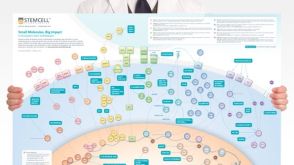 挂图Small Molecules, Big Impact in Pluripotent Stem Cell Research Overview of signaling pathways and small molecules in pluripotent stem cell research

 沪公网安备31010102008431号