Pourcet B et al. (MAY 2016)
Scientific Reports 6 25481
The nuclear receptor LXR modulates interleukin-18 levels in macrophages through multiple mechanisms.
IL-18 is a member of the IL-1 family involved in innate immunity and inflammation. Deregulated levels of IL-18 are involved in the pathogenesis of multiple disorders including inflammatory and metabolic diseases,yet relatively little is known regarding its regulation. Liver X receptors or LXRs are key modulators of macrophage cholesterol homeostasis and immune responses. Here we show that LXR ligands negatively regulate LPS-induced mRNA and protein expression of IL-18 in bone marrow-derived macrophages. Consistent with this being an LXR-mediated process,inhibition is abolished in the presence of a specific LXR antagonist and in LXR-deficient macrophages. Additionally,IL-18 processing of its precursor inactive form to its bioactive state is inhibited by LXR through negative regulation of both pro-caspase 1 expression and activation. Finally,LXR ligands further modulate IL-18 levels by inducing the expression of IL-18BP,a potent endogenous inhibitor of IL-18. This regulation occurs via the transcription factor IRF8,thus identifying IL-18BP as a novel LXR and IRF8 target gene. In conclusion,LXR activation inhibits IL-18 production through regulation of its transcription and maturation into an active pro-inflammatory cytokine. This novel regulation of IL-18 by LXR could be applied to modulate the severity of IL-18 driven metabolic and inflammatory disorders.
View Publication
产品号#:
17858
17858RF
100-0694
产品名:
EasySep™人CD14正选试剂盒II
RoboSep™ 人CD14正选试剂盒II
EasySep™人CD14正选试剂盒II
Liu T-T et al. (MAY 2016)
Journal of Immunology
LSm14A Plays a Critical Role in Antiviral Immune Responses by Regulating MITA Level in a Cell-Specific Manner.
Viral infection triggers induction of antiviral cytokines and effectors,which are critical mediators of innate antiviral immune response. It has been shown that the processing body-associated protein LSm14A is involved in the induction of antiviral cytokines in cell lines but in vivo evidence is lacking. By generating LSm14A-deficient mice,in this study,we show that LSm14A plays a critical and specific role in the induction of antiviral cytokines in dendritic cells (DCs) but not in macrophages and fibroblasts. Induction of antiviral cytokines triggered by the DNA viruses HSV-1 and murid herpesvirus 68 and the RNA virus vesicular stomatitis virus but not Sendai virus was impaired in Lsm14a(-/-) DCs,which is correlated to the functions of the adaptor protein MITA/STING in the antiviral signaling pathways. LSm14A deficiency specifically downregulated MITA/STING level in DCs by impairing its nuclear mRNA precursor processing and subsequently impaired antiviral innate and adaptive immune responses. Our findings reveal a nuclear mRNA precursor processing and cell-specific regulatory mechanism of antiviral immune responses.
View Publication
产品号#:
18758
18758RF
18768
18768RF
18780
18780RF
18781
18781RF
产品名:
EasySep™小鼠CD11c正选试剂盒II
RoboSep™ 小鼠CD11c正选试剂盒II
EasySep™小鼠CD11c正选试剂盒II及脾脏解离液
RoboSep™ 小鼠CD11c正选试剂盒II及脾脏解离液
Kieback E et al. (MAY 2016)
Immunity 44 5 1114--26
Thymus-Derived Regulatory T Cells Are Positively Selected on Natural Self-Antigen through Cognate Interactions of High Functional Avidity.
Regulatory T (Treg) cells expressing Foxp3 transcripton factor are essential for immune homeostasis. They arise in the thymus as a separate lineage from conventional CD4(+)Foxp3(-) T (Tconv) cells. Here,we show that the thymic development of Treg cells depends on the expression of their endogenous cognate self-antigen. The formation of these cells was impaired in mice lacking this self-antigen,while Tconv cell development was not negatively affected. Thymus-derived Treg cells were selected by self-antigens in a specific manner,while autoreactive Tconv cells were produced through degenerate recognition of distinct antigens. These distinct modes of development were associated with the expression of T cell receptor of higher functional avidity for self-antigen by Treg cells than Tconv cells,a difference subsequently essential for the control of autoimmunity. Our study documents how self-antigens define the repertoire of thymus-derived Treg cells to subsequently endow this cell type with the capacity to undermine autoimmune attack.
View Publication


 EasySep™小鼠TIL(CD45)正选试剂盒




 科学海报Column-Free Enrichment of EPCAM Positive and CD49F Positive Human Mammary Epithelial Progenitor Cells
 科学海报Isolation of Human CD4+CD25+Bright/Foxp3+ Regulatory T Cells Directly from Whole Blood
 科学海报Cell Enrichment to Obtain Mouse NK Cell Populations By Negative Selection
 科学海报Rapid Expansion of Functional Human T Cells Using a Novel Serum-Free and Xeno-Free Culture Medium
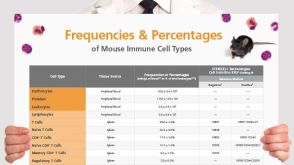 挂图Frequencies and Percentages of Mouse Immune Cell Types List of the frequencies of over 25 immune cell types in C57BL/6 mice
 沪公网安备31010102008431号