LSm14A Plays a Critical Role in Antiviral Immune Responses by Regulating MITA Level in a Cell-Specific Manner.
Viral infection triggers induction of antiviral cytokines and effectors,which are critical mediators of innate antiviral immune response. It has been shown that the processing body-associated protein LSm14A is involved in the induction of antiviral cytokines in cell lines but in vivo evidence is lacking. By generating LSm14A-deficient mice,in this study,we show that LSm14A plays a critical and specific role in the induction of antiviral cytokines in dendritic cells (DCs) but not in macrophages and fibroblasts. Induction of antiviral cytokines triggered by the DNA viruses HSV-1 and murid herpesvirus 68 and the RNA virus vesicular stomatitis virus but not Sendai virus was impaired in Lsm14a(-/-) DCs,which is correlated to the functions of the adaptor protein MITA/STING in the antiviral signaling pathways. LSm14A deficiency specifically downregulated MITA/STING level in DCs by impairing its nuclear mRNA precursor processing and subsequently impaired antiviral innate and adaptive immune responses. Our findings reveal a nuclear mRNA precursor processing and cell-specific regulatory mechanism of antiviral immune responses.
View Publication
产品号#:
18758
18758RF
18768
18768RF
18780
18780RF
18781
18781RF
产品名:
EasySep™小鼠CD11c正选试剂盒II
RoboSep™ 小鼠CD11c正选试剂盒II
EasySep™小鼠CD11c正选试剂盒II及脾脏解离液
RoboSep™ 小鼠CD11c正选试剂盒II及脾脏解离液
Pourcet B et al. (MAY 2016)
Scientific Reports 6 25481
The nuclear receptor LXR modulates interleukin-18 levels in macrophages through multiple mechanisms.
IL-18 is a member of the IL-1 family involved in innate immunity and inflammation. Deregulated levels of IL-18 are involved in the pathogenesis of multiple disorders including inflammatory and metabolic diseases,yet relatively little is known regarding its regulation. Liver X receptors or LXRs are key modulators of macrophage cholesterol homeostasis and immune responses. Here we show that LXR ligands negatively regulate LPS-induced mRNA and protein expression of IL-18 in bone marrow-derived macrophages. Consistent with this being an LXR-mediated process,inhibition is abolished in the presence of a specific LXR antagonist and in LXR-deficient macrophages. Additionally,IL-18 processing of its precursor inactive form to its bioactive state is inhibited by LXR through negative regulation of both pro-caspase 1 expression and activation. Finally,LXR ligands further modulate IL-18 levels by inducing the expression of IL-18BP,a potent endogenous inhibitor of IL-18. This regulation occurs via the transcription factor IRF8,thus identifying IL-18BP as a novel LXR and IRF8 target gene. In conclusion,LXR activation inhibits IL-18 production through regulation of its transcription and maturation into an active pro-inflammatory cytokine. This novel regulation of IL-18 by LXR could be applied to modulate the severity of IL-18 driven metabolic and inflammatory disorders.
View Publication
Activation of the reward system boosts innate and adaptive immunity.
Positive expectations contribute to the clinical benefits of the placebo effect. Such positive expectations are mediated by the brain's reward system; however,it remains unknown whether and how reward system activation affects the body's physiology and,specifically,immunity. Here we show that activation of the ventral tegmental area (VTA),a key component of the reward system,strengthens immunological host defense. We used 'designer receptors exclusively activated by designer drugs' (DREADDs) to directly activate dopaminergic neurons in the mouse VTA and characterized the subsequent immune response after exposure to bacteria (Escherichia coli),using time-of-flight mass cytometry (CyTOF) and functional assays. We found an increase in innate and adaptive immune responses that were manifested by enhanced antibacterial activity of monocytes and macrophages,reduced in vivo bacterial load and a heightened T cell response in the mouse model of delayed-type hypersensitivity. By chemically ablating the sympathetic nervous system (SNS),we showed that the reward system's effects on immunity are,at least partly,mediated by the SNS. Thus,our findings establish a causal relationship between the activity of the VTA and the immune response to bacterial infection.
View Publication
产品号#:
19851
19851RF
19861
19861RF
产品名:
EasySep™小鼠T细胞分选试剂盒
RoboSep™ 小鼠T细胞分选试剂盒
EasySep™小鼠单核细胞分选试剂盒
RoboSep™ 小鼠单核细胞分选试剂盒
Smith Sa et al. (MAR 2012)
Journal of Virology 86 5 2665--75
Persistence of circulating memory B cell clones with potential for Dengue virus disease enhancement for decades following infection
Symptomatic dengue virus infection ranges in disease severity from an influenza-like illness to life-threatening shock. One model of the mechanism underlying severe disease proposes that weakly neutralizing,dengue serotype cross-reactive antibodies induced during a primary infection facilitate virus entry into Fc receptor-bearing cells during a subsequent secondary infection,increasing viral replication and the release of cytokines and vasoactive mediators,culminating in shock. This process has been termed antibody-dependent enhancement of infection and has significantly hindered vaccine development. Much of our understanding of this process has come from studies using mouse monoclonal antibodies (MAbs); however,antibody responses in mice typically exhibit less complexity than those in humans. A better understanding of the humoral immune response to natural dengue virus infection in humans is sorely needed. Using a high-efficiency human hybridoma technology,we isolated 37 hybridomas secreting human MAbs to dengue viruses from 12 subjects years or even decades following primary or secondary infection. The majority of the human antibodies recovered were broadly cross-reactive,directed against either envelope or premembrane proteins,and capable of enhancement of infection in vitro; few exhibited serotype-specific binding or potent neutralizing activity. Memory B cells encoding enhancing antibodies predominated in the circulation,even two or more decades following infection. Mapping the epitopes and activity of naturally occurring dengue antibodies should prove valuable in determining whether the enhancing and neutralizing activity of antibodies can be separated. Such principles could be used in the rational design of vaccines that enhance the induction of neutralizing antibodies,while lowering the risk of dengue shock syndrome.
View Publication
产品号#:
03800
03801
03802
03803
03804
03805
03806
产品名:
ClonaCell™-HY杂交瘤试剂盒
ClonaCell™-HY培养基A
ClonaCell™-HY 培养基 B
ClonaCell™-HY 培养基 C
ClonaCell™-HY 培养基 D
ClonaCell™-HY 培养基 E
ClonaCell™-HY PEG
Machmach K et al. (APR 2012)
Journal of virology 86 8 4245--52
Plasmacytoid dendritic cells reduce HIV production in elite controllers.
HIV elite controllers (EC) are a rare group of HIV-infected patients who are able to maintain undetectable viral loads during a long period of time in the absence of antiretroviral treatment. Adaptive immunity and host genetic factors,although implicated,do not entirely explain this phenomenon. On the other hand,plasmacytoid dendritic cells (pDCs) are the principal type I interferon (IFN) producers in response to viral infection,and it is unknown whether pDCs are involved in the control of HIV infection in EC. In our study,we analyzed peripheral pDC levels and IFN-α production by peripheral blood mononuclear cells (PBMCs) in EC compared to other groups of HIV-infected patients,the ability of pDCs to reduce HIV production in vitro,and the mechanisms potentially involved. We showed preserved pDC counts and IFN-α production in EC. We also observed a higher capacity of pDCs from EC to reduce HIV production and to induce T cell apoptosis,whereas pDCs from viremic patients barely responded without previous Toll-like receptor 9 (TLR-9) stimulus. The preserved functionality of pDCs from EC to reduce viral production may be one of the mechanisms involved in the control of HIV viremia in these subjects. These results demonstrate the importance of innate immunity in HIV pathogenesis,and an understanding of pDC mechanisms would be helpful for the design of new therapies.
View Publication
产品号#:
15022
15062
19062
19062RF
17977
17977RF
产品名:
RosetteSep™人CD4+ T细胞富集抗体混合物
RosetteSep™人CD4+ T细胞富集抗体混合物
EasySep™人浆细胞样DC富集试剂盒
RoboSep™ 人浆细胞样DC富集试剂盒含滤芯吸头
EasySep™人浆细胞样DC分选试剂盒
RoboSep™ 人浆细胞样DC分选试剂盒
Yamin R et al. (MAY 2016)
Cell Reports 15 7 1542--53
HCMV vCXCL1 Binds Several Chemokine Receptors and Preferentially Attracts Neutrophils over NK Cells by Interacting with CXCR2.
HCMV is a highly sophisticated virus that has developed various mechanisms for immune evasion and viral dissemination throughout the body (partially mediated by neutrophils). NK cells play an important role in elimination of HCMV-infected cells. Both neutrophils and NK cells utilize similar sets of chemokine receptors to traffic,to and from,various organs. However,the mechanisms by which HCMV attracts neutrophils and not NK cells are largely unknown. Here,we show a unique viral protein,vCXCL1,which targets three chemokine receptors: CXCR1 and CXCR2 expressed on neutrophils and CXCR1 and CX3CR1 expressed on NK cells. Although vCXCL1 attracted both cell types,neutrophils migrated faster and more efficiently than NK cells through the binding of CXCR2. Therefore,we propose that HCMV has developed vCXCL1 to orchestrate its rapid systemic dissemination through preferential attraction of neutrophils and uses alternative mechanisms to counteract the later attraction of NK cells.
View Publication
产品号#:
19055
19055RF
产品名:
EasySep™人NK细胞富集试剂盒
RoboSep™ 人NK细胞富集试剂盒含滤芯吸头
Jin Q et al. (SEP 2011)
Virology 417 2 449--56
Role for the conserved N-terminal cysteines in the anti-chemokine activities by the chemokine-like protein MC148R1 encoded by Molluscum contagiosum virus.
Molluscum contagiosum poxvirus (MCV) type 1 and type 2 encode two chemokine-like proteins MC148R1 and MC148R2. It is believed that MC148R proteins function by blocking the inflammatory response. However,the mechanism of the proposed biological activities of MC148R proteins and the role of the additional C-terminal cysteines that do not exist in other chemokines are not understood. Here,we demonstrated in two different assay systems that His-tagged MC148R1 displaces the interaction between CXCL12α and CXCR4. The N-terminal cysteines but not the additional C-terminal cysteines modulate this displacement. His-tagged MC148R1 blocked both CXCL12α-mediated and MIP-1α-mediated chemotaxis. In contrast,MC148R2 blocked MIP-1α-mediated but not CXCL12α-mediated chemotaxis. Immunoprecipitation by antibodies to MC148R1 or CXCL12α followed by immunoblotting and detection by antibodies to the other protein demonstrated physical interaction of His-tagged CXCL12α and His-tagged MC148R1. Interaction with chemokines might mask the receptor interaction site resulting in decreased binding and impairment of the biological activities.
View Publication
产品号#:
70025
70025.1
70025.2
70025.3
70047
70047.1
70047.2
70048
70048.1
70048.2
产品名:
冻存的人外周血单个核细胞
冻存的人外周血单个核细胞
冻存的人外周血单个核细胞
冻存的人外周血单个核细胞
Martinez-Gonzalez I et al. (JUL 2016)
Immunity 45 1 198--208
Allergen-Experienced Group 2 Innate Lymphoid Cells Acquire Memory-like Properties and Enhance Allergic Lung Inflammation.
Group 2 innate lymphoid cells (ILC2s) in the lung are stimulated by inhaled allergens. ILC2s do not directly recognize allergens but they are stimulated by cytokines including interleukin (IL)-33 released by damaged epithelium. In response to allergens,lung ILC2s produce T helper 2 cell type cytokines inducing T cell-independent allergic lung inflammation. Here we examined the fate of lung ILC2s upon allergen challenges. ILC2s proliferated and secreted cytokines upon initial stimulation with allergen or IL-33,and this phase was followed by a contraction phase as cytokine production ceased. Some ILC2s persisted long after the resolution of the inflammation as allergen-experienced ILC2s and responded to unrelated allergens more potently than naive ILC2s,mediating severe allergic inflammation. The allergen-experienced ILC2s exhibited a gene expression profile similar to that of memory T cells. The memory-like properties of allergen-experienced ILC2s may explain why asthma patients are often sensitized to multiple allergens.
View Publication
产品号#:
19842
产品名:
EasySep™小鼠ILC2富集试剂盒
Mace EM et al. ( 2016)
Nature communications 7 12171
Human NK cell development requires CD56-mediated motility and formation of the developmental synapse.
While distinct stages of natural killer (NK) cell development have been defined,the molecular interactions that shape human NK cell maturation are poorly understood. Here we define intercellular interactions between developing NK cells and stromal cells which,through contact-dependent mechanisms,promote the generation of mature,functional human NK cells from CD34(+) precursors. We show that developing NK cells undergo unique,developmental stage-specific sustained and transient interactions with developmentally supportive stromal cells,and that the relative motility of NK cells increases as they move through development in vitro and ex vivo. These interactions include the formation of a synapse between developing NK cells and stromal cells,which we term the developmental synapse. Finally,we identify a role for CD56 in developmental synapse structure,NK cell motility and NK cell development. Thus,we define the developmental synapse leading to human NK cell functional maturation.
View Publication


 EasySep™小鼠TIL(CD45)正选试剂盒




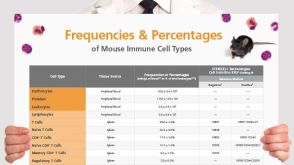 挂图Frequencies and Percentages of Mouse Immune Cell Types List of the frequencies of over 25 immune cell types in C57BL/6 mice
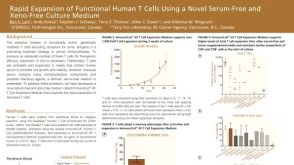 科学海报Rapid Expansion of Functional Human T Cells Using a Novel Serum-Free and Xeno-Free Culture Medium
 沪公网安备31010102008431号