Yu S et al. (FEB 2006)
The Journal of experimental medicine 203 2 349--58
B cell-deficient NOD.H-2h4 mice have CD4+CD25+ T regulatory cells that inhibit the development of spontaneous autoimmune thyroiditis.
Wild-type (WT) NOD.H-2h4 mice develop spontaneous autoimmune thyroiditis (SAT) when given 0.05% NaI in their drinking water,whereas B cell-deficient NOD.H-2h4 mice are SAT resistant. To test the hypothesis that resistance of B cell-deficient mice to SAT was due to the activity of regulatory CD4+CD25+ T (T reg) cells activated if autoantigen was initially presented on non-B cells,CD25+ T reg cells were transiently depleted in vivo using anti-CD25. B cell-deficient NOD.H-2h4 mice given three weekly injections of anti-CD25 developed SAT 8 wk after NaI water. Thyroid lesions were similar to those in WT mice except there were no B cells in thyroid infiltrates. WT and B cell-deficient mice had similar numbers of CD4+CD25+Foxp3+ cells. Mice with transgenic nitrophenyl-specific B cells unable to secrete immunoglobulin were also resistant to SAT,and transient depletion of T reg cells resulted in severe SAT with both T and B cells in thyroid infiltrates. T reg cells that inhibit SAT were eliminated by day 3 thymectomy,indicating they belong to the subset of naturally occurring T reg cells. However,T reg cell depletion did not increase SAT severity in WT mice,suggesting that T reg cells may be nonfunctional when effector T cells are activated; i.e.,by autoantigen-presenting B cells.
View Publication
Rouhi A et al. (MAR 2006)
Journal of immunology (Baltimore,Md. : 1950) 176 5 2991--9
Evidence for epigenetic maintenance of Ly49a monoallelic gene expression.
Although structurally unrelated,the human killer cell Ig-like (KIR) genes and the rodent lectin-like Ly49 genes serve similar functional roles in NK cells. Moreover,both gene families display variegated,monoallelic expression patterns established at the transcriptional level. DNA methylation has been shown to play an important role in maintenance of expression patterns of KIR genes,which have CpG island promoters. The potential role of DNA methylation in expression of Ly49 genes,which have CpG-poor promoters,is unknown. In this study,we show that hypomethylation of the region encompassing the Pro-2 promoter of Ly49a and Ly49c in primary C57BL/6 NK cells correlates with expression of the gene. Using C57BL/6 x BALB/c F1 hybrid mice,we demonstrate that the expressed allele of Ly49a is hypomethylated while the nonexpressed allele is heavily methylated,indicating a role for epigenetics in maintaining monoallelic Ly49 gene expression. Furthermore,the Ly49a Pro-2 region is heavily methylated in fetal NK cells but variably methylated in nonlymphoid tissues. Finally,in apparent contrast to the KIR genes,we show that DNA methylation and the histone acetylation state of the Pro-2 region are strictly linked with Ly49a expression status.
View Publication
产品号#:
18554
18554RF
18564
18564RF
产品名:
Dykstra B et al. (MAY 2006)
Proceedings of the National Academy of Sciences of the United States of America 103 21 8185--90
High-resolution video monitoring of hematopoietic stem cells cultured in single-cell arrays identifies new features of self-renewal.
To search for new indicators of self-renewing hematopoietic stem cells (HSCs),highly purified populations were isolated from adult mouse marrow,micromanipulated into a specially designed microscopic array,and cultured for 4 days in 300 ng/ml Steel factor,20 ng/ml IL-11,and 1 ng/ml flt3-ligand. During this period,each cell and its progeny were imaged at 3-min intervals by using digital time-lapse photography. Individual clones were then harvested and assayed for HSCs in mice by using a 4-month multilineage repopulation endpoint (textgreater1% contribution to lymphoid and myeloid lineages). In a first experiment,6 of 14 initial cells (43%) and 17 of 61 clones (28%) had HSC activity,demonstrating that HSC self-renewal divisions had occurred in vitro. Characteristics associated with HSC activity included longer cell-cycle times and the absence of uropodia on a majority of cells within the clone during the final 12 h of culture. Combining these criteria maximized the distinction of clones with HSC activity from those without and identified a subset of 27 of the 61 clones. These 27 clones included all 17 clones that had HSC activity; a detection efficiency of 63% (2.26 times more frequently than in the original group). The utility of these characteristics for discriminating HSC-containing clones was confirmed in two independent experiments where all HSC-containing clones were identified at a similar 2- to 3-fold-greater efficiency. These studies illustrate the potential of this monitoring system to detect new features of proliferating HSCs that are predictive of self-renewal divisions.
View Publication
Peters PJ et al. (JUL 2006)
Journal of virology 80 13 6324--32
Non-macrophage-tropic human immunodeficiency virus type 1 R5 envelopes predominate in blood, lymph nodes, and semen: implications for transmission and pathogenesis.
Human immunodeficiency virus type 1 (HIV-1) R5 isolates that predominantly use CCR5 as a coreceptor are frequently described as macrophage tropic. Here,we compare macrophage tropism conferred by HIV-1 R5 envelopes that were derived directly by PCR from patient tissue. This approach avoids potentially selective culture protocols used in virus isolation. Envelopes were amplified (i) from blood and semen of adult patients and (ii) from plasma of pediatric patients. The phenotypes of these envelopes were compared to those conferred by an extended panel of envelopes derived from brain and lymph node that we reported previously. Our results show that R5 envelopes vary by up to 1,000-fold in their capacity to confer infection of primary macrophages. Highly macrophage-tropic envelopes were predominate in brain but were infrequent in semen,blood,and lymph node samples. We also confirmed that the presence of N283 in the C2 CD4 binding site of gp120 is associated with HIV-1 envelopes from the brain but absent from macrophage-tropic envelopes amplified from blood and semen. Finally,we compared infection of macrophages,CD4(+) T cells,and peripheral blood mononuclear cells (PBMCs) conferred by macrophage-tropic and non-macrophage-tropic envelopes in the context of full-length replication competent viral clones. Non-macrophage-tropic envelopes conferred low-level infection of macrophages yet infected CD4(+) T cells and PBMCs as efficiently as highly macrophage-tropic brain envelopes. The lack of macrophage tropism for the majority of the envelopes amplified from lymph node,blood,and semen is striking and contrasts with the current consensus that R5 primary isolates are generally macrophage tropic. The extensive variation in R5 tropism reported here is likely to have an important impact on pathogenesis and on the capacity of HIV-1 to transmit.
View Publication


 EasySep™小鼠TIL(CD45)正选试剂盒






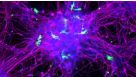 实验方案How to Co-Culture Human Pluripotent Stem Cell (hPSC)-Derived Forebrain Neurons and Microglia

 沪公网安备31010102008431号