Neutrophil survival and c-kit(+)-progenitor proliferation in Staphylococcus aureus-infected skin wounds promote resolution.
Polymorphonuclear neutrophils (PMNs) are critical for the formation,maintenance,and resolution of bacterial abscesses. However,the mechanisms that regulate PMN survival and proliferation during the evolution of an abscess are not well defined. Using a mouse model of Staphylococcus aureus abscess formation within a cutaneous wound,combined with real-time imaging of genetically tagged PMNs,we observed that a high bacterial burden elicited a sustained mobilization of PMNs from the bone marrow to the infected wound,where their lifespan was markedly extended. A continuous rise in wound PMN number,which was not accounted for by trafficking from the bone marrow or by prolonged survival,was correlated with the homing of c-kit(+)-progenitor cells from the blood to the wound,where they proliferated and formed mature PMNs. Furthermore,by blocking their recruitment with an antibody to c-kit,which severely limited the proliferation of mature PMNs in the wound and shortened mouse survival,we confirmed that progenitor cells are not only important contributors to PMN expansion in the wound,but are also functionally important for immune protection. We conclude that the abscess environment provides a niche capable of regulating PMN survival and local proliferation of bone marrow-derived c-kit(+)-progenitor cells.
View Publication
Human Immune Cytokines
Infographic of key cytokines for expansion, differentiation and characterization of major immune cell types
Fan Y et al. (JAN 2018)
The Biochemical journal 475 1 23--44
Interrogating Parkinson's disease LRRK2 kinase pathway activity by assessing Rab10 phosphorylation in human neutrophils.
There is compelling evidence for the role of the leucine-rich repeat kinase 2 (LRRK2) and in particular its kinase function in Parkinson's disease. Orally bioavailable,brain penetrant and potent LRRK2 kinase inhibitors are in the later stages of clinical development. Here,we describe a facile and robust assay to quantify LRRK2 kinase pathway activity by measuring LRRK2-mediated phosphorylation of Rab10 in human peripheral blood neutrophils. We use the selective MJFF-pRab10 monoclonal antibody recognising the Rab10 Thr73 phospho-epitope that is phosphorylated by LRRK2. We highlight the feasibility and practicability of using our assay in the clinical setting by studying a few patients with G2019S LRRK2 associated and sporadic Parkinson's as well as healthy controls. We suggest that peripheral blood neutrophils are a valuable resource for LRRK2 research and should be considered for inclusion in Parkinson's bio-repository collections as they are abundant,homogenous and express relatively high levels of LRRK2 as well as Rab10. In contrast,the widely used peripheral blood mononuclear cells are heterogeneous and only a minority of cells (monocytes and contaminating neutrophils) express LRRK2. While our LRRK2 kinase pathway assay could assist in patient stratification based on LRRK2 kinase activity,we envision that it may find greater utility in pharmacodynamic and target engagement studies in future LRRK2 inhibitor trials.
View Publication
产品号#:
19666
85450
85460
100-0404
产品名:
EasySep™ Direct人中性粒细胞分选试剂盒
SepMate™-50 (IVD)
SepMate™-50 (IVD)
RoboSep™ 人中性粒细胞分选试剂盒
Cowburn AS et al. (JUN 2011)
American journal of respiratory cell and molecular biology 44 6 879--87
Granulocyte/macrophage colony-stimulating factor causes a paradoxical increase in the BH3-only pro-apoptotic protein Bim in human neutrophils.
Neutrophil apoptosis is essential for the resolution of inflammation but is delayed by several inflammatory mediators. In such terminally differentiated cells it has been uncertain whether these agents can inhibit apoptosis through transcriptional regulation of anti-death (Bcl-X(L),Mcl-1,Bcl2A1) or BH3-only (Bim,Bid,Puma) Bcl2-family proteins. We report that granulocyte/macrophage colony-stimulating factor (GM-CSF) and tumor necrosis factor (TNF)-α prevent the normal time-dependent loss of Mcl-1 and Bcl2A1 in neutrophils,and we demonstrate that they cause an NF-κB-dependent increase in Bcl-X(L) transcription/translation. We show that GM-CSF and TNF-α increase and/or maintain mRNA levels for the pro-apoptotic BH3-only protein Bid and that GM-CSF has a similar NF-κB-dependent effect on Bim transcription and BimEL expression. The in-vivo relevance of these findings was indicated by demonstrating that GM-CSF is the dominant neutrophil survival factor in lung lavage from patients with ventilator-associated pneumonia,confirming an increase in lung neutrophil Bim mRNA. Finally GM-CSF caused mitochondrial location of Bim and a switch in phenotype to a cell that displays accelerated caspase-9-dependent apoptosis. This study demonstrates the capacity of neutrophil survival agents to induce a paradoxical increase in the pro-apoptotic proteins Bid and Bim and suggests that this may function to facilitate rapid apoptosis at the termination of the inflammatory cycle.
View Publication
产品号#:
19257
19257RF
21000
20119
20155
产品名:
RoboSep™- S
RoboSep™ 吸头组件抛光剂
RoboSep™分选管套装(9个塑料管)
Simons MP et al. (MAR 2008)
Journal of leukocyte biology 83 3 621--9
TNF-related apoptosis-inducing ligand (TRAIL) is expressed throughout myeloid development, resulting in a broad distribution among neutrophil granules.
TRAIL induces apoptosis in a variety of tumor cells. Our laboratory found that human neutrophils contain an intracellular reservoir of prefabricated TRAIL that is released after stimulation with Mycobacterium bovis bacillus Calmette-Guérin. In this study,we examined the subcellular distribution of TRAIL in freshly isolated neutrophils. Neutrophil granules,secretory vesicles (SV),and plasma membrane vesicles were isolated by subcellular fractionation,followed by free-flow electrophoresis,and examined by ELISA and immunoblot. TRAIL was found in all membrane-bound fractions with the highest amounts in the fractions enriched in azurophilic granule (AG) and SV. Immunofluorescence confocal microscopy showed that TRAIL colocalized independently with myeloperoxidase (MPO),lactoferrin (LF),and albumin,respective markers of AG,specific granules,and SV. Furthermore,immunotransmission electron microscopy demonstrated that TRAIL colocalized intracellularly with MPO and albumin. We examined TRAIL expression in PLB-985 cells induced with dimethylformamide and in CD34-positive stem cells treated with G-CSF. Quantitative RT-PCR analysis showed that TRAIL was expressed in each stage of development,whereas MPO and LF were only expressed at distinct times during differentiation. Collectively,these findings suggest that TRAIL is expressed throughout neutrophil development,resulting in a broad distribution among different granule subtypes.
View Publication
产品号#:
09600
09650
09850
产品名:
StemSpan™ SFEM
StemSpan™ SFEM
Y. Kuwano et al. (MAY 2016)
Journal of Immunology 196 9 3828--33
G$\alpha$i2 and G$\alpha$i3 Differentially Regulate Arrest from Flow and Chemotaxis in Mouse Neutrophils.
Leukocyte recruitment to inflammation sites progresses in a multistep cascade. Chemokines regulate multiple steps of the cascade,including arrest,transmigration,and chemotaxis. The most important chemokine receptor in mouse neutrophils is CXCR2,which couples through G$\alpha$i2- and G$\alpha$i3-containing heterotrimeric G proteins. Neutrophils arrest in response to CXCR2 stimulation. This is defective in G$\alpha$i2-deficient neutrophils. In this study,we show that G$\alpha$i3-deficient neutrophils showed reduced transmigration but normal arrest in mice. We also tested G$\alpha$i2- or G$\alpha$i3-deficient neutrophils in a CXCL1 gradient generated by a microfluidic device. G$\alpha$i3-,but not G$\alpha$i2-,deficient neutrophils showed significantly reduced migration and directionality. This was confirmed in a model of sterile inflammation in vivo. G$\alpha$i2-,but not G$\alpha$i3-,deficient neutrophils showed decreased Ca(2+) flux in response to CXCR2 stimulation. Conversely,G$\alpha$i3-,but not G$\alpha$i2-,deficient neutrophils exhibited reduced AKT phosphorylation upon CXCR2 stimulation. We conclude that G$\alpha$i2 controls arrest and G$\alpha$i3 controls transmigration and chemotaxis in response to chemokine stimulation of neutrophils.
View Publication
Stadtmann A et al. (OCT 2013)
The Journal of Experimental Medicine 210 11 2171--80
The PSGL-1-L-selectin signaling complex regulates neutrophil adhesion under flow
Neutrophils are recruited from the blood to sites of inflammation,where they contribute to immune defense but may also cause tissue damage. During inflammation,neutrophils roll along the microvascular endothelium before arresting and transmigrating. Arrest requires conformational activation of the integrin lymphocyte function-associated antigen 1 (LFA-1),which can be induced by selectin engagement. Here,we demonstrate that a subset of P-selectin glycoprotein ligand-1 (PSGL-1) molecules is constitutively associated with L-selectin. Although this association does not require the known lectin-like interaction between L-selectin and PSGL-1,the signaling output is dependent on this interaction and the cytoplasmic tail of L-selectin. The PSGL-1-L-selectin complex signals through Src family kinases,ITAM domain-containing adaptor proteins,and other kinases to ultimately result in LFA-1 activation. The PSGL-1-L-selectin complex-induced signaling effects on neutrophil slow rolling and recruitment in vivo demonstrate the functional importance of this pathway. We conclude that this is a signaling complex specialized for sensing adhesion under flow.
View Publication


 EasySep™小鼠TIL(CD45)正选试剂盒




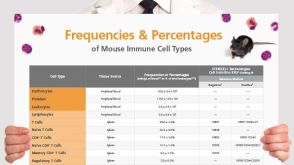 挂图Frequencies and Percentages of Mouse Immune Cell Types List of the frequencies of over 25 immune cell types in C57BL/6 mice
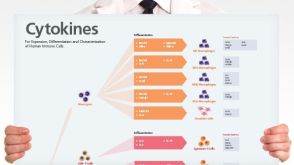 挂图Human Immune Cytokines Infographic of key cytokines for expansion, differentiation and characterization of major immune cell types

 沪公网安备31010102008431号