Cao Y et al. (MAR 2016)
Journal of Immunology 196 5 2075--84
Autoreactive T Cells from Patients with Myasthenia Gravis Are Characterized by Elevated IL-17, IFN-γ, and GM-CSF and Diminished IL-10 Production.
Myasthenia gravis (MG) is a prototypical autoimmune disease that is among the few for which the target Ag and the pathogenic autoantibodies are clearly defined. The pathology of the disease is affected by autoantibodies directed toward the acetylcholine receptor (AChR). Mature,Ag-experienced B cells rely on the action of Th cells to produce these pathogenic Abs. The phenotype of the MG Ag-reactive T cell compartment is not well defined; thus,we sought to determine whether such cells exhibit both a proinflammatory and a pathogenic phenotype. A novel T cell library assay that affords multiparameter interrogation of rare Ag-reactive CD4(+) T cells was applied. Proliferation and cytokine production in response to both AChR and control Ags were measured from 3120 T cell libraries derived from 11 MG patients and paired healthy control subjects. The frequency of CCR6(+) memory T cells from MG patients proliferating in response to AChR-derived peptides was significantly higher than that of healthy control subjects. Production of both IFN-γ and IL-17,in response to AChR,was also restricted to the CCR6(+) memory T cell compartment in the MG cohort,indicating a proinflammatory phenotype. These T cells also included an elevated expression of GM-CSF and absence of IL-10 expression,indicating a proinflammatory and pathogenic phenotype. This component of the autoimmune response in MG is of particular importance when considering the durability of MG treatment strategies that eliminate B cells,because the autoreactive T cells could renew autoimmunity in the reconstituted B cell compartment with ensuing clinical manifestations.
View Publication
产品号#:
17952
17952RF
100-0696
产品名:
EasySep™人CD4+ T细胞分选试剂盒
RoboSep™ 人CD4+ T细胞分选试剂盒
EasySep™人CD4+ T细胞分离试剂盒
Friesen TJ et al. (MAY 2016)
The Journal of Experimental Medicine 213 6 913--920
Recent thymic emigrants are tolerized in the absence of inflammation.
T cell development requires a period of postthymic maturation. Why this is the case has remained a mystery,particularly given the rigors of intrathymic developmental checkpoints,successfully traversed by only ∼5% of thymocytes. We now show that the first few weeks of T cell residence in the lymphoid periphery define a period of heightened susceptibility to tolerance induction to tissue-restricted antigens (TRAs),the outcome of which depends on the context in which recent thymic emigrants (RTEs) encounter antigen. After encounter with TRAs in the absence of inflammation,RTEs exhibited defects in proliferation,diminished cytokine production,elevated expression of anergy-associated genes,and diminished diabetogenicity. These properties were mirrored in vitro by enhanced RTE susceptibility to regulatory T cell-mediated suppression. In the presence of inflammation,RTEs and mature T cells were,in contrast,equally capable of inducing diabetes,proliferating,and producing cytokines. Thus,recirculating RTEs encounter TRAs during a transitional developmental stage that facilitates tolerance induction,but inflammation converts antigen-exposed,tolerance-prone RTEs into competent effector cells.
View Publication
Li P et al. (JUL 2016)
Nature medicine 22 7 807--11
Stimulating the RIG-I pathway to kill cells in the latent HIV reservoir following viral reactivation.
The persistence of latent HIV proviruses in long-lived CD4(+) T cells despite antiretroviral therapy (ART) is a major obstacle to viral eradication. Because current candidate latency-reversing agents (LRAs) induce HIV transcription,but fail to clear these cellular reservoirs,new approaches for killing these reactivated latent HIV reservoir cells are urgently needed. HIV latency depends upon the transcriptional quiescence of the integrated provirus and the circumvention of immune defense mechanisms. These defenses include cell-intrinsic innate responses that use pattern-recognition receptors (PRRs) to detect viral pathogens,and that subsequently induce apoptosis of the infected cell. Retinoic acid (RA)-inducible gene I (RIG-I,encoded by DDX58) forms one class of PRRs that mediates apoptosis and the elimination of infected cells after recognition of viral RNA. Here we show that acitretin,an RA derivative approved by the US Food and Drug Administration (FDA),enhances RIG-I signaling ex vivo,increases HIV transcription,and induces preferential apoptosis of HIV-infected cells. These effects are abrogated by DDX58 knockdown. Acitretin also decreases proviral DNA levels in CD4(+) T cells from HIV-positive subjects on suppressive ART,an effect that is amplified when combined with suberoylanilide hydroxamic acid (SAHA),a histone deacetylase inhibitor. Pharmacological enhancement of an innate cellular-defense network could provide a means by which to eliminate reactivated cells in the latent HIV reservoir.
View Publication
A Cas9 Ribonucleoprotein Platform for Functional Genetic Studies of HIV-Host Interactions in Primary Human T Cells.
New genetic tools are needed to understand the functional interactions between HIV and human host factors in primary cells. We recently developed a method to edit the genome of primary CD4(+) T cells by electroporation of CRISPR/Cas9 ribonucleoproteins (RNPs). Here,we adapted this methodology to a high-throughput platform for the efficient,arrayed editing of candidate host factors. CXCR4 or CCR5 knockout cells generated with this method are resistant to HIV infection in a tropism-dependent manner,whereas knockout of LEDGF or TNPO3 results in a tropism-independent reduction in infection. CRISPR/Cas9 RNPs can furthermore edit multiple genes simultaneously,enabling studies of interactions among multiple host and viral factors. Finally,in an arrayed screen of 45 genes associated with HIV integrase,we identified several candidate dependency/restriction factors,demonstrating the power of this approach as a discovery platform. This technology should accelerate target validation for pharmaceutical and cell-based therapies to cure HIV infection.
View Publication
产品号#:
19052
19052RF
产品名:
EasySep™人CD4+ T细胞富集试剂盒
RoboSep™ 人CD4+ T细胞富集试剂盒含滤芯吸头
Papait A et al. (NOV 2016)
Journal of tissue engineering and regenerative medicine
Allogeneic platelet-rich plasma affects monocyte differentiation to dendritic cells causing an anti-inflammatory microenvironment putatively fostering the wound healing.
Autologous platelet rich plasma (PRP) is clinically used to induce repair of different tissues through the release of bioactive molecules. In some patients,the production of an efficient autologous PRP is unfeasible due to their compromised health. We developed an allogeneic PRP mismatched for AB0 and Rh antigens. To broadcast its clinical applications avoiding side effects the outcome of allogeneic PRP on immune response should be defined. Thus,we investigated whether PRP affected the differentiation of peripheral blood monocytes to dendritic cells upon stimulation with granulocyte monocyte colony stimulating factor and interleukin-4. Indeed,these cells are the main players of immune response and tissue repair. PRP inhibited the differentiation of monocytes to CD1a(+) dendritic cells and favored the expansion of phagocytic CD163(+) CD206(+) fibrocyte-like cells. These cells produced inteleukin-10 and prostaglandin-E2,but not interferon-γ,upon stimulation with lipopolysaccharides. Moreover,they promoted the expansion of regulatory CD4(+) CD25(+) FoxP3(+) T cells upon allostimulation or antigen specific priming. Finally,the conditioned medium harvested from monocytes differentiated with PRP triggered a strong chemotactic effect on mesenchymal cells in both scratch and transwell migration assays. These results strongly suggest that allogeneic PRP can foster the differentiation of monocytes to a regulatory anti-inflammatory population possibly favoring wound healing.
View Publication
产品号#:
15022
15062
19155
19155RF
15028
15068
产品名:
RosetteSep™人CD4+ T细胞富集抗体混合物
RosetteSep™人CD4+ T细胞富集抗体混合物
RosetteSep™人单核细胞富集抗体混合物
RosetteSep™人单核细胞富集抗体混合物
Lin L et al. ( 2014)
The Journal of Immunology 193 2 940--949
Human NK Cells Licensed by Killer Ig Receptor Genes Have an Altered Cytokine Program That Modifies CD4+ T Cell Function
NK cells are innate immune cells known for their cytolytic activities toward tumors and infections. They are capable of expressing diverse killer Ig-like receptors (KIRs),and KIRs are implicated in susceptibility to Crohn's disease (CD),a chronic intestinal inflammatory disease. However,the cellular mechanism of this genetic contribution is unknown. In this study,we show that the licensing" of NK cells�
View Publication
产品号#:
18052
18052RF
19051
19051RF
19055
19055RF
18231
19854
19854RF
15025
15065
产品名:
EasySep™人T细胞富集试剂盒
RoboSep™ 人T细胞富集试剂盒含滤芯吸头
EasySep™人NK细胞富集试剂盒
RoboSep™ 人NK细胞富集试剂盒含滤芯吸头
EasySep™小鼠B细胞分选试剂盒
RoboSep™ 小鼠B细胞分选试剂盒
RosetteSep™人NK细胞富集抗体混合物
RosetteSep™人NK细胞富集抗体混合物
Begum AN et al. (JUL 2014)
Translational psychiatry 4 January e414
Women with the Alzheimer's risk marker ApoE4 lose A-specific CD4 T cells 10-20 years before men.
Adaptive immunity to self-antigens causes autoimmune disorders,such as multiple sclerosis,psoriasis and type 1 diabetes; paradoxically,T- and B-cell responses to amyloid-$\$(A$\$) reduce Alzheimer's disease (AD)-associated pathology and cognitive impairment in mouse models of the disease. The manipulation of adaptive immunity has been a promising therapeutic approach for the treatment of AD,although vaccine and anti-A$\$ approaches have proven difficult in patients,thus far. CD4(+) T cells have a central role in regulating adaptive immune responses to antigens,and A$\$-specific CD4(+) T cells have been shown to reduce AD pathology in mouse models. As these cells may facilitate endogenous mechanisms that counter AD,an evaluation of their abundance before and during AD could provide important insights. A$\$-CD4see is a new assay developed to quantify A$\$-specific CD4(+) T cells in human blood,using dendritic cells derived from human pluripotent stem cells. In tests of textgreater50 human subjects A$\$-CD4see showed an age-dependent decline of A$\$-specific CD4(+) T cells,which occurs earlier in women than men. In aggregate,men showed a 50% decline in these cells by the age of 70 years,but women reached the same level before the age of 60 years. Notably,women who carried the AD risk marker apolipoproteinE-ɛ4 (ApoE4) showed the earliest decline,with a precipitous drop between 45 and 52 years,when menopause typically begins. A$\$-CD4see requires a standard blood draw and provides a minimally invasive approach for assessing changes in A$\$ that may reveal AD-related changes in physiology by a decade. Furthermore,CD4see probes can be modified to target any peptide,providing a powerful new tool to isolate antigen-specific CD4(+) T cells from human subjects.
View Publication
产品号#:
05850
05857
05870
05875
85850
85857
85870
85875
产品名:
mTeSR™1
mTeSR™1
Zizzari IG et al. ( 2015)
PLoS One 10 7 e0132617
The Macrophage Galactose-Type C-Type Lectin (MGL) Modulates Regulatory T Cell Functions
Regulatory T cells (Tregs) are physiologically designed to prevent autoimmune disease and maintain self-tolerance. In tumour microenvironments,their presence is related to a poor prognosis,and they influence the therapeutic outcome due to their capacity to suppress the immune response by cell-cell contact and to release immunosuppressive cytokines. In this study,we demonstrate that Treg immunosuppressive activity can be modulated by the cross-linking between the CD45RA expressed by Tregs and the C-type lectin MGL. This specific interaction strongly decreases the immunosuppressive activity of Tregs,restoring the proliferative capacity of co-cultured T lymphocytes. This effect can be attributed to changes in CD45RA and TCR signalling through the inhibition of Lck and inactivation of Zap-70,an increase in the Foxp3 methylation status and,ultimately,the reduced production of suppressive cytokines. These results indicate a role of MGL as an immunomodulator within the tumour microenvironment interfering with Treg functions,suggesting its possible use in the design of anticancer vaccines.
View Publication
产品号#:
18063
15361
15861
15861RF
18231
产品名:
EasySep™人CD4+CD127low CD25+调节性T细胞分选试剂盒
RosetteSep™人 CD4+ CD127low T细胞富集抗体混合物
Schumann K et al. (AUG 2015)
Proceedings of the National Academy of Sciences of the United States of America 112 33 10437--42
Generation of knock-in primary human T cells using Cas9 ribonucleoproteins.
T-cell genome engineering holds great promise for cell-based therapies for cancer,HIV,primary immune deficiencies,and autoimmune diseases,but genetic manipulation of human T cells has been challenging. Improved tools are needed to efficiently knock out" genes and "knock in" targeted genome modifications to modulate T-cell function and correct disease-associated mutations. CRISPR/Cas9 technology is facilitating genome engineering in many cell types�
View Publication
产品号#:
17952
17952RF
100-0696
产品名:
EasySep™人CD4+ T细胞分选试剂盒
RoboSep™ 人CD4+ T细胞分选试剂盒
EasySep™人CD4+ T细胞分离试剂盒
Chen H et al. (DEC 2015)
Biological research 48 1 59
Functional disruption of human leukocyte antigen II in human embryonic stem cell.
BACKGROUND Theoretically human embryonic stem cells (hESCs) have the capacity to self-renew and differentiate into all human cell types. Therefore,the greatest promise of hESCs-based therapy is to replace the damaged tissues of patients suffering from traumatic or degenerative diseases by the exact same type of cells derived from hESCs. Allograft immune rejection is one of the obstacles for hESCs-based clinical applications. Human leukocyte antigen (HLA) II leads to CD4(+) T cells-mediated allograft rejection. Hence,we focus on optimizing hESCs for clinic application through gene modification. RESULTS Transcription activator-like effector nucleases (TALENs) were used to target MHC class II transactivator (CIITA) in hESCs efficiently. CIITA (-/-) hESCs did not show any difference in the differentiation potential and self-renewal capacity. Dendritic cells (DCs) derived from CIITA (-/-) hESCs expressed CD83 and CD86 but without the constitutive HLA II. Fibroblasts derived from CIITA (-/-) hESCs were powerless in IFN-$\$ expression of HLA II. CONCLUSION We generated HLA II defected hESCs via deleting CIITA,a master regulator of constitutive and IFN-$\$ expression of HLA II genes. CIITA (-/-) hESCs can differentiate into tissue cells with non-HLA II expression. It's promising that CIITA (-/-) hESCs-derived cells could be used in cell therapy (e.g.,T cells and DCs) and escape the attack of receptors' CD4(+) T cells,which are the main effector cells of cellular immunity in allograft.
View Publication


 EasySep™小鼠TIL(CD45)正选试剂盒




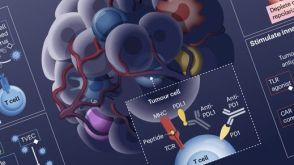 挂图Rational Combination of Cancer Therapies with PD1 Axis Blockade Lists the ways to combine new immunotherapeutic targets and modalities for your translational research.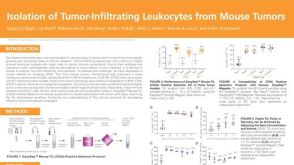

 沪公网安备31010102008431号