In herpesvirus infections,the virus persists for life but is contained through T-cell-mediated immune surveillance. How this immune surveillance operates is poorly understood. Recent studies of other persistent infections have indicated that virus persistence is associated with functional deficits in the CD8(+) T-cell response. To test whether this is the case in a herpesvirus infection,we used a mutant murine gammaherpesvirus that is defective in its ability to persist in the host. By comparing the immune response to this virus with a revertant virus that can persist,we were able to dissect the changes in the antiviral CD8(+) T-cell response that are induced by virus persistence. Surprisingly,persistently infected mice controlled a secondary challenge infection more rapidly than nonpersistently infected mice,indicating enhanced rather than diminished effector functions. Consistent with this,virus-specific CD8 T cells from these mice exhibited faster upregulation of the cytotoxic mediator granzyme B. Another unexpected finding was that CD8(+) T cells from neither infection responded efficiently to homeostatic cytokines. The unresponsiveness of the memory cells from the nonpersistently infected mice appears to be linked to the prolonged replication of virus within the lungs. Other changes seen in different chronic infection models were also observed,such as changes in Bcl-2 levels,interleukin-2 production,and the immunodominance hierarchy. These data show persistence of gammaherpesvirus type 68 alters the properties of CD8(+) T cells and illustrates that immune surveillance does not require CD8 T cells with the same attributes as classical" memory CD8(+) T cells."
View Publication
产品号#:
18753
18753RF
产品名:
Li Q et al. (AUG 2005)
Proceedings of the National Academy of Sciences of the United States of America 102 35 12425--30
Enhanced NF-kappaB activation and cellular function in macrophages lacking IkappaB kinase 1 (IKK1).
IkappaB kinase (IKK) complex plays a key regulatory role in macrophages for NF-kappaB activation during both innate and adaptive immune responses. Because IKK1-/- mice died at birth,we differentiated functional macrophages from embryonic day 15.5 IKK1 mutant embryonic liver. The embryonic liver-derived macrophage (ELDM) showed enhanced phagocytotic clearance of bacteria,more efficient antigen-presenting capacity,elevated secretion of several key proinflammatory cytokines and chemokines,and known NFkappaB target genes. Increased NFkappaB activity in IKK1 mutant ELDM was the result of prolonged degradation of IkappaBalpha in response to infectious pathogens. The delayed restoration of IkappaBalpha in pathogen-activated IKK1-/- ELDM was a direct consequence of uncontrolled IKK2 kinase activity. We hypothesize that IKK1 plays a checkpoint role in the proper control of IkappaBalpha kinase activity in innate and adaptive immunity.
View Publication


 EasySep™小鼠TIL(CD45)正选试剂盒





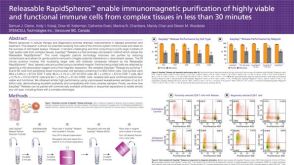 科学海报Releasable RapidSpheres Enable Immunomagnetic Purification of Highly Viable and Functional Immune Cells from Complex Tissues in Less Than 30 Minutes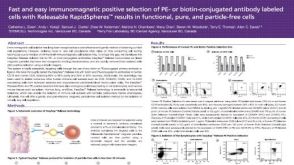






 沪公网安备31010102008431号