Zeng J and Wang S (JAN 2014)
Stem cells translational medicine 3 1 69--80
Human dendritic cells derived from embryonic stem cells stably modified with CD1d efficiently stimulate antitumor invariant natural killer T cell response.
Invariant natural killer T (iNKT) cells are a unique lymphocyte subpopulation that mediates antitumor activities upon activation. A current strategy to harness iNKT cells for cancer treatment is endogenous iNKT cell activation using patient-derived dendritic cells (DCs). However,the limited number and functional defects of patient DCs are still the major challenges for this therapeutic approach. In this study,we investigated whether human embryonic stem cells (hESCs) with an ectopically expressed CD1d gene could be exploited to address this issue. Using a lentivector carrying an optimized expression cassette,we generated stably modified hESC lines that consistently overexpressed CD1d. These modified hESC lines were able to differentiate into DCs as efficiently as the parental line. Most importantly,more than 50% of such derived DCs were CD1d+. These CD1d-overexpressing DCs were more efficient in inducing iNKT cell response than those without modification,and their ability was comparable to that of DCs generated from monocytes of healthy donors. The iNKT cells expanded by the CD1d-overexpressing DCs were functional,as demonstrated by their ability to lyse iNKT cell-sensitive glioma cells. Therefore,hESCs stably modified with the CD1d gene may serve as a convenient,unlimited,and competent DC source for iNKT cell-based cancer immunotherapy.
View Publication
产品号#:
05850
05857
05870
05875
09600
09650
70024
70024.1
85850
85857
85870
85875
产品名:
StemSpan™ SFEM
StemSpan™ SFEM
冻存的人外周血Pan T细胞
冻存的人外周血Pan T细胞
mTeSR™1
mTeSR™1
Gracias DT et al. (FEB 2016)
Journal of Immunology 196 3 1186--98
Phosphatidylinositol 3-Kinase p110δ Isoform Regulates CD8+ T Cell Responses during Acute Viral and Intracellular Bacterial Infections.
The p110δ isoform of PI3K is known to play an important role in immunity,yet its contribution to CTL responses has not been fully elucidated. Using murine p110δ-deficient CD8(+) T cells,we demonstrated a critical role for the p110δ subunit in the generation of optimal primary and memory CD8(+) T cell responses. This was demonstrated in both acute viral and intracellular bacterial infections in mice. We show that p110δ signaling is required for CD8(+) T cell activation,proliferation and effector cytokine production. We provide evidence that the effects of p110δ signaling are mediated via Akt activation and through the regulation of TCR-activated oxidative phosphorylation and aerobic glycolysis. In light of recent clinical trials that employ drugs targeting p110δ in certain cancers and other diseases,our study suggests caution in using these drugs in patients,as they could potentially increase susceptibility to infectious diseases. These studies therefore reveal a novel and direct role for p110δ signaling in in vivo CD8(+) T cell immunity to microbial pathogens.
View Publication
产品号#:
19858
19858RF
产品名:
EasySep™小鼠Naïve CD8+ T细胞分选试剂盒
RoboSep™ 小鼠Naïve CD8+ T细胞分选试剂盒
Deets KA et al. (MAR 2016)
Journal of Immunology 196 6 2450--5
Cutting Edge: Enhanced Clonal Burst Size Corrects an Otherwise Defective Memory Response by CD8+ Recent Thymic Emigrants.
The youngest peripheral T cells (recent thymic emigrants [RTEs]) are functionally distinct from naive T cells that have completed postthymic maturation. We assessed the RTE memory response and found that RTEs produced less granzyme B than their mature counterparts during infection but proliferated more and,therefore,generated equivalent target killing in vivo. Postinfection,RTE numbers contracted less dramatically than those of mature T cells,but RTEs were delayed in their transition to central memory,displaying impaired expression of CD62L,IL-2,Eomesodermin,and CXCR4,which resulted in impaired bone marrow localization. RTE-derived and mature memory cells expanded equivalently during rechallenge,indicating that the robust proliferative capacity of RTEs was maintained independently of central memory phenotype. Thus,the diminished effector function and delayed central memory differentiation of RTE-derived memory cells are counterbalanced by their increased proliferative capacity,driving the efficacy of the RTE response to that of mature T cells.
View Publication
产品号#:
19853
19853RF
产品名:
EasySep™小鼠CD8+ T细胞分选试剂盒
RoboSep™ 小鼠CD8+ T细胞分选试剂盒
Khazen R et al. (MAR 2016)
Nature Communications 7 10823
Melanoma cell lysosome secretory burst neutralizes the CTL-mediated cytotoxicity at the lytic synapse.
Human melanoma cells express various tumour antigens that are recognized by CD8(+) cytotoxic T lymphocytes (CTLs) and elicit tumour-specific responses in vivo. However,natural and therapeutically enhanced CTL responses in melanoma patients are of limited efficacy. The mechanisms underlying CTL effector phase failure when facing melanomas are still largely elusive. Here we show that,on conjugation with CTL,human melanoma cells undergo an active late endosome/lysosome trafficking,which is intensified at the lytic synapse and is paralleled by cathepsin-mediated perforin degradation and deficient granzyme B penetration. Abortion of SNAP-23-dependent lysosomal trafficking,pH perturbation or impairment of lysosomal proteolytic activity restores susceptibility to CTL attack. Inside the arsenal of melanoma cell strategies to escape immune surveillance,we identify a self-defence mechanism based on exacerbated lysosome secretion and perforin degradation at the lytic synapse. Interfering with this synaptic self-defence mechanism might be useful in potentiating CTL-mediated therapies in melanoma patients.
View Publication
产品号#:
17953
17953RF
100-0710
产品名:
EasySep™人CD8+ T细胞分选试剂盒
RoboSep™ 人CD8+ T细胞分选试剂盒
EasySep™人CD8+ T细胞分选试剂盒
Flach A-C et al. (MAR 2016)
Proceedings of the National Academy of Sciences of the United States of America 113 12 3323--8
Autoantibody-boosted T-cell reactivation in the target organ triggers manifestation of autoimmune CNS disease.
Multiple sclerosis (MS) is caused by T cells that are reactive for brain antigens. In experimental autoimmune encephalomyelitis,the animal model for MS,myelin-reactive T cells initiate the autoimmune process when entering the nervous tissue and become reactivated upon local encounter of their cognate CNS antigen. Thereby,the strength of the T-cellular reactivation process within the CNS tissue is crucial for the manifestation and the severity of the clinical disease. Recently,B cells were found to participate in the pathogenesis of CNS autoimmunity,with several diverse underlying mechanisms being under discussion. We here report that B cells play an important role in promoting the initiation process of CNS autoimmunity. Myelin-specific antibodies produced by autoreactive B cells after activation in the periphery diffused into the CNS together with the first invading pathogenic T cells. The antibodies accumulated in resident antigen-presenting phagocytes and significantly enhanced the activation of the incoming effector T cells. The ensuing strong blood-brain barrier disruption and immune cell recruitment resulted in rapid manifestation of clinical disease. Therefore,myelin oligodendrocyte glycoprotein (MOG)-specific autoantibodies can initiate disease bouts by cooperating with the autoreactive T cells in helping them to recognize their autoantigen and become efficiently reactivated within the immune-deprived nervous tissue.
View Publication
产品号#:
19851
19851RF
19854
19854RF
产品名:
EasySep™小鼠T细胞分选试剂盒
RoboSep™ 小鼠T细胞分选试剂盒
EasySep™小鼠B细胞分选试剂盒
RoboSep™ 小鼠B细胞分选试剂盒
Serr I et al. (MAR 2016)
Nature Communications 7 10991
Type 1 diabetes vaccine candidates promote human Foxp3(+)Treg induction in humanized mice.
Immune tolerance is executed partly by Foxp3(+)regulatory T (Treg) cells,which suppress autoreactive T cells. In autoimmune type 1 diabetes (T1D) impaired tolerance promotes destruction of insulin-producing β-cells. The development of autoantigen-specific vaccination strategies for Foxp3(+)Treg-induction and prevention of islet autoimmunity in patients is still in its infancy. Here,using human haematopoietic stem cell-engrafted NSG-HLA-DQ8 transgenic mice,we provide direct evidence for human autoantigen-specific Foxp3(+)Treg-induction in vivo. We identify HLA-DQ8-restricted insulin-specific CD4(+)T cells and demonstrate efficient human insulin-specific Foxp3(+)Treg-induction upon subimmunogenic vaccination with strong agonistic insulin mimetopes in vivo. Induced human Tregs are stable,show increased expression of Treg signature genes such as Foxp3,CTLA4,IL-2Rα and TIGIT and can efficiently suppress effector T cells. Such Foxp3(+)Treg-induction does not trigger any effector T cells. These T1D vaccine candidates could therefore represent an expedient improvement in the challenge to induce human Foxp3(+)Tregs and to develop novel precision medicines for prevention of islet autoimmunity in children at risk of T1D.
View Publication
产品号#:
17952
17952RF
100-0696
产品名:
EasySep™人CD4+ T细胞分选试剂盒
RoboSep™ 人CD4+ T细胞分选试剂盒
EasySep™人CD4+ T细胞分离试剂盒
Fedele G et al. (MAY 2011)
Journal of immunology (Baltimore,Md. : 1950) 186 9 5388--96
Attenuated Bordetella pertussis vaccine candidate BPZE1 promotes human dendritic cell CCL21-induced migration and drives a Th1/Th17 response.
New vaccines against pertussis are needed to evoke full protection and long-lasting immunological memory starting from the first administration in neonates--the major target of the life-threatening pertussis infection. A novel live attenuated Bordetella pertussis vaccine strain,BPZE1,has been developed by eliminating or detoxifying three important B. pertussis virulence factors: pertussis toxin,dermonecrotic toxin,and tracheal cytotoxin. We used a human preclinical ex vivo model based on monocyte-derived dendritic cells (MDDCs) to evaluate BPZE1 immunogenicity. We studied the effects of BPZE1 on MDDC functions,focusing on the impact of Bordetella-primed dendritic cells in the regulation of Th and suppressor T cells (Ts). BPZE1 is able to activate human MDDCs and to promote the production of a broad spectrum of proinflammatory and regulatory cytokines. Moreover,conversely to its parental wild-type counterpart BPSM,BPZE1-primed MDDCs very efficiently migrate in vitro in response to the lymphatic chemokine CCL21,due to the inactivation of pertussis toxin enzymatic activity. BPZE1-primed MDDCs drove a mixed Th1/Th17 polarization and also induced functional Ts. Experiments performed in a Transwell system showed that cell contact rather than the production of soluble factors was required for suppression activity. Overall,our findings support the potential of BPZE1 as a novel live attenuated pertussis vaccine,as BPZE1-challenged dendritic cells might migrate from the site of infection to the lymph nodes,prime Th cells,mount an adaptive immune response,and orchestrate Th1/Th17 and Ts responses.
View Publication
产品号#:
09500
产品名:
BIT 9500血清替代物
Zimmerman Z et al. (AUG 2005)
Biology of Blood and Marrow Transplantation 11 8 576--86
Effector cells derived from host CD8 memory T cells mediate rapid resistance against minor histocompatibility antigen-mismatched allogeneic marrow grafts without participation of perforin, Fas ligand, and the simultaneous inhibition of 3 tumor necrosis Fa
Reduced-intensity conditioning regimens for transplant recipients have heightened awareness of immunologic resistance to allogeneic bone marrow transplants (BMT). Although T cell-mediated cytotoxicity has been assumed to play a role in the resistance against donor allogeneic hematopoietic stem and progenitor cell grafts,several studies have reported relatively unimpaired resistance by recipients who lack perforin,Fas ligand (FasL),and other cytotoxic mediators. This study compared the early kinetics of T cell-mediated resistance in B6 (H2b) cytotoxically normal versus deficient recipients after transplantation with major histocompatibility complex-matched,minor histocompatibility antigen (MiHA)-mismatched allogeneic marrow grafts. Wild-type B6 or cytotoxic double-deficient perforin-/-/ gld+/+ (B6-cdd) mice were sensitized against major histocompatibility complex-matched BALB.B or C3H.SW (H2b) MiHA and transplanted with a high dose (1 ?? 107) of T cell-depleted bone marrow. CD8 T memory cells were shown to be present in recipients before BMT,and anti-CD8 monoclonal antibody infusion abolished resistance,thus demonstrating that CD8 T cells are the host effector population. Donor-committed and high proliferative potential progenitor numbers were markedly diminished by 48 hours after transplantation in both wild-type B6 and B6-cdd anti-donor MiHA-sensitized recipients. These observations indicate that the resistance pathway used in the cytotoxic deficient mice was both potent and rapidly induced - consistent with a CD8 memory T-cell response. To examine the role of Tumor necrosis factor-like weak inducer of apoptosis (TWEAK)- and TL1A-mediated cytotoxicity in this strong resistance,newly generated monoclonal antibodies specific for these ligands were administered to B6-cdd recipients sensitized to donor antigens. Recipients of syngeneic B6-gfp bone marrow exhibited significant donor colony-forming unit numbers after BMT. In contrast,low or absent colony-forming unit levels were detected in allogeneic recipients,including those that lacked perforin and FasL and that received anti-TWEAK,anti-tumor necrosis factor-related apoptosis-inducing ligand,and anti-TL1A monoclonal antibodies. These findings extend previous observations by demonstrating the existence of a rapidly effected resistance pathway mediated by memory CD8 effector T cells independent of the 2 major pathways of cytotoxicity. Together with previous findings,these results support the notion that effector cells derived from memory CD8 T-cell populations can mediate strong resistance against donor allogeneic MiHA-disparate hematopoietic engraftment by using a mechanism that is independent of the contribution of perforin,FasL,and the known death ligand receptor pathways. ?? 2005 American Society for Blood and Marrow Transplantation.
View Publication
产品号#:
03800
03801
03802
03803
03804
03805
03806
产品名:
ClonaCell™-HY杂交瘤试剂盒
ClonaCell™-HY培养基A
ClonaCell™-HY 培养基 B
ClonaCell™-HY 培养基 C
ClonaCell™-HY 培养基 D
ClonaCell™-HY 培养基 E
ClonaCell™-HY PEG
Peters PJ et al. (JUL 2006)
Journal of virology 80 13 6324--32
Non-macrophage-tropic human immunodeficiency virus type 1 R5 envelopes predominate in blood, lymph nodes, and semen: implications for transmission and pathogenesis.
Human immunodeficiency virus type 1 (HIV-1) R5 isolates that predominantly use CCR5 as a coreceptor are frequently described as macrophage tropic. Here,we compare macrophage tropism conferred by HIV-1 R5 envelopes that were derived directly by PCR from patient tissue. This approach avoids potentially selective culture protocols used in virus isolation. Envelopes were amplified (i) from blood and semen of adult patients and (ii) from plasma of pediatric patients. The phenotypes of these envelopes were compared to those conferred by an extended panel of envelopes derived from brain and lymph node that we reported previously. Our results show that R5 envelopes vary by up to 1,000-fold in their capacity to confer infection of primary macrophages. Highly macrophage-tropic envelopes were predominate in brain but were infrequent in semen,blood,and lymph node samples. We also confirmed that the presence of N283 in the C2 CD4 binding site of gp120 is associated with HIV-1 envelopes from the brain but absent from macrophage-tropic envelopes amplified from blood and semen. Finally,we compared infection of macrophages,CD4(+) T cells,and peripheral blood mononuclear cells (PBMCs) conferred by macrophage-tropic and non-macrophage-tropic envelopes in the context of full-length replication competent viral clones. Non-macrophage-tropic envelopes conferred low-level infection of macrophages yet infected CD4(+) T cells and PBMCs as efficiently as highly macrophage-tropic brain envelopes. The lack of macrophage tropism for the majority of the envelopes amplified from lymph node,blood,and semen is striking and contrasts with the current consensus that R5 primary isolates are generally macrophage tropic. The extensive variation in R5 tropism reported here is likely to have an important impact on pathogenesis and on the capacity of HIV-1 to transmit.
View Publication


 EasySep™小鼠TIL(CD45)正选试剂盒




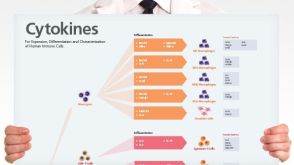 挂图Human Immune Cytokines Infographic of key cytokines for expansion, differentiation and characterization of major immune cell types
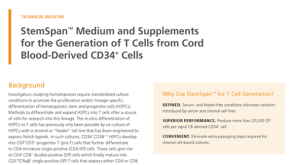 技术公告StemSpan™ Medium and Supplements for the Generation of T Cells from Cord Blood-Derived CD34+ Cells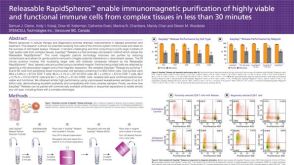

 沪公网安备31010102008431号