While a third of the world carries the burden of tuberculosis,disease control has been hindered by a lack of tools,including a rapid,point-of-care diagnostic and a protective vaccine. In many infectious diseases,antibodies (Abs) are powerful biomarkers and important immune mediators. However,in Mycobacterium tuberculosis (Mtb) infection,a discriminatory or protective role for humoral immunity remains unclear. Using an unbiased antibody profiling approach,we show that individuals with latent tuberculosis infection (Ltb) and active tuberculosis disease (Atb) have distinct Mtb-specific humoral responses,such that Ltb infection is associated with unique Ab Fc functional profiles,selective binding to FcγRIII,and distinct Ab glycosylation patterns. Moreover,compared to Abs from Atb,Abs from Ltb drove enhanced phagolysosomal maturation,inflammasome activation,and,most importantly,macrophage killing of intracellular Mtb. Combined,these data point to a potential role for Fc-mediated Ab effector functions,tuned via differential glycosylation,in Mtb control.
View Publication
产品号#:
18085
18085RF
18058
18058RF
15025
15065
产品名:
RosetteSep™人NK细胞富集抗体混合物
RosetteSep™人NK细胞富集抗体混合物
Smalls-Mantey A et al. ( 2013)
PloS one 8 9 e74858
Comparative efficiency of HIV-1-infected T cell killing by NK cells, monocytes and neutrophils.
HIV-1 infected cells are eliminated in infected individuals by a variety of cellular mechanisms,the best characterized of which are cytotoxic T cell and NK cell-mediated killing. An additional antiviral mechanism is antibody-dependent cellular cytotoxicity. Here we use primary CD4(+) T cells infected with the BaL clone of HIV-1 as target cells and autologous NK cells,monocytes,and neutrophils as effector cells,to quantify the cytotoxicity mediated by the different effectors. This was carried out in the presence or absence of HIV-1-specific antiserum to assess antibody-dependent cellular cytotoxicity. We show that at the same effector to target ratio,NK cells and monocytes mediate similar levels of both antibody-dependent and antibody-independent killing of HIV-1-infected T cells. Neutrophils mediated significant antibody-dependent killing of targets,but were less effective than monocytes or NK cells. These data have implications for acquisition and control of HIV-1 in natural infection and in the context of vaccination.
View Publication
产品号#:
19257
19257RF
19055
19055RF
19059
19059RF
产品名:
EasySep™人NK细胞富集试剂盒
RoboSep™ 人NK细胞富集试剂盒含滤芯吸头
EasySep™人单核细胞富集试剂盒
RoboSep™ 人单核细胞富集试剂盒含滤芯吸头
Lin L et al. ( 2014)
The Journal of Immunology 193 2 940--949
Human NK Cells Licensed by Killer Ig Receptor Genes Have an Altered Cytokine Program That Modifies CD4+ T Cell Function
NK cells are innate immune cells known for their cytolytic activities toward tumors and infections. They are capable of expressing diverse killer Ig-like receptors (KIRs),and KIRs are implicated in susceptibility to Crohn's disease (CD),a chronic intestinal inflammatory disease. However,the cellular mechanism of this genetic contribution is unknown. In this study,we show that the licensing" of NK cells�
View Publication
产品号#:
18052
18052RF
19051
19051RF
19055
19055RF
18231
19854
19854RF
15025
15065
产品名:
EasySep™人T细胞富集试剂盒
RoboSep™ 人T细胞富集试剂盒含滤芯吸头
EasySep™人NK细胞富集试剂盒
RoboSep™ 人NK细胞富集试剂盒含滤芯吸头
EasySep™小鼠B细胞分选试剂盒
RoboSep™ 小鼠B细胞分选试剂盒
RosetteSep™人NK细胞富集抗体混合物
RosetteSep™人NK细胞富集抗体混合物
Esplugues E et al. (JUN 2005)
Blood 105 11 4399--406
Induction of tumor NK-cell immunity by anti-CD69 antibody therapy.
The leukocyte activation marker CD69 is a novel regulator of the immune response,modulating the production of cytokines including transforming growth factor-beta (TGF-beta). We have generated an antimurine CD69 monoclonal antibody (mAb),CD69.2.2,which down-regulates CD69 expression in vivo but does not deplete CD69-expressing cells. Therapeutic administration of CD69.2.2 to wild-type mice induces significant natural killer (NK) cell-dependent antitumor responses to major histocompatibility complex (MHC) class I low RMA-S lymphomas and to RM-1 prostatic carcinoma lung metastases. These in vivo antitumor responses are comparable to those seen in CD69(-/-) mice. Enhanced host NK cytotoxic activity correlates with a reduction in NK-cell TGF-beta production and is independent of tumor priming. In vitro studies demonstrate the novel ability of anti-CD69 mAbs to activate resting NK cells in an Fc receptor-independent manner,resulting in a substantial increase in both NK-cell cytolytic activity and interferon gamma (IFNgamma) production. Modulation of the innate immune system with monoclonal antibodies to host CD69 thus provides a novel means to antagonize tumor growth and metastasis.
View Publication
产品号#:
09600
09650
产品名:
StemSpan™ SFEM
StemSpan™ SFEM
Chen X et al. (JUL 2006)
Proceedings of the National Academy of Sciences of the United States of America 103 27 10346--51
CD28-stimulated ERK2 phosphorylation is required for polarization of the microtubule organizing center and granules in YTS NK cells.
Activation of natural killer (NK) cell cytotoxicity requires adhesion and formation of a conjugate with a susceptible target cell,followed by actin polymerization,and polarization of the microtubule organizing center (MTOC) and cytolytic granules to the NK cell immune synapse. Here,by using the YTS NK cell line as a model,CD28 is shown to be an activating receptor. It signals cytotoxicity in a process dependent on phosphoinositide-3 kinase activation,leading to sustained extracellular signal-regulated kinase 2 (ERK2) phosphorylation. ERK and phospho-ERK localize to microtubule filaments. Neither conjugation with targets nor actin polymerization is affected by blocking ERK2 activation. However,both polarization of the MTOC and cytolytic granules to the synaptic region and NK cell cytotoxicity are strongly reduced by blocking ERK2 activation. A role for the CD28/CD80 interaction in cytotoxicity of human peripheral NK cells also was established. By contrast,lymphocyte function-associated antigen 1 (LFA-1) ligation transduces only a transient ERK2 activation and fails to induce killing in YTS cells. Thus,in YTS cells,a CD28 signal is used to polarize the MTOC and cytolytic granules to the NK cell immune synapse by stimulating sustained ERK2 activation.
View Publication
产品号#:
05150
15025
15065
产品名:
MyeloCult™ H5100
RosetteSep™人NK细胞富集抗体混合物
RosetteSep™人NK细胞富集抗体混合物
Bernstein HB et al. (SEP 2006)
Journal of immunology (Baltimore,Md. : 1950) 177 6 3669--76
CD4 expression on activated NK cells: ligation of CD4 induces cytokine expression and cell migration.
NK cells play an important role in the innate immune response. We have isolated NK cells from human lymphoid tissues and found that these cells express the CD4 molecule on their surface at levels higher than those found on peripheral blood NK cells. To study the functional role of the CD4 molecule on NK cells,we developed an in vitro system by which we are able to obtain robust CD4 expression on NK cells derived from blood. CD4+ NK cells efficiently mediate NK cell cytotoxicity,and CD4 expression does not appear to alter lytic function. CD4+ NK cells are more likely to produce the cytokines gamma-IFN and TNF-alpha than are CD4- NK cells. Ligation of CD4 further increases the number of NK cells producing these cytokines. NK cells expressing CD4 are also capable of migrating toward the CD4-specific chemotactic factor IL-16,providing another function for the CD4 molecule on NK cells. Thus,the CD4 molecule is present and functional on NK cells and plays a role in innate immune responses as a chemotactic receptor and by increasing cytokine production,in addition to its well-described function on T cells as a coreceptor for Ag responsive cell activation.
View Publication
产品号#:
14055
14065
18052
18052RF
19055
19055RF
产品名:
EasySep™人NK细胞富集试剂盒
RoboSep™ 人NK细胞富集试剂盒含滤芯吸头
Fujii H et al. (MAR 2007)
Blood 109 5 2008--13
In vivo control of acute lymphoblastic leukemia by immunostimulatory CpG oligonucleotides.
Despite considerable success in treating newly diagnosed childhood acute lymphoblastic leukemia (ALL),relapsed disease remains a significant clinical challenge. Using a NOD/SCID mouse xenograft model,we report that immunostimulatory DNA oligonucleotides containing CpG motifs (CpG ODNs) stimulate significant immune activity against primary human ALL cells in vivo. The administration of CpG ODNs induced a significant reduction in systemic leukemia burden,mediated continued disease control,and significantly improved survival of mice with established human ALL. The death of leukemia cells in vivo was independent of the ability of ALL cells to respond directly to CpG ODNs and correlated with the production of IL-12p70,IFN-alpha,and IFN-gamma by the host. In addition,depletion of natural killer cells by anti-asialo-GM1 treatment significantly reduced the in vivo antileukemic activity of CpG ODN. This antileukemia effect was not limited to the xenograft model because natural killer cell-dependent killing of ALL by human peripheral blood mononuclear cells (PBMCs) was also increased by CpG ODN stimulation. These results suggest that CpG ODNs have potential as therapeutic agents for the treatment of ALL.
View Publication


 EasySep™小鼠TIL(CD45)正选试剂盒






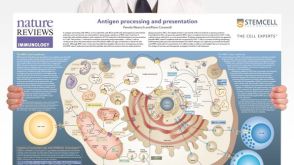 挂图Antigen Processing and Presentation Overview of the mechanisms by which antigens are processed and presented to T cells
 沪公网安备31010102008431号