Zeng J and Wang S (JAN 2014)
Stem cells translational medicine 3 1 69--80
Human dendritic cells derived from embryonic stem cells stably modified with CD1d efficiently stimulate antitumor invariant natural killer T cell response.
Invariant natural killer T (iNKT) cells are a unique lymphocyte subpopulation that mediates antitumor activities upon activation. A current strategy to harness iNKT cells for cancer treatment is endogenous iNKT cell activation using patient-derived dendritic cells (DCs). However,the limited number and functional defects of patient DCs are still the major challenges for this therapeutic approach. In this study,we investigated whether human embryonic stem cells (hESCs) with an ectopically expressed CD1d gene could be exploited to address this issue. Using a lentivector carrying an optimized expression cassette,we generated stably modified hESC lines that consistently overexpressed CD1d. These modified hESC lines were able to differentiate into DCs as efficiently as the parental line. Most importantly,more than 50% of such derived DCs were CD1d+. These CD1d-overexpressing DCs were more efficient in inducing iNKT cell response than those without modification,and their ability was comparable to that of DCs generated from monocytes of healthy donors. The iNKT cells expanded by the CD1d-overexpressing DCs were functional,as demonstrated by their ability to lyse iNKT cell-sensitive glioma cells. Therefore,hESCs stably modified with the CD1d gene may serve as a convenient,unlimited,and competent DC source for iNKT cell-based cancer immunotherapy.
View Publication
产品号#:
05850
05857
05870
05875
09600
09650
70024
70024.1
85850
85857
85870
85875
产品名:
StemSpan™ SFEM
StemSpan™ SFEM
冻存的人外周血Pan T细胞
冻存的人外周血Pan T细胞
mTeSR™1
mTeSR™1
Iqbal AJ et al. (OCT 2014)
Blood 124 15 e33--44
Human CD68 promoter GFP transgenic mice allow analysis of monocyte to macrophage differentiation in vivo.
The recruitment of monocytes and their differentiation into macrophages at sites of inflammation are key events in determining the outcome of the inflammatory response and initiating the return to tissue homeostasis. To study monocyte trafficking and macrophage differentiation in vivo,we have generated a novel transgenic reporter mouse expressing a green fluorescent protein (GFP) under the control of the human CD68 promoter. CD68-GFP mice express high levels of GFP in both monocyte and embryo-derived tissue resident macrophages in adult animals. The human CD68 promoter drives GFP expression in all CD115(+) monocytes of adult blood,spleen,and bone marrow; we took advantage of this to directly compare the trafficking of bone marrow-derived CD68-GFP monocytes to that of CX3CR1(GFP) monocytes in vivo using a sterile zymosan peritonitis model. Unlike CX3CR1(GFP) monocytes,which downregulate GFP expression on differentiation into macrophages in this model,CD68-GFP monocytes retain high-level GFP expression for 72 hours after differentiation into macrophages,allowing continued cell tracking during resolution of inflammation. In summary,this novel CD68-GFP transgenic reporter mouse line represents a powerful resource for analyzing monocyte mobilization and monocyte trafficking as well as studying the fate of recruited monocytes in models of acute and chronic inflammation.
View Publication
产品号#:
18102
19761
19761RF
产品名:
EasyPlate™ EasySep™磁极
Chevalier MF et al. ( 2015)
The Journal of Infectious Diseases 211 5 769--779
Phenotype Alterations in Regulatory T-Cell Subsets in Primary HIV Infection and Identification of Tr1-like Cells as the Main Interleukin 10-Producing CD4+ T Cells
BACKGROUND: Conventional regulatory T cells (Tregs) can suppress human immunodeficiency virus type 1 (HIV-1)-specific immune responses but cannot control immune activation in primary HIV infection. Here,we characterized Treg subsets,using recently defined phenotypic delineation,and analyzed the relative contribution of cell subsets to the production of immunosuppressive cytokines in primary HIV infection. METHODS: In a longitudinal prospective study,ex vivo phenotyping of fresh peripheral blood mononuclear cells from patients with primary HIV infection was performed at baseline and month 6 of follow-up to characterize Treg subsets,immune activation,and cytokine production in isolated CD4(+) T cells. RESULTS: The frequency of CD4(+)CD25(+)CD127(low) Tregs and the distribution between the naive,memory,and activated/memory Treg subsets was similar in patients and healthy donors. However,Tregs from patients with primary HIV infection showed peculiar phenotypic profiles,such as elevated FoxP3,ICOS,and CTLA-4 expression,with CTLA-4 expression strikingly increased in all Treg subsets both at baseline and month 6 of follow-up. The great majority of interleukin 10 (IL-10)-producing CD4(+) T cells were FoxP3(neg) (ie,Tr1-like cells). In contrast to conventional Tregs,Tr1-like cells were inversely correlated with immune activation and not associated with lower effector T-cell responses. CONCLUSION: FoxP3(neg) Tr1-like cells-major contributors to IL-10 production-may have a beneficial role by controlling immune activation in early HIV infection.
View Publication


 EasySep™小鼠TIL(CD45)正选试剂盒




 技术公告Achieve Scalable, High-Quality Nucleic Acid Extractions with the EasySep™ Total Nucleic Acid Extraction Kit
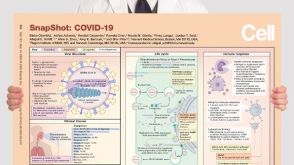 挂图SnapShot: COVID-19 Overview of the life cycle, viral structure, and human immune response to SARS-CoV-2




 沪公网安备31010102008431号