Impact of selective immune-cell depletion on growth of Mycobacterium tuberculosis (Mtb) in a whole-blood bactericidal activity (WBA) assay.
We investigated the contribution of host immune cells to bacterial killing in a whole-blood bactericidal activity (WBA) assay,an ex vivo model used to test efficacy of drugs against mycobacterium tuberculosis (Mtb). We performed WBA assays with immuno-magnetic depletion of specific cell types,in the presence or absence of rifampicin. Innate immune cells decreased Mtb growth in absence of drug,but appeared to diminish the cidal activity of rifampicin,possibly attributable to intracellular bacterial sequestration. Adaptive immune cells had no effect with or without drug. The WBA assay may have potential for testing adjunctive host-directed therapies acting on phagocytic cells.
View Publication
产品号#:
18000
产品名:
EasySep™磁极
J. U. Hermansen et al. (dec 2018)
Scientific reports 8 1 17651
Cryopreservation of primary B cells minimally influences their signaling responses.
Phospho flow is a powerful approach to detect cell signaling aberrations,identify biomarkers and assess pharmacodynamics,and can be performed using cryopreserved samples. The effects of cryopreservation on signaling responses and the reproducibility of phospho flow measurements are however unknown in many cell systems. Here,B lymphocytes were isolated from healthy donors and patients with the B cell malignancy chronic lymphocytic leukemia and analyzed by phospho flow using phospho-specific antibodies targeting 20 different protein epitopes. Cells were analyzed both at basal conditions and after activation of cluster of differentiation 40 (CD40) or the B cell receptor. Pharmacodynamics of the novel pathway inhibitor ibrutinib was also assessed. At all conditions,fresh cells were compared to cryopreserved cells. Minimal variation between fresh and frozen samples was detected. Reproducibility was tested by running samples from the same donors in different experiments. The results demonstrate reproducibility across different phospho flow runs and support the use of cryopreserved samples in future phospho flow studies of B lymphocytes.
View Publication
产品号#:
15024
15064
产品名:
RosetteSep™人B细胞富集抗体混合物
RosetteSep™人B细胞富集抗体混合物
C.-W. J. Lio et al. (apr 2019)
Science immunology 4 34
TET enzymes augment activation-induced deaminase (AID) expression via 5-hydroxymethylcytosine modifications at the Aicda superenhancer.
TET enzymes are dioxygenases that promote DNA demethylation by oxidizing the methyl group of 5-methylcytosine to 5-hydroxymethylcytosine (5hmC). Here,we report a close correspondence between 5hmC-marked regions,chromatin accessibility and enhancer activity in B cells,and a strong enrichment for consensus binding motifs for basic region-leucine zipper (bZIP) transcription factors at TET-responsive genomic regions. Functionally,Tet2 and Tet3 regulate class switch recombination (CSR) in murine B cells by enhancing expression of Aicda,which encodes the activation-induced cytidine deaminase (AID) enzyme essential for CSR. TET enzymes deposit 5hmC,facilitate DNA demethylation,and maintain chromatin accessibility at two TET-responsive enhancer elements,TetE1 and TetE2,located within a superenhancer in the Aicda locus. Our data identify the bZIP transcription factor,ATF-like (BATF) as a key transcription factor involved in TET-dependent Aicda expression. 5hmC is not deposited at TetE1 in activated Batf-deficient B cells,indicating that BATF facilitates TET recruitment to this Aicda enhancer. Our study emphasizes the importance of TET enzymes for bolstering AID expression and highlights 5hmC as an epigenetic mark that captures enhancer dynamics during cell activation.
View Publication
产品号#:
19854
19854RF
产品名:
EasySep™小鼠B细胞分选试剂盒
RoboSep™ 小鼠B细胞分选试剂盒
Y. Ode et al. (apr 2019)
Scientific reports 9 1 6252
Cold-inducible RNA-binding Protein Induces Neutrophil Extracellular Traps in the Lungs during Sepsis.
Extracellular cold-inducible RNA-binding protein (CIRP) exaggerates inflammation and tissue injury in sepsis. Neutrophil extracellular traps (NETs) are released by activated neutrophils during sepsis. NETs contribute to pathogen clearance,but excessive NET formation (NETosis) causes inflammation and tissue damage. Peptidylarginine deiminase 4 (PAD4) is associated with NETosis by increasing histone citrullination and chromatin decondensation. We hypothesized that CIRP induces NETosis in the lungs during sepsis via upregulating PAD4 expression. Sepsis was induced in C57BL/6 wild-type (WT) and CIRP-/- mice by cecal ligation and puncture (CLP). After 20 h of CLP induction,NETs in the lungs of WT and CIRP-/- mice were quantified by flow cytometry by staining the single cell suspensions with MPO and CitH3 Abs. PAD4 expression in the lungs of WT and CIRP-/- mice after sepsis was assessed by Western blotting. In vitro effects of recombinant mouse (rm) CIRP for NETosis and PAD4 expression in the bone marrow-derived neutrophils (BMDN) were assessed by flow cytometry and Western blotting,respectively. After 20 h of CLP,NETosis in the lungs was significantly decreased in CIRP-/- mice compared to WT mice,which also correlated with the decreased PAD4 expression. Intratracheal administration of rmCIRP into WT mice significantly increased NETosis and PAD4 expression in the lungs compared to vehicle-injected mice. In vitro culture of BMDN with rmCIRP significantly increased NETosis and PAD4 expression compared to PBS-treated control. Fluorescence microscopy revealed typical web-like structures consistent with NETs in rmCIRP-treated BMDN. Thus,CIRP serves as a novel inducer of NETosis via PAD4 during sepsis.
View Publication
产品号#:
18000
19762
19762RF
产品名:
EasySep™磁极
EasySep™小鼠中性粒细胞富集试剂盒
RoboSep™ 小鼠中性粒细胞富集试剂盒含滤芯吸头
P. A. Terhal et al. (may 2019)
European journal of human genetics : EJHG
Biallelic variants in POLR3GL cause endosteal hyperostosis and oligodontia.
RNA polymerase III (Pol III) is an essential 17-subunit complex responsible for the transcription of small housekeeping RNAs such as transfer RNAs and 5S ribosomal RNA. Biallelic variants in four genes (POLR3A,POLR3B,and POLR1C and POLR3K) encoding Pol III subunits have previously been found in individuals with (neuro-) developmental disorders. In this report,we describe three individuals with biallelic variants in POLR3GL,a gene encoding a Pol III subunit that has not been associated with disease before. Using whole exome sequencing in a monozygotic twin and an unrelated individual,we detected homozygous and compound heterozygous POLR3GL splice acceptor site variants. RNA sequencing confirmed the loss of full-length POLR3GL RNA transcripts in blood samples of the individuals. The phenotypes of the described individuals are mainly characterized by axial endosteal hyperostosis,oligodontia,short stature,and mild facial dysmorphisms. These features largely fit within the spectrum of phenotypes caused by previously described biallelic variants in POLR3A,POLR3B,POLR1C,and POLR3K. These findings further expand the spectrum of POLR3-related disorders and implicate that POLR3GL should be included in genetic testing if such disorders are suspected.
View Publication
Biologic and genetic characterization of the novel amyloidogenic lambda light chain-secreting human cell lines, ALMC-1 and ALMC-2.
Primary systemic amyloidosis (AL) is a rare monoclonal plasma cell (PC) disorder characterized by the deposition of misfolded immunoglobulin (Ig) light chains (LC) in vital organs throughout the body. To our knowledge,no cell lines have ever been established from AL patients. Here we describe the establishment of the ALMC-1 and ALMC-2 cell lines from an AL patient. Both cell lines exhibit a PC phenotype and display cytokine-dependent growth. Using a comprehensive genetic approach,we established the genetic relationship between the cell lines and the primary patient cells,and we were also able to identify new genetic changes accompanying tumor progression that may explain the natural history of this patient's disease. Importantly,we demonstrate that free lambda LC secreted by both cell lines contained a beta structure and formed amyloid fibrils. Despite absolute Ig LC variable gene sequence identity,the proteins show differences in amyloid formation kinetics that are abolished by the presence of Na(2)SO(4). The formation of amyloid fibrils from these naturally secreting human LC cell lines is unprecedented. Moreover,these cell lines will provide an invaluable tool to better understand AL,from the combined perspectives of amyloidogenic protein structure and amyloid formation,genetics,and cell biology.
View Publication
产品号#:
18357
18357RF
21000
20119
20155
18387
18387RF
产品名:
RoboSep™- S
RoboSep™ 吸头组件抛光剂
RoboSep™分选管套装(9个塑料管)
Chua KY et al. (JAN 2008)
Methods in molecular biology (Clifton,N.J.) 423 509--20
Production of monoclonal antibody by DNA immunization with electroporation.
DNA immunization with in vivo electroporation is an efficient alternative protocol for the production of monoclonal antibodies (mAb). Generation of mAb by DNA immunization is a novel approach to circumvent the following technical hurdles associated with problematic antigens: low abundance and protein instability and use of recombinant proteins that lack posttranslational modifications. This chapter describes the use of a DNA-based immunization protocol for the production of mAb against a house dust mite allergen,designated as Blo t 11,which is a paramyosin homologue found in Blomia tropicalis mites. The Blo t 11 cDNA fused at the N terminus to the sequence of a signal peptide was cloned into the pCI mammalian expression vector. The DNA construct was injected intramuscularly with in vivo electroporation into mice,and the specific antibody production in mice was analyzed by enzyme-linked immunosorbent assay (ELISA). Hybridomas were generated by fusing mouse splenocytes with myeloma cells using the ClonaCell-HY Hybridoma Cloning Kit. Six hybridoma clones secreting Blo t 11 mAb were successfully generated,and these mAb are useful reagents for immunoaffinity purification and immunoassays.
View Publication
产品号#:
03800
03801
03802
03803
03804
03805
03806
产品名:
ClonaCell™-HY杂交瘤试剂盒
ClonaCell™-HY培养基A
ClonaCell™-HY 培养基 B
ClonaCell™-HY 培养基 C
ClonaCell™-HY 培养基 D
ClonaCell™-HY 培养基 E
ClonaCell™-HY PEG
Mauldin JP et al. (MAY 2008)
Circulation 117 21 2785--92
Reduced expression of ATP-binding cassette transporter G1 increases cholesterol accumulation in macrophages of patients with type 2 diabetes mellitus.
BACKGROUND: Patients with type 2 diabetes mellitus are at increased risk for the development of atherosclerosis. A pivotal event in the development of atherosclerosis is macrophage foam cell formation. The ATP-binding cassette (ABC) transporters ABCA1 and ABCG1 regulate macrophage cholesterol efflux and hence play a vital role in macrophage foam cell formation. We have previously found that chronic elevated glucose reduces ABCG1 expression. In the present study,we examined whether patients with type 2 diabetes mellitus had decreased ABCG1 and/or ABCA1,impaired cholesterol efflux,and increased macrophage foam cell formation. METHODS AND RESULTS: Blood was collected from patients with and without type 2 diabetes mellitus. Peripheral blood monocytes were differentiated into macrophages,and cholesterol efflux assays,immunoblots,histological analysis,and intracellular cholesteryl ester measurements were performed. Macrophages from patients with type 2 diabetes mellitus had a 30% reduction in cholesterol efflux with a corresponding 60% increase in cholesterol accumulation relative to control subjects. ABCG1 was present in macrophages from control subjects but was undetectable in macrophages from patients with type 2 diabetes mellitus. In contrast,ABCA1 expression in macrophages was similar in both control subjects and patients with type 2 diabetes mellitus. Macrophage expression of ABCG1 in both patients and control subjects was induced by treatment with the liver X receptor agonist TO-901317. Upregulation of liver X receptor dramatically reduced foam cell formation in macrophages from patients with type 2 diabetes mellitus. CONCLUSIONS: ABCG1 expression and cholesterol efflux are reduced in patients with type 2 diabetes mellitus. This impaired ABCG1-mediated cholesterol efflux significantly correlates with increased intracellular cholesterol accumulation. Strategies to upregulate ABCG1 expression and function in type 2 diabetes mellitus could have therapeutic potential for limiting the accelerated vascular disease observed in patients with type 2 diabetes mellitus.
View Publication
产品号#:
15028
15068
产品名:
RosetteSep™人单核细胞富集抗体混合物
RosetteSep™人单核细胞富集抗体混合物
Moulton VR et al. (JUL 2008)
The Journal of biological chemistry 283 29 20037--44
The RNA-stabilizing protein HuR regulates the expression of zeta chain of the human T cell receptor-associated CD3 complex.
T cell dysfunction is crucial to the pathogenesis of systemic lupus erythematosus (SLE); however,the molecular mechanisms involved in the deficient expression of the T cell receptor-associated CD3zeta chain in SLE are not clear. SLE T cells express abnormally increased levels of an alternatively spliced isoform of CD3zeta that lacks a 562-bp region in its 3'-untranslated region (UTR). We showed previously that two adenosine/uridine-rich elements (ARE) in this splice-deleted region of CD3zeta transcript are critical for the mRNA stability and protein expression of CD3zeta. In this study we show for the first time that the mRNA-stabilizing protein HuR binds to these two ARE bearing regions of CD3zeta 3'-UTR. Knockdown of HuR resulted in decreased expression of the CD3zeta chain,whereas overexpression led to the increase of CD3zeta chain levels. Additionally,overexpression of HuR in human T cells resulted in increased mRNA stability of CD3zeta. Our results identify the 3'-UTR of CD3zeta as a novel target for the mRNA-stabilizing protein HuR. Thus,the absence of two critical AREs in the alternatively spliced CD3zeta 3'-UTR found in SLE T cells may result in decreased HuR binding,representing a possible molecular mechanism contributing to the reduced stability and expression of CD3zeta in SLE.
View Publication
产品号#:
15021
15061
产品名:
RosetteSep™人T细胞富集抗体混合物
RosetteSep™人T细胞富集抗体混合物
Peterson ME and Long EO (OCT 2008)
Immunity 29 4 578--88
Inhibitory receptor signaling via tyrosine phosphorylation of the adaptor Crk.
Many cellular responses,such as autoimmunity and cytotoxicity,are controlled by receptors with cytoplasmic immunoreceptor tyrosine-based inhibition motifs (ITIMs). Here,we showed that binding of inhibitory natural killer (NK) cell receptors to human leukocyte antigen (HLA) class I on target cells induced tyrosine phosphorylation of the adaptor Crk,concomitant with dephosphorylation of the guanine exchange factor Vav1. Furthermore,Crk dissociated from the guanine exchange factor C3G and bound to the tyrosine kinase c-Abl during inhibition. Membrane targeting of a tyrosine-mutated form of Crk could overcome inhibition of NK cell cytotoxicity,providing functional evidence that Crk phosphorylation contributes to inhibition. The specific phosphorylation of Crk and its dissociation from a signaling complex,observed here with two types of inhibitory receptors,expands the signaling potential of the large ITIM-receptor family and reveals an unsuspected component of the inhibitory mechanism.
View Publication
Engineering a stable and selective peptide blocker of the Kv1.3 channel in T lymphocytes.
Kv1.3 potassium channels maintain the membrane potential of effector memory (T(EM)) T cells that are important mediators of multiple sclerosis,type 1 diabetes mellitus,and rheumatoid arthritis. The polypeptide ShK-170 (ShK-L5),containing an N-terminal phosphotyrosine extension of the Stichodactyla helianthus ShK toxin,is a potent and selective blocker of these channels. However,a stability study of ShK-170 showed minor pH-related hydrolysis and oxidation byproducts that were exacerbated by increasing temperatures. We therefore engineered a series of analogs to minimize the formation of these byproducts. The analog with the greatest stability,ShK-192,contains a nonhydrolyzable phosphotyrosine surrogate,a methionine isostere,and a C-terminal amide. ShK-192 shows the same overall fold as ShK,and there is no evidence of any interaction between the N-terminal adduct and the rest of the peptide. The docking configuration of ShK-192 in Kv1.3 shows the N-terminal para-phosphonophenylalanine group lying at the junction of two channel monomers to form a salt bridge with Lys(411) of the channel. ShK-192 blocks Kv1.3 with an IC(50) of 140 pM and exhibits greater than 100-fold selectivity over closely related channels. After a single subcutaneous injection of 100 microg/kg,approximately 100 to 200 pM concentrations of active peptide is detectable in the blood of Lewis rats 24,48,and 72 h after the injection. ShK-192 effectively inhibits the proliferation of T(EM) cells and suppresses delayed type hypersensitivity when administered at 10 or 100 microg/kg by subcutaneous injection once daily. ShK-192 has potential as a therapeutic for autoimmune diseases mediated by T(EM) cells.
View Publication


 EasySep™小鼠TIL(CD45)正选试剂盒




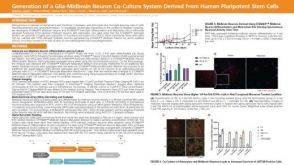 科学海报Generation of a Glia-Midbrain Neuron Co-Culture System Derived From Human Pluripotent Stem Cells
 沪公网安备31010102008431号