Imren S et al. (OCT 2004)
The Journal of clinical investigation 114 7 953--62
High-level beta-globin expression and preferred intragenic integration after lentiviral transduction of human cord blood stem cells.
Transplantation of genetically corrected autologous hematopoietic stem cells is an attractive approach for the cure of sickle-cell disease and beta-thalassemia. Here,we infected human cord blood cells with a self-inactivating lentiviral vector encoding an anti-sickling betaA-T87Q-globin transgene and analyzed the transduced progeny produced over a 6-month period after transplantation of the infected cells directly into sublethally irradiated NOD/LtSz-scid/scid mice. Approximately half of the human erythroid and myeloid progenitors regenerated in the mice containing the transgene,and erythroid cells derived in vitro from these in vivo-regenerated cells produced high levels of betaA-T87Q-globin protein. Linker-mediated PCR analysis identified multiple transgene-positive clones in all mice analyzed with 2.1 +/- 0.1 integrated proviral copies per cell. Genomic sequencing of vector-containing fragments showed that 86% of the proviral inserts had occurred within genes,including several genes implicated in human leukemia. These findings indicate effective transduction of very primitive human cord blood cells with a candidate therapeutic lentiviral vector resulting in the long-term and robust,erythroid-specific production of therapeutically relevant levels of beta-globin protein. However,the frequency of proviral integration within genes that regulate hematopoiesis points to a need for additional safety modifications.
View Publication
产品号#:
18056
18056RF
产品名:
Trotta R et al. (APR 2005)
Blood 105 8 3011--8
Differential expression of SHIP1 in CD56bright and CD56dim NK cells provides a molecular basis for distinct functional responses to monokine costimulation.
Monocyte cytokines (ie,monokines) induce natural killer (NK) cells to produce interferon-gamma (IFN-gamma),which is critical for monocyte clearance of infectious pathogens and tumor surveillance. Human CD56bright NK cells produce far more IFN-gamma in response to monokines than do CD56dim NK cells. The kinases and phosphatases involved in regulating IFN-gamma production by monokine-activated NK cells are not clearly identified. SHIP1 is a 5' inositol phosphatase that dephosphorylates the phosphatidylinositol-3 kinase (PI-3K) product PI3,4,5P3. Here,we show that constitutive expression of SHIP1 is distinctly lower in CD56bright NK cells compared with CD56dim NK cells,suggesting it could be an important negative regulator of IFN-gamma production in monokine-activated NK cells. Indeed,overexpression of SHIP1 in CD56bright NK cells followed by monokine activation substantially lowered IFN-gamma production. This effect was not seen when NK cells were infected with a SHIP1 mutant containing an inactive catalytic domain. Finally,NK cells in SHIP1-/- mice produced more IFN-gamma in response to monokines in vivo than did NK cells from wild-type mice. Collectively,these results demonstrate that SHIP1 negatively regulates monokine-induced NK cell IFN-gamma production in vitro and in vivo and provide the first molecular explanation for an important functional distinction observed between CD56bright and CD56dim human NK subsets.
View Publication
产品号#:
15025
15065
产品名:
RosetteSep™人NK细胞富集抗体混合物
RosetteSep™人NK细胞富集抗体混合物
He X-S et al. (DEC 2004)
The Journal of clinical investigation 114 12 1812--9
T cell-dependent production of IFN-gamma by NK cells in response to influenza A virus.
The role of human NK cells in viral infections is poorly understood. We used a cytokine flow-cytometry assay to simultaneously investigate the IFN-gamma response of NK and T lymphocytes to influenza A virus (fluA). When PBMCs from fluA-immune adult donors were incubated with fluA,IFN-gamma was produced by both CD56(dim) and CD56(bright) subsets of NK cells,as well as by fluA-specific T cells. Purified NK cells did not produce IFN-gamma in response to fluA,while depletion of T lymphocytes reduced to background levels the fluA-induced IFN-gamma production by NK cells,which indicates that T cells are required for the IFN-gamma response of NK cells. The fluA-induced IFN-gamma production of NK cells was suppressed by anti-IL-2 Ab,while recombinant IL-2 replaced the helper function of T cells for IFN-gamma production by NK cells. This indicates that IL-2 produced by fluA-specific T cells is involved in the T cell-dependent IFN-gamma response of NK cells to fluA. Taken together,these results suggest that at an early stage of recurrent viral infection,NK-mediated innate immunity to the virus is enhanced by preexisting virus-specific T cells.
View Publication


 EasySep™小鼠TIL(CD45)正选试剂盒




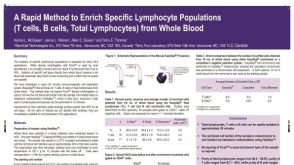 科学海报Cell Enrichment of Specific Lymphocyte Populations (T Cells, B Cells, Total Lymphocytes) from Whole Blood
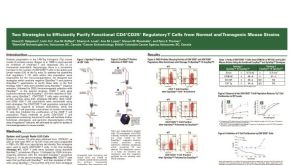 科学海报Cell Isolation of Functional CD4+CD25+ Regulatory T Cells from Mouse Strains
 科学海报Immunomagnetic Isolation Method for Mouse CD4+CD25+ Regulatory T Cells
 科学海报One-Step Enrichment of Leukocyte Subsets Directly in the Blood Collection Tube



 沪公网安备31010102008431号