DNA targeting specificity of RNA-guided Cas9 nucleases.
The Streptococcus pyogenes Cas9 (SpCas9) nuclease can be efficiently targeted to genomic loci by means of single-guide RNAs (sgRNAs) to enable genome editing. Here,we characterize SpCas9 targeting specificity in human cells to inform the selection of target sites and avoid off-target effects. Our study evaluates textgreater700 guide RNA variants and SpCas9-induced indel mutation levels at textgreater100 predicted genomic off-target loci in 293T and 293FT cells. We find that SpCas9 tolerates mismatches between guide RNA and target DNA at different positions in a sequence-dependent manner,sensitive to the number,position and distribution of mismatches. We also show that SpCas9-mediated cleavage is unaffected by DNA methylation and that the dosage of SpCas9 and sgRNA can be titrated to minimize off-target modification. To facilitate mammalian genome engineering applications,we provide a web-based software tool to guide the selection and validation of target sequences as well as off-target analyses.
View Publication
产品号#:
05850
05857
05870
05875
85850
85857
85870
85875
产品名:
mTeSR™1
mTeSR™1
Yang L et al. (OCT 2013)
Nucleic Acids Research 41 19 9049--9061
Optimization of scarless human stem cell genome editing
Efficient strategies for precise genome editing in human-induced pluripotent cells (hiPSCs) will enable sophisticated genome engineering for research and clinical purposes. The development of programmable sequence-specific nucleases such as Transcription Activator-Like Effectors Nucleases (TALENs) and Cas9-gRNA allows genetic modifications to be made more efficiently at targeted sites of interest. However,many opportunities remain to optimize these tools and to enlarge their spheres of application. We present several improvements: First,we developed functional re-coded TALEs (reTALEs),which not only enable simple one-pot TALE synthesis but also allow TALE-based applications to be performed using lentiviral vectors. We then compared genome-editing efficiencies in hiPSCs mediated by 15 pairs of reTALENs and Cas9-gRNA targeting CCR5 and optimized ssODN design in conjunction with both methods for introducing specific mutations. We found Cas9-gRNA achieved 7-8× higher non-homologous end joining efficiencies (3%) than reTALENs (0.4%) and moderately superior homology-directed repair efficiencies (1.0 versus 0.6%) when combined with ssODN donors in hiPSCs. Using the optimal design,we demonstrated a streamlined process to generated seamlessly genome corrected hiPSCs within 3 weeks.
View Publication
产品号#:
05850
05857
05870
05875
85850
85857
85870
85875
产品名:
mTeSR™1
mTeSR™1
Akizu N et al. (AUG 2013)
Cell 154 3 505--517
AMPD2 Regulates GTP Synthesis and Is Mutated in a Potentially Treatable Neurodegenerative Brainstem Disorder
Purine biosynthesis and metabolism,conserved in all living organisms,is essential for cellular energy homeostasis and nucleic acid synthesis. The de novo synthesis of purine precursors is under tight negative feedback regulation mediated by adenosine and guanine nucleotides. We describe a distinct early-onset neurodegenerative condition resulting from mutations in the adenosine monophosphate deaminase 2 gene (AMPD2). Patients have characteristic brain imaging features of pontocerebellar hypoplasia (PCH) due to loss of brainstem and cerebellar parenchyma. We found that AMPD2 plays an evolutionary conserved role in the maintenance of cellular guanine nucleotide pools by regulating the feedback inhibition of adenosine derivatives on de novo purine synthesis. AMPD2 deficiency results in defective GTP-dependent initiation of protein translation,which can be rescued by administration of purine precursors. These data suggest AMPD2-related PCH as a potentially treatable early-onset neurodegenerative disease. ?? 2013 Elsevier Inc.
View Publication
产品号#:
05850
05857
05870
05875
85850
85857
85870
85875
产品名:
mTeSR™1
mTeSR™1
Xue Y et al. (AUG 2013)
PLoS ONE 8 8 e70573
Generating a Non-Integrating Human Induced Pluripotent Stem Cell Bank from Urine-Derived Cells
Induced pluripotent stem cell (iPS cell) holds great potential for applications in regenerative medicine,drug discovery,and disease modeling. We describe here a practical method to generate human iPS cells from urine-derived cells (UCs) under feeder-free,virus-free,serum-free condition and without oncogene c-MYC. We showed that this approach could be applied in a large population with different genetic backgrounds. UCs are easily accessible and exhibit high reprogramming efficiency,offering advantages over other cell types used for the purpose of iPS generation. Using the approach described in this study,we have generated 93 iPS cell lines from 20 donors with diverse genetic backgrounds. The non-viral iPS cell bank with these cell lines provides a valuable resource for iPS cells research,facilitating future applications of human iPS cells.
View Publication
产品号#:
05850
05857
05870
05875
85850
85857
85870
85875
产品名:
mTeSR™1
mTeSR™1
Zhu H et al. (OCT 2013)
Nucleic Acids Research 41 19 e180
Baculoviral transduction facilitates TALEN-mediated targeted transgene integration and Cre/LoxP cassette exchange in human-induced pluripotent stem cells
Safety and reliability of transgene integration in human genome continue to pose challenges for stem cell-based gene therapy. Here,we report a baculovirus-transcription activator-like effector nuclease system for AAVS1 locus-directed homologous recombination in human induced pluripotent stem cells (iPSCs). This viral system,when optimized in human U87 cells,provided a targeted integration efficiency of 95.21% in incorporating a Neo-eGFP cassette and was able to mediate integration of DNA insert up to 13.5 kb. In iPSCs,targeted integration with persistent transgene expression was achieved without compromising genomic stability. The modified iPSCs continued to express stem cell pluripotency markers and maintained the ability to differentiate into three germ lineages in derived embryoid bodies. Using a baculovirus-Cre/LoxP system in the iPSCs,the Neo-eGFP cassette at the AAVS1 locus could be replaced by a Hygro-mCherry cassette,demonstrating the feasibility of cassette exchange. Moreover,as assessed by measuring γ-H2AX expression levels,genome toxicity associated with chromosomal double-strand breaks was not detectable after transduction with moderate doses of baculoviral vectors expressing transcription activator-like effector nucleases. Given high targeted integration efficiency,flexibility in transgene exchange and low genome toxicity,our baculoviral transduction-based approach offers great potential and attractive option for precise genetic manipulation in human pluripotent stem cells.
View Publication
C. Kropp et al. (Oct 2016)
Stem cells translational medicine 5 1289-1301
Impact of Feeding Strategies on the Scalable Expansion of Human Pluripotent Stem Cells in Single-Use Stirred Tank Bioreactors.
The routine application of human pluripotent stem cells (hPSCs) and their derivatives in biomedicine and drug discovery will require the constant supply of high-quality cells by defined processes. Culturing hPSCs as cell-only aggregates in (three-dimensional [3D]) suspension has the potential to overcome numerous limitations of conventional surface-adherent (two-dimensional [2D]) cultivation. Utilizing single-use instrumented stirred-tank bioreactors,we showed that perfusion resulted in a more homogeneous culture environment and enabled superior cell densities of 2.85 X 10(6) cells per milliliter and 47% higher cell yields compared with conventional repeated batch cultures. Flow cytometry,quantitative reverse-transcriptase polymerase chain reaction,and global gene expression analysis revealed a high similarity across 3D suspension and 2D precultures,underscoring that matrix-free hPSC culture efficiently supports maintenance of pluripotency. Interestingly,physiological data and gene expression assessment indicated distinct changes of the cells' energy metabolism,suggesting a culture-induced switch from glycolysis to oxidative phosphorylation in the absence of hPSC differentiation. Our data highlight the plasticity of hPSCs' energy metabolism and provide clear physiological and molecular targets for process monitoring and further development. This study paves the way toward more efficient GMP-compliant cell production and underscores the enormous process development potential of hPSCs in suspension culture. SIGNIFICANCE Human pluripotent stem cells (hPSCs) are a unique source for the,in principle,unlimited production of functional human cell types in vitro,which are of high value for therapeutic and industrial applications. This study applied single-use,clinically compliant bioreactor technology to develop advanced,matrix-free,and more efficient culture conditions for the mass production of hPSCs in scalable suspension culture. Using extensive analytical tools to compare established conditions with this novel culture strategy,unexpected physiological features of hPSCs were discovered. These data allow a more rational process development,providing significant progress in the field of translational stem cell research and medicine.
View Publication


 EasySep™小鼠TIL(CD45)正选试剂盒




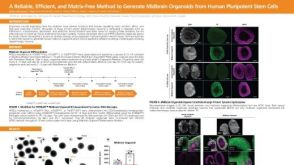 科学海报A Reliable, Efficient, and Matrix-Free Method to Generate Midbrain Organoids from Human Pluripotent Stem Cells


 沪公网安备31010102008431号