Daniel Gray, PhD
Taking Advantage of Apoptosis and Cell Death During Drug Development for Immune Disorders
研究方向:
干细胞生物学
Cho SK et al. (AUG 1999)
Proceedings of the National Academy of Sciences of the United States of America 96 17 9797--802
Functional characterization of B lymphocytes generated in vitro from embryonic stem cells.
To study molecular events involved in B lymphocyte development and V(D)J rearrangement,we have established an efficient system for the differentiation of embryonic stem (ES) cells into mature Ig-secreting B lymphocytes. Here,we show that B lineage cells generated in vitro from ES cells are functionally analogous to normal fetal liver-derived or bone marrow-derived B lineage cells at three important developmental stages: first,they respond to Flt-3 ligand during an early lymphopoietic progenitor stage; second,they become targets for Abelson murine leukemia virus (A-MuLV) infection at a pre-B cell stage; third,they secrete Ig upon stimulation with lipopolysaccharide at a mature mitogen-responsive stage. Moreover,the ES cell-derived A-MuLV-transformed pre-B (EAB) cells are phenotypically and functionally indistinguishable from standard A-MuLV-transformed pre-B cells derived from infection of mouse fetal liver or bone marrow. Notably,EAB cells possess functional V(D)J recombinase activity. In particular,the generation of A-MuLV transformants from ES cells will provide an advantageous system to investigate genetic modifications that will help to elucidate molecular mechanisms in V(D)J recombination and in A-MuLV-mediated transformation.
View Publication
产品号#:
06902
06952
00321
00322
00323
00324
00325
产品名:
Bü et al. (OCT 1999)
Blood 94 7 2343--56
The monoclonal antibody 97A6 defines a novel surface antigen expressed on human basophils and their multipotent and unipotent progenitors.
Basophils (Ba) and mast cells (MC) are important effector cells of inflammatory reactions. Both cell types derive from CD34(+) hematopoietic progenitors. However,little is known about the cell subsets that become committed to and give rise to Ba and/or MC. We have generated a monoclonal antibody (MoAb),97A6,that specifically detects human Ba,MC (lung,skin),and their CD34(+) progenitors. Other mature hematopoietic cells (neutrophils,eosinophils,monocytes,lymphocytes,platelets) did not react with MoAb 97A6,and sorting of 97A6(+) peripheral blood (PB) and bone marrow (BM) cells resulted in an almost pure population (textgreater98%) of Ba. Approximately 1% of CD34(+) BM and PB cells was found to be 97A6(+). Culture of sorted CD34(+)97A6(+) BM cells in semisolid medium containing phytohemagglutinin-stimulated leukocyte supernatant for 16 days (multilineage assay) resulted in the formation of pure Ba colonies (10 of 40),Ba-eosinophil colonies (7 of 40),Ba-macrophage colonies (3 of 40),and multilineage Ba-eosinophil-macrophage and/or neutrophil colonies (12 of 40). In contrast,no Ba could be cultured from CD34(+)97A6(-) cells. Liquid culture of CD34(+) PB cells in the presence of 100 ng/mL interleukin (IL)-3 (Ba progenitor assay) resulted in an increase of 97A6(+) cells,starting from 1% of day-0 cells to almost 70% (basophils) after day 7. Culture of sorted BM CD34(+)97A6(+) cells in the presence of 100 ng/mL stem cell factor (SCF) for 35 days (mast cell progenitor assay) resulted in the growth of MC (textgreater30% on day 35). Anti-IgE-induced IgE receptor cross-linking on Ba for 15 minutes resulted in a 4-fold to 5-fold upregulation of 97A6 antigen expression. These data show that the 97A6-reactive antigen plays a role in basophil activation and is expressed on multipotent CD34(+) progenitors,MC progenitors,Ba progenitors,as well as on mature Ba and tissue MC. The lineage-specificity of MoAb 97A6 suggests that this novel marker may be a useful tool to isolate and analyze Ba/MC and their progenitors.
View Publication
Chen X et al. (SEP 2015)
Stem Cell Research 15 2 395--402
OP9-Lhx2 stromal cells facilitate derivation of hematopoietic progenitors both in vitro and in vivo
Generating engraftable hematopoietic stem cells (HSCs) from pluripotent stem cells (PSCs) is an ideal approach for obtaining induced HSCs for cell therapy. However,the path from PSCs to robustly induced HSCs (iHSCs) in vitro remains elusive. We hypothesize that the modification of hematopoietic niche cells by transcription factors facilitates the derivation of induced HSCs from PSCs. The Lhx2 transcription factor is expressed in fetal liver stromal cells but not in fetal blood cells. Knocking out Lhx2 leads to a fetal hematopoietic defect in a cell non-autonomous role. In this study,we demonstrate that the ectopic expression of Lhx2 in OP9 cells (OP9-Lhx2) accelerates the hematopoietic differentiation of PSCs. OP9-Lhx2 significantly increased the yields of hematopoietic progenitor cells via co-culture with PSCs in vitro. Interestingly,the co-injection of OP9-Lhx2 and PSCs into immune deficient mice also increased the proportion of hematopoietic progenitors via the formation of teratomas. The transplantation of phenotypic HSCs from OP9-Lhx2 teratomas but not from the OP9 control supported a transient repopulating capability. The upregulation of Apln gene by Lhx2 is correlated to the hematopoietic commitment property of OP9-Lhx2. Furthermore,the enforced expression of Apln in OP9 cells significantly increased the hematopoietic differentiation of PSCs. These results indicate that OP9-Lhx2 is a good cell line for regeneration of hematopoietic progenitors both in vitro and in vivo.
View Publication
PPAR-α and glucocorticoid receptor synergize to promote erythroid progenitor self-renewal.
Many acute and chronic anaemias,including haemolysis,sepsis and genetic bone marrow failure diseases such as Diamond-Blackfan anaemia,are not treatable with erythropoietin (Epo),because the colony-forming unit erythroid progenitors (CFU-Es) that respond to Epo are either too few in number or are not sensitive enough to Epo to maintain sufficient red blood cell production. Treatment of these anaemias requires a drug that acts at an earlier stage of red cell formation and enhances the formation of Epo-sensitive CFU-E progenitors. Recently,we showed that glucocorticoids specifically stimulate self-renewal of an early erythroid progenitor,burst-forming unit erythroid (BFU-E),and increase the production of terminally differentiated erythroid cells. Here we show that activation of the peroxisome proliferator-activated receptor α (PPAR-α) by the PPAR-α agonists GW7647 and fenofibrate synergizes with the glucocorticoid receptor (GR) to promote BFU-E self-renewal. Over time these agonists greatly increase production of mature red blood cells in cultures of both mouse fetal liver BFU-Es and mobilized human adult CD34(+) peripheral blood progenitors,with a new and effective culture system being used for the human cells that generates normal enucleated reticulocytes. Although Ppara(-/-) mice show no haematological difference from wild-type mice in both normal and phenylhydrazine (PHZ)-induced stress erythropoiesis,PPAR-α agonists facilitate recovery of wild-type but not Ppara(-/-) mice from PHZ-induced acute haemolytic anaemia. We also show that PPAR-α alleviates anaemia in a mouse model of chronic anaemia. Finally,both in control and corticosteroid-treated BFU-E cells,PPAR-α co-occupies many chromatin sites with GR; when activated by PPAR-α agonists,additional PPAR-α is recruited to GR-adjacent sites and presumably facilitates GR-dependent BFU-E self-renewal. Our discovery of the role of PPAR-α agonists in stimulating self-renewal of early erythroid progenitor cells suggests that the clinically tested PPAR-α agonists we used may improve the efficacy of corticosteroids in treating Epo-resistant anaemias.
View Publication
产品号#:
02697
06902
06952
09300
09600
09650
产品名:
StemSpan™ CC110
含有10% 牛血清白蛋白(BSA)的 Iscove's MDM
StemSpan™ SFEM
StemSpan™ SFEM
Stumpf M et al. (DEC 2010)
Proceedings of the National Academy of Sciences of the United States of America 107 50 21541--6
Specific erythroid-lineage defect in mice conditionally deficient for Mediator subunit Med1.
The Mediator complex forms the bridge between transcriptional activators and the RNA polymerase II. Med1 (also known as PBP or TRAP220) is a key component of Mediator that interacts with nuclear hormone receptors and GATA transcription factors. Here,we show dynamic recruitment of GATA-1,TFIIB,Mediator,and RNA polymerase II to the β-globin locus in induced mouse erythroid leukemia cells and in an erythropoietin-inducible hematopoietic progenitor cell line. Using Med1 conditional knockout mice,we demonstrate a specific block in erythroid development but not in myeloid or lymphoid development,highlighted by the complete absence of β-globin gene expression. Thus,Mediator subunit Med1 plays a pivotal role in erythroid development and in β-globin gene activation.
View Publication
产品号#:
03334
产品名:
MethoCult™ M3334
Fenouille N et al. (DEC 2010)
Cancer research 70 23 9659--70
Persistent activation of the Fyn/ERK kinase signaling axis mediates imatinib resistance in chronic myelogenous leukemia cells through upregulation of intracellular SPARC.
SPARC is an extracellular matrix protein that exerts pleiotropic effects on extracellular matrix organization,growth factor availability,cell adhesion,differentiation,and immunity in cancer. Chronic myelogenous leukemia (CML) cells resistant to the BCR-ABL inhibitor imatinib (IM-R cells) were found to overexpress SPARC mRNA. In this study,we show that imatinib triggers SPARC accumulation in a variety of tyrosine kinase inhibitor (TKI)-resistant CML cell lines. SPARC silencing in IM-R cells restored imatinib sensitivity,whereas enforced SPARC expression in imatinib-sensitive cells promoted viability as well as protection against imatinib-mediated apoptosis. Notably,we found that the protective effect of SPARC required intracellular retention inside cells. Accordingly,SPARC was not secreted into the culture medium of IM-R cells. Increased SPARC expression was intimately linked to persistent activation of the Fyn/ERK kinase signaling axis. Pharmacologic inhibition of this pathway or siRNA-mediated knockdown of Fyn kinase resensitized IM-R cells to imatinib. In support of our findings,increased levels of SPARC mRNA were documented in blood cells from CML patients after 1 year of imatinib therapy compared with initial diagnosis. Taken together,our results highlight an important role for the Fyn/ERK signaling pathway in imatinib-resistant cells that is driven by accumulation of intracellular SPARC.
View Publication


 EasySep™小鼠TIL(CD45)正选试剂盒




 专家访谈Daniel Gray, PhD Taking Advantage of Apoptosis and Cell Death During Drug Development for Immune Disorders
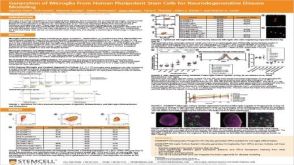 科学海报Generation of Microglia From Human Pluripotent Stem Cells for Neurodegenerative Disease Modeling
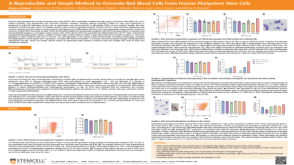 科学海报A Reproducible and Simple Method to Generate Red Blood Cells From Human Pluripotent Stem Cells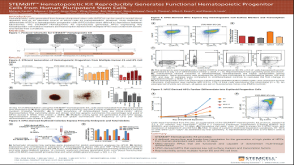

 沪公网安备31010102008431号