Perry BC et al. (JUN 2008)
Tissue engineering. Part C,Methods 14 2 149--56
Collection, cryopreservation, and characterization of human dental pulp-derived mesenchymal stem cells for banking and clinical use.
Recent studies have shown that mesenchymal stem cells (MSC) with the potential for cell-mediated therapies and tissue engineering applications can be isolated from extracted dental tissues. Here,we investigated the collection,processing,and cryobiological characteristics of MSC from human teeth processed under current good tissue practices (cGTP). Viable dental pulp-derived MSC (DPSC) cultures were isolated from 31 of 40 teeth examined. Of eight DPSC cultures examined more thoroughly,all expressed appropriate cell surface markers and underwent osteogenic,adipogenic,and chondrogenic differentiation in appropriate differentiation medium,thus meeting criteria to be called MSC. Viable DPSC were obtained up to 120 h postextraction. Efficient recovery of DPSC from cryopreserved intact teeth and second-passage DPSC cultures was achieved. These studies indicate that DPSC isolation is feasible for at least 5 days after tooth extraction,and imply that processing immediately after extraction may not be required for successful banking of DPSC. Further,the recovery of viable DPSC after cryopreservation of intact teeth suggests that minimal processing may be needed for the banking of samples with no immediate plans for expansion and use. These initial studies will facilitate the development of future cGTP protocols for the clinical banking of MSC.
View Publication
产品号#:
05401
05402
05404
05411
产品名:
MesenCult™ MSC 基础培养基(人)
MesenCult™ MSC刺激添加物(人)
MesenCult™ 增殖试剂盒(人)
Eirew P et al. (DEC 2008)
Nature medicine 14 12 1384--9
A method for quantifying normal human mammary epithelial stem cells with in vivo regenerative ability.
Previous studies have demonstrated that normal mouse mammary tissue contains a rare subset of mammary stem cells. We now describe a method for detecting an analogous subpopulation in normal human mammary tissue. Dissociated cells are suspended with fibroblasts in collagen gels,which are then implanted under the kidney capsule of hormone-treated immunodeficient mice. After 2-8 weeks,the gels contain bilayered mammary epithelial structures,including luminal and myoepithelial cells,their in vitro clonogenic progenitors and cells that produce similar structures in secondary transplants. The regenerated clonogenic progenitors provide an objective indicator of input mammary stem cell activity and allow the frequency and phenotype of these human mammary stem cells to be determined by limiting-dilution analysis. This new assay procedure sets the stage for investigations of mechanisms regulating normal human mammary stem cells (and possibly stem cells in other tissues) and their relationship to human cancer stem cell populations.
View Publication
产品号#:
05601
产品名:
EpiCult™-B 人培养基
Wang L-S et al. (FEB 2010)
Biomaterials 31 6 1148--57
Injectable biodegradable hydrogels with tunable mechanical properties for the stimulation of neurogenesic differentiation of human mesenchymal stem cells in 3D culture.
We report an injectable hydrogel scaffold system with tunable stiffness for controlling the proliferation rate and differentiation of human mesenchymal stem cells (hMSCs) in a three-dimensional (3D) context in normal growth media. The hydrogels composed of gelatin-hydroxyphenylpropionic acid (Gtn-HPA) conjugate were formed using the oxidative coupling of HPA moieties catalyzed by hydrogen peroxide (H(2)O(2)) and horseradish peroxidase (HRP). The stiffness of the hydrogels was readily tuned by varying the H(2)O(2) concentration without changing the concentration of polymer precursor. We found that the hydrogel stiffness strongly affected the cell proliferation rates. The rate of hMSC proliferation increased with the decrease in the stiffness of the hydrogel. Also,the neurogenesis of hMSCs was controlled by the hydrogel stiffness in a 3D context without the use of any additional biochemical signal. These cells which were cultured in hydrogels with lower stiffness for 3 weeks expressed much more neuronal protein markers compared to those cultured within stiffer hydrogels for the same period of time.
View Publication
产品号#:
05401
05402
05411
产品名:
MesenCult™ MSC 基础培养基(人)
MesenCult™ MSC刺激添加物(人)
MesenCult™ 增殖试剂盒(人)
Grajales L et al. (APR 2010)
Journal of molecular and cellular cardiology 48 4 735--45
Delayed enrichment of mesenchymal cells promotes cardiac lineage and calcium transient development.
Bone marrow-derived mesenchymal stem cells (BM-MSCs) can be induced to differentiate into myogenic cells. Despite their potential,previous studies have not been successful in producing a high percentage of cardiac-like cells with a muscle phenotype. We hypothesized that cardiac lineage development in BM-MSC is related to cell passage,culture milieu,and enrichment for specific cell subtypes before and during differentiation. Our study demonstrated that Lin(-) BM-MSC at an intermediate passage (IP; P8-P12) expressed cardiac troponin T (cTnT) after 21 days in culture. Cardiac TnT expression was similar whether IP cells were differentiated in media containing 5-azacytidine+2% FBS (AZA; 14%) or 2% FBS alone (LS; 12%) and both were significantly higher than AZA+5% FBS. This expression was potentiated by first enriching for CD117/Sca-1 cells followed by differentiation (AZA,39% and LS,28%). A second sequential enrichment for the dihydropyridine receptor subunit alpha2delta1 (DHPR-alpha2) resulted in cardiac TnT expressed in 54% of cultured cells compared to 28% of cells after CD117/Sca-1(+) enrichment. Cells enriched for CD117/Sca-1 and subjected to differentiation displayed spontaneous intracellular Ca(2+) transients with an increase in transient frequency and a 60% decrease in the transient duration amplitude between days 14 and 29. In conclusion,IP CD117/Sca-1(+) murine BM-MSCs display robust cardiac muscle lineage development that can be induced independent of AZA but is diminished under higher serum concentrations. Furthermore,temporal changes in calcium kinetics commensurate with increased cTnT expression suggest progressive maturation of a cardiac muscle lineage. Enrichment with CD117/Sca-1 to establish lineage commitment followed by DHPR-alpha2 in lineage developing cells may enhance the therapeutic potential of these cells for transplantation.
View Publication
产品号#:
19771
产品名:
EasySep™ 小鼠间充质干/祖细胞富集试剂盒
Dí et al. (DEC 2010)
Cardiovascular research 88 3 502--11
Endothelial progenitor cells undergo an endothelial-to-mesenchymal transition-like process mediated by TGFbetaRI.
AIMS: Endothelial progenitor cells (EPC) have been shown to repair pulmonary endothelium,although they can also migrate into the arterial intima and differentiate into smooth muscle-like (mesenchymal) cells contributing to intimal hyperplasia. The molecular mechanisms by which this process proceeds have not been fully elucidated. Here,we study whether genes involved in the endothelial-to-mesenchymal transition (EnMT) may contribute to the mesenchymal phenotype acquisition of EPC and we evaluate whether transforming growth factor β1 (TGFβ1) is involved in this process. METHODS AND RESULTS: Our results show that co-culture of EPC with smooth muscle cells (SMC) increases the expression of the mesenchymal cell markers α-smooth muscle actin,sm22-α,and myocardin,and decreases the expression of the endothelial cell marker CD31. In the same conditions,we also observed a concomitant increase in the gene expression of the EnMT-related transcription factors: slug,snail,zeb1,and endothelin-1. This indicates that mesenchymal phenotype acquisition occurred through an EnMT-like process. Inhibition of TGFβ receptor I (TGFβRI) downregulated snail gene expression,blocked the EnMT,and facilitated the differentiation of EPC to the endothelial cell lineage. Furthermore,TGFβRI inhibition decreased migration of EPC stimulated by SMC without affecting their functionality and adhesion capacity. CONCLUSION: These results indicate that EPC may differentiate into SMC-like cells through an EnMT-like process and that TGFβI plays an important role in the fate of EPC.
View Publication
产品号#:
09600
09650
产品名:
StemSpan™ SFEM
StemSpan™ SFEM
Yu J et al. (JAN 2011)
PloS one 6 3 e17557
Efficient feeder-free episomal reprogramming with small molecules.
Genetic reprogramming of human somatic cells to induced pluripotent stem cells (iPSCs) could offer replenishable cell sources for transplantation therapies. To fulfill their promises,human iPSCs will ideally be free of exogenous DNA (footprint-free),and be derived and cultured in chemically defined media free of feeder cells. Currently,methods are available to enable efficient derivation of footprint-free human iPSCs. However,each of these methods has its limitations. We have previously derived footprint-free human iPSCs by employing episomal vectors for transgene delivery,but the process was inefficient and required feeder cells. Here,we have greatly improved the episomal reprogramming efficiency using a cocktail containing MEK inhibitor PD0325901,GSK3β inhibitor CHIR99021,TGF-β/Activin/Nodal receptor inhibitor A-83-01,ROCK inhibitor HA-100 and human leukemia inhibitory factor. Moreover,we have successfully established a feeder-free reprogramming condition using chemically defined medium with bFGF and N2B27 supplements and chemically defined human ESC medium mTeSR1 for the derivation of footprint-free human iPSCs. These improvements enabled the routine derivation of footprint-free human iPSCs from skin fibroblasts,adipose tissue-derived cells and cord blood cells. This technology will likely be valuable for the production of clinical-grade human iPSCs.
View Publication
产品号#:
05420
05850
05857
05870
05875
72482
72484
85850
85857
85870
85875
产品名:
HA-100 (Dihydrochloride)
HA-100 (2HCl), 25 mg
mTeSR™1
mTeSR™1
Phuc PV et al. (JUN 2012)
Cell and tissue banking 13 2 341--51
Isolation of three important types of stem cells from the same samples of banked umbilical cord blood.
It is known that umbilical cord blood (UCB) is a rich source of stem cells with practical and ethical advantages. Three important types of stem cells which can be harvested from umbilical cord blood and used in disease treatment are hematopoietic stem cells (HSCs),mesenchymal stem cells (MSCs) and endothelial progenitor cells (EPCs). Since these stem cells have shown enormous potential in regenerative medicine,numerous umbilical cord blood banks have been established. In this study,we examined the ability of banked UCB collected to produce three types of stem cells from the same samples with characteristics of HSCs,MSCs and EPCs. We were able to obtain homogeneous plastic rapidly-adherent cells (with characteristics of MSCs),slowly-adherent (with characteristics of EPCs) and non-adherent cells (with characteristics of HSCs) from the mononuclear cell fractions of cryopreserved UCB. Using a protocol of 48 h supernatant transferring,we successfully isolated MSCs which expressed CD13,CD44 and CD90 while CD34,CD45 and CD133 negative,had typical fibroblast-like shape,and was able to differentiate into adipocytes; EPCs which were CD34,and CD90 positive,CD13,CD44,CD45 and CD133 negative,adherent with cobble-like shape; HSCs which formed colonies when cultured in MethoCult medium.
View Publication
产品号#:
84434
84444
产品名:
Pei Y et al. (MAR 2015)
Scientific reports 5 9205
A platform for rapid generation of single and multiplexed reporters in human iPSC lines.
Induced pluripotent stem cells (iPSC) are important tools for drug discovery assays and toxicology screens. In this manuscript,we design high efficiency TALEN and ZFN to target two safe harbor sites on chromosome 13 and 19 in a widely available and well-characterized integration-free iPSC line. We show that these sites can be targeted in multiple iPSC lines to generate reporter systems while retaining pluripotent characteristics. We extend this concept to making lineage reporters using a C-terminal targeting strategy to endogenous genes that express in a lineage-specific fashion. Furthermore,we demonstrate that we can develop a master cell line strategy and then use a Cre-recombinase induced cassette exchange strategy to rapidly exchange reporter cassettes to develop new reporter lines in the same isogenic background at high efficiency. Equally important we show that this recombination strategy allows targeting at progenitor cell stages,further increasing the utility of the platform system. The results in concert provide a novel platform for rapidly developing custom single or dual reporter systems for screening assays.
View Publication
产品号#:
05850
05857
05870
05875
85850
85857
85870
85875
产品名:
mTeSR™1
mTeSR™1
Palakkan AA et al. (SEP 2015)
Biomedical reports 3 5 626--636
Polarisation and functional characterisation of hepatocytes derived from human embryonic and mesenchymal stem cells.
Adult hepatocytes are polarised with their apical and basolateral membranes separated from neighbouring cells by tight junction proteins. Although efficient differentiation of pluripotent stem cells to hepatocytes has been achieved,the formation of proper polarisation in these cells has not been thoroughly investigated. In the present study,human embryonic stem cells (hESCs) and human mesenchymal stem cells (hMSCs) were differentiated to hepatocyte-like cells and the derived hepatocytes were characterised for mature hepatocyte markers. The secretion of hepatic proteins,expression of hepatic genes and the functional hepatic polarisation of stem cell-derived hepatocytes,foetal hepatocytes and the HepG2 hepatic cell line were evaluated and the different lines were compared. The results indicate that hESC-derived hepatocytes are phenotypically more robust and functionally more efficient compared with the hMSC-derived hepatocytes,suggesting their suitability for toxicity studies.
View Publication
Crebbp haploinsufficiency in mice alters the bone marrow microenvironment, leading to loss of stem cells and excessive myelopoiesis.
CREB-binding protein (CREBBP) is important for the cell-autonomous regulation of hematopoiesis,including the stem cell compartment. In the present study,we show that CREBBP plays an equally pivotal role in microenvironment-mediated regulation of hematopoiesis. We found that the BM microenvironment of Crebbp(+/-) mice was unable to properly maintain the immature stem cell and progenitor cell pools. Instead,it stimulates myeloid differentiation,which progresses into a myeloproliferation phenotype. Alterations in the BM microenvironment resulting from haploinsufficiency of Crebbp included a marked decrease in trabecular bone that was predominantly caused by increased osteoclastogenesis. Although CFU-fibroblast (CFU-F) and total osteoblast numbers were decreased,the bone formation rate was similar to that found in wild-type mice. At the molecular level,we found that the known hematopoietic modulators matrix metallopeptidase-9 (MMP9) and kit ligand (KITL) were decreased with heterozygous levels of Crebbp. Lastly,potentially important regulatory proteins,endothelial cell adhesion molecule 1 (ESAM1) and cadherin 5 (CDH5),were increased on Crebbp(+/-) endothelial cells. Our findings reveal that a full dose of Crebbp is essential in the BM microenvironment to maintain proper hematopoiesis and to prevent excessive myeloproliferation.
View Publication


 EasySep™小鼠TIL(CD45)正选试剂盒




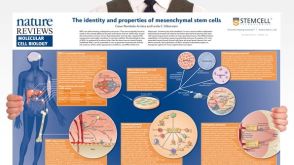 挂图The Identity and Properties of Mesenchymal Stem Cells Overview of MSC expansion, differentiation, immunoregulatory properties and therapeutic potential

 沪公网安备31010102008431号