Enzymatic passaging of human embryonic stem cells alters central carbon metabolism and glycan abundance
To realize the potential of human embryonic stem cells (hESCs) in regenerative medicine and drug discovery applications,large numbers of cells that accurately recapitulate cell and tissue function must be robustly produced. Previous studies have suggested that genetic instability and epigenetic changes occur as a consequence of enzymatic passaging. However,the potential impacts of such passaging methods on the metabolism of hESCs have not been described. Using stable isotope tracing and mass spectrometry-based metabolomics,we have explored how different passaging reagents impact hESC metabolism. Enzymatic passaging caused significant decreases in glucose utilization throughout central carbon metabolism along with attenuated de novo lipogenesis. In addition,we developed and validated a method for rapidly quantifying glycan abundance and isotopic labeling in hydrolyzed biomass. Enzymatic passaging reagents significantly altered levels of glycans immediately after digestion but surprisingly glucose contribution to glycans was not affected. These results demonstrate that there is an immediate effect on hESC metabolism after enzymatic passaging in both central carbon metabolism and biosynthesis. HESCs subjected to enzymatic passaging are routinely placed in a state requiring re-synthesis of biomass components,subtly influencing their metabolic needs in a manner that may impact cell performance in regenerative medicine applications.
View Publication
产品号#:
05850
05857
05870
05875
85850
85857
85870
85875
产品名:
mTeSR™1
mTeSR™1
Yin D et al. (JAN 2012)
Methods in molecular biology (Clifton,N.J.) 873 247--259
Comparison of neural differentiation potential of human pluripotent stem cell lines using a quantitative neural differentiation protocol.
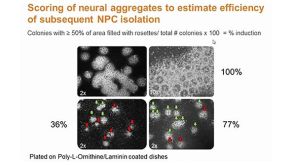
Neural differentiation of human embryonic (ES) and induced pluripotent (iPS) stem cell lines has been used for research in early human development,drug discovery,and cell replacement therapies. It is critical to establish generic differentiation protocols to compare the neural specification potential of each individually derived pluripotent stem cell line and identify the efficacious lines for research and therapeutic use. Here,we describe a reproducible and quantitative protocol to assess the neural progenitor (NP) generation of human pluripotent stem cell lines. This method includes a robust and well-defined neural inducing platform for Pax6(+) neural rosette (neuroectodermal cells) generation,propagation,and subsequent differentiation into nestin(+) NPs. A side-by-side comparison under common culture conditions among three human ES cell lines,TE03,TE06,and BG01V,and one iPS cell line,HD02,showed highly variable efficiency in their differentiation into NPs.
View Publication
产品号#:
05850
05857
05870
05875
85850
85857
85870
85875
产品名:
mTeSR™1
mTeSR™1
Naujok O and Lenzen S (SEP 2012)
Stem Cell Reviews and Reports 8 3 779--791
A critical re-evaluation of CD24-positivity of human embryonic stem cells differentiated into pancreatic progenitors.
Differentiation of embryonic stem cells (ESCs) into insulin-producing cells for cell replacement therapy of diabetes mellitus comprises the stepwise recapitulation of in vivo developmental stages of pancreatic organogenesis in an in vitro differentiation protocol. The chemical compounds IDE-1 and (-)-indolactam-V can be used to direct mouse and human ESCs through these stages to form definitive endoderm via an intermediate mesendodermal stage and finally into pancreatic endoderm. Cells of the pancreatic endoderm express the PDX1 transcription factor and contribute to all pancreatic cell types upon further in vitro or in vivo differentiation. Even though this differentiation approach is highly effective and reproducible,it generates heterogeneous populations containing PDX1-expressing pancreatic progenitors amongst other cell types. Thus,a technique to separate PDX1-expressing cells from this mixture is very desirable. Recently it has been reported that PDX1-positive pancreatic progenitors,derived from human embryonic stem cells,express the surface marker CD24. Therefore were subjected mouse and human ESCs to a small molecule differentiation approach and the expression of the surface marker CD24 was monitored in undifferentiated cells,cells committed to the definitive endoderm and cells reminiscent of the pancreatic endoderm. We observed that both mouse and human ESCs expressed CD24 in the pluripotent state,during the whole process of endoderm formation and upon further differentiation towards pancreatic endoderm. Thus CD24 is not a suitable cell surface marker for identification of PDX1-positive progenitor cells.
View Publication
产品号#:
05850
05857
05870
05875
07923
85850
85857
85870
85875
产品名:
Dispase (1 U/mL)
mTeSR™1
mTeSR™1
Tamaki S et al. ( 2015)
PLoS ONE 10 11 e0142991
SS18-SSX, the oncogenic fusion protein in synovial sarcoma, is a cellular context-dependent epigenetic modifier
The prevalence and specificity of unique fusion oncogenes are high in a number of soft tissue sarcomas (STSs). The close relationship between fusion genes and clinicopathological features suggests that a correlation may exist between the function of fusion proteins and cellular context of the cell-of-origin of each tumor. However,most STSs are origin-unknown tumors and this issue has not yet been investigated in detail. In the present study,we examined the effects of the cellular context on the function of the synovial sarcoma (SS)-specific fusion protein,SS18-SSX,using human pluripotent stem cells (hPSCs) containing the drug-inducible SS18-SSX gene. We selected the neural crest cell (NCC) lineage for the first trial of this system,induced SS18-SSX at various differentiation stages from PSCs to NCC-derived mesenchymal stromal cells (MSCs),and compared its biological effects on each cell type. We found that the expression of FZD10,identified as an SS-specific gene,was induced by SS18-SSX at the PSC and NCC stages,but not at the MSC stage. This stage-specific induction of FZD10 correlated with stage-specific changes in histone marks associated with the FZD10 locus and also with the loss of the BAF47 protein,a member of the SWI/SNF chromatin-remodeling complex. Furthermore,the global gene expression profile of hPSC-derived NCCs was the closest to that of SS cell lines after the induction of SS18-SSX. These results clearly demonstrated that the cellular context is an important factor in the function of SS18-SSX as an epigenetic modifier.
View Publication
产品号#:
05850
05857
05870
05875
85850
85857
85870
85875
产品名:
mTeSR™1
mTeSR™1
Shinnawi R et al. (OCT 2015)
Stem cell reports 5 4 582--596
Monitoring Human-Induced Pluripotent Stem Cell-Derived Cardiomyocytes with Genetically Encoded Calcium and Voltage Fluorescent Reporters.
The advent of the human-induced pluripotent stem cell (hiPSC) technology has transformed biomedical research,providing new tools for human disease modeling,drug development,and regenerative medicine. To fulfill its unique potential in the cardiovascular field,efficient methods should be developed for high-resolution,large-scale,long-term,and serial functional cellular phenotyping of hiPSC-derived cardiomyocytes (hiPSC-CMs). To achieve this goal,we combined the hiPSC technology with genetically encoded voltage (ArcLight) and calcium (GCaMP5G) fluorescent indicators. Expression of ArcLight and GCaMP5G in hiPSC-CMs permitted to reliably follow changes in transmembrane potential and intracellular calcium levels,respectively. This allowed monitoring short- and long-term changes in action-potential and calcium-handling properties and the development of arrhythmias in response to several pharmaceutical agents and in hiPSC-CMs derived from patients with different inherited arrhythmogenic syndromes. Combining genetically encoded fluorescent reporters with hiPSC-CMs may bring a unique value to the study of inherited disorders,developmental biology,and drug development and testing.
View Publication
产品号#:
05850
05857
05870
05875
85850
85857
85870
85875
产品名:
mTeSR™1
mTeSR™1
Yazdi PG et al. (AUG 2015)
PloS one 10 8 e0136574
Increasing Nucleosome Occupancy Is Correlated with an Increasing Mutation Rate so Long as DNA Repair Machinery Is Intact.
Deciphering the multitude of epigenomic and genomic factors that influence the mutation rate is an area of great interest in modern biology. Recently,chromatin has been shown to play a part in this process. To elucidate this relationship further,we integrated our own ultra-deep sequenced human nucleosomal DNA data set with a host of published human genomic and cancer genomic data sets. Our results revealed,that differences in nucleosome occupancy are associated with changes in base-specific mutation rates. Increasing nucleosome occupancy is associated with an increasing transition to transversion ratio and an increased germline mutation rate within the human genome. Additionally,cancer single nucleotide variants and microindels are enriched within nucleosomes and both the coding and non-coding cancer mutation rate increases with increasing nucleosome occupancy. There is an enrichment of cancer indels at the theoretical start (74 bp) and end (115 bp) of linker DNA between two nucleosomes. We then hypothesized that increasing nucleosome occupancy decreases access to DNA by DNA repair machinery and could account for the increasing mutation rate. Such a relationship should not exist in DNA repair knockouts,and we thus repeated our analysis in DNA repair machinery knockouts to test our hypothesis. Indeed,our results revealed no correlation between increasing nucleosome occupancy and increasing mutation rate in DNA repair knockouts. Our findings emphasize the linkage of the genome and epigenome through the nucleosome whose properties can affect genome evolution and genetic aberrations such as cancer.
View Publication


 EasySep™小鼠TIL(CD45)正选试剂盒






 沪公网安备31010102008431号