White MP et al. (JAN 2013)
STEM CELLS 31 1 92--103
Limited Gene Expression Variation in Human Embryonic Stem Cell and Induced Pluripotent Stem Cell-Derived Endothelial Cells
Recent evidence suggests human embryonic stem cell (hESC) and induced pluripotent stem (iPS) cell lines have differences in their epigenetic marks and transcriptomes,yet the impact of these differences on subsequent terminally differentiated cells is less well understood. Comparison of purified,homogeneous populations of somatic cells derived from multiple independent human iPS and ES lines will be required to address this critical question. Here,we report a differentiation protocol based on embryonic development that consistently yields large numbers of endothelial cells (ECs) derived from multiple hESCs or iPS cells. Mesoderm differentiation of embryoid bodies was maximized,and defined growth factors were used to generate KDR+ EC progenitors. Magnetic purification of a KDR+ progenitor subpopulation resulted in an expanding,homogeneous pool of ECs that expressed EC markers and had functional properties of ECs. Comparison of the transcriptomes revealed limited gene expression variability between multiple lines of human iPS-derived ECs or between lines of ES- and iPS-derived ECs. These results demonstrate a method to generate large numbers of pure human EC progenitors and differentiated ECs from pluripotent stem cells and suggest individual lineages derived from human iPS cells may have significantly less variance than their pluripotent founders. STEM Cells2013;31:92–103
View Publication
产品号#:
05850
05857
05870
05875
85850
85857
85870
85875
产品名:
mTeSR™1
mTeSR™1
MacLean Ga et al. (OCT 2012)
Proceedings of the National Academy of Sciences 109 43 17567--17572
Altered hematopoiesis in trisomy 21 as revealed through in vitro differentiation of isogenic human pluripotent cells
Trisomy 21 is associated with hematopoietic abnormalities in the fetal liver,a preleukemic condition termed transient myeloproliferative disorder,and increased incidence of acute megakaryoblastic leukemia. Human trisomy 21 pluripotent cells of various origins,human embryonic stem (hES),and induced pluripotent stem (iPS) cells,were differentiated in vitro as a model to recapitulate the effects of trisomy on hematopoiesis. To mitigate clonal variation,we isolated disomic and trisomic subclones from the same parental iPS line,thereby generating subclones isogenic except for chromosome 21. Under differentiation conditions favoring development of fetal liver-like,γ-globin expressing,definitive hematopoiesis,we found that trisomic cells of hES,iPS,or isogenic origins exhibited a two- to fivefold increase in a population of CD43(+)(Leukosialin)/CD235(+)(Glycophorin A) hematopoietic cells,accompanied by increased multilineage colony-forming potential in colony-forming assays. These findings establish an intrinsic disturbance of multilineage myeloid hematopoiesis in trisomy 21 at the fetal liver stage.
View Publication
产品号#:
05850
05857
05870
05875
85850
85857
85870
85875
产品名:
mTeSR™1
mTeSR™1
Ku M et al. ( 2012)
Genome biology 13 10 R85
H2A.Z landscapes and dual modifications in pluripotent and multipotent stem cells underlie complex genome regulatory functions.
BACKGROUND: The histone variant H2A.Z has been implicated in nucleosome exchange,transcriptional activation and Polycomb repression. However,the relationships among these seemingly disparate functions remain obscure.backslashnbackslashnRESULTS: We mapped H2A.Z genome-wide in mammalian ES cells and neural progenitors. H2A.Z is deposited promiscuously at promoters and enhancers,and correlates strongly with H3K4 methylation. Accordingly,H2A.Z is present at poised promoters with bivalent chromatin and at active promoters with H3K4 methylation,but is absent from stably repressed promoters that are specifically enriched for H3K27 trimethylation. We also characterized post-translational modification states of H2A.Z,including a novel species dually-modified by ubiquitination and acetylation that is enriched at bivalent chromatin.backslashnbackslashnCONCLUSIONS: Our findings associate H2A.Z with functionally distinct genomic elements,and suggest that post-translational modifications may reconcile its contrasting locations and roles.
View Publication
产品号#:
05850
05857
05870
05875
85850
85857
85870
85875
产品名:
mTeSR™1
mTeSR™1
Lagier-Tourenne C et al. (NOV 2012)
Nature neuroscience 15 11 1488--1497
Divergent roles of ALS-linked proteins FUS/TLS and TDP-43 intersect in processing long pre-mRNAs
FUS/TLS (fused in sarcoma/translocated in liposarcoma) and TDP-43 are integrally involved in amyotrophic lateral sclerosis (ALS) and frontotemporal dementia. We found that FUS/TLS binds to RNAs from textgreater5,500 genes in mouse and human brain,primarily through a GUGGU-binding motif. We identified a sawtooth-like binding pattern,consistent with co-transcriptional deposition of FUS/TLS. Depletion of FUS/TLS from the adult nervous system altered the levels or splicing of textgreater950 mRNAs,most of which are distinct from RNAs dependent on TDP-43. Abundance of only 45 RNAs was reduced after depletion of either TDP-43 or FUS/TLS from mouse brain,but among these were mRNAs that were transcribed from genes with exceptionally long introns and that encode proteins that are essential for neuronal integrity. Expression levels of a subset of these were lowered after TDP-43 or FUS/TLS depletion in stem cell-derived human neurons and in
View Publication
产品号#:
05850
05857
05870
05875
85850
85857
85870
85875
产品名:
mTeSR™1
mTeSR™1
Taylor RE et al. (FEB 2013)
Biomedical Microdevices 15 1 171--181
Sacrificial layer technique for axial force post assay of immature cardiomyocytes
Immature primary and stem cell-derived cardiomyocytes provide useful models for fundamental studies of heart development and cardiac disease,and offer potentialbackslashrbackslashnfor patient specific drug testing and differentiation protocols aimed at cardiac grafts. To assess their potential for augmenting heart function,and to gain insight into cardiac growth and disease,tissue engineers must quantify the contractile forces of these single cells. Currently,axial contractile forces of isolated adult heart cells can only be measuredbackslashrbackslashnby two-point methods such as carbon fiber techniques,which cannot be applied to neonatal and stem cell-derived heart cells because they are more difficult to handle and lack a persistent shape. Here we present a novel axial technique for measuring the contractile forces of isolated immature cardiomyocytes. We overcome cell manipulation and patterning challenges by using a thermoresponsive sacrificialbackslashrbackslashnsupport layer in conjunction with arrays of widely separated elastomeric microposts. Our approach has the potential to be high-throughput,is functionally analogous to current gold-standard axial force assays for adult heart cells,and prescribes elongated cell shapes without protein patterning. Finally,we calibrate these force posts withbackslashrbackslashnpiezoresistive cantilevers to dramatically reduce measurement error typical for soft polymer-based force assays. We report quantitative measurements of peak contractile forces up to 146 nN with post stiffness standard error (26 nN) far betterbackslashrbackslashnthan that based on geometry and stiffness estimates alone. The addition of sacrificial layers to future 2D and 3D cell culturebackslashrbackslashnplatforms will enable improved cell placement and the complex suspension of cells across 3D constructs.
View Publication
产品号#:
05850
05857
05870
05875
85850
85857
85870
85875
产品名:
mTeSR™1
mTeSR™1
Jiang W et al. (JAN 2012)
Cell Research 23 1 122--130
Histone H3K27me3 demethylases KDM6A and KDM6B modulate definitive endoderm differentiation from human ESCs by regulating WNT signaling pathway
Regulation of the Hippo-YAP pathway by G-protein-coupled receptor signaling.
The Hippo pathway is crucial in organ size control,and its dysregulation contributes to tumorigenesis. However,upstream signals that regulate the mammalian Hippo pathway have remained elusive. Here,we report that the Hippo pathway is regulated by G-protein-coupled receptor (GPCR) signaling. Serum-borne lysophosphatidic acid (LPA) and sphingosine 1-phosphophate (S1P) act through G12/13-coupled receptors to inhibit the Hippo pathway kinases Lats1/2,thereby activating YAP and TAZ transcription coactivators,which are oncoproteins repressed by Lats1/2. YAP and TAZ are involved in LPA-induced gene expression,cell migration,and proliferation. In contrast,stimulation of Gs-coupled receptors by glucagon or epinephrine activates Lats1/2 kinase activity,thereby inhibiting YAP function. Thus,GPCR signaling can either activate or inhibit the Hippo-YAP pathway depending on the coupled G protein. Our study identifies extracellular diffusible signals that modulate the Hippo pathway and also establishes the Hippo-YAP pathway as a critical signaling branch downstream of GPCR.
View Publication
产品号#:
05850
05857
05870
05875
85850
85857
85870
85875
产品名:
mTeSR™1
mTeSR™1
Kallas A et al. (APR 2011)
PLoS ONE 6 4 e19114
Nocodazole treatment decreases expression of pluripotency markers nanog and Oct4 in human embryonic stem cells
Nocodazole is a known destabiliser of microtubule dynamics and arrests cell-cycle at the G2/M phase. In the context of the human embryonic stem cell (hESC) it is important to understand how this arrest influences the pluripotency of cells. Here we report for the first time the changes in the expression of transcription markers Nanog and Oct4 as well as SSEA-3 and SSEA-4 in human embryonic cells after their treatment with nocodazole. Multivariate permeabilised-cell flow cytometry was applied for characterising the expression of Nanog and Oct4 during different cell cycle phases. Among untreated hESC we detected Nanog-expressing cells,which also expressed Oct4,SSEA-3 and SSEA-4. We also found another population expressing SSEA-4,but without Nanog,Oct4 and SSEA-3 expression. Nocodazole treatment resulted in a decrease of cell population positive for all four markers Nanog,Oct4,SSEA-3,SSEA-4. Nocodazole-mediated cell-cycle arrest was accompanied by higher rate of apoptosis and upregulation of p53. Twenty-four hours after the release from nocodazole block,the cell cycle of hESC normalised,but no increase in the expression of transcription markers Nanog and Oct4 was detected. In addition,the presence of ROCK-2 inhibitor Y-27632 in the medium had no effect on increasing the expression of pluripotency markers Nanog and Oct4 or decreasing apoptosis or the level of p53. The expression of SSEA-3 and SSEA-4 increased in Nanog-positive cells after wash-out of nocodazole in the presence and in the absence of Y-27632. Our data show that in hESC nocodazole reversible blocks cell cycle,which is accompanied by irreversible loss of expression of pluripotency markers Nanog and Oct4.
View Publication
产品号#:
05850
05857
05870
05875
85850
85857
85870
85875
产品名:
mTeSR™1
mTeSR™1
Bone HK et al. (JUN 2011)
Journal of cell science 124 Pt 12 1992--2000
A novel chemically directed route for the generation of definitive endoderm from human embryonic stem cells based on inhibition of GSK-3.
The use of small molecules to 'chemically direct' differentiation represents a powerful approach to promote specification of embryonic stem cells (ESCs) towards particular functional cell types for use in regenerative medicine and pharmaceutical applications. Here,we demonstrate a novel route for chemically directed differentiation of human ESCs (hESCs) into definitive endoderm (DE) exploiting a selective small-molecule inhibitor of glycogen synthase kinase 3 (GSK-3). This GSK-3 inhibitor,termed 1m,when used as the only supplement to a chemically defined feeder-free culture system,effectively promoted differentiation of ESC lines towards primitive streak (PS),mesoderm and DE. This contrasts with the role of GSK-3 in murine ESCs,where GSK-3 inhibition promotes pluripotency. Interestingly,1m-mediated induction of differentiation involved transient NODAL expression and Nodal signalling. Prolonged treatment of hESCs with 1m resulted in the generation of a population of cells displaying hepatoblast characteristics,that is expressing α-fetoprotein and HNF4α. Furthermore,1m-induced DE had the capacity to mature and generate hepatocyte-like cells capable of producing albumin. These findings describe,for the first time,the utility of GSK-3 inhibition,in a chemically directed approach,to a method of DE generation that is robust,potentially scalable and applicable to different hESC lines.
View Publication
产品号#:
05850
05857
05870
05875
85850
85857
85870
85875
产品名:
mTeSR™1
mTeSR™1
Freude KK et al. (JUL 2011)
Journal of Biological Chemistry 286 27 24264--24274
Soluble amyloid precursor protein induces rapid neural differentiation of human embryonic stem cells.
Human embryonic stem cells (hESCs) offer tremendous potential for not only treating neurological disorders but also for their ability to serve as vital reagents to model and investigate human disease. To further our understanding of a key protein involved in Alzheimer disease pathogenesis,we stably overexpressed amyloid precursor protein (APP) in hESCs. Remarkably,we found that APP overexpression in hESCs caused a rapid and robust differentiation of pluripotent stem cells toward a neural fate. Despite maintenance in standard hESC media,up to 80% of cells expressed the neural stem cell marker nestin,and 65% exhibited the more mature neural marker β-3 tubulin within just 5 days of passaging. To elucidate the mechanism underlying the effects of APP on neural differentiation,we examined the proteolysis of APP and performed both gain of function and loss of function experiments. Taken together,our results demonstrate that the N-terminal secreted soluble forms of APP (in particular sAPPβ) robustly drive neural differentiation of hESCs. Our findings not only reveal a novel and intriguing role for APP in neural lineage commitment but also identify a straightforward and rapid approach to generate large numbers of neurons from human embryonic stem cells. These novel APP-hESC lines represent a valuable tool to investigate the potential role of APP in development and neurodegeneration and allow for insights into physiological functions of this protein.
View Publication
产品号#:
05850
05857
05870
05875
85850
85857
85870
85875
产品名:
mTeSR™1
mTeSR™1
Batista LFZ et al. (JUN 2011)
Nature 474 7351 399--402
Telomere shortening and loss of self-renewal in dyskeratosis congenita induced pluripotent stem cells
The differentiation of patient-derived induced pluripotent stem cells (iPSCs) to committed fates such as neurons,muscle and liver is a powerful approach for understanding key parameters of human development and disease. Whether undifferentiated iPSCs themselves can be used to probe disease mechanisms is uncertain. Dyskeratosis congenita is characterized by defective maintenance of blood,pulmonary tissue and epidermal tissues and is caused by mutations in genes controlling telomere homeostasis. Short telomeres,a hallmark of dyskeratosis congenita,impair tissue stem cell function in mouse models,indicating that a tissue stem cell defect may underlie the pathophysiology of dyskeratosis congenita. Here we show that even in the undifferentiated state,iPSCs from dyskeratosis congenita patients harbour the precise biochemical defects characteristic of each form of the disease and that the magnitude of the telomere maintenance defect in iPSCs correlates with clinical severity. In iPSCs from patients with heterozygous mutations in TERT,the telomerase reverse transcriptase,a 50% reduction in telomerase levels blunts the natural telomere elongation that accompanies reprogramming. In contrast,mutation of dyskerin (DKC1) in X-linked dyskeratosis congenita severely impairs telomerase activity by blocking telomerase assembly and disrupts telomere elongation during reprogramming. In iPSCs from a form of dyskeratosis congenita caused by mutations in TCAB1 (also known as WRAP53),telomerase catalytic activity is unperturbed,yet the ability of telomerase to lengthen telomeres is abrogated,because telomerase mislocalizes from Cajal bodies to nucleoli within the iPSCs. Extended culture of DKC1-mutant iPSCs leads to progressive telomere shortening and eventual loss of self-renewal,indicating that a similar process occurs in tissue stem cells in dyskeratosis congenita patients. These findings in iPSCs from dyskeratosis congenita patients reveal that undifferentiated iPSCs accurately recapitulate features of a human stem cell disease and may serve as a cell-culture-based system for the development of targeted therapeutics.
View Publication


 EasySep™小鼠TIL(CD45)正选试剂盒




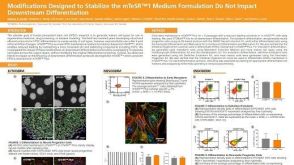 科学海报Modifications Designed to Stabilize the mTeSR1™ Formulation Do Not Impact Downstream Differentiation
 沪公网安备31010102008431号