Keller GM (DEC 1995)
Current opinion in cell biology 7 6 862--9
In vitro differentiation of embryonic stem cells.
Under appropriate conditions in culture,embryonic stem cells will differentiate and form embryoid bodies that have been shown to contain cells of the hematopoietic,endothelial,muscle and neuronal lineages. Many aspects of the lineage-specific differentiation programs observed within the embryoid bodies reflect those found in the embryo,indicating that this model system provides access to early cell populations that develop in a normal fashion. Recent studies involving the differentiation of genetically altered embryonic stem cells highlight the potential of this in vitro differentiation system for defining the function of genes in early development.
View Publication
Chua SJ et al. (FEB 2009)
Biochemical and biophysical research communications 379 2 217--21
Neural progenitors, neurons and oligodendrocytes from human umbilical cord blood cells in a serum-free, feeder-free cell culture.
We have previously demonstrated that lineage negative cells (Lin(neg)) from umbilical cord blood (UCB) develop into multipotent cells capable of differentiation into bone,muscle,endothelial and neural cells. The objective of this study was to determine the optimal conditions required for Lin(neg) UCB cells to differentiate into neuronal cells and oligodendrocytes. We demonstrate that early neural stage markers (nestin,neurofilament,A2B5 and Sox2) are expressed in Lin(neg) cells cultured in FGF4,SCF,Flt3-ligand reprogramming culture media followed by the early macroglial cell marker O4. Early stage oligodendrocyte markers CNPase,GalC,Olig2 and the late-stage marker MOSP are observed,as is the Schwann cell marker PMP22. In summary,Lin(neg) UCB cells,when appropriately cultured,are able to exhibit characteristics of neuronal and macroglial cells that can specifically differentiate into oligodendrocytes and Schwann cells and express proteins associated with myelin production after in vitro differentiation.
View Publication
产品号#:
09600
09650
产品名:
StemSpan™ SFEM
StemSpan™ SFEM
Abuljadayel IS (JAN 2003)
Current medical research and opinion 19 5 355--75
Induction of stem cell-like plasticity in mononuclear cells derived from unmobilised adult human peripheral blood.
Undifferentiated pluripotent stem cells with flexible developmental potentials are not normally found in peripheral blood. However,such cells have recently been reported to reside in the bone marrow. Herein are reported methods of inducing pluripotency in cells derived from unmobilised adult human peripheral blood. In response to the inclusion of purified CR3/43 monoclonal antibody (mAb) to well-established culture conditions,mononuclear cells (MNC) obtained from a single blood donor are converted into pluripotent haematopoietic,neuronal and cardiomyogenic progenitor stem cells or undifferentiated stem cells. The haematopoietic stem cells are CD34+,clonogenic and have been shown to repopulate non-obese diabetic/severe combined immunodeficient (NOD/SCID) mice. The neuronal precursors transcribe the primitive stem cell markers OCT-4 and nestin,and on maturation,differentially stain positive for neuronal,glial or oligodendrocyte-specific antigens. The cardiomyogenic progenitor stem cells form large bodies of asynchronously beating cells and differentiate into mature cardiomyocytes which transcribe GATA-4. The undifferentiated stem cells do not express haematopoietic-associated markers,are negative for major histocompatibility complex (MHC) class I and II antigens,transcribe high levels of OCT-4 and form embryoid body (EB)-like structures. This induction of stem cell-like plasticity in MNC may have proceeded by a process of retrodifferentiation but,in any case,could have profound clinical and pharmacological implications. Finally,the flexibility and the speed by which a variety of stem cell classes can be generated ex vivo from donor blood could potentially transfer this novel process into a less invasive automated clinical procedure.
View Publication
产品号#:
04434
04444
产品名:
MethoCult™ H4434 Classic
MethoCult™ H4434 Classic
Cheng L et al. (JUN 2014)
Cell Research 24 6 665--679
Generation of neural progenitor cells by chemical cocktails and hypoxia
Neural progenitor cells (NPCs) can be induced from somatic cells by defined factors. Here we report that NPCs can be generated from mouse embryonic fibroblasts by a chemical cocktail,namely VCR (V,VPA,an inhibitor of HDACs; C,CHIR99021,an inhibitor of GSK-3 kinases and R,Repsox,an inhibitor of TGF-β pathways),under a physiological hypoxic condition. These chemical-induced NPCs (ciNPCs) resemble mouse brain-derived NPCs re- garding their proliferative and self-renewing abilities,gene expression profiles,and multipotency for different neu- roectodermal lineages in vitro and in vivo. Further experiments reveal that alternative cocktails with inhibitors of histone deacetylation,glycogen synthase kinase,and TGF-β pathways show similar efficacies for ciNPC induction. Moreover,ciNPCs can also be induced from mouse tail-tip fibroblasts and human urinary cells with the same chemi- cal cocktail VCR. Thus our study demonstrates that lineage-specific conversion of somatic cells to NPCs could be achieved by chemical cocktails without introducing exogenous factors.
View Publication
产品号#:
05850
05857
05870
05875
85850
85857
85870
85875
产品名:
mTeSR™1
mTeSR™1
Ray MK et al. (JUL 2016)
The Journal of biological chemistry jbc.M116.730853
CAT7 and cat7l long non-coding RNAs Tune Polycomb Repressive Complex 1 Function During Human and Zebrafish Development.
The essential functions of Polycomb Repressive Complex 1 (PRC1) in development and gene silencing are thought to involve long non-coding RNAs (lncRNAs),but few specific lncRNAs that guide PRC1 activity are known. We screened for lncRNAs which co-precipitate with PRC1 from chromatin and found candidates that impact Polycomb Group protein (PcG)-regulated gene expression in vivo. A novel lncRNA from this screen,CAT7,regulates expression and PcG binding at the MNX1 locus during early neuronal differentiation. CAT7 contains a unique tandem repeat domain which shares high sequence similarity to a non-syntenic zebrafish analog,cat7l. Defects caused by interference of cat7l RNA during zebrafish embryogenesis were rescued by human CAT7 RNA,enhanced by interference of a PRC1 component,and suppressed by interference of a known PRC1 target gene,demonstrating cat7l genetically interacts with a PRC1. We propose a model whereby PRC1 acts in concert with specific lncRNAs,and that CAT7/cat7l represent convergent lncRNAs that independently evolved to tune PRC1 repression at individual loci.
View Publication
Nguyen HX et al. (AUG 2014)
Journal of Comparative Neurology 522 12 2767--2783
Induction of early neural precursors and derivation of tripotent neural stem cells from human pluripotent stem cells under xeno-free conditions
Human embryonic stem cells (hESC) and induced pluripotent stem cells (hiPSC) can differentiate into many cell types and are important for regenerative medicine; however,further work is needed to reliably differentiate hESC and hiPSC into neural-restricted multipotent derivatives or specialized cell types under conditions that are free from animal products. Toward this goal,we tested the transition of hESC and hiPSC lines onto xeno-free (XF) / feeder-free conditions and evaluated XF substrate preference,pluripotency,and karyotype. Critically,XF transitioned H9 hESC,Shef4 hESC,and iPS6-9 retained pluripotency (Oct-4 and NANOG),proliferation (MKI67 and PCNA),and normal karyotype. Subsequently,XF transitioned hESC and hiPSC were induced with epidermal growth factor (EGF) and basic fibroblast growth factor (bFGF) to generate neuralized spheres containing primitive neural precursors,which could differentiate into astrocytes and neurons,but not oligoprogenitors. Further neuralization of spheres via LIF supplementation and attachment selection on CELLstart substrate generated adherent human neural stem cells (hNSC) with normal karyotype and high proliferation potential under XF conditions. Interestingly,adherent hNSC derived from H9,Shef4,and iPS6-9 differentiated into significant numbers of O4+ oligoprogenitors (∼20-30%) with robust proliferation; however,very few GalC+ cells were observed (∼2-4%),indicative of early oligodendrocytic lineage commitment. Overall,these data demonstrate the transition of multiple hESC and hiPSC lines onto XF substrate and media conditions,and a reproducible neuralization method that generated neural derivatives with multipotent cell fate potential and normal karyotype.
View Publication
产品号#:
05860
05880
05850
05857
05870
05875
85850
85857
85870
85875
产品名:
mTeSR™1
mTeSR™1
Pecho-Vrieseling E et al. (AUG 2014)
Nat Neurosci 17 8 1064--1072
Transneuronal propagation of mutant huntingtin contributes to non-cell autonomous pathology in neurons.
In Huntington's disease (HD),whether transneuronal spreading of mutant huntingtin (mHTT) occurs and its contribution to non-cell autonomous damage in brain networks is largely unknown. We found mHTT spreading in three different neural network models: human neurons integrated in the neural network of organotypic brain slices of HD mouse model,an ex vivo corticostriatal slice model and the corticostriatal pathway in vivo. Transneuronal propagation of mHTT was blocked by two different botulinum neurotoxins,each known for specifically inactivating a single critical component of the synaptic vesicle fusion machinery. Moreover,healthy human neurons in HD mouse model brain slices displayed non-cell autonomous changes in morphological integrity that were more pronounced when these neurons bore mHTT aggregates. Altogether,our findings suggest that transneuronal propagation of mHTT might be an important and underestimated contributor to the pathophysiology of HD.
View Publication


 EasySep™小鼠TIL(CD45)正选试剂盒




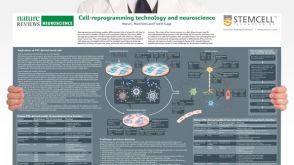 挂图Cell-Reprogramming Technology and Neuroscience Details on human iPSC-derived models of neuropsychiatric and neurodegenerative disorders

 沪公网安备31010102008431号