Santoni de Sio FR et al. (JUN 2006)
Blood 107 11 4257--65
Proteasome activity restricts lentiviral gene transfer into hematopoietic stem cells and is down-regulated by cytokines that enhance transduction.
The therapeutic potential of hematopoietic stem cell (HSC) gene therapy can be fully exploited only by reaching efficient gene transfer into HSCs without compromising their biologic properties. Although HSCs can be transduced by HIV-derived lentiviral vectors (LVs) in short ex vivo culture,they display low permissivity to the vector,requiring cytokine stimulation to reach high-frequency transduction. Using stringent assays of competitive xenograft repopulation,we show that early-acting cytokines synergistically enhanced human HSC gene transfer by LVs without impairing engraftment and repopulation capacity. Using S-phase suicide assays,we show that transduction enhancement by cytokines was not dependent on cell cycle progression and that LVs can transduce quiescent HSCs. Pharmacologic inhibition of the proteasome during transduction dramatically enhanced HSC gene transfer,allowing the reach of very high levels of vector integration in their progeny in vivo. Thus,LVs are effectively restricted at a postentry step by the activity of this proteolytic complex. Unexpectedly,cytokine stimulation rapidly and substantially down-regulated proteasome activity in hematopoietic progenitors,highlighting one mechanism by which cytokines may enhance permissiveness to LV gene transfer. These findings demonstrate that antiviral responses ultimately mediated by proteasomes strongly limit the efficiency of HSC transduction by LVs and establish improved conditions for HSC-based gene therapy.
View Publication
产品号#:
09600
09650
产品名:
StemSpan™ SFEM
StemSpan™ SFEM
Martin G et al. (JUN 2007)
Journal of virology 81 11 5872--81
Human immunodeficiency virus type 1-associated CD40 ligand transactivates B lymphocytes and promotes infection of CD4+ T cells.
Abnormal activation of B lymphocytes is a feature commonly seen in human immunodeficiency virus type 1 (HIV-1)-infected persons. However,the mechanism(s) responsible for this dysfunction is still poorly understood. Having recently shown that CD40L,the ligand for CD40,is inserted within emerging HIV-1 particles,we hypothesized that the contact between virus-anchored host CD40L and CD40 on the surface of B lymphocytes might result in the activation of this cell type. We report here that CD40L-bearing viruses,but not isogenic virions lacking host-derived CD40L,can induce immunoglobulin G and interleukin-6 production. Furthermore,such viral entities were found to induce B-cell homotypic adhesion. These effects were paralleled at the intracellular level by the nuclear translocation of the ubiquitous transcription factor NF-kappaB. The presence of host-derived CD40L within virions resulted in an increased virus attachment to B cells and a more-efficient B-cell-mediated transfer of HIV-1 to autologous CD4(+) T lymphocytes. All the above processes were independent of the virus-encoded envelope glycoproteins. Altogether,the data gathered from this series of investigations suggest that the incorporation of host-encoded CD40L in HIV-1 is likely to play a role in the B-cell abnormalities that are seen in infected individuals.
View Publication
产品号#:
19052
19052RF
19054
19054RF
产品名:
EasySep™人CD4+ T细胞富集试剂盒
RoboSep™ 人CD4+ T细胞富集试剂盒含滤芯吸头
EasySep™人B细胞富集试剂盒
RoboSep™ 人B细胞富集试剂盒含滤芯吸头
Gilbert C et al. (JUL 2007)
Journal of virology 81 14 7672--82
Human immunodeficiency virus type 1 replication in dendritic cell-T-cell cocultures is increased upon incorporation of host LFA-1 due to higher levels of virus production in immature dendritic cells.
Dendritic cells (DCs) act as a portal for invasion by human immunodeficiency virus type-1 (HIV-1). Here,we investigated whether virion-incorporated host cell membrane proteins can affect virus replication in DC-T-cell cocultures. Using isogenic viruses either devoid of or bearing host-derived leukocyte function-associated antigen 1 (LFA-1),we showed that HIV-1 production is augmented when LFA-1-bearing virions are used compared to that for viral entities lacking this adhesion molecule. This phenomenon was observed in immature monocyte-derived DCs (IM-MDDCs) only and not in DCs displaying a mature phenotype. The increase is not due to higher virus production in responder CD4(+) T cells but rather is linked with a more important productive infection of IM-MDDCs. We provided evidence that virus-associated host LFA-1 molecules do not affect a late event in the HIV-1 life cycle but rather exert an effect on an early step in virus replication. We demonstrated that the enhancement of productive infection of IM-MDDCs that is conferred by virus-anchored host LFA-1 involves the protein kinase A (PKA) and PKC signal transduction pathways. The biological significance of this phenomenon was established by performing experiments with virus stocks produced in primary human cells and anti-LFA-1 antibodies. Together,our results indicate that the association between some virus-bound host proteins and their natural cognate ligands can modulate de novo HIV-1 production by IM-MDDCs. Therefore,the additional interactions between virus-bound host cell membrane constituents and counter receptors on the surfaces of DCs can influence HIV-1 replication in IM-MDDC-T-cell cocultures.
View Publication
Lin S et al. (SEP 2010)
Journal of virology 84 18 9487--96
HIV infection upregulates caveolin 1 expression to restrict virus production.
Caveolin 1 (Cav-1) is a major protein of a specific membrane lipid raft known as caveolae. Cav-1 interacts with the gp41 of the human immunodeficiency virus (HIV) envelope,but the role of Cav-1 in HIV replication and pathogenesis is not known. In this report,we demonstrate that HIV infection in primary human monocyte-derived macrophages (MDMs),THP-1 macrophages,and U87-CD4 cells results in a dramatic upregulation of Cav-1 expression mediated by HIV Tat. The activity of p53 is essential for Tat-induced Cav-1 expression,as our findings show enhanced phosphorylation of serine residues at amino acid positions 15 and 46 in the presence of Tat with a resulting Cav-1 upregulation. Furthermore,inhibition of p38 mitogen-activated protein kinase (MAPK) blocked phosphorylation of p53 in the presence of Tat. Infection studies of Cav-1-overexpressing cells reveal a significant reduction of HIV production. Taken together,these results suggest that HIV infection enhances the expression of Cav-1,which subsequently causes virus reduction,suggesting that Cav-1 may contribute to persistent infection in macrophages.
View Publication
产品号#:
19058
19058RF
100-1525
19059
19059RF
产品名:
EasySep™人单核细胞富集试剂盒(不去除CD16)
RoboSep™ 人单核细胞富集试剂盒(不去除CD16)含滤芯吸头
EasySep™人单核细胞富集试剂盒(不去除CD16)
EasySep™人单核细胞富集试剂盒
RoboSep™ 人单核细胞富集试剂盒含滤芯吸头
Addo MM et al. (FEB 2003)
Journal of virology 77 3 2081--92
Comprehensive epitope analysis of human immunodeficiency virus type 1 (HIV-1)-specific T-cell responses directed against the entire expressed HIV-1 genome demonstrate broadly directed responses, but no correlation to viral load.
Cellular immune responses play a critical role in the control of human immunodeficiency virus type 1 (HIV-1); however,the breadth of these responses at the single-epitope level has not been comprehensively assessed. We therefore screened peripheral blood mononuclear cells (PBMC) from 57 individuals at different stages of HIV-1 infection for virus-specific T-cell responses using a matrix of 504 overlapping peptides spanning all expressed HIV-1 proteins in a gamma interferon-enzyme-linked immunospot (Elispot) assay. HIV-1-specific T-cell responses were detectable in all study subjects,with a median of 14 individual epitopic regions targeted per person (range,2 to 42),and all 14 HIV-1 protein subunits were recognized. HIV-1 p24-Gag and Nef contained the highest epitope density and were also the most frequently recognized HIV-1 proteins. The total magnitude of the HIV-1-specific response ranged from 280 to 25,860 spot-forming cells (SFC)/10(6) PBMC (median,4,245) among all study participants. However,the number of epitopic regions targeted,the protein subunits recognized,and the total magnitude of HIV-1-specific responses varied significantly among the tested individuals,with the strongest and broadest responses detectable in individuals with untreated chronic HIV-1 infection. Neither the breadth nor the magnitude of the total HIV-1-specific CD8+-T-cell responses correlated with plasma viral load. We conclude that a peptide matrix-based Elispot assay allows for rapid,sensitive,specific,and efficient assessment of cellular immune responses directed against the entire expressed HIV-1 genome. These data also suggest that the impact of T-cell responses on control of viral replication cannot be explained by the mere quantification of the magnitude and breadth of the CD8+-T-cell response,even if a comprehensive pan-genome screening approach is applied.
View Publication
产品号#:
15022
15062
15023
15063
产品名:
RosetteSep™人CD4+ T细胞富集抗体混合物
RosetteSep™人CD4+ T细胞富集抗体混合物
RosetteSep™人CD8+ T细胞富集抗体混合物
RosetteSep™人CD8+ T细胞富集抗体混合物
Trkola A et al. (DEC 2003)
Journal of virology 77 24 13146--55
Human immunodeficiency virus type 1 fitness is a determining factor in viral rebound and set point in chronic infection.
Human immunodeficiency virus type 1 (HIV-1) isolates from 20 chronically infected patients who participated in a structured treatment interruption (STI) trial were studied to determine whether viral fitness influences reestablishment of viremia. Viruses derived from individuals who spontaneously controlled viremia had significantly lower in vitro replication capacities than viruses derived from individuals that did not control viremia after interruption of antiretroviral therapy (ART),and replication capacities correlated with pre-ART and post-STI viral set points. Of note,no clinically relevant improvement of viral loads upon STI occurred. Virus isolates from controlling and noncontrolling patients were indistinguishable in terms of coreceptor usage,genetic subtype,and sensitivity to neutralizing antibodies. In contrast,viruses from controlling patients exhibited increased sensitivity to inhibition by chemokines. Sensitivity to inhibition by RANTES correlated strongly with slower replication kinetics of the virus isolates,suggesting a marked dependency of these virus isolates on high coreceptor densities on the target cells. In summary,our data indicate that viral fitness is a driving factor in determining the magnitude of viral rebound and viral set point in chronic HIV-1 infection,and thus fitness should be considered as a parameter influencing the outcome of therapeutic intervention in chronic infection.
View Publication
产品号#:
15022
15062
产品名:
RosetteSep™人CD4+ T细胞富集抗体混合物
RosetteSep™人CD4+ T细胞富集抗体混合物
Abdelwahab SF et al. (DEC 2003)
Proceedings of the National Academy of Sciences of the United States of America 100 25 15006--10
HIV-1-suppressive factors are secreted by CD4+ T cells during primary immune responses.
CD4+ T cells are required for immunity against many viral infections,including HIV-1 where a positive correlation has been observed between strong recall responses and low HIV-1 viral loads. Some HIV-1-specific CD4+ T cells are preferentially infected with HIV-1,whereas others escape infection by unknown mechanisms. One possibility is that some CD4+ T cells are protected from infection by the secretion of soluble HIV-suppressive factors,although it is not known whether these factors are produced during primary antigen-specific responses. Here,we show that soluble suppressive factors are produced against CXCR4 and CCR5 isolates of HIV-1 during the primary immune response of human CD4+ T cells. This activity requires antigenic stimulation of naïve CD4+ T cells. One anti-CXCR4 factor is macrophage-derived chemokine (chemokine ligand 22,CCL22),and anti-CCR5 factors include macrophage inflammatory protein-1 alpha (CCL3),macrophage inflammatory protein-1 beta (CCL4),and RANTES (regulated upon activation of normal T cells expressed and secreted) (CCL5). Intracellular staining confirms that CD3+CD4+ T cells are the source of the prototype HIV-1-inhibiting chemokines CCL22 and CCL4. These results show that CD4+ T cells secrete an evolving HIV-1-suppressive activity during the primary immune response and that this activity is comprised primarily of CC chemokines. The data also suggest that production of such factors should be considered in the design of vaccines against HIV-1 and as a mechanism whereby the host can control infections with this virus.
View Publication
产品号#:
09500
09600
09650
19155
19155RF
产品名:
BIT 9500血清替代物
StemSpan™ SFEM
StemSpan™ SFEM
Feeney ME et al. (DEC 2003)
Journal of immunology (Baltimore,Md. : 1950) 171 12 6968--75
Reconstitution of virus-specific CD4 proliferative responses in pediatric HIV-1 infection.
Gag-specific CD4 proliferative responses correlate inversely with HIV-1 RNA levels in infected adults,and robust responses are characteristic of long-term nonprogressive infection. However,strong responses are seldom detected in adult subjects with progressive infection and are not generally reconstituted on highly active antiretroviral therapy (HAART). To date,the role of HIV-1-specific Th responses in children has not been thoroughly examined. We characterized Gag-specific CD4 responses among 35 perinatally infected subjects,including 2 children who spontaneously control viremia without antiretroviral therapy,21 children with viral loads (VL) of textless400 on HAART,and 12 viremic children. Gag-specific Th activity was assessed by lymphoproliferative assay,and responses were mapped using overlapping Gag peptides in an IFN-gamma ELISPOT. Robust proliferative responses were detected in the children exhibiting spontaneous control of viremia,and mapping of targeted Gag regions in one such subject identified multiple epitopes. Among children textgreateror=5 years old,14 of 17 subjects with VL of textless400 on HAART demonstrated a significant p24 proliferative response (median p24 stimulation index,20),in contrast with only 1 of 9 viremic children (median p24 stimulation index,2.0; p = 0.0008). However,no subject younger than 5 years of age possessed a significant response,even when viremia was fully suppressed. When compared with adults with VL of textless400 on HAART,Th responses among children with VL of textless400 were both more frequent (p = 0.009) and of greater magnitude (p = 0.002). These data suggest that children may have a greater intrinsic capacity to reconstitute HIV-1-specific immunity than adults,and may be excellent candidates for immune-based therapies.
View Publication
产品号#:
15623
15663
产品名:
RosetteSep™人CD8去除抗体混合物
RosetteSep™人CD8去除抗体混合物
Hanawa H et al. (JUN 2004)
Blood 103 11 4062--9
Efficient gene transfer into rhesus repopulating hematopoietic stem cells using a simian immunodeficiency virus-based lentiviral vector system.
High-titer,HIV-1-based lentiviral vector particles were found to transduce cytokine-mobilized rhesus macaque CD34(+) cells and clonogenic progenitors very poorly (textless 1%),reflecting the postentry restriction in rhesus cells to HIV infection. To overcome this barrier,we developed a simian immunodeficiency virus (SIV)-based vector system. A single exposure to a low concentration of amphotropic pseudotyped SIV vector particles encoding the green fluorescent protein (GFP) resulted in gene transfer into 68% +/- 1% of rhesus bulk CD34(+) cells and 75% +/- 1% of clonogenic progenitors. Polymerase chain reaction (PCR) analysis of DNA from individual hematopoietic colonies confirmed these relative transduction efficiencies. To evaluate SIV vector-mediated stem cell gene transfer in vivo,3 rhesus macaques underwent transplantation with transduced,autologous cytokine-mobilized peripheral blood CD34(+) cells following myeloablative conditioning. Hematopoietic reconstitution was rapid,and an average of 18% +/- 8% and 15% +/- 7% GFP-positive granulocytes and monocytes,respectively,were observed 4 to 6 months after transplantation,consistent with the average vector copy number of 0.19 +/- 0.05 in peripheral blood leukocytes as determined by real-time PCR. Vector insertion site analysis demonstrated polyclonal reconstitution with vector-containing cells. SIV vectors appear promising for evaluating gene therapy approaches in nonhuman primate models.
View Publication
产品号#:
84434
84444
04434
04444
产品名:
MethoCult™ H4434 Classic
MethoCult™ H4434 Classic
De Palma M et al. (MAR 2005)
Blood 105 6 2307--15
Promoter trapping reveals significant differences in integration site selection between MLV and HIV vectors in primary hematopoietic cells.
Recent reports have indicated that human immunodeficiency virus (HIV) and murine leukemia virus (MLV) vectors preferentially integrate into active genes. Here,we used a novel approach based on genetic trapping to rapidly score several thousand integration sites and found that MLV vectors trapped cellular promoters more efficiently than HIV vectors. Remarkably,1 in 5 MLV integrations trapped an active promoter in different cell lines and primary hematopoietic cells. Such frequency was even higher in growth-stimulated lymphocytes. We show that the different behavior of MLV and HIV vectors was dependent on a different integration pattern within transcribed genes. Whereas MLV-based traps showed a strong bias for promoter-proximal integration leading to efficient reporter expression,HIV-based traps integrated throughout transcriptional units and were limited for expression by the distance from the promoter and the reading frame of the targeted gene. Our results indicate a strong propensity of MLV to establish transcriptional interactions with cellular promoters,a behavior that may have evolved to enhance proviral expression and may increase the insertional mutagenesis risk. Promoter trapping efficiency provides a convenient readout to assess transcriptional interactions between the vector and its flanking genes at the integration site and to compare integration site selection among different cell types and in different growth conditions.
View Publication


 EasySep™小鼠TIL(CD45)正选试剂盒




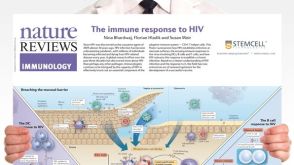 挂图The Immune Response to HIV Poster Summary of how HIV subverts the immune response to establish a chronic infection

 沪公网安备31010102008431号