若您需要咨询产品或有任何技术问题,请通过官方电话 400 885 9050 或邮箱 info.cn@stemcell.com 与我们联系。

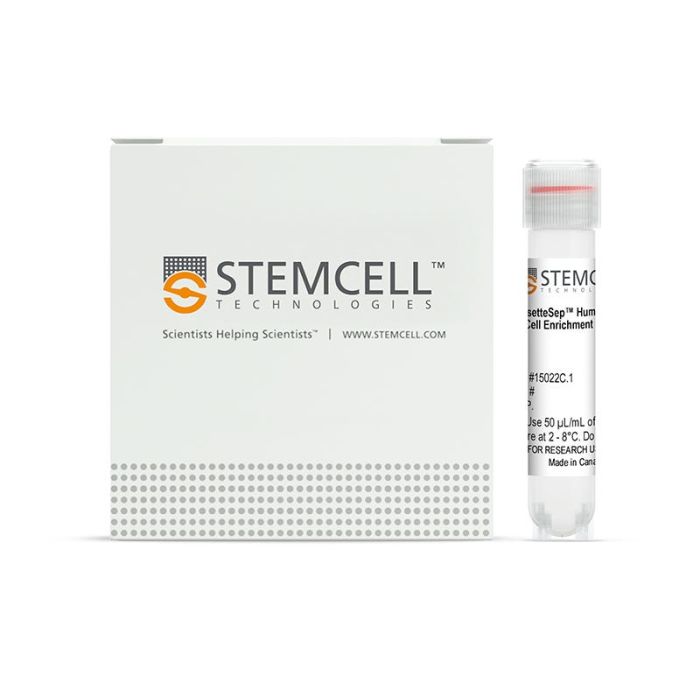
RosetteSep™人CD4+ T细胞富集抗体混合物

免疫密度负选试剂混合物

只有 %1
¥2,310.00

产品号 #(选择产品)

产品号 #15022_C

免疫密度负选试剂混合物

产品优势

  • 快捷、操作简单
  • 不需要特殊设备或额外培训
  • 分选得到的细胞不带标记
  • 可与SepMate™联合使用,实现一致的高通量样本处理

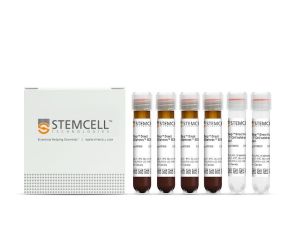
产品组分包括

  • RosetteSep™人CD4+ T细胞富集抗体混合物(产品号 #15022)
    • RosetteSep™人CD4+ T细胞富集抗体混合物,2 mL
  • RosetteSep™人CD4+ T细胞富集抗体混合物(产品号 #15062)
    • RosetteSep™人CD4+ T细胞富集抗体混合物操作流程, 5x2 mL
New look, same high quality and support! You may notice that your instrument or reagent packaging looks slightly different from images displayed on the website, or from previous orders. We are updating our look but rest assured, the products themselves and how you should use them have not changed. Learn more
专为您的实验方案打造的产品
要查看实验方案所需的所有配套产品,请参阅《实验方案与技术文档》

总览

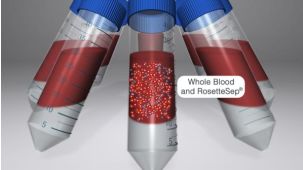
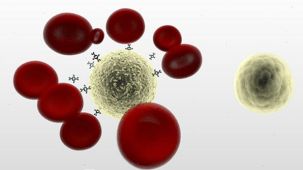
RosetteSep™人CD4+ T细胞浓缩鸡尾酒设计用于通过阴性选择从全血中分离CD4+ T细胞。四聚体抗体复合物识别非CD4+ T细胞和红血球上的糖蛋白A,以清除不需要的细胞为目标。当在浮性密度介质上离心时,如RosetteSep™DM-L(产品号 #15705)或lymphooprep™(产品号 #07801),不需要的细胞颗粒与红细胞一起。纯化的CD4+ T细胞作为一个高度富集的群体存在于血浆和密度梯度离心液之间的界面。

分类
细胞分选试剂盒
 
细胞类型
T 细胞,T 细胞,CD4+
 
种属

 
样本来源
白膜层、全血
 
分选方法
负选
 
应用
细胞分选
 
品牌
RosetteSep
 
研究领域
免疫,细胞治疗开发
 

实验数据

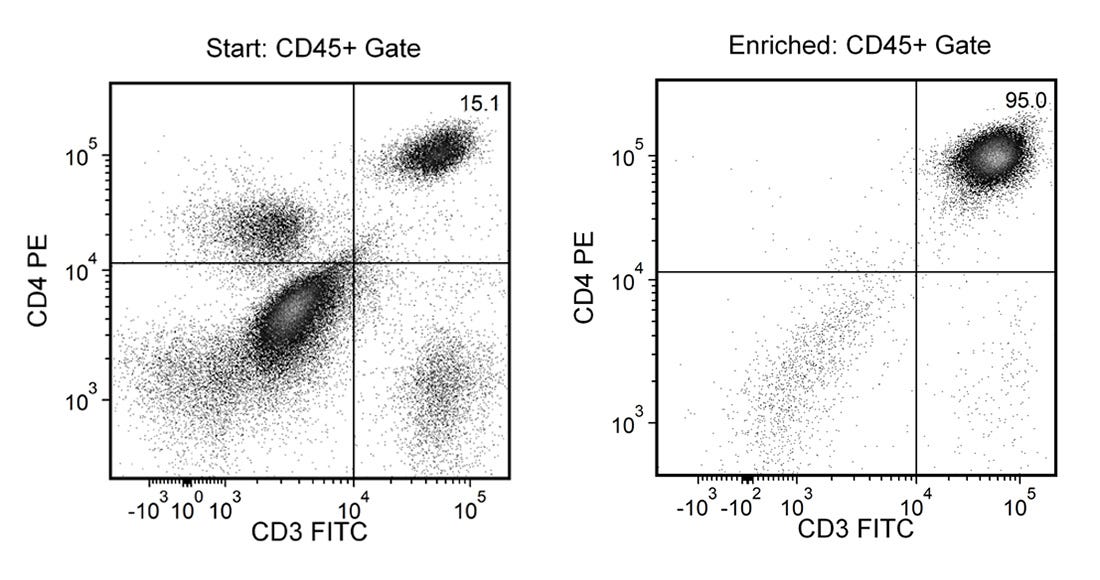
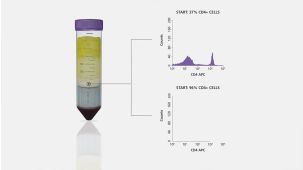
FACS Histogram Results Using RosetteSep™ Human CD4+ T Cell Enrichment Cocktail

Figure 1. FACS Histogram Results Using RosetteSep™ Human CD4+ T Cell Enrichment Cocktail

Starting with fresh human whole blood, the CD4+ (CD3+CD4+) T cell content of the enriched fraction is typically 94.7 ± 2.4% (mean ± SD). In the above example, the purities of the start and final enriched fractions are 15.1% and 95.0%, respectively.

产品说明书及文档

请在《产品说明书》中查找相关支持信息和使用说明,或浏览下方更多实验方案。

Document Type
Product Name
Catalog #
Lot #
Language
Catalog #
15022, 15062
Lot #
All
Language
English
Document Type
Safety Data Sheet
Catalog #
15022, 15062
Lot #
All
Language
English

应用领域

本产品专为以下研究领域设计,适用于工作流程中的高亮阶段。探索这些工作流程,了解更多我们为各研究领域提供的其他配套产品。

相关材料与文献

技术资料 (10)

常见问题(9)

What is RosetteSep™?

RosetteSep™ is a rapid cell separation procedure for the isolation of purified cells directly from whole blood, without columns or magnets.

How does RosetteSep™ work?

The antibody cocktail crosslinks unwanted cells to red blood cells (RBCs), forming rosettes. The unwanted cells then pellet with the free RBCs when centrifuged over a density centrifugation medium (e.g. Ficoll-Paque™ PLUS, Lymphoprep™).

What factors affect cell recovery?

The temperature of the reagents can affect cell recovery. All reagents should be at room temperature (sample, density centrifugation medium, PBS, centrifuge) before performing the isolations. Layering can also affect recovery so be sure to carefully layer the sample to avoid mixing with the density centrifugation medium as much as possible. Be sure to collect the entire enriched culture without disturbing the RBC pellet. A small amount of density centrifugation medium can be collected without worry.

Which cell samples can RosetteSep™ be used with?

RosetteSep™ can be used with leukapheresis samples, bone marrow or buffy coat, as long as: the concentration of cells does not exceed 5 x 10⁷ per mL (can dilute if necessary); and there are at least 100 RBCs for every nucleated cell (RBCs can be added if necessary).

Can RosetteSep™ be used with previously frozen or cultured cells?

Yes. Cells should be re-suspended at 2 - 5 x 10⁷ cells / mL in PBS + 2% FBS. Fresh whole blood should be added at 250 µL per mL of sample, as a source of red cells.

Can RosetteSep™ be used to enrich progenitors from cord blood?

Yes. Sometimes cord blood contains immature nucleated red cells that have a lower density than mature RBCs. These immature red cells do not pellet over Ficoll™, which can lead to a higher RBC contamination than peripheral blood separations.

Does RosetteSep™ work with mouse cells?

No, but we have developed EasySep™, a magnetic-based cell isolation system which works with mouse and other non-human species.

Which anticoagulant should be used with RosetteSep™?

Peripheral blood should be collected in heparinized Vacutainers. Cord blood should be collected in ACD.

Should the anticoagulant be washed off before using RosetteSep™?

No, the antibody cocktail can be added directly to the sample.

文献 (64)

Regulatory T Cells Boost Efficacy of Post-Infarction Pluripotent Stem Cell-Derived Cardiovascular Progenitor Cell Transplants A. D. D. Lima et al. Cells 2025 Jun

Abstract

Cell therapy is promising for heart failure treatment, with growing interest in cardiovascular progenitor cells (CPCs) from pluripotent stem cells. A major challenge is managing the immune response, due to their allogeneic source. Regulatory T cells (Treg) offer an alternative to pharmacological immunosuppression by inducing immune tolerance. This study assesses whether Treg therapy can mitigate the xeno-immune response, improving cardiac outcomes in a mouse model of human CPC intramyocardial transplantation. CPCs stimulated immune responses in allogeneic and xenogeneic settings, causing proliferation in T cell subsets. Tregs showed immunosuppressive effects on T lymphocyte populations when co-cultured with CPCs. Post infarction, CPCs were transplanted intramyocardially into an immune-competent mouse model 3 weeks after myocardial infarction. Human or murine Tregs were intravenously administered on transplantation day and three days later. Control groups received CPCs without Tregs or saline (PBS). CPCs with Tregs improved LV systolic function in three weeks, linked to reduced myocardial fibrosis and enhanced angiogenesis. This was accompanied by decreased splenocyte NK cell populations and pro-inflammatory cytokine levels in cardiac tissue. Treg therapy with CPC transplantation enhances cardiac functional and structural outcomes in mice. Though it does not directly avert graft rejection, it primarily affects NKG2D+ cytotoxic cells, indicating systemic immune modulation and remote heart repair benefits.
Replication competent HIV-guided CRISPR screen identifies antiviral factors including targets of the accessory protein Nef Nature Communications 2024 May

Abstract

Innate antiviral factors are essential for effective defense against viral pathogens. However, the identity of major restriction mechanisms remains elusive. Current approaches to discover antiviral factors usually focus on the initial steps of viral replication and are limited to a single round of infection. Here, we engineered libraries of >1500 replication-competent HIV-1 constructs each expressing a single gRNAs to target >500 cellular genes for virus-driven discovery of antiviral factors. Passaging in CD4+ T cells robustly enriched HIV-1 encoding sgRNAs against GRN, CIITA, EHMT2, CEACAM3, CC2D1B and RHOA by >50-fold. Using an HIV-1 library lacking the accessory nef gene, we identified IFI16 as a Nef target. Functional analyses in cell lines and primary CD4+ T cells support that the HIV-driven CRISPR screen identified restriction factors targeting virus entry, transcription, release and infectivity. Our HIV-guided CRISPR technique enables sensitive discovery of physiologically relevant cellular defense factors throughout the entire viral replication cycle. Innate immune mechanisms are critical for antiviral defense. Here, the authors developed a CRISPR/Cas9-based HIV-driven approach to identify cellular factors compromising viral transcription, assembly, release or infectivity in human T cells. They identify targets of the Nef protein as antiviral factors.
The immunosuppressive tuberculosis-associated microenvironment inhibits viral replication and promotes HIV-1 latency in CD4 + T cells S. Cronin et al. iScience 2024 Jun

Abstract

Mycobacterium tuberculosis ( Mtb ), the causative agent of tuberculosis (TB), is the most common coinfection among people living with HIV-1. This coinfection is associated with accelerated HIV-1 disease progression and reduced survival. However, the impact of the HIV-1/TB coinfection on HIV-1 replication and latency in CD4 + T cells remains poorly studied. Using the acellular fraction of tuberculous pleural effusion (TB-PE), we investigated whether viral replication and HIV-1 latency in CD4 + T cells are affected by a TB-associated microenvironment. Our results revealed that TB-PE impaired T cell receptor-dependent cell activation and decreased HIV-1 replication in CD4 + T cells. Moreover, this immunosuppressive TB microenvironment promoted viral latency and inhibited HIV-1 reactivation. This study indicates that the TB-induced immune response may contribute to the persistence of the viral reservoir by silencing HIV-1 expression, allowing the virus to persist undetected by the immune system, and increasing the size of the latent HIV-1 reservoir. Subject areas: Immunology, Virology

更多信息

更多信息
物种 人类
样本来源 全血, 白膜层
Selection Method Negative
PRODUCTS ARE FOR RESEARCH USE ONLY AND NOT INTENDED FOR HUMAN OR ANIMAL DIAGNOSTIC OR THERAPEUTIC USES UNLESS OTHERWISE STATED. FOR ADDITIONAL INFORMATION ON QUALITY AT STEMCELL, REFER TO WWW.STEMCELL.COM/COMPLIANCE.
Copyright © 2025 by STEMCELL Technologies. All rights reserved.

在线联系