若您需要咨询产品或有任何技术问题,请通过官方电话 400 885 9050 或邮箱 info.cn@stemcell.com 与我们联系。

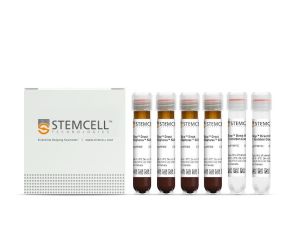
RosetteSep™人B细胞富集抗体混合物

免疫密度负选试剂混合物
只有 %1
¥2,328.00

产品号 #(选择产品)

产品号 #15024_C

通过免疫密度分离法分选未被标记的B细胞

产品优势

  • 快捷、操作简单
  • 不需要特殊设备或额外培训
  • 分选得到的细胞不带标记

产品组分包括

  • RosetteSep™人B细胞富集抗体混合物(产品号 #15024)
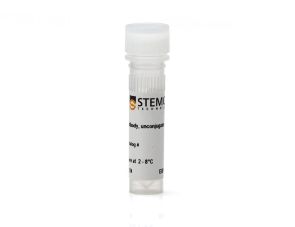
    • RosetteSep™人B细胞富集抗体混合物,2mL
  • RosetteSep™人B细胞富集抗体混合物(产品号 #15064)
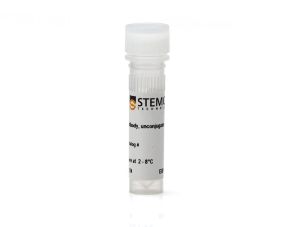
    • RosetteSep™人B细胞富集抗体混合物,5x2mL
New look, same high quality and support! You may notice that your instrument or reagent packaging looks slightly different from images displayed on the website, or from previous orders. We are updating our look but rest assured, the products themselves and how you should use them have not changed. Learn more
专为您的实验方案打造的产品
要查看实验方案所需的所有配套产品,请参阅《实验方案与技术文档》

总览

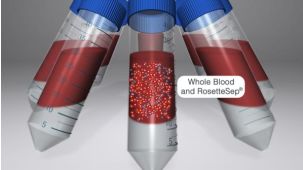
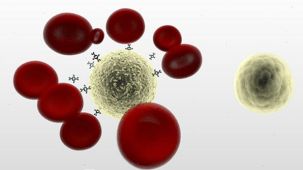
RosetteSep™人B细胞富集抗体混合物设计通过负选从全血分离B细胞。四聚体抗体复合物可识别非B细胞和红细胞(RBC)上的糖蛋白A,从而靶向去除非目的细胞。使用浮力密度梯度离心液(如RosetteSep™ DM-L(产品号 #15705)或Lymphoprep™(产品号 #18060)离心后时,非目的细胞会与红细胞一起沉淀。纯化的B细胞为血浆和密度梯度离心液的交界界面中高度富集的细胞。

分类
细胞分选试剂盒
 
细胞类型
B 细胞
 
种属

 
样本来源
白膜层、全血
 
分选方法
负选
 
应用
细胞分选
 
品牌
RosetteSep
 
研究领域
免疫
 

实验数据

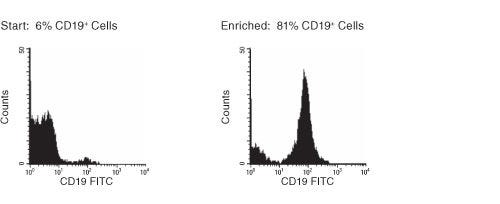
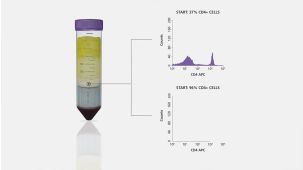
FACS Histogram Results With RosetteSep™ Human B Cell Enrichment Cocktail

Figure 1. FACS Histogram Results With RosetteSep™ Human B Cell Enrichment Cocktail

Starting with fresh whole blood, the CD19+ cell content of the enriched fraction typically ranges from 81% - 83%.

产品说明书及文档

请在《产品说明书》中查找相关支持信息和使用说明,或浏览下方更多实验方案。

Document Type
Product Name
Catalog #
Lot #
Language
Catalog #
15064, 15024
Lot #
All
Language
English
Document Type
Safety Data Sheet
Catalog #
15064, 15024
Lot #
All
Language
English

应用领域

本产品专为以下研究领域设计,适用于工作流程中的高亮阶段。探索这些工作流程,了解更多我们为各研究领域提供的其他配套产品。

相关材料与文献

技术资料 (9)

常见问题 (9)

What is RosetteSep™?

RosetteSep™ is a rapid cell separation procedure for the isolation of purified cells directly from whole blood, without columns or magnets.

How does RosetteSep™ work?

The antibody cocktail crosslinks unwanted cells to red blood cells (RBCs), forming rosettes. The unwanted cells then pellet with the free RBCs when centrifuged over a density centrifugation medium (e.g. Ficoll-Paque™ PLUS, Lymphoprep™).

What factors affect cell recovery?

The temperature of the reagents can affect cell recovery. All reagents should be at room temperature (sample, density centrifugation medium, PBS, centrifuge) before performing the isolations. Layering can also affect recovery so be sure to carefully layer the sample to avoid mixing with the density centrifugation medium as much as possible. Be sure to collect the entire enriched culture without disturbing the RBC pellet. A small amount of density centrifugation medium can be collected without worry.

Which cell samples can RosetteSep™ be used with?

RosetteSep™ can be used with leukapheresis samples, bone marrow or buffy coat, as long as: the concentration of cells does not exceed 5 x 10⁷ per mL (can dilute if necessary); and there are at least 100 RBCs for every nucleated cell (RBCs can be added if necessary).

Can RosetteSep™ be used with previously frozen or cultured cells?

Yes. Cells should be re-suspended at 2 - 5 x 10⁷ cells / mL in PBS + 2% FBS. Fresh whole blood should be added at 250 µL per mL of sample, as a source of red cells.

Can RosetteSep™ be used to enrich progenitors from cord blood?

Yes. Sometimes cord blood contains immature nucleated red cells that have a lower density than mature RBCs. These immature red cells do not pellet over Ficoll™, which can lead to a higher RBC contamination than peripheral blood separations.

Does RosetteSep™ work with mouse cells?

No, but we have developed EasySep™, a magnetic-based cell isolation system which works with mouse and other non-human species.

Which anticoagulant should be used with RosetteSep™?

Peripheral blood should be collected in heparinized Vacutainers. Cord blood should be collected in ACD.

Should the anticoagulant be washed off before using RosetteSep™?

No, the antibody cocktail can be added directly to the sample.

文献 (43)

Dual membrane receptor degradation via folate receptor targeting chimera Z. Wang et al. Nature Communications 2025 Oct

Abstract

Cancer drug resistance poses a significant challenge in oncology, often driven by intricate cross-talk among membrane-bound receptors that compromise mono-targeted therapies. We develop a dual membrane receptor degradation strategy leveraging Folate Receptor α (FRα) to address this issue. Folate Receptor α Targeting Chimeras-dual (FolTAC-dual) are engineered degraders designed to selectively and simultaneously degrade distinct receptor pairs: (1) EGFR/HER2 and (2) PD-L1/VISTA. Through modular optimization of modality configurations and geometries, we identify the “string” format as the most effective construct. Mechanistic studies demonstrate an ~85% increase in EGFR-binding affinity compared to the conventional knob-into-hole design, likely contributing to the improved efficiency of dual-target degradation. Proof-of-concept studies reveal that EGFR and HER2 FolTAC-dual effectively counteracts resistance in Trastuzumab/Lapatinib-resistant HER2-positive breast cancer models, while PD-L1 and VISTA FolTAC-dual rejuvenates immune responses in PD-L1 antibody-resistant syngeneic mouse models. These findings establish FolTAC-dual as a promising dual-degradation platform for clinical translation. Subject terms: Cancer immunotherapy, Targeted therapies, Protein design, Drug discovery and development
A spatiotemporal map of co-receptor signaling networks underlying B cell activation K. J. Susa et al. Cell reports 2024 Jun

Abstract

The B cell receptor (BCR) signals together with a multi-component co-receptor complex to initiate B cell activation in response to antigen binding. Here, we take advantage of peroxidase-catalyzed proximity labeling combined with quantitative mass spectrometry to track co-receptor signaling dynamics in Raji cells from 10 s to 2 h after BCR stimulation. This approach enables tracking of 2,814 proximity-labeled proteins and 1,394 phosphosites and provides an unbiased and quantitative molecular map of proteins recruited to the vicinity of CD19, the signaling subunit of the co-receptor complex. We detail the recruitment kinetics of signaling effectors to CD19 and identify previously uncharacterized mediators of B cell activation. We show that the glutamate transporter SLC1A1 is responsible for mediating rapid metabolic reprogramming and for maintaining redox homeostasis during B cell activation. This study provides a comprehensive map of BCR signaling and a rich resource for uncovering the complex signaling networks that regulate activation.
Development of KoRV-pseudotyped lentiviral vectors for efficient gene transfer into freshly isolated immune cells A. Renner et al. Gene Therapy 2024 Apr

Abstract

Allogeneic cell therapies, such as those involving macrophages or Natural Killer (NK) cells, are of increasing interest for cancer immunotherapy. However, the current techniques for genetically modifying these cell types using lenti- or gamma-retroviral vectors present challenges, such as required cell pre-activation and inefficiency in transduction, which hinder the assessment of preclinical efficacy and clinical translation. In our study, we describe a novel lentiviral pseudotype based on the Koala Retrovirus (KoRV) envelope protein, which we identified based on homology to existing pseudotypes used in cell therapy. Unlike other pseudotyped viral vectors, this KoRV-based envelope demonstrates remarkable efficiency in transducing freshly isolated primary human NK cells directly from blood, as well as freshly obtained monocytes, which were differentiated to M1 macrophages as well as B cells from multiple donors, achieving up to 80% reporter gene expression within three days post-transduction. Importantly, KoRV-based transduction does not compromise the expression of crucial immune cell receptors, nor does it impair immune cell functionality, including NK cell viability, proliferation, cytotoxicity as well as phagocytosis of differentiated macrophages. Preserving immune cell functionality is pivotal for the success of cell-based therapeutics in treating various malignancies. By achieving high transduction rates of freshly isolated immune cells before expansion, our approach enables a streamlined and cost-effective automated production of off-the-shelf cell therapeutics, requiring fewer viral particles and less manufacturing steps. This breakthrough holds the potential to significantly reduce the time and resources required for producing e.g. NK cell therapeutics, expediting their availability to patients in need. Subject terms: Genetic transduction, Tumour immunology, Immunotherapy, Genetic vectors, Innate immune cells

更多信息

更多信息
物种 人类
样本来源 全血, 白膜层
Selection Method Negative
标记抗体
质量保证:

产品仅供研究使用,不用于针对人或动物的诊断或治疗。 欲获悉更多关于STEMCELL的质控信息,请访问 STEMCELL.CN/COMPLIANCE.
Copyright © 2025 by STEMCELL Technologies. All rights reserved.

在线联系