若您需要咨询产品或有任何技术问题,请通过官方电话 400 885 9050 或邮箱 info.cn@stemcell.com 与我们联系。

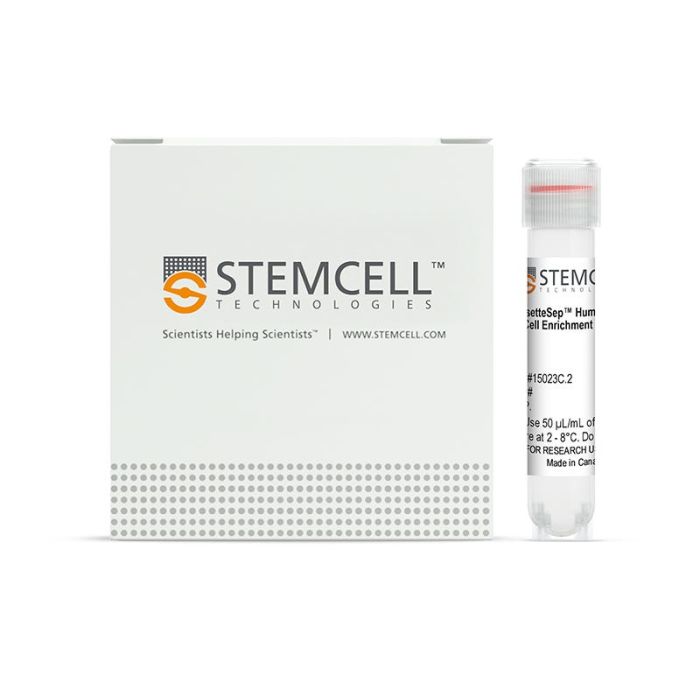
RosetteSep™人CD8+ T细胞富集抗体混合物

免疫密度负选试剂混合物
只有 %1
¥2,328.00

产品号 #(选择产品)

产品号 #15023_C

免疫密度负选试剂混合物

产品优势

  • 快捷、操作简单
  •  不需要特殊设备或额外培训
  • 分选得到的细胞不带标记
  • 可与SepMate™联合使用,实现一致的高通量样本处理

产品组分包括

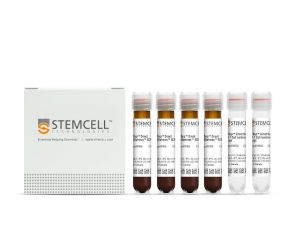
  • RosetteSep™人NK细胞富集抗体混合物(产品号 #15025)
  • RosetteSep™人CD8+ T细胞富集抗体混合物,2mL
  • RosetteSep™人NK细胞富集抗体混合物(产品号 #15025)
  • RosetteSep™人CD8+ T细胞富集抗体混合物操作流程,5x2mL
专为您的实验方案打造的产品
要查看实验方案所需的所有配套产品,请参阅《实验方案与技术文档》

总览

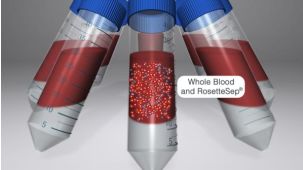
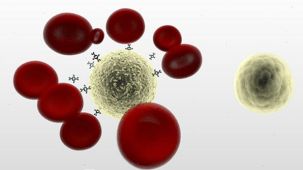
RosetteSep™人CD8+ T细胞富集抗体混合物通过负选从全血分离CD8+ T细胞。四聚体抗体复合物可识别非CD8+ T细胞以及红细胞(RBC)上的糖蛋白A,从而靶向去除非目的细胞。使用密度梯度离心液(如RosetteSep™ DM-L(产品号 #15705)或Lymphoprep™(产品号 #18060)离心后,非目的细胞会与红细胞一起沉淀。纯化的CD8+ T细胞为血浆和密度梯度离心液的交界界面中高度富集的细胞。

磁极兼容性
 
 
分类
细胞分选试剂盒
 
细胞类型
T 细胞,T 细胞,CD8+
 
种属

 
样本来源
白膜层、全血
 
分选方法
负选
 
应用
细胞分选
 
品牌
RosetteSep
 
研究领域
免疫
 

实验数据

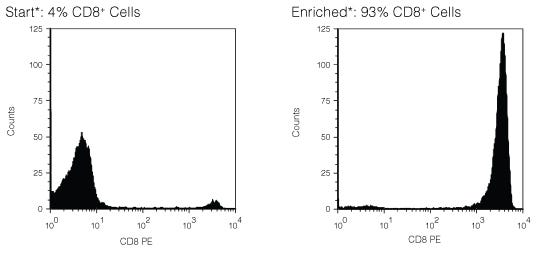
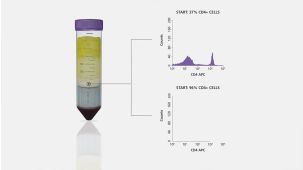
FACS Histogram Results Using RosetteSep™ Human CD8+ T Cell Enrichment Cocktail

Figure 1. FACS Histogram Results Using RosetteSep™ Human CD8+ T Cell Enrichment Cocktail

Starting with fresh peripheral blood the CD8+ cell content of the enriched fraction typically ranges from 81% - 95%. *Note: Red blood cells were removed by lysis prior to flow cytometry.

产品说明书及文档

请在《产品说明书》中查找相关支持信息和使用说明,或浏览下方更多实验方案。

Document Type
Product Name
Catalog #
Lot #
Language
Document Type
产品说明书
Catalog #
15023
Lot #
All
Language
中文
Document Type
产品说明书
Catalog #
15063
Lot #
All
Language
中文
Catalog #
15023, 15063
Lot #
All
Language
English
Document Type
Safety Data Sheet
Catalog #
15023, 15063
Lot #
All
Language
English

应用领域

本产品专为以下研究领域设计,适用于工作流程中的高亮阶段。探索这些工作流程,了解更多我们为各研究领域提供的其他配套产品。

相关材料与文献

技术资料 (8)

常见问题

What is RosetteSep™?

RosetteSep™ is a rapid cell separation procedure for the isolation of purified cells directly from whole blood, without columns or magnets.

How does RosetteSep™ work?

The antibody cocktail crosslinks unwanted cells to red blood cells (RBCs), forming rosettes. The unwanted cells then pellet with the free RBCs when centrifuged over a density centrifugation medium (e.g. Ficoll-Paque™ PLUS, Lymphoprep™).

What factors affect cell recovery?

The temperature of the reagents can affect cell recovery. All reagents should be at room temperature (sample, density centrifugation medium, PBS, centrifuge) before performing the isolations. Layering can also affect recovery so be sure to carefully layer the sample to avoid mixing with the density centrifugation medium as much as possible. Be sure to collect the entire enriched culture without disturbing the RBC pellet. A small amount of density centrifugation medium can be collected without worry.

Which cell samples can RosetteSep™ be used with?

RosetteSep™ can be used with leukapheresis samples, bone marrow or buffy coat, as long as: the concentration of cells does not exceed 5 x 10⁷ per mL (can dilute if necessary); and there are at least 100 RBCs for every nucleated cell (RBCs can be added if necessary).

Can RosetteSep™ be used with previously frozen or cultured cells?

Yes. Cells should be re-suspended at 2 - 5 x 10⁷ cells / mL in PBS + 2% FBS. Fresh whole blood should be added at 250 µL per mL of sample, as a source of red cells.

Can RosetteSep™ be used to enrich progenitors from cord blood?

Yes. Sometimes cord blood contains immature nucleated red cells that have a lower density than mature RBCs. These immature red cells do not pellet over Ficoll™, which can lead to a higher RBC contamination than peripheral blood separations.

Does RosetteSep™ work with mouse cells?

No, but we have developed EasySep™, a magnetic-based cell isolation system which works with mouse and other non-human species.

Which anticoagulant should be used with RosetteSep™?

Peripheral blood should be collected in heparinized Vacutainers. Cord blood should be collected in ACD.

Should the anticoagulant be washed off before using RosetteSep™?

No, the antibody cocktail can be added directly to the sample.

文献 (22)

Prevalence of regulatory T cells is increased in peripheral blood and tumor microenvironment of patients with pancreas or breast adenocarcinoma. Liyanage UK et al. Journal of immunology (Baltimore,Md. : 1950) 2002 SEP

Abstract

Regulatory T cells (T(reg)) that prevent autoimmune diseases by suppression of self-reactive T cells may also suppress the immune response against cancer. In mice,depletion of T(reg) by Ab therapy leads to more efficient tumor rejection. T(reg)-mediated suppression of antitumor immune responses may partly explain the poor clinical response to vaccine-based immunotherapy for human cancer. In this study,we measured the prevalence of T(reg) that coexpress CD4 and CD25 in the PBLs,tumor-infiltrating lymphocytes,and regional lymph node lymphocytes from 65 patients with either pancreas or breast cancer. In breast cancer patients (n = 35),pancreas cancer patients (n = 30),and normal donors (n = 35),the prevalence of T(reg) were 16.6% (SE 1.22),13.2% (SE 1.13),and 8.6% (SE 0.71) of the total CD4(+) cells,respectively. The prevalence of T(reg) were significantly higher in breast cancer patients (p textless 0.01) and pancreas cancer patients (p textless 0.01) when compared with normal donors. In tumor-infiltrating lymphocytes and lymph node lymphocytes,the T(reg) prevalence were 20.2% (SE 3.93) and 20.1% (SE 4.3),respectively. T(reg) constitutively coexpressed CTLA-4 and CD45RO markers,and secreted TGF-beta and IL-10 but did not secrete IFN-gamma. When cocultured with activated CD8(+) cells or CD4(+)25(-) cells,T(reg) potently suppressed their proliferation and secretion of IFN-gamma. We conclude that the prevalence of T(reg) is increased in the peripheral blood as well as in the tumor microenvironment of patients with invasive breast or pancreas cancers. These T(reg) may mitigate the immune response against cancer,and may partly explain the poor immune response against tumor Ags.
The intracellular granzyme B inhibitor, proteinase inhibitor 9, is up-regulated during accessory cell maturation and effector cell degranulation, and its overexpression enhances CTL potency. Hirst CE et al. Journal of immunology (Baltimore,Md. : 1950) 2003 JAN

Abstract

Granzyme B (grB) is a serine proteinase released by cytotoxic lymphocytes (CLs) to kill abnormal cells. GrB-mediated apoptotic pathways are conserved in nucleated cells; hence,CLs require mechanisms to protect against ectopic or misdirected grB. The nucleocytoplasmic serpin,proteinase inhibitor 9 (PI-9),is a potent inhibitor of grB that protects cells from grB-mediated apoptosis in model systems. Here we show that PI-9 is present in CD4(+) cells,CD8(+) T cells,NK cells,and at lower levels in B cells and myeloid cells. PI-9 is up-regulated in response to grB production and degranulation,and associates with grB-containing granules in activated CTLs and NK cells. Intracellular complexes of PI-9 and grB are evident in NK cells,and overexpression of PI-9 enhances CTL potency,suggesting that cytoplasmic grB,which may threaten CL viability,is rapidly inactivated by PI-9. Because dendritic cells (DCs) acquire characteristics similar to those of target cells to activate naive CD8(+) T cells and therefore may also require protection against grB,we investigated the expression of PI-9 in DCs. PI-9 is evident in thymic DCs (CD3(-),CD4(+),CD8(-),CD45(+)),tonsillar DCs,and DC subsets purified from peripheral blood (CD16(+) monocytes and CD123(+) plasmacytoid DCs). Furthermore,PI-9 is expressed in monocyte-derived DCs and is up-regulated upon TNF-alpha-induced maturation of monocyte-derived DCs. In conclusion,the presence and subcellular localization of PI-9 in leukocytes and DCs are consistent with a protective role against ectopic or misdirected grB during an immune response.
Comprehensive epitope analysis of human immunodeficiency virus type 1 (HIV-1)-specific T-cell responses directed against the entire expressed HIV-1 genome demonstrate broadly directed responses, but no correlation to viral load. Addo MM et al. Journal of virology 2003 FEB

Abstract

Cellular immune responses play a critical role in the control of human immunodeficiency virus type 1 (HIV-1); however,the breadth of these responses at the single-epitope level has not been comprehensively assessed. We therefore screened peripheral blood mononuclear cells (PBMC) from 57 individuals at different stages of HIV-1 infection for virus-specific T-cell responses using a matrix of 504 overlapping peptides spanning all expressed HIV-1 proteins in a gamma interferon-enzyme-linked immunospot (Elispot) assay. HIV-1-specific T-cell responses were detectable in all study subjects,with a median of 14 individual epitopic regions targeted per person (range,2 to 42),and all 14 HIV-1 protein subunits were recognized. HIV-1 p24-Gag and Nef contained the highest epitope density and were also the most frequently recognized HIV-1 proteins. The total magnitude of the HIV-1-specific response ranged from 280 to 25,860 spot-forming cells (SFC)/10(6) PBMC (median,4,245) among all study participants. However,the number of epitopic regions targeted,the protein subunits recognized,and the total magnitude of HIV-1-specific responses varied significantly among the tested individuals,with the strongest and broadest responses detectable in individuals with untreated chronic HIV-1 infection. Neither the breadth nor the magnitude of the total HIV-1-specific CD8+-T-cell responses correlated with plasma viral load. We conclude that a peptide matrix-based Elispot assay allows for rapid,sensitive,specific,and efficient assessment of cellular immune responses directed against the entire expressed HIV-1 genome. These data also suggest that the impact of T-cell responses on control of viral replication cannot be explained by the mere quantification of the magnitude and breadth of the CD8+-T-cell response,even if a comprehensive pan-genome screening approach is applied.

更多信息

更多信息
物种
Magnet Compatibility  
样本来源 全血, 白膜层
Selection Method Negative
PRODUCTS ARE FOR RESEARCH USE ONLY AND NOT INTENDED FOR HUMAN OR ANIMAL DIAGNOSTIC OR THERAPEUTIC USES UNLESS OTHERWISE STATED. FOR ADDITIONAL INFORMATION ON QUALITY AT STEMCELL, REFER TO WWW.STEMCELL.COM/COMPLIANCE.
Copyright © 2026 by STEMCELL Technologies. All rights reserved.

在线联系