若您需要咨询产品或有任何技术问题,请通过官方电话 400 885 9050 或邮箱 info.cn@stemcell.com 与我们联系。

MesenCult™-ACF软骨细胞分化试剂盒

用于MSCs向软骨细胞分化的无动物成分培养基
只有 %1
¥3,050.00

产品号 #(选择产品)

产品号 #05455_C

用于MSCs向软骨细胞分化的无动物成分培养基

产品优势

  • 无动物成分(ACF)配方
  • 最快需要14天,实现最少3 × 10^5 MSCs高效地软骨分化
  • 软骨相关转录因子Acan、Col2a、Sox9和Col10a的强表达;肥大相关转录因子Mmp13低表达
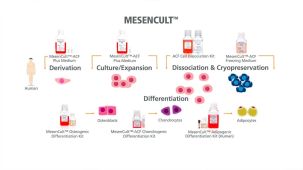
  • 优化的完整无动物成分(ACF)产品线,用于MSC的分离、扩增、冻存和软骨分化

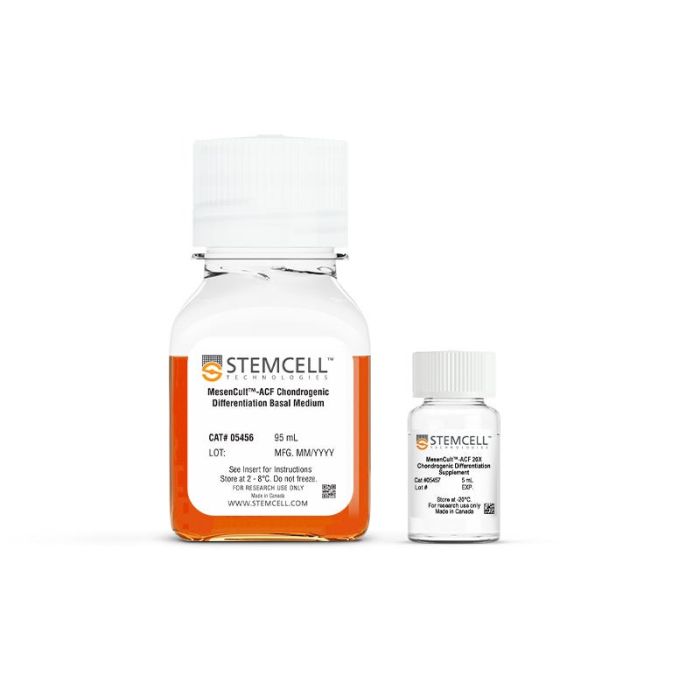
产品组分包括

  • MesenCult™-ACF软骨分化基础培养基,95 mL
  • MesenCult™-ACF 20X 软骨分化补充剂, 5 mL
专为您的实验方案打造的产品
要查看实验方案所需的所有配套产品,请参阅《实验方案与技术文档》

总览

MesenCult™-ACF软骨分化培养基是一种无动物成分(ACF)的软骨分化培养基,专门用于人原代间充质基质细胞和多能干细胞来源的间充质祖细胞(MSCs;也称为间充质干细胞)分化为软骨生成谱系的细胞,包括软骨细胞。该培养基适用于人骨髓(Bone marrow),脂肪组织(Adipose tissue)和滑膜(Synovium)来源的 MSC 的分化,MSC可在含血清培养基(例如MesenCult™ 扩增试剂盒 (人)[产品号 #05411])或无动物成分的MesenCult™-ACF Plus Medium培养基[产品号 #05445])中培养扩增。MesenCult™-ACF软骨分化培养基可诱导最少3 × 10^5个细胞,最早可在第14天实现人MSC高效地软骨分化。

分类
专用培养基
 
细胞类型
软骨细胞,间充质干/祖细胞
 
种属

 
应用
细胞培养,分化
 
品牌
MesenCult
 
研究领域
干细胞生物学
 
制剂类别
不含动物成分,无血清
 

实验数据

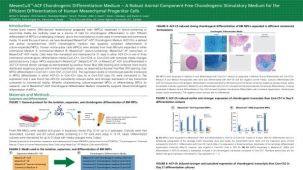
MesenCult™-ACF Chondrogenic Differentiation Medium Induces Robust Chondrogenic Differentiation of Human MSCs

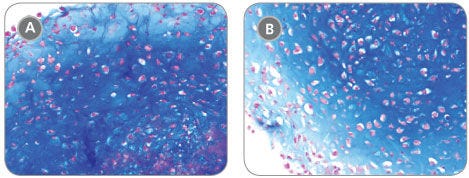
Figure 1. MesenCult™-ACF Chondrogenic Differentiation Medium Induces Robust Chondrogenic Differentiation of Human MSCs

Human BM-derived MSCs were cultured in MesenCult™-ACF Medium then differentiated to the chondrogenic lineage using MesenCult™-ACF Chondrogenic Differentiation Medium. Robust chondrogenic differentiation was observed (A) starting with as few as 3 x 10⁵ MSCs, or (B) when differentiating for just 14 days starting with 5 x 10⁵ MSCs.

Chondrogenic Differentiation of Human MSCs Is More Robust With Fewer Hypertrophic Chondrocytes Using MesenCult™-ACF Chondrogenic Differentiation Medium Compared to Competitor Media

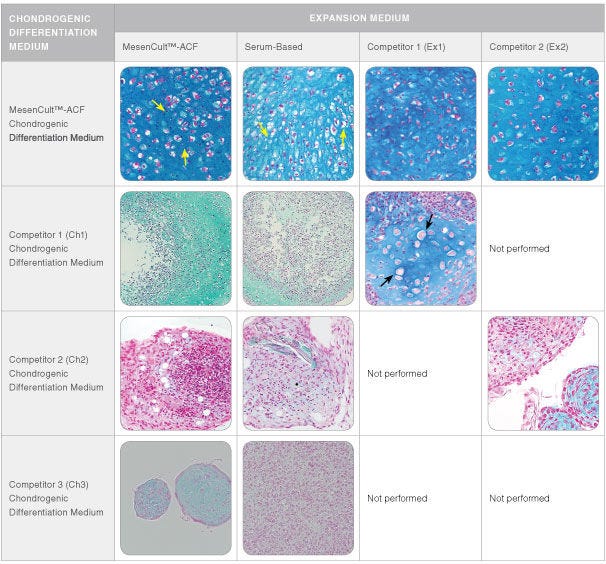
Figure 2. Chondrogenic Differentiation of Human MSCs Is More Robust With Fewer Hypertrophic Chondrocytes Using MesenCult™-ACF Chondrogenic Differentiation Medium Compared to Competitor Media

Human BM-derived MSCs culture-expanded for up to two passages in MesenCult™-ACF Medium, serum-based medium, or one of two commercially available media (Competitor 1 (Ex1) and Competitor 2 (Ex2)), were then differentiated to the chondrogenic lineage starting with 5 x 10⁵ MSCs and either using MesenCult™-ACF Chondrogenic Differentiation Medium or one of several commercially available chondrogenic differentiation media (Ch1, Ch2 or Ch3) for 21 days. More robust and uniform chondrogenic differentiation was observed when the MSCs were differentiated in MesenCult™-ACF Chondrogenic Differentiation Medium compared to the other commercially available chondrogenic differentiation media (Ch1, Ch2 and Ch3), irrespective of the expansion medium used to culture the MSCs prior to differentiation. Cultures differentiated using MesenCult™-ACF Chondrogenic Differentiation Medium displayed an abundance of isogenous groups (yellow arrows), suggesting there is proliferation of differentiating chondrocyte progenitors. Few hypertrophic chondrocytes (black arrows) are seen in cultures differentiated with MesenCult™-ACF Chondrogenic Differentiation Medium, suggesting the maintenance of chondrogenic activity throughout the culturing period.

MesenCult™-ACF Chondrogenic Differentiation Medium Induces Stronger and More Sustained Chondrogenic Transcript Expression Compared to Competitor Media

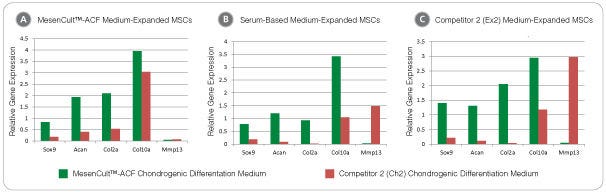
Figure 3. MesenCult™-ACF Chondrogenic Differentiation Medium Induces Stronger and More Sustained Chondrogenic Transcript Expression Compared to Competitor Media

Human BM-derived MSCs expanded in (A) MesenCult™-ACF Medium, (B) a serum-based medium or (C) Competitor 2 (Ex2) medium, were differentiated for 21 days with MesenCult™-ACF Chondrogenic Differentiation Medium and Competitor 2 (Ch2) chondrogenic differentiation medium. Regardless of the expansion medium initially used to culture the MSCs, differentiation using MesenCult™-ACF Chondrogenic Differentiation Medium led to a substantial up-regulation of the chondrogenic transcripts compared to Ch2. In addition, expression of the terminally-differentiated hypertrophic transcript Mmp13 was higher for Ch2 differentiated cultures compared to cultures differentiated with MesenCult™-ACF Chondrogenic Differentiation Medium.

Mouse MSCs Cultured in MesenCult™-ACF Chondrogenic Differentiation Medium Differentiate to Chondrocytes

Figure 4. Mouse MSCs Cultured in MesenCult™-ACF Chondrogenic Differentiation Medium Differentiate to Chondrocytes

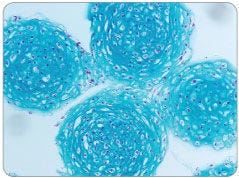
Mouse compact bone-derived MSCs were cultured using the MesenCult™ Proliferation Kit with MesenPure™ (Mouse, Catalog #05512) for 2 passages then differentiated by pellet culture with MesenCult™-ACF Chondrogenic Differentiation Medium for 21 days under normoxic (20% O2) conditions. Strong chondrogenic differentiation is indicated by dark-blue staining of the cartilage extracellular matrix and an abundance of isogenous chondrocyte groups.

Human MSC Chondrogenic Differentiation With AggreWell™800 Plates

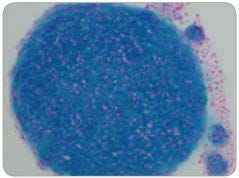
Figure 5. Human MSC Chondrogenic Differentiation With AggreWell™800 Plates

Using centrifugation, 1 x 10^6 human MSCs were distributed evenly among 800 µm microwells in one well of an AggreWell™800 plate. Small aggregates of only ~3,300 cells per pellet were then differentiated to chondrocytes using MesenCult™-ACF Chondrogenic Differentiation Medium for 21 days under normoxic (20% O2) conditions.

Procedure Overview: Human MSC Chondrogenic Differentiation Using MesenCult™-ACF Chondrogenic Differentiation Medium

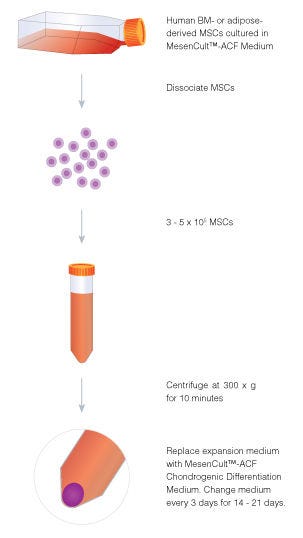
Figure 6. Procedure Overview: Human MSC Chondrogenic Differentiation Using MesenCult™-ACF Chondrogenic Differentiation Medium

Aggregate culture is a useful method for inducing chondrogenic differentiation of human BM- and adipose-derived MSCs in a three-dimensional in vitro culture environment. MSCs are efficiently differentiated to the chondrogenic lineage using MesenCult™-ACF Chondrogenic Differentiation Medium in 14 - 21 days with 3 - 5 x 10⁵ cells.

产品说明书及文档

请在《产品说明书》中查找相关支持信息和使用说明,或浏览下方更多实验方案。

Document Type
Product Name
Catalog #
Lot #
Language
Catalog #
05455
Lot #
All
Language
English
Document Type
Safety Data Sheet 1
Catalog #
05455
Lot #
All
Language
English
Document Type
Safety Data Sheet 2
Catalog #
05455
Lot #
All
Language
English

应用领域

本产品专为以下研究领域设计,适用于工作流程中的高亮阶段。探索这些工作流程,了解更多我们为各研究领域提供的其他配套产品。

相关材料与文献

技术资料 (9)

文献 (14)

Ultralow-dose irradiation enables engraftment and intravital tracking of disease initiating niches in clonal hematopoiesis K. Lee et al. Scientific Reports 2024 Sep

Abstract

Recent advances in imaging suggested that spatial organization of hematopoietic cells in their bone marrow microenvironment (niche) regulates cell expansion, governing progression, and leukemic transformation of hematological clonal disorders. However, our ability to interrogate the niche in pre-malignant conditions has been limited, as standard murine models of these diseases rely largely on transplantation of the mutant clones into conditioned mice where the marrow microenvironment is compromised. Here, we leveraged live-animal microscopy and ultralow dose whole body or focal irradiation to capture single cells and early expansion of benign/pre-malignant clones in the functionally preserved microenvironment. 0.5 Gy whole body irradiation (WBI) allowed steady engraftment of cells beyond 30 weeks compared to non-conditioned controls. In-vivo tracking and functional analyses of the microenvironment showed no change in vessel integrity, cell viability, and HSC-supportive functions of the stromal cells, suggesting minimal inflammation after the radiation insult. The approach enabled in vivo imaging of Tet2 + /− and its healthy counterpart, showing preferential localization within a shared microenvironment while forming discrete micro-niches. Notably, stationary association with the niche only occurred in a subset of cells and would not be identified without live imaging. This strategy may be broadly applied to study clonal disorders in a spatial context.
Mesenchymal stem cell cryopreservation with cavitation-mediated trehalose treatment C. V. Fuenteslópez et al. Communications Engineering 2024 Sep

Abstract

Dimethylsulfoxide (DMSO) has conventionally been used for cell cryopreservation both in research and in clinical applications, but has long-term cytotoxic effects. Trehalose, a natural disaccharide, has been proposed as a non-toxic cryoprotectant. However, the lack of specific cell membrane transporter receptors inhibits transmembrane transport and severely limits its cryoprotective capability. This research presents a method to successfully deliver trehalose into mesenchymal stem cells (MSCs) using ultrasound in the presence of microbubbles. The optimised trehalose concentration was shown to be able to not only preserve membrane integrity and cell viability but also the multipotency of MSCs, which are essential for stem cell therapy. Confocal imaging revealed that rhodamine-labelled trehalose was transported into cells rather than simply attached to the membrane. Additionally, the membranes were successfully preserved in lyophilised cells. This study demonstrates that ultrasonication with microbubbles facilitated trehalose delivery, offering promising cryoprotective capability without the cytotoxicity associated with DMSO-based methods. Subject terms: Membrane biophysics, Biomedical engineering
Mutations in fibronectin dysregulate chondrogenesis in skeletal dysplasia N. E. H. Dinesh et al. Cellular and Molecular Life Sciences: CMLS 2024 Oct

Abstract

Fibronectin (FN) is an extracellular matrix glycoprotein essential for the development and function of major vertebrate organ systems. Mutations in FN result in an autosomal dominant skeletal dysplasia termed corner fracture-type spondylometaphyseal dysplasia (SMDCF). The precise pathomechanisms through which mutant FN induces impaired skeletal development remain elusive. Here, we have generated patient-derived induced pluripotent stem cells as a cell culture model for SMDCF to investigate the consequences of FN mutations on mesenchymal stem cells (MSCs) and their differentiation into cartilage-producing chondrocytes. In line with our previous data, FN mutations disrupted protein secretion from MSCs, causing a notable increase in intracellular FN and a significant decrease in extracellular FN levels. Analyses of plasma samples from SMDCF patients also showed reduced FN in circulation. FN and endoplasmic reticulum (ER) protein folding chaperones (BIP, HSP47) accumulated in MSCs within ribosome-covered cytosolic vesicles that emerged from the ER. Massive amounts of these vesicles were not cleared from the cytosol, and a smaller subset showed the presence of lysosomal markers. The accumulation of intracellular FN and ER proteins elevated cellular stress markers and altered mitochondrial structure. Bulk RNA sequencing revealed a specific transcriptomic dysregulation of the patient-derived cells relative to controls. Analysis of MSC differentiation into chondrocytes showed impaired mesenchymal condensation, reduced chondrogenic markers, and compromised cell proliferation in mutant cells. Moreover, FN mutant cells exhibited significantly lower transforming growth factor beta-1 (TGFβ1) expression, crucial for mesenchymal condensation. Exogenous FN or TGFβ1 supplementation effectively improved the MSC condensation and promoted chondrogenesis in FN mutant cells. These findings demonstrate the cellular consequences of FN mutations in SMDCF and explain the molecular pathways involved in the associated altered chondrogenesis. The online version contains supplementary material available at 10.1007/s00018-024-05444-4.

更多信息

更多信息
物种 人类
配方 不含动物成分, 无血清
质量保证:

产品仅供研究使用,不用于针对人或动物的诊断或治疗。 欲获悉更多关于STEMCELL的质控信息,请访问 STEMCELL.CN/COMPLIANCE.
Copyright © 2025 by STEMCELL Technologies. All rights reserved.

在线联系