若您需要咨询产品或有任何技术问题,请通过官方电话 400 885 9050 或邮箱 info.cn@stemcell.com 与我们联系。

EasySep™ 总核酸提取试剂盒

磁珠法总核酸(DNA和RNA)提取试剂盒

产品号 #(选择产品)

产品号 #100-1079_C

磁珠法总核酸(DNA和RNA)提取试剂盒

产品优势

  • 大规模核酸提取,最多可同时提取16或96个样本
  • 无需使用离心柱,避免离心步骤,节省样品处理时间
  • 通过易于操作的体系简化工作流程,免去使用有毒试剂
  • 实现稳定地从各种类型样本(如全血和细胞悬液)中提取核酸

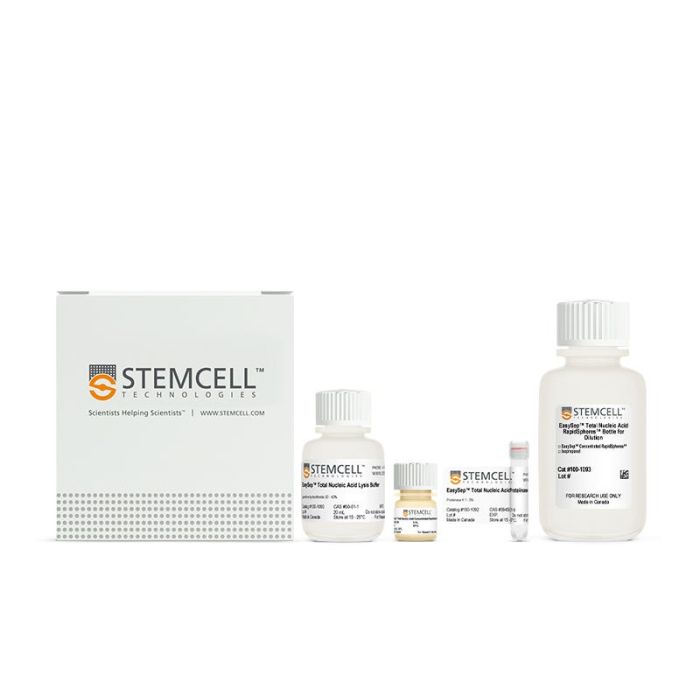
产品组分包括

  • EasySep™总核酸浓缩RapidSpheres™,3mL(产品号#100-1091)
  • EasySep™总核酸裂解缓冲液,20mL(产品号#100-1090)
  • EasySep™总核酸蛋白酶K, 2mL(产品号#100-1092)
  • EasySep™总核酸RapidSpheres™稀释用瓶,1(产品号#100-1093)
专为您的实验方案打造的产品
要查看实验方案所需的所有配套产品,请参阅《实验方案与技术文档》

总览

高效地从全血、细胞悬液(如 PBMCs、hPSCs、培养细胞)及 使用EasySep™ 分选的细胞中高效地提取总核酸(DNA 和 RNA)或仅提取 RNA。EasySep™ 总核酸提取试剂盒采用磁珠技术,配合简便且可扩展的操作流程,无需使用离心柱或有毒试剂。使用该试剂盒提取的核酸纯度高,可直接用于如qPCR等下游应用。

使用本试剂盒,可通过 EasySep™ 总核酸 RapidSpheres™ 磁珠对样本中的总核酸或 RNA 进行磁珠标记。随后无需分离柱,只需磁极(需单独购买)处理样本。去除未标记的杂质成分后,从磁极上取下样本并回收被磁珠标记的核酸。

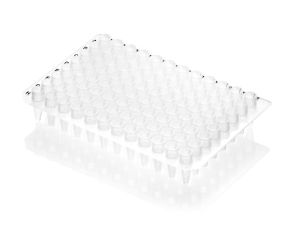
该试剂盒提供了两种方案:使用 1.7 mL 微量离心管配合 ErythroClear™ 磁极(产品号 #01737)进行总核酸或 RNA 提取;或在 96 孔 PCR 板中配合96孔PCR磁力板(产品号 #100-1304)实现高通量提取。


磁极兼容性
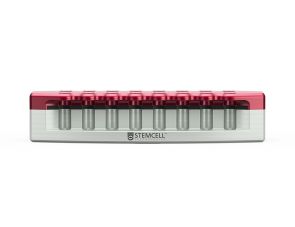
ErythroClear™磁极(产品号 #01737)

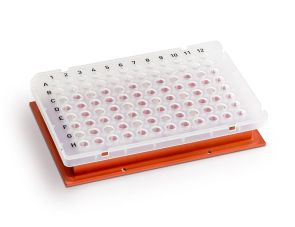
96孔PCR微孔板磁极(产品号 #100-1304)
 
细胞类型
淋巴细胞,单个核细胞
 
应用
基因组编辑,核酸纯化
 
研究领域
癌症,免疫
 

实验数据

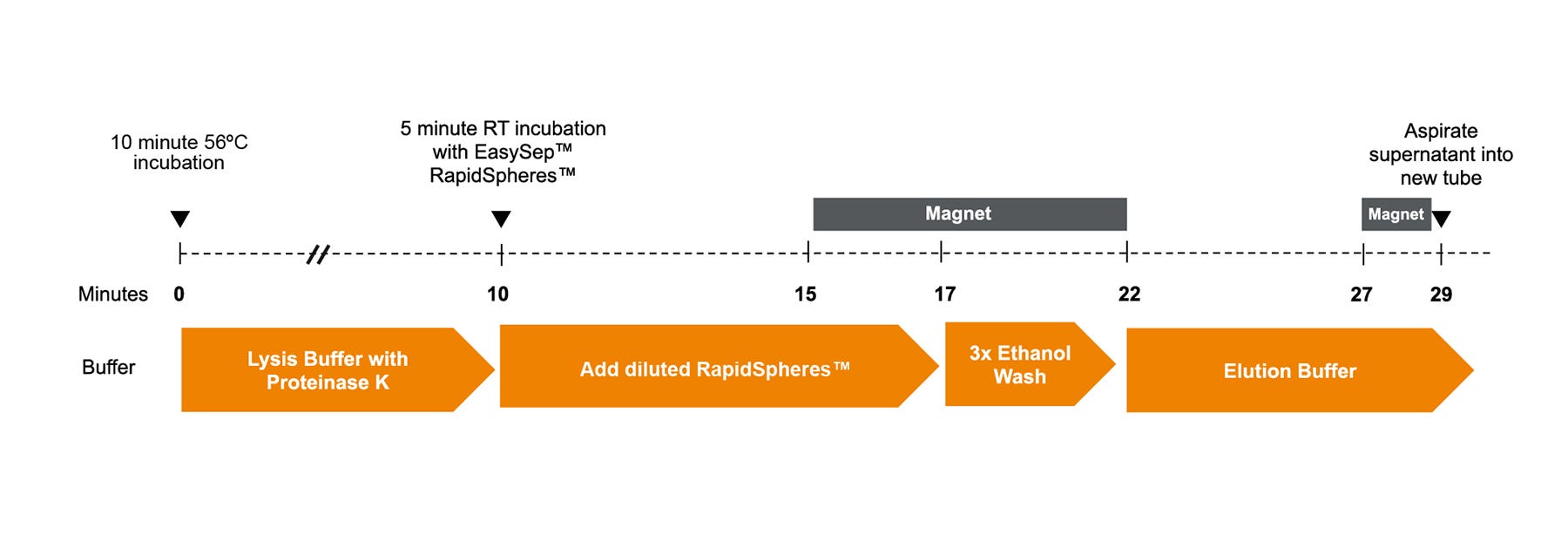
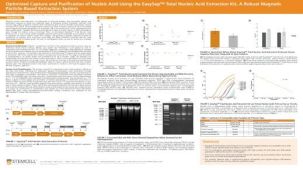
Diagram of the EasySep™ Total Nucleic Acid Extraction Kit workflow.

Figure 1. EasySep™ Total Nucleic Acid Extraction Kit Workflow

Diagram of the standard extraction workflow. Time points at which samples must be placed in the magnet are indicated with gray boxes. EasySep™ Lysis Buffer and Proteinase K are added to the sample and incubated at 56°C for 10 minutes. Diluted EasySep™ Nucleic Acid RapidSpheres™ are added to the sample and incubated at room temperature (RT) for 5 minutes, then placed in the magnet for 2 minutes. While in the magnet, the sample is washed three times with a 70% ethanol wash solution, and the supernatant is removed. The pellet is resuspended with the elution buffer while removed from the magnet and incubated at room temperature for 5 minutes. The sample is then placed in the magnet for 2 minutes before the supernatant is aspirated to a new tube to obtain the extracted nucleic acids.

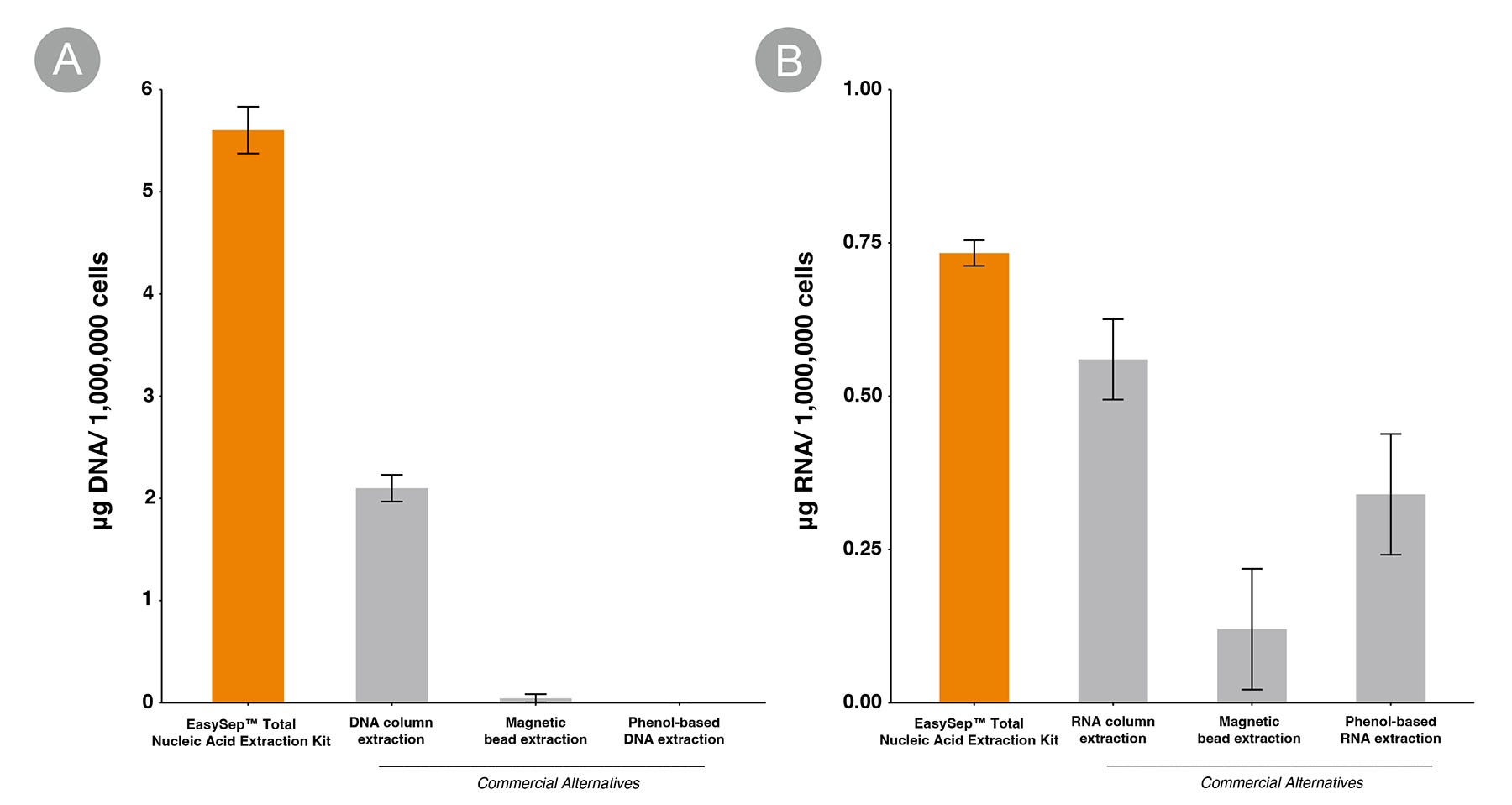
EasySep™ Total Nucleic Acid Extraction Kit shows improved DNA and RNA recovery relative to other commonly used methods.

Figure 2. EasySep™ Total Nucleic Acid Extraction Kit Shows Improved DNA and RNA Recovery Relative to Other Commonly Used Methods

Normalized recovery (μg per 1 x 10^6 cells) of (A) DNA and (B) RNA across EasySep™ Total Nucleic Acid Extraction Kit and other commonly used extraction methods. DNA and RNA concentrations were measured separately using the Qubit™ Fluorometer. Sample source: Leukopak, n = 3. Error bars represent ± 1 standard deviation.

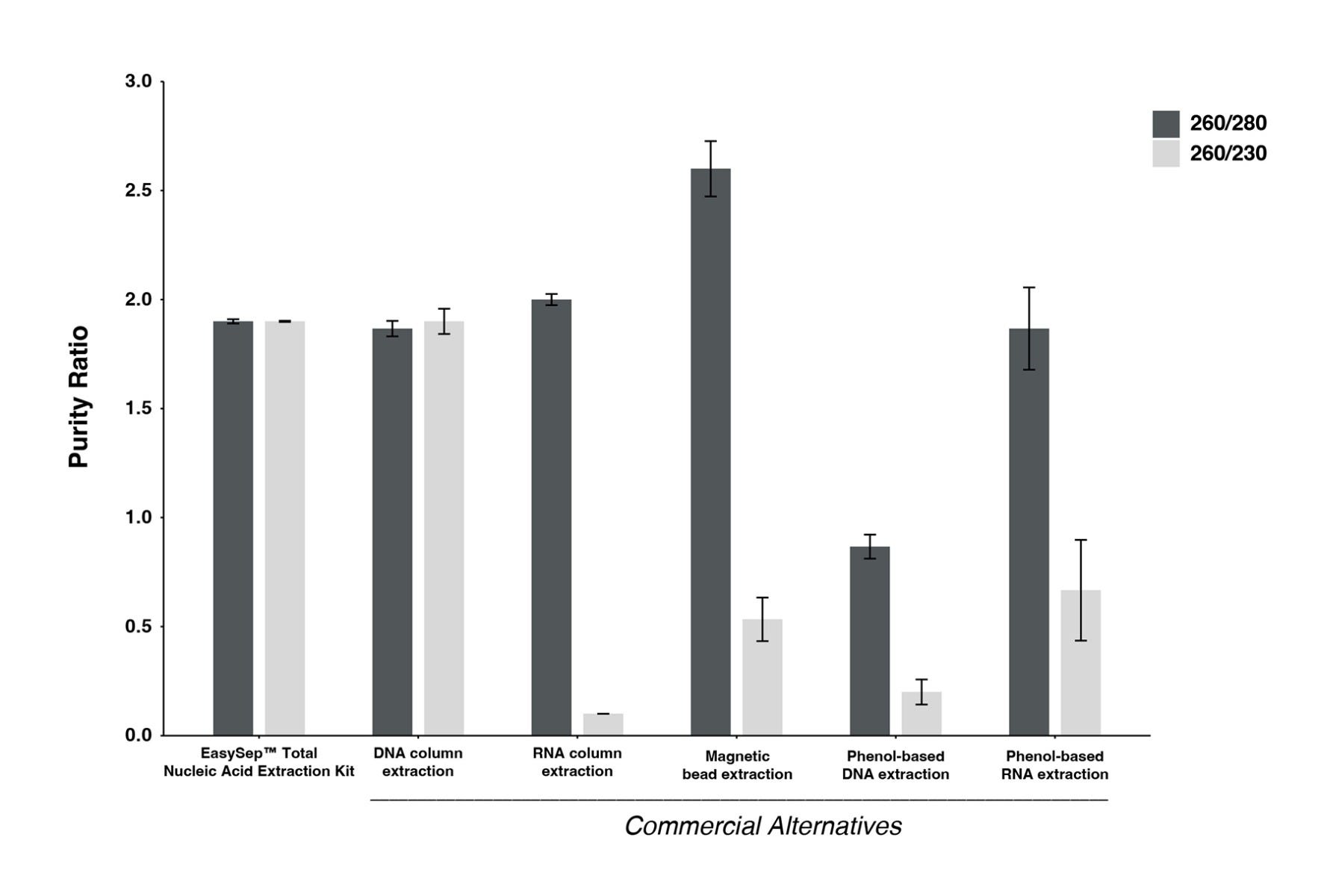
EasySep™ Total Nucleic Acid Extraction Kit recovers nucleic acids of optimal purity when benchmarked against other commonly used extraction methods.

Figure 3. EasySep™ Total Nucleic Acid Extraction Kit Recovers Nucleic Acid of Optimal Purity

Purity ratios obtained using spectrophotometric absorbance measurements show that the nucleic acid recovered by the EasySep™ Total Nucleic Acid Extraction Kit is of optimal purity, benchmarked against other commonly used extraction methods. The 260/280 ratio, indicative of protein, phenol, and other contaminants within the extract that absorb at or near 280 nm, has an optimum purity ratio of ~ 1.8 for DNA and ~ 2.0 for RNA. The 260/230 ratio, a secondary measure of purity indicative of salt, phenol, and other organic compound contamination, has an optimal range of 1.8 - 2.2. Ratios that fall outside of these ranges are generally considered contaminated. Purity ratios were obtained using the Nanodrop™ Spectrophotometer. Sample source: Leukopak, n = 3. Error bars represent ± 1 standard deviation.

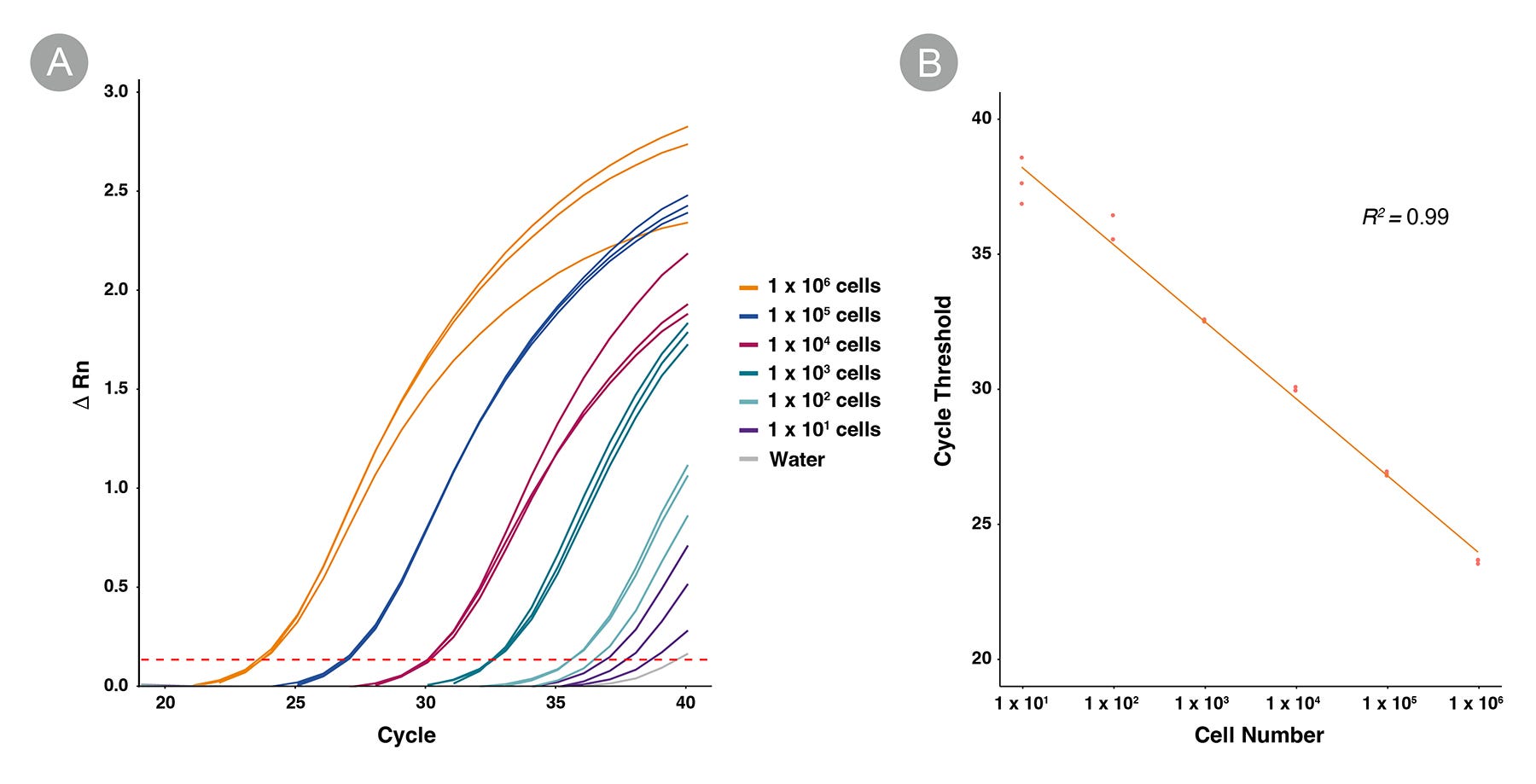
Results from a DNA-based qPCR assay with primers targeted to a non-genic region of chromosome 4 demonstrate that, DNA is detectable in extractions with a starting cell input of 10 cells and up to 1 x 10^6 cells, using the EasySep™ Total Nucleic Acid Extraction Kit.

Figure 4. EasySep™ Total Nucleic Acid Extraction Kit Is Capable of Extracting from As Few As 10 Cells

Results from a DNA-based qPCR assay using primers targeted to a non-genic region of chromosome 4 demonstrate that DNA is detectable in extractions with a starting cell input of 10 - 1 x 10^6 cells. (A) qPCR curves coloured by cell input. Dotted red line represents the cycle threshold (Ct; 0.139). Each individual curve represents 1 technical replicate, n = 3. (B) Inverse linear relationship between log(cell number input) and Ct value. Each data point represents 1 technical replicate, n = 3. Sample source: Leukopak.

产品说明书及文档

请在《产品说明书》中查找相关支持信息和使用说明,或浏览下方更多实验方案。

Document Type
Product Name
Catalog #
Lot #
Language
Catalog #
100-1079
Lot #
All
Language
English
Catalog #
100-1079
Lot #
All
Language
English
Document Type
Safety Data Sheet 1
Catalog #
100-1079
Lot #
All
Language
English
Document Type
Safety Data Sheet 2
Catalog #
100-1079
Lot #
All
Language
English
Document Type
Safety Data Sheet 3
Catalog #
100-1079
Lot #
All
Language
English

应用领域

本产品专为以下研究领域设计,适用于工作流程中的高亮阶段。探索这些工作流程,了解更多我们为各研究领域提供的其他配套产品。

相关材料与文献

技术资料 (1)

文献 (1)

M1-like, but not M0- or M2-like, macrophages, reduce RSV infection of primary bronchial epithelial cells in a media-dependent fashion. N. J. Ronaghan et al. PloS one 2022

Abstract

Respiratory syncytial virus (RSV) is a common childhood infection that in young infants can progress into severe bronchiolitis and pneumonia. Disease pathogenesis results from both viral mediated and host immune processes of which alveolar macrophages play an important part. Here, we investigated the role of different types of alveolar macrophages on RSV infection using an in vitro co-culture model involving primary tissue-derived human bronchial epithelial cells (HBECs) and human blood monocyte-derived M0-like, M1-like, or M2-like macrophages. It was hypothesized that the in vitro model would recapitulate previous in vivo findings of a protective effect of macrophages against RSV infection. It was found that macrophages maintained their phenotype for the 72-hour co-culture time period and the bronchial epithelial cells were unaffected by the macrophage media. HBEC infection with RSV was decreased by M1-like macrophages but enhanced by M0- or M2-like macrophages. The medium used during the co-culture also impacted the outcome of the infection. This work demonstrates that alveolar macrophage phenotypes may have differential roles during epithelial RSV infection, and demonstrates that an in vitro co-culture model could be used to further investigate the roles of macrophages during bronchial viral infection.

更多信息

更多信息
Magnet Compatibility ErythroClear™ Magnet (Catalog #01737) 96-Well PCR Microplate Magnet (Catalog #100-1304)
质量保证:

产品仅供研究使用,不用于针对人或动物的诊断或治疗。 欲获悉更多关于STEMCELL的质控信息,请访问 STEMCELL.CN/COMPLIANCE.
Copyright © 2025 by STEMCELL Technologies. All rights reserved.

在线联系