Mechanisms that regulate the cell cycle status of very primitive hematopoietic cells in long-term human marrow cultures. II. Analysis of positive and negative regulators produced by stromal cells within the adherent layer.
Numerous factors that can influence the proliferation and differentiation in vitro of cells at various stages of hematopoiesis have been identified,but the mechanisms used by stromal cells to regulate the cycling status of the most primitive human hematopoietic cells are still poorly understood. Previous studies of long-term cultures (LTC) of human marrow have suggested that cytokine-induced variations in stromal cell production of one or more stimulators and inhibitors of hematopoiesis may be important. To identify the specific regulators involved,we performed Northern analyses on RNA extracted from human marrow LTC adherent layers,or stromal cell types derived from or related to those present in the adherent layer. These analyses showed marked increases in interleukin-1 beta (IL-1 beta),IL-6,and granulocyte colony-stimulating factor (G-CSF) mRNA levels within 8 hours after treatments that lead to the activation within 2 days of primitive hematopoietic progenitors in such cultures. Increases in granulocyte-macrophage (GM)-CSF and M-CSF mRNA were also sometimes seen. Bioassays using cell lines responsive to G-CSF,GM-CSF,and IL-6 showed significant elevation in growth factor levels 24 hours after IL-1 beta stimulation. Neither IL-3 nor IL-4 mRNA was detectable at any time. In contrast,transforming growth factor-beta (TGF-beta) mRNA and nanogram levels of TGF-beta bioactivity in the medium were detected at all times in established LTC,and these levels were not consistently altered by any of the manipulations that stimulated hematopoietic growth factor production and primitive progenitor cycling. We also found that addition of anti-TGF-beta antibody could prolong or reactivate primitive progenitor proliferation when added to previously stimulated or quiescent cultures,respectively. Together,these results indicate a dominant negative regulatory role of endogenously produced TGF-beta in unperturbed LTC,with activation of primitive hematopoietic cells being achieved by mechanisms that stimulate stromal cells to produce G-CSF,GM-CSF,and IL-6. Given the similarities between the LTC system and the marrow microenvironment,it seems likely that the control of human stem cell activation in vivo may involve similar variations in the production of these factors by stromal cells.
View Publication
产品类型:
产品号#:
05150
05350
产品名:
MyeloCult™ H5100
M. A. Loberg et al. (jul 2019)
Leukemia 33 7 1635--1649
Sequentially inducible mouse models reveal that Npm1 mutation causes malignant transformation of Dnmt3a-mutant clonal hematopoiesis.
Clonal hematopoiesis (CH) is a common aging-associated condition with increased risk of hematologic malignancy. Knowledge of the mechanisms driving evolution from CH to overt malignancy has been hampered by a lack of in vivo models that orthogonally activate mutant alleles. Here,we develop independently regulatable mutations in DNA methyltransferase 3A (Dnmt3a) and nucleophosmin 1 (Npm1),observed in human CH and AML,respectively. We find Dnmt3a mutation expands hematopoietic stem and multipotent progenitor cells (HSC/MPPs),modeling CH. Induction of mutant Npm1 after development of Dnmt3a-mutant CH causes progression to myeloproliferative disorder (MPD),and more aggressive MPD is observed with longer latency between mutations. MPDs uniformly progress to acute myeloid leukemia (AML) following transplant,accompanied by a decrease in HSC/MPPs and an increase in myeloid-restricted progenitors,the latter of which propagate AML in tertiary recipient mice. At a molecular level,progression of CH to MPD is accompanied by selection for mutations activating Ras/Raf/MAPK signaling. Progression to AML is characterized by additional oncogenic signaling mutations (Ptpn11,Pik3r1,Flt3) and/or mutations in epigenetic regulators (Hdac1,Idh1,Arid1a). Together,our study demonstrates that Npm1 mutation drives evolution of Dnmt3a-mutant CH to AML and rate of disease progression is accelerated with longer latency of CH.
View Publication
High-throughput screening assay for the identification of compounds regulating self-renewal and differentiation in human embryonic stem cells.
High-throughput screening (HTS) of chemical libraries has become a critical tool in basic biology and drug discovery. However,its implementation and the adaptation of high-content assays to human embryonic stem cells (hESCs) have been hampered by multiple technical challenges. Here we present a strategy to adapt hESCs to HTS conditions,resulting in an assay suitable for the discovery of small molecules that drive hESC self-renewal or differentiation. Use of this new assay has led to the identification of several marketed drugs and natural compounds promoting short-term hESC maintenance and compounds directing early lineage choice during differentiation. Global gene expression analysis upon drug treatment defines known and novel pathways correlated to hESC self-renewal and differentiation. Our results demonstrate feasibility of hESC-based HTS and enhance the repertoire of chemical compounds for manipulating hESC fate. The availability of high-content assays should accelerate progress in basic and translational hESC biology.
View Publication
产品类型:
产品号#:
72752
72882
72884
产品名:
加替沙星(Gatifloxacin)
Sinomenine (Hydrochloride)
Fan Y et al. (NOV 2013)
Tissue Engineering Part A 20 3-4 131128071850006
Facile engineering of xeno-free microcarriers for the scalable cultivation of human pluripotent stem cells in stirred suspension.
A prerequisite for the realization of human pluripotent stem cell (hPSC) therapies is the development of bioprocesses for generating clinically relevant quantities of undifferentiated hPSCs and their derivatives under xeno-free conditions. Microcarrier stirred-suspension bioreactors are an appealing modality for the scalable expansion and directed differentiation of hPSCs. Comparative analyses of commercially available microcarriers clearly show the need for developing synthetic substrates supporting the adhesion and growth of hPSCs in three-dimensional cultures under agitation-induced shear. Moreover,the low seeding efficiencies during microcarrier loading with hPSC clusters poses a significant process bottleneck. To that end,a novel protocol was developed increasing hPSC seeding efficiency from 30% to over 80% and substantially shortening the duration of microcarrier loading. Importantly,this method was combined with the engineering of polystyrene microcarriers by surface conjugation of a vitronectin-derived peptide,which was previously shown to support the growth of human embryonic stem cells. Cells proliferated on peptide-conjugated beads in static culture but widespread detachment was observed after exposure to stirring. This prompted additional treatment of the microcarriers with a synthetic polymer commonly used to enhance cell adhesion. hPSCs were successfully cultivated on these microcarriers in stirred suspension vessels for multiple consecutive passages with attachment efficiencies close to 40%. Cultured cells exhibited on average a 24-fold increase in concentration per 6-day passage,over 85% viability,and maintained a normal karyotype and the expression of pluripotency markers such as Nanog,Oct4,and SSEA4. When subjected to spontaneous differentiation in embryoid body cultures or directed differentiation to the three embryonic germ layers,the cells adopted respective fates displaying relevant markers. Lastly,engineered microcarriers were successfully utilized for the expansion and differentiation of hPSCs to mesoderm progeny in stirred suspension vessels. Hence,we demonstrate a strategy for the facile engineering of xeno-free microcarriers for stirred-suspension cultivation of hPSCs. Our findings support the use of microcarrier bioreactors for the scalable,xeno-free propagation and differentiation of human stem cells intended for therapies.
View Publication
Enhanced CLIP Uncovers IMP Protein-RNA Targets in Human Pluripotent Stem Cells Important for Cell Adhesion and Survival
Human pluripotent stem cells (hPSCs) require precise control of post-transcriptional RNA networks to maintain proliferation and survival. Using enhanced UV crosslinking and immunoprecipitation (eCLIP),we identify RNA targets of the IMP/IGF2BP family of RNA-binding proteins in hPSCs. At the broad region and binding site levels,IMP1 and IMP2 show reproducible binding to a large and overlapping set of 3' UTR-enriched targets. RNA Bind-N-seq applied to recombinant full-length IMP1 and IMP2 reveals CA-rich motifs that are enriched in eCLIP-defined binding sites. We observe that IMP1 loss in hPSCs recapitulates IMP1 phenotypes,including a reduction in cell adhesion and increase in cell death. For cell adhesion,we find IMP1 maintains levels of integrin mRNA specifically regulating RNA stability of ITGB5 in hPSCs. Additionally,we show that IMP1 can be linked to hPSC survival via direct target BCL2. Thus,transcriptome-wide binding profiles identify hPSC targets modulating well-characterized IMP1 roles.
View Publication
产品类型:
产品号#:
05850
05857
05870
05875
85850
85857
85870
85875
产品名:
mTeSR™1
mTeSR™1
Li D et al. (MAY 2016)
Stem Cell Reports 6 5 717--728
Optimized Approaches for Generation of Integration-free iPSCs from Human Urine-Derived Cells with Small Molecules and Autologous Feeder
Generation of induced pluripotent stem cells (iPSCs) from human urine-derived cells (hUCs) provides a convenient and non-invasive way to obtain patient-specific iPSCs. However,many isolated hUCs exhibit very poor proliferation and are difficult to reprogram. In this study,we optimized reprogramming approaches for hUCs with very poor proliferation. We report here that a compound cocktail containing cyclic pifithrin-a (a P53 inhibitor),A-83-01,CHIR99021,thiazovivin,NaB,and PD0325901 significantly improves the reprogramming efficiency (170-fold more) for hUCs. In addition,we showed that replacement of Matrigel with autologous hUC feeders can overcome the reprogramming failure due to the massive cell death that occurs during delivery of reprogramming factors. In summary,we describe improved approaches to enable iPSC generation from hUCs that were otherwise difficult to reprogram,a valuable asset for banking patient-specific iPSCs.
View Publication
产品类型:
产品号#:
05850
05857
05870
05875
85850
85857
85870
85875
产品名:
mTeSR™1
mTeSR™1
Nishimoto KP et al. (MAY 2011)
Regenerative medicine 6 3 303--18
Modification of human embryonic stem cell-derived dendritic cells with mRNA for efficient antigen presentation and enhanced potency.
AIM: Dendritic cell (DC)-based vaccines are designed to exploit the intrinsic capacity of these highly effective antigen presenting cells to prime and boost antigen-specific T-cell immune responses. Successful development of DC-based vaccines will be dependent on the ability to utilize and harness the full potential of these potent immune stimulatory cells. Recent advances to generate DCs derived from human embryonic stem cells (hESCs) that are suitable for clinical use represent an alternative strategy from conventional approaches of using patient-specific DCs. Although the differentiation of hESC-derived DCs in serum-free defined conditions has been established,the stimulatory potential of these hESC-derived DCs have not been fully evaluated. METHODS: hESC-derived DCs were differentiated in serum-free defined culture conditions. The delivery of antigen into hESC-derived DCs was investigated using mRNA transfection and replication-deficient adenoviral vector transduction. hESC-derived DCs modified with antigen were evaluated for their capacity to stimulate antigen-specific T-cell responses with known HLA matching. Since IL-12 is a key cytokine that drives T-cell function,further enhancement of DC potency was evaluated by transfecting mRNA encoding the IL-12p70 protein into hESC-derived DCs. RESULTS: The transfection of mRNA into hESC-derived DCs was effective for heterologous protein expression. The efficiency of adenoviral vector transduction into hESC-derived DCs was poor. These mRNA-transfected DCs were capable of stimulating human telomerase reverse transcriptase antigen-specific T cells composed of varying degrees of HLA matching. In addition,we observed the transfection of mRNA encoding IL-12p70 enhanced the T-cell stimulation potency of hESC-derived DCs. CONCLUSION: These data provide support for the development and modification of hESC-derived DCs with mRNA as a potential strategy for the induction of T-cell-mediated immunity.
View Publication
产品类型:
产品号#:
05850
05857
05870
05875
85850
85857
85870
85875
产品名:
mTeSR™1
mTeSR™1
Asuri P et al. (FEB 2012)
Molecular therapy : the journal of the American Society of Gene Therapy 20 2 329--38
Directed Evolution of Adeno-associated Virus for Enhanced Gene Delivery and Gene Targeting in Human Pluripotent Stem Cells
Efficient approaches for the precise genetic engineering of human pluripotent stem cells (hPSCs) can enhance both basic and applied stem cell research. Adeno- associated virus (AAV) vectors are of particular interest for their capacity to mediate efficient gene delivery to and gene targeting in various cells. However,natural AAV serotypes offer only modest transduction of human embryonic and induced pluripotent stem cells (hESCs and hiPSCs),which limits their utility for efficiently manipulating the hPSC genome. Directed evolution is a powerful means to generate viral vectors with novel capabilities,and we have applied this approach to create a novel AAV variant with high gene delivery efficiencies (˜50%) to hPSCs,which are importantly accompanied by a considerable increase in gene-targeting frequencies,up to 0.12%. While this level is likely sufficient for numerous applications,we also show that the gene-targeting efficiency mediated by an evolved AAV variant can be further enhanced (textgreater1%) in the presence of targeted double- stranded breaks (DSBs) generated by the co-delivery of artificial zinc finger nucleases (ZFNs). Thus,this study demonstrates that under appropriate selective pressures,AAV vectors can be created to mediate efficient gene targeting in hPSCs,alone or in the presence of ZFN- mediated double-stranded DNA breaks.
View Publication
产品类型:
产品号#:
05850
05857
05870
05875
85850
85857
85870
85875
产品名:
mTeSR™1
mTeSR™1
Lo SL et al. (MAY 2012)
Biochemical and biophysical research communications 421 3 616--620
A ??-sheet structure interacting peptide for intracellular protein delivery into human pluripotent stem cells and their derivatives
The advance in stem cell research relies largely on the efficiency and biocompatibility of technologies used to manipulate stem cells. In our previous study,we had designed an amphipathic peptide RV24 that can deliver proteins into cancer cell lines efficiently without significant side effects. Encouraged by this observation,we moved forward to test whether RV24 could be used to deliver proteins into human embryonic stem cells and human induced pluripotent stem cells. RV24 successfully mediated protein delivery into these pluripotent stem cells,as well as their derivatives including neural stem cells and dendritic cells. Based on NMR studies and particle surface charge measurements,we proposed that hydrophobic domain of RV24 interacts with ??-sheet structures of the proteins,followed by formation of peptide cage" to facilitate delivery across cellular membrane. These findings suggest the feasibility of using amphipathic peptide to deliver functional proteins intracellularly for stem cell research. ?? 2012 Elsevier Inc."
View Publication
产品类型:
产品号#:
05850
05857
05870
05875
85850
85857
85870
85875
产品名:
mTeSR™1
mTeSR™1
C. P. Pacini et al. (Dec 2025)
European Journal of Immunology 55 12
Selection and Characterisation of Minor Histocompatibility Antigen‐Specific Regulatory T Cells in Fully HLA‐Matched Setting for GVHD Therapy
Graft‐versus‐host disease is mediated by donor‐derived T cells reactive against the recipient's broadly expressed minor histocompatibility antigens (mHA). Regulatory T cells (Treg) have been explored as a therapeutic approach for chronic GVHD (cGVHD). The promising results from polyclonal Treg trials in this setting have led us to develop a Treg product specific for mismatched minor antigens between patient and donor (mTreg),circumventing broad immune suppression risks. HLA‐matched siblings of opposite sexes were used to obtain the sister's CD4+CD25hiCD127low Treg for co‐culture with the respective brother's dendritic cells as a source of mismatched mHA. We have established the optimal culture conditions resulting in the highest mTreg proliferation and viability. Comprehensive phenotyping during the ex vivo selection shows PD‐1,CTLA‐4,CD39 and HLA‐DR expression. Transcriptomic analysis revealed a switch in metabolic process,and up‐regulation of functional Treg genes. Furthermore,mTreg possess specific and potent suppressive activity,in which there is a dependency on cell‐to‐cell contact and a role for HLA class II expression on mTreg. This protocol would allow the generation of Treg specific to an array of mHA from the recipient's healthy tissues,likely providing a directed and strong suppression of cGVHD. We optimised a protocol for mHA‐specific Treg (mTreg) selection in an HLA‐matched context while defining its phenotype,transcriptional state and function. mTreg were highly activated and exerted specific,HLA class II‐,contact‐dependent suppression. This protocol can be explored as a highly personalised antigen‐specific Treg‐based therapy in future clinical trials for cGVHD.
View Publication
产品类型:
产品号#:
100-0694
100-0784
10971
10991
17858
17858RF
产品名:
EasySep™人CD14正选试剂盒II
ImmunoCult™ 人CD3/CD28 T细胞激活剂
ImmunoCult™ 人CD3/CD28 T细胞激活剂
ImmunoCult™ 人CD3/CD28 T细胞激活剂
EasySep™人CD14正选试剂盒II
RoboSep™ 人CD14正选试剂盒II
(May 2024)
Angiogenesis 27 3
Generation and characterisation of scalable and stable human pluripotent stem cell-derived microvascular-like endothelial cells for cardiac applications
Coronary microvascular disease (CMD) and its progression towards major adverse coronary events pose a significant health challenge. Accurate in vitro investigation of CMD requires a robust cell model that faithfully represents the cells within the cardiac microvasculature. Human pluripotent stem cell-derived endothelial cells (hPSC-ECs) offer great potential; however,they are traditionally derived via differentiation protocols that are not readily scalable and are not specified towards the microvasculature. Here,we report the development and comprehensive characterisation of a scalable 3D protocol enabling the generation of phenotypically stable cardiac hPSC-microvascular-like ECs (hPSC-CMVECs) and cardiac pericyte-like cells. These were derived by growing vascular organoids within 3D stirred tank bioreactors and subjecting the emerging 3D hPSC-ECs to high-concentration VEGF-A treatment (3DV). Not only did this promote phenotypic stability of the 3DV hPSC-ECs; single cell-RNA sequencing (scRNA-seq) revealed the pronounced expression of cardiac endothelial- and microvascular-associated genes. Further,the generated mural cells attained from the vascular organoid exhibited markers characteristic of cardiac pericytes. Thus,we present a suitable cell model for investigating the cardiac microvasculature as well as the endothelial-dependent and -independent mechanisms of CMD. Moreover,owing to their phenotypic stability,cardiac specificity,and high angiogenic potential,the cells described within would also be well suited for cardiac tissue engineering applications.Supplementary InformationThe online version contains supplementary material available at 10.1007/s10456-024-09929-5.
View Publication


 EasySep™小鼠TIL(CD45)正选试剂盒





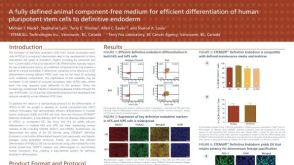 科学海报A Fully Defined Animal Component Free Medium for Efficient Differentiation of Human Pluripotent Stem Cells to Definitive Endoderm
 沪公网安备31010102008431号