M. Liu et al. (nov 2019)
Leukemia research 86 106225
Treatment of human T-cell acute lymphoblastic leukemia cells with CFTR inhibitor CFTRinh-172.
Our previous studies have demonstrated that a previously unrecognized role of CFTR in hematopoiesis and acute leukemia. Here,we show that CFTR inhibitor CFTR-inh172 possesses ability to inhibit human T-cell acute lymphoblastic leukemia cells. In detail,CFTR-inh172 inhibited cell proliferation,promoted apoptosis and arrested the cell cycle in human T-cell acute lymphoblastic leukemia cell CCRF-CEM,JURKAT and MOLT-4. Furthermore,transcriptome analysis reveals that CFTR-inh172 induces significant alteration of gene expression related to apoptosis and proliferation. These findings demonstrate the potential of CFTR inhibitor CFTR-inh172 in human T-cell acute lymphoblastic leukemia treatment.
View Publication
产品类型:
产品号#:
06005
产品名:
IntestiCult™ 类器官生长培养基 (小鼠)
A. Ly et al. (nov 2019)
Cell reports 29 8 2257--2269.e6
Transcription Factor T-bet in B Cells Modulates Germinal Center Polarization and Antibody Affinity Maturation in Response to Malaria.
Despite the key role that antibodies play in protection,the cellular processes mediating the acquisition of humoral immunity against malaria are not fully understood. Using an infection model of severe malaria,we find that germinal center (GC) B cells upregulate the transcription factor T-bet during infection. Molecular and cellular analyses reveal that T-bet in B cells is required not only for IgG2c switching but also favors commitment of B cells to the dark zone of the GC. T-bet was found to regulate the expression of Rgs13 and CXCR3,both of which contribute to the impaired GC polarization observed in the absence of T-bet,resulting in reduced IghV gene mutations and lower antibody avidity. These results demonstrate that T-bet modulates GC dynamics,thereby promoting the differentiation of B cells with increased affinity for antigen.
View Publication
产品类型:
产品号#:
06005
产品名:
IntestiCult™ 类器官生长培养基 (小鼠)
M. Pardons et al. (nov 2019)
Cell reports 29 9 2783--2795.e5
Latency-Reversing Agents Induce Differential Responses in Distinct Memory CD4 T Cell Subsets in Individuals on Antiretroviral Therapy.
Latent proviruses persist in central (TCM),transitional (TTM),and effector (TEM) memory cells. We measured the levels of cellular factors involved in HIV gene expression in these subsets. The highest levels of acetylated H4,active nuclear factor $\kappa$B (NF-$\kappa$B),and active positive transcription elongation factor b (P-TEFb) were measured in TEM,TCM,and TTM cells,respectively. Vorinostat and romidepsin display opposite abilities to induce H4 acetylation across subsets. Protein kinase C (PKC) agonists are more efficient at inducing NF-$\kappa$B phosphorylation in TCM cells but more potent at activating PTEF-b in the TEM subset. We selected the most efficient latency-reversing agents (LRAs) and measured their ability to reverse latency in each subset. While ingenol alone has modest activities in the three subsets,its combination with a histone deacetylase inhibitor (HDACi) dramatically increases latency reversal in TCM cells. Altogether,these results indicate that cellular HIV reservoirs are differentially responsive to common LRAs and suggest that combination of compounds will be required to achieve latency reversal in all subsets.
View Publication
产品类型:
产品号#:
17955
17955RF
100-0960
产品名:
EasySep™人NK细胞分选试剂盒
RoboSep™ 人NK细胞分选试剂盒
EasySep™人NK细胞分离试剂盒
T. Scott et al. (nov 2019)
Scientific reports 9 1 16104
Improved Cas9 activity by specific modifications of the tracrRNA.
CRISPR/Cas is a transformative gene editing tool,that offers a simple and effective way to target a catalytic Cas9,the most widely used is derived from Streptococcus pyogenes (SpCas9),with a complementary small guide RNA (sgRNA) to inactivate endogenous genes resulting from insertions and deletions (indels). CRISPR/Cas9 has been rapidly applied to basic research as well as expanded for potential clinical applications. Utilization of spCas9 as an ribonuclearprotein complex (RNP) is considered the most safe and effective method to apply Cas9 technology,and the efficacy of this system is critically dependent on the ability of Cas9 to generate high levels of indels. We find here that novel sequence changes to the tracrRNA significantly improves Cas9 activity when delivered as an RNP. We demonstrate that a dual-guide RNA (dgRNA) with a modified tracrRNA can improve reporter knockdown and indel formation at several targets within the long terminal repeat (LTR) of HIV. Furthermore,the sequence-modified tracrRNAs improved Cas9-mediated reduction of CCR5 surface receptor expression in cell lines,which correlated with higher levels of indel formation. It was demonstrated that a Cas9 RNP with a sequence modified tracrRNA enhanced indel formation at the CCR5 target site in primary CD4+ T-cells. Finally,we show improved activity at two additional targets within the HBB locus and the BCL11A GATA site. Overall,the data presented here suggests that novel facile tracrRNA sequence changes could potentially be integrated with current dgRNA technology,and open up the possibility for the development of sequence modified tracrRNAs to improve Cas9 RNP activity.
View Publication
产品类型:
产品号#:
19655
19661
19669
产品名:
EasySep™ Direct人总淋巴细胞分选试剂盒
EasySep™ Direct人T细胞分选试剂盒
EasySep™ Direct人单核细胞分选试剂盒
Y. Zhao et al. (sep 2019)
Cancer biology {\&} therapy 16 1--9
Identification of anti-CD16a single domain antibodies and their application in bispecific antibodies.
CD16a (Fc$\gamma$RIIIa) mediates the antibody dependent cellular cytotoxicity (ADCC) and is important for anti-tumor activities of many therapeutic antibodies. Bispecific antibody targeting natural killer (NK) cells has been studied for cancer therapy. In this work,anti-CD16a single-domain antibodies were identified from hCD16a immunized camel. Bispecific antibodies are then constructed by fusing these single domain antibodies with an anti-CEA single domain antibody. These bispecific antibodies can recruite NK cells to kill CEA-positive tumor cells,and inhibit tumor growth in vivo,suggesting that these anti-CD16a single domain antibodies are powerful tools to engaging NK cells for cancer therapy.
View Publication
产品类型:
产品号#:
86450
86460
产品名:
SepMate™-50 (RUO)
SepMate™-50 (RUO)
专家访谈
Eric Song
Priming the Immune System Against Brain Tumors
SnapShot: COVID-19
Overview of the life cycle, viral structure, and human immune response to SARS-CoV-2
发布日期: 07/15/2020
A. Balakrishnan et al. (sep 2019)
Clinical cancer research : an official journal of the American Association for Cancer Research 25 24 7506--7516
Multispecific Targeting with Synthetic Ankyrin Repeat Motif Chimeric Antigen Receptors.
PURPOSE The outgrowth of antigen-negative variants is a significant challenge for adoptive therapy with T cells that target a single specificity. Chimeric antigen receptors (CAR) are typically designed with one or two scFvs that impart antigen specificity fused to activation and costimulation domains of T-cell signaling molecules. We designed and evaluated the function of CARs with up to three specificities for overcoming tumor escape using Designed Ankyrin Repeat Proteins (DARPins) rather than scFvs for tumor recognition. EXPERIMENTAL DESIGN A monospecific CAR was designed with a DARPin binder (E01) specific for EGFR and compared with a CAR designed using an anti-EGFR scFv. CAR constructs in which DARPins specific for EGFR,EpCAM,and HER2 were linked together in a single CAR were then designed and optimized to achieve multispecific tumor recognition. The efficacy of CAR-T cells bearing a multispecific DARPin CAR for treating tumors with heterogeneous antigen expression was evaluated in vivo. RESULTS The monospecific anti-EGFR E01 DARPin conferred potent tumor regression against EGFR+ targets that was comparable with an anti-EGFR scFv CAR. Linking three separate DARPins in tandem was feasible and in an optimized format generated a single tumor recognition domain that targeted a mixture of heterogeneous tumor cells,each expressing a single antigen,and displayed synergistic activity when tumor cells expressed more than one target antigen. CONCLUSIONS DARPins can serve as high-affinity recognition motifs for CAR design,and their robust architecture enables linking of multiple binders against different antigens to achieve functional synergy and reduce antigen escape.
View Publication
产品类型:
产品号#:
19662
19662RF
19663
产品名:
EasySep™ Direct人CD4+ T细胞分选试剂盒
RoboSep™ Direct人CD4+ T细胞分选试剂盒
EasySep™ Direct人CD8+ T细胞分选试剂盒
B. L. Khoo et al. ( 2019)
NPJ precision oncology 3 30
Liquid biopsy for minimal residual disease detection in leukemia using a portable blast cell biochip.
Long-term management for leukemia is challenging due to the painful and invasive procedure of bone marrow (BM) biopsy. At present,non-invasive liquid (blood) biopsy is not utilized for leukemia,due to lower counts of leukemia blast cells in the blood. Here,we described a robust system for the simultaneous detection and enrichment of rare blast cells. Enrichment of blast cells was achieved from blood with a one-step microfluidic blast cell biochip (BCB) sorting system,without specific targeting of proteins by antibodies. Non-target cells encountered a differential net force as compared to stiffer blast cells and were removed. The efficiency of the BCB promotes high detection sensitivity (1 in 106 cells) even from patients with minimal residual disease. The procedure was validated using actual blast cells from patients with various types of leukemia. Outcomes were compared to current evaluation standards,such as flow cytometry,using BM aspirates. Blast cell detection efficiency was higher in 55.6{\%} of the patients using the BCB as compared to flow cytometry,despite the lower concentrations of blast cells in liquid biopsy. These studies promote early-stage detection and routine monitoring for minimal residual disease in patients.
View Publication
产品类型:
产品号#:
19655
19655RF
产品名:
EasySep™ Direct人总淋巴细胞分选试剂盒
RoboSep™ Direct人总淋巴细胞分选试剂盒
M. Kim et al. (jan 2020)
Scientific reports 10 1 1085
Novel genes exhibiting DNA methylation alterations in Korean patients with chronic lymphocytic leukaemia: a methyl-CpG-binding domain sequencing study.
Chronic lymphocytic leukaemia (CLL) exhibits differences between Asians and Caucasians in terms of incidence rate,age at onset,immunophenotype,and genetic profile. We performed genome-wide methylation profiling of CLL in an Asian cohort for the first time. Eight Korean patients without somatic immunoglobulin heavy chain gene hypermutations underwent methyl-CpG-binding domain sequencing (MBD-seq),as did five control subjects. Gene Ontology,pathway analysis,and network-based prioritization of differentially methylated genes were also performed. More regions were hypomethylated (2,062 windows) than were hypermethylated (777 windows). Promoters contained the highest proportion of differentially methylated regions (0.08{\%}),while distal intergenic and intron regions contained the largest number of differentially methylated regions. Protein-coding genes were the most abundant,followed by long noncoding and short noncoding genes. The most significantly over-represented signalling pathways in the differentially methylated gene list included immune/cancer-related pathways and B-cell receptor signalling. Among the top 10 hub genes identified via network-based prioritization,four (UBC,GRB2,CREBBP,and GAB2) had no known relevance to CLL,while the other six (STAT3,PTPN6,SYK,STAT5B,XPO1,and ABL1) have previously been linked to CLL in Caucasians. As such,our analysis identified four novel candidate genes of potential significance to Asian patients with CLL.
View Publication
产品类型:
产品号#:
17854
17854RF
产品名:
EasySep™人CD19正选试剂盒II
RoboSep™ 人CD19正选试剂盒II
R. D. Kim et al. (jul 2020)
Clinical cancer research : an official journal of the American Association for Cancer Research 26 14 3557--3564
Phase II Study of Ensituximab, a Novel Chimeric Monoclonal Antibody, in Adults with Unresectable, Metastatic Colorectal Cancer.
PURPOSE Patients with metastatic colorectal cancer refractory to chemotherapy have limited treatment options. Ensituximab (NEO-102) is a novel chimeric mAb targeting a variant of MUC5AC with specificity to colorectal cancer. PATIENTS AND METHODS Single-arm,phase II trial assessed the efficacy and safety of ensituximab in patients with advanced,refractory cancer who expressed MUC5AC antigen in tumor tissue. Ensituximab was administered intravenously every 2 weeks with 3 mg/kg as recommended phase II dose (RP2D). A minimum sample size of 43 patients was required on the basis of the assumption that ensituximab would improve median overall survival (OS) by 7 months using a one-sided significance level of 10{\%} and 80{\%} power. Written informed consent was obtained from all patients. RESULTS Sixty-three patients with advanced,refractory colorectal cancer were enrolled and 53 subjects were treated in phase II arm. Median age was 58 years and 46{\%} of the patients were female. Among 57 evaluable patients,median OS was 6.8 months. No responses were observed,and stable disease was achieved in 21{\%} of the patients. The most common treatment-related adverse events (AE) at RP2D included fatigue (38{\%}),anemia (30{\%}),nausea (15{\%}),vomiting (11{\%}),increased bilirubin (9{\%}),constipation (8{\%}),decreased appetite (6{\%}),and diarrhea (6{\%}). Serious AEs at least possibly related to ensituximab occurred in 4 patients and included anemia,nausea,increased bilirubin,and hypoxia. No patients discontinued treatment due to drug-related AEs. CONCLUSIONS Ensituximab was well tolerated and demonstrated modest antitumor activity in patients with heavily pretreated refractory colorectal cancer.
View Publication


 EasySep™小鼠TIL(CD45)正选试剂盒





 专家访谈Eric Song Priming the Immune System Against Brain Tumors
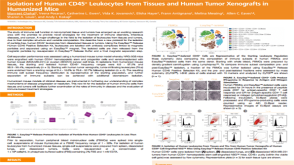 科学海报Isolation of Human CD45+ Leukocytes From Tissues and Human Tumor Xenografts in Humanized Mice
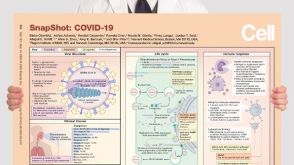 挂图SnapShot: COVID-19 Overview of the life cycle, viral structure, and human immune response to SARS-CoV-2发布日期: 07/15/2020
 沪公网安备31010102008431号