A. Caye et al. (jun 2020)
Leukemia 34 6 1658--1668
Despite mutation acquisition in hematopoietic stem cells, JMML-propagating cells are not always restricted to this compartment.
Juvenile myelomonocytic leukemia (JMML) is a rare aggressive myelodysplastic/myeloproliferative neoplasm of early childhood,initiated by RAS-activating mutations. Genomic analyses have recently described JMML mutational landscape; however,the nature of JMML-propagating cells (JMML-PCs) and the clonal architecture of the disease remained until now elusive. Combining genomic (exome,RNA-seq),Colony forming assay and xenograft studies,we detect the presence of JMML-PCs that faithfully reproduce JMML features including the complex/nonlinear organization of dominant/minor clones,both at diagnosis and relapse. Further integrated analysis also reveals that although the mutations are acquired in hematopoietic stem cells,JMML-PCs are not always restricted to this compartment,highlighting the heterogeneity of the disease during the initiation steps. We show that the hematopoietic stem/progenitor cell phenotype is globally maintained in JMML despite overexpression of CD90/THY-1 in a subset of patients. This study shed new lights into the ontogeny of JMML,and the identity of JMML-PCs,and provides robust models to monitor the disease and test novel therapeutic approaches.
View Publication
产品类型:
产品号#:
05445
05448
19849
产品名:
MesenCult™ -ACF Plus培养基
MesenCult™-ACF Plus培养试剂盒
EasySep™小鼠/人嵌合体分选试剂盒
G. J. Godoy et al. ( 2019)
Frontiers in immunology 10 2665
T Regulatory Cells From Non-obese Diabetic Mice Show Low Responsiveness to IL-2 Stimulation and Exhibit Differential Expression of Anergy-Related and Ubiquitination Factors.
Foxp3+ Regulatory T cells (Tregs) are pivotal for the maintenance of tolerance. Alterations in their number and/or function have been proposed to occur in the autoimmune-prone non-obese diabetic (NOD) mouse. Comparing the frequencies and absolute numbers of CD4+Foxp3+CD25+ Tregs among 4 to 6-week old NOD,B6,and BALB/c mice,we observed differences in counts and Foxp3 expression in Tregs from secondary lymphoid organs,but not in the thymus. Upon TCR and IL-2 stimulation,NOD Tregs showed lower responses than Tregs from B6 and BALB/c mice. Indeed,NOD Tregs responded with less proliferation and with smaller increments in the expression of CD25,LAP-1,CD39,PD-1,PD-L1,and LAG-3,when in vitro cultured for 3 days with anti-CD3/CD28 in the absence or presence of IL-2,Tregs from NOD mice showed to be highly dependent on IL-2 to maintain Foxp3 expression. Moreover,NOD Tregs become producers of IL-17 and INF-gamma more easily than Tregs from the other strains. In addition,NOD Tregs showed lower responsiveness to IL-2,with significantly reduced levels of pSTAT5,even at high IL-2 doses,with respect to B6 and BALB/c Tregs. Interestingly,NOD Tregs exhibit differences in the expression of SOCS3,GRAIL,and OTUB1 when compared with Tregs from B6 and BALB/c mice. Both,at steady state conditions and also after activation,Tregs from NOD mice showed increased levels of OTUB1 and low levels of GRAIL. In addition,NOD Tregs had differences in the expression of ubiquitin related molecules that play a role in the maintenance of Foxp3 cellular pools. Indeed,significantly higher STUB1/USP7 ratios were detected in NOD Tregs,both at basal conditions and after stimulation,compared to in B6 and BALB/c Tregs. Moreover,the addition of a proteasome inhibitor to cell cultures,conferred NOD Tregs the ability to retain Foxp3 expression. Herein,we provide evidence indicating a differential expression of SOCS3,GRAIL,and STUB1/USP7 in Tregs from NOD mice,factors known to be involved in IL-2R signaling and to affect Foxp3 stability. These findings add to the current knowledge of the immunobiology of Tregs and may be related to the known insufficiency of Tregs from NOD mice to maintain self-tolerance.
View Publication
产品类型:
产品号#:
05790
05792
05793
05794
05795
产品名:
BrainPhys™神经元培养基
BrainPhys™神经元培养基和SM1试剂盒
BrainPhys™ 神经元培养基N2-A和SM1试剂盒
BrainPhys™原代神经元试剂盒
BrainPhys™ hPSC 神经元试剂盒
E. Kjeldsen ( 2016)
Cancer genomics {\&} proteomics 13 2 91--127
Identification of Prognostically Relevant Chromosomal Abnormalities in Routine Diagnostics of Multiple Myeloma Using Genomic Profiling.
BACKGROUND The combination of serum $\beta$2-microglubulin and albumin levels is highly prognostic in multiple myeloma (MM),defined as the International Staging System (ISS). Recurrent genomic abnormalities present in myeloma cells also have a strong prognostic power. This study aimed to assess,in a routine diagnostic setting,whether genomic aberrations can be used to identify sub-groups in ISS staging,as this system does not incorporate intrinsic myeloma cell variability at the molecular level. MATERIALS AND METHODS A prospective population-based study of 123 patients newly diagnosed with MM with ISS staging were included for karyotyping,interphase nuclei fluorescence in situ hybridization (iFISH) and oligo-based array comparative genomic hybridization (oaCGH) analyses. RESULTS Clonal abnormalities were identified in 27{\%} of analyses by karyotyping,in 83{\%} by iFISH,and in 99{\%} by oaCGH analysis. ISS staging combined with oaCGH aberrations identified ISS sub-groups. CONCLUSION oaCGH analysis is a valuable asset in detecting prognostically relevant genomic abnormalities. The combination of oaCGH data with ISS staging might help define new sub-groups in MM.
View Publication
产品类型:
产品号#:
06005
100-1133
产品名:
IntestiCult™ 类器官生长培养基 (小鼠)
T. B. Levring et al. (nov 2019)
Scientific reports 9 1 16725
Tumor necrosis factor induces rapid down-regulation of TXNIP in human T cells.
In addition to antigen-driven signals,T cells need co-stimulatory signals for robust activation. Several receptors,including members of the tumor necrosis factor receptor superfamily (TNFRSF),can deliver co-stimulatory signals to T cells. Thioredoxin interacting protein (TXNIP) is an important inhibitor of glucose uptake and cell proliferation,but it is unknown how TXNIP is regulated in T cells. The aim of this study was to determine expression levels and regulation of TXNIP in human T cells. We found that na{\{i}}ve T cells express high levels of TXNIP and that treatment of blood samples with TNF results in rapid down-regulation of TXNIP in the T cells. TNF-induced TXNIP down-regulation correlated with increased glucose uptake. Furthermore we found that density gradient centrifugation (DGC) induced down-regulation of TXNIP. We demonstrate that DGC induced TNF production that paralleled the TXNIP down-regulation. Treatment of blood with toll-like receptor (TLR) ligands induced TNF production and TXNIP down-regulation suggesting that damage-associated molecular patterns (DAMPs) such as endogenous TLR ligands released during DGC play a role in DGC-induced TXNIP down-regulation. Finally we demonstrate that TNF-induced TXNIP down-regulation is dependent on caspase activity and is caused by caspase-mediated cleavage of TXNIP."
View Publication
产品类型:
产品号#:
06005
产品名:
IntestiCult™ 类器官生长培养基 (小鼠)
F. Mammoli et al. (sep 2019)
Experimental cell research 382 1 111445
Physiological expression of miR-130a during differentiation of CD34+ human hematopoietic stem cells results in the inhibition of monocyte differentiation.
MicroRNAs (miRNA) are small noncoding RNAs that regulate gene expression by targeting mRNAs in a sequence specific manner,thereby determining their degradation or inhibiting translation. They are involved in processes such as proliferation,differentiation and apoptosis by fine-tuning the expression of genes underlying such events. The expression of specific miRNAs is involved in hematopoietic differentiation and their deregulation contributes to the development of hematopoietic malignancies such as acute myeloid leukemia (AML). miR-130a is over-expressed in AML. Here we show that miR-130a is physiologically expressed in myeloblasts and down-regulated during monocyte differentiation. Gain- and loss-of-function experiments performed on CD34+ human hematopoietic stem cells confirmed that expression of miR-130a inhibits monocyte differentiation by interfering with the expression of key transcription factors HOXA10,IRF8,KLF4,MAFB and PU-1. The data obtained in this study highlight that the correct modulation of miR-130a is necessary for normal differentiation to occur and confirming that deregulation of this miRNA might underlie the differentiation block occurring in AML.
View Publication
产品类型:
产品号#:
06005
产品名:
IntestiCult™ 类器官生长培养基 (小鼠)
J. A. Pearson et al. ( 2019)
Frontiers in immunology 10 2654
Norovirus Changes Susceptibility to Type 1 Diabetes by Altering Intestinal Microbiota and Immune Cell Functions.
Environmental factors contribute to Type 1 diabetes (T1D) susceptibility. The gut microbiome,which includes bacteria,viruses,and fungi,contributes to this environmental influence,and can induce immunological changes. The gut viral component of the microbiome,related to T1D has mostly focused on coxsackieviruses and rotavirus. The role of norovirus,another common enteric virus,in susceptibility to T1D was hitherto unknown. Norovirus is highly infectious and encountered by many children. We studied the mouse norovirus 4 (MNV4),related to human noroviruses,in the Non-obese diabetic (NOD) mouse model,to determine its role in influencing susceptibility to T1D. We infected MNV-free NOD mice with MNV4 by exposing the mice to MNV4-positive bedding from an endemically-infected mouse colony to mimic a natural infection. Control MNV-free NOD mice were exposed to MNV-free bedding from the same colony. Interestingly,MNV4 infection protected NOD mice from the development of T1D and was associated with an expansion of Tregs and reduced proinflammatory T cells. We also found MNV4 significantly modified the gut commensal bacteria composition,promoting increased $\alpha$-diversity and Firmicutes/Bacteroidetes ratio. To elucidate whether T1D protection was directly related to MNV4,or indirectly through modulating gut microbiota,we colonized germ-free (GF) NOD mice with the MNV4-containing or non-MNV4-containing viral filtrate,isolated from filtered fecal material. We found that MNV4 induced significant changes in mucosal immunity,including altered Tuft cell markers,cytokine secretion,antiviral immune signaling markers,and the concentration of mucosal antibodies. Systemically,MNV4-infection altered the immune cells including B cell subsets,macrophages and T cells,and especially induced an increase in Treg number and function. Furthermore,in vitro primary exposure of the norovirus filtrate to na{\{i}}ve splenocytes identified significant increases in the proportion of activated and CTLA4-expressing Tregs. Our data provide novel knowledge that norovirus can protect NOD mice from T1D development by inducing the expansion of Tregs and reducing inflammatory T cells. Our study also highlights the importance of distinguishing the mucosal immunity mediated by bacteria from that by enteric viruses."
View Publication
产品类型:
产品号#:
18001
产品名:
“The Big Easy” EasySep™磁极
S. Schmidt et al. (nov 2019)
Pathogens (Basel,Switzerland) 8 4
Distinct Effects of Immunosuppressive Drugs on the Anti-Aspergillus Activity of Human Natural Killer Cells.
As the prognosis of invasive aspergillosis remains unacceptably poor in patients undergoing hematopoietic stem cell transplantation (HSCT),there is a growing interest in the adoptive transfer of antifungal effector cells,such as Natural Killer (NK) cells. Because immunosuppressive agents are required in most HSCT recipients,knowledge of the impact of these compounds on the antifungal activity of NK cells is a prerequisite for clinical trials. We,therefore,assessed the effect of methylprednisolone (mPRED),cyclosporin A (CsA) and mycophenolic acid (MPA) at different concentrations on proliferation,apoptosis/necrosis,and the direct and indirect anti-Aspergillus activity of human NK cells. Methylprednisolone decreased proliferation and increased apoptosis of NK cells in a significant manner. After seven days,a reduction of viable NK cells was seen for all three immunosuppressants,which was significant for MPA only. Cyclosporin A significantly inhibited the direct hyphal damage by NK cells in a dose-dependent manner. None of the immunosuppressive compounds had a major impact on the measured levels of interferon-$\gamma$,granulocyte-macrophage colony-stimulating factor and RANTES (regulated on activation,normal T cell expressed and secreted; CCL5). Our data demonstrate that commonly used immunosuppressive compounds have distinct effects on proliferation,viability and antifungal activity of human NK cells,which should be considered in designing studies on the use of NK cells for adoptive antifungal immunotherapy.
View Publication
产品类型:
产品号#:
19055
19055RF
19059
19059RF
产品名:
EasySep™人NK细胞富集试剂盒
RoboSep™ 人NK细胞富集试剂盒含滤芯吸头
EasySep™人单核细胞富集试剂盒
RoboSep™ 人单核细胞富集试剂盒含滤芯吸头
J. D. Strickley et al. ( 2019)
Nature 575 7783 519--522
Immunity to commensal papillomaviruses protects against skin cancer.
Immunosuppression increases the risk of cancers that are associated with viral infection1. In particular,the risk of squamous cell carcinoma of the skin-which has been associated with beta human papillomavirus ($\beta$-HPV) infection-is increased by more than 100-fold in immunosuppressed patients2-4. Previous studies have not established a causative role for HPVs in driving the development of skin cancer. Here we show that T cell immunity against commensal papillomaviruses suppresses skin cancer in immunocompetent hosts,and the loss of this immunity-rather than the oncogenic effect of HPVs-causes the markedly increased risk of skin cancer in immunosuppressed patients. To investigate the effects of papillomavirus on carcinogen-driven skin cancer,we colonized several strains of immunocompetent mice with mouse papillomavirus type 1 (MmuPV1)5. Mice with natural immunity against MmuPV1 after colonization and acquired immunity through the transfer of T cells from immune mice or by MmuPV1 vaccination were protected against skin carcinogenesis induced by chemicals or by ultraviolet radiation in a manner dependent on CD8+ T cells. RNA and DNA in situ hybridization probes for 25 commensal $\beta$-HPVs revealed a significant reduction in viral activity and load in human skin cancer compared with the adjacent healthy skin,suggesting a strong immune selection against virus-positive malignant cells. Consistently,E7 peptides from $\beta$-HPVs activated CD8+ T cells from unaffected human skin. Our findings reveal a beneficial role for commensal viruses and establish a foundation for immune-based approaches that could block the development of skin cancer by boosting immunity against the commensal HPVs present in all of our skin.
View Publication
产品类型:
产品号#:
19855
19855RF
产品名:
EasySep™小鼠NK细胞分选试剂盒
RoboSep™ 小鼠NK细胞分选试剂盒
L. Zhao et al. (sep 2019)
Cell death {\&} disease 10 10 731
LncRNA SNHG14/miR-5590-3p/ZEB1 positive feedback loop promoted diffuse large B cell lymphoma progression and immune evasion through regulating PD-1/PD-L1 checkpoint.
Diffuse large B cell lymphoma (DLBCL) is the commonest disorder derived from the B-lymphocytes. Inhibiting the immune checkpoint through naturalizing programmed death-1 (PD-1) and programmed death ligand 1 (PD-L1) is proved to be a successful therapeutic regime for lymphoma. Long non-coding RNAs (lncRNAs) are unceasingly reported to be promising biological targets for the cancer therapies. This study planned to explore the regulation of small nucleolar RNA host gene 14 (SNHG14) on DLBCL. SNHG14 level in DLBCL samples and cell lines was analyzed by GEPIA bioinformatics tool and RT-qPCR. Biological functions of SNHG14 in DLBCL were detected by CCK-8,colony formation,and transwell invasion assays. Molecular interaction was determined by RNA immunoprecipitation (RIP) and luciferase reporter assays. MiR-5590-3p-related pathway was identified through KEGG pathway analysis applying DAVID6.8 online bioinformatics tool. Effect of SNHG14 on CD8+ T cells was detected by flow cytometry. Results depicted that SNHG14 was upregulated in DLBCL and its depletion retarded proliferation,migration and epithelial-to-mesenchymal transition (EMT). Mechanistically,SNHG14 sponged miR-5590-3p to upregulate Zinc finger E-box binding homeobox 1 (ZEB1),and ZEB1 transcriptionally activated SNHG14 and PD-L1 to promote the immune evasion of DLBCL cells. In conclusion,we firstly showed that SNHG14/miR-5590-3p/ZEB1 positive feedback loop promoted diffuse large B cell lymphoma progression and immune evasion through regulating PD-1/PD-L1 checkpoint,indicating that targeting SNHG14 was a potential approach to improve the efficacy of immunotherapy in DLBCL.
View Publication
产品类型:
产品号#:
86450
86460
产品名:
SepMate™-50 (RUO)
SepMate™-50 (RUO)
L. Zhu et al. ( 2019)
Immunologic research 67 5-Apr 443--449
Characterization of IL-17-producing Treg cells in type 2 diabetes patients.
The association between type 2 diabetes (T2D) pathogenesis and immune-mediated tissue damage and insulin resistance suggests that T2D patients might benefit from the suppression of pathogenic inflammation. Foxp3+ Treg cells are crucial suppressors of inflammation,but the differentiation of Foxp3+ Treg cells is not static and is subject to conversion into IL-17-producing Th17-like cells upon receiving external signals. In this study,we examined the production of IL-17 by Treg cells. Compared to non-T2D controls,T2D patients presented significantly higher levels of IL-17-expressing cells in both Foxp3- CD4 T cells and Foxp3+ Treg cells. The frequencies of IL-17-nonexpressing Foxp3+ Treg cells,on the other hand,were not changed. Interestingly,IL-17-expressing Foxp3+ Treg cells were mutually exclusive from IL-10-expressing and TGF-$\beta$-expressing Foxp3+ Treg cells,suggesting that multiple subpopulations exist within the Foxp3+ Treg cells from T2D patients. In T2D patients,the frequencies of IL-17-expressing Foxp3+ Treg cells were positively correlated with the body mass index (BMI) and the HbA1c levels of T2D patients. The frequencies of IL-10-expressing Treg cells,on the other hand,were inversely associated with the BMI of both non-T2D controls and T2D patients. In addition,the suppressive activity of Treg cells was significantly lower in T2D patients than in non-T2D controls. Together,our study uncovered a dysregulation in Foxp3+ Treg cells from T2D patients,characterized by high IL-17 expression and low suppression activity.
View Publication
K. Alack et al. (jan 2020)
Scientific reports 10 1 888
Profiling of human lymphocytes reveals a specific network of protein kinases modulated by endurance training status.
To date,the effects of endurance exercise training on lymphocyte physiology at the kinome level are largely unknown. Therefore,the present study used a highly sensitive peptide-based kinase activity profiling approach to investigate if the basal activity of tyrosine (Tyr) and serine/threonine (Ser/Thr) kinases of human lymphocytes is affected by the aerobic endurance training status. Results revealed that the activity of various tyrosine kinases of the FGFR family and ZAP70 was increased,whereas the activity of multiple Ser/Thr kinases such as IKK$\alpha$,CaMK4,PKA$\alpha$,PKC$\alpha$+$\delta$ (among others) was decreased in lymphocytes of endurance trained athletes (ET). Moreover,functional associations between several differentially regulated kinases in ET-derived lymphocytes were demonstrated by phylogenetic mapping and network analysis. Especially,Ser/Thr kinases of the AGC-kinase (protein kinase A,G,and C) family represent exercise-sensitive key components within the lymphocytes kinase network that may mediate the long-term effects of endurance training. Furthermore,KEGG (Kyoto Encyclopedia of Genes and Genomes) and Reactome pathway analysis indicate that Ras as well as intracellular signaling by second messengers were found to be enriched in the ET individuals. Overall,our data suggest that endurance exercise training improves the adaptive immune competence by modulating the activity of multiple protein kinases in human lymphocytes.
View Publication


 EasySep™小鼠TIL(CD45)正选试剂盒





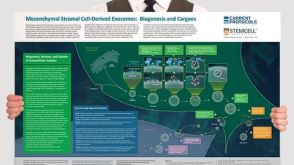 挂图Mesenchymal Stromal Cell-Derived Exosomes: Biogenesis and Cargoes Overview of exosome and microvesicle biogenesis pathways and potential therapeutic implications in the context of mesenchymal stromal cells发布日期: 02/27/2020
 沪公网安备31010102008431号