K. Alack et al. (jan 2020)
Scientific reports 10 1 888
Profiling of human lymphocytes reveals a specific network of protein kinases modulated by endurance training status.
To date,the effects of endurance exercise training on lymphocyte physiology at the kinome level are largely unknown. Therefore,the present study used a highly sensitive peptide-based kinase activity profiling approach to investigate if the basal activity of tyrosine (Tyr) and serine/threonine (Ser/Thr) kinases of human lymphocytes is affected by the aerobic endurance training status. Results revealed that the activity of various tyrosine kinases of the FGFR family and ZAP70 was increased,whereas the activity of multiple Ser/Thr kinases such as IKK$\alpha$,CaMK4,PKA$\alpha$,PKC$\alpha$+$\delta$ (among others) was decreased in lymphocytes of endurance trained athletes (ET). Moreover,functional associations between several differentially regulated kinases in ET-derived lymphocytes were demonstrated by phylogenetic mapping and network analysis. Especially,Ser/Thr kinases of the AGC-kinase (protein kinase A,G,and C) family represent exercise-sensitive key components within the lymphocytes kinase network that may mediate the long-term effects of endurance training. Furthermore,KEGG (Kyoto Encyclopedia of Genes and Genomes) and Reactome pathway analysis indicate that Ras as well as intracellular signaling by second messengers were found to be enriched in the ET individuals. Overall,our data suggest that endurance exercise training improves the adaptive immune competence by modulating the activity of multiple protein kinases in human lymphocytes.
View Publication
产品类型:
产品号#:
19655
19655RF
产品名:
EasySep™ Direct人总淋巴细胞分选试剂盒
RoboSep™ Direct人总淋巴细胞分选试剂盒
M. Banach-Or\lowska et al. (dec 2019)
Cell communication and signaling : CCS 17 1 171
BACKGROUND Lymphotoxin $\beta$ receptor (LT$\beta$R) plays important roles in the development of the immune system and immune response. At the cellular level,ligand-bound LT$\beta$R activates the pro-inflammatory NF-$\kappa$B pathway but the detailed mechanisms regulating its signaling remain unknown. Understanding them is of high importance since LT$\beta$R and its ligands are promising therapeutic targets. Here,we studied the consequences of perturbed cellular cholesterol content on LT$\beta$R-induced NF-$\kappa$B signaling. METHODS To modulate cholesterol availability and/or level in lung carcinoma A549 and H2228,and endothelial HUVEC cells different treatment regimens with filipin,methyl-$\beta$-cyclodextrin and simvastatin were applied. LT$\beta$R localization was studied by confocal microscopy. The activity of LT$\beta$R-induced NF-$\kappa$B pathway was assessed by measuring the levels of NF-$\kappa$B pathway inhibitor I$\kappa$B$\alpha$ and phosphorylation of RelA transcription factor by Western blotting. The NF-$\kappa$B transcriptional response,production of chemokines and adhesion molecules were examined by qRT-PCR,ELISA,and Western blotting,respectively. Adherence of different types of primary immune cells to epithelial A549 cells and endothelial HUVECs was measured fluorometrically. Interactions of LT$\beta$R with its protein partners were investigated by immunoprecipitation. RESULTS We showed that filipin-mediated sequestration of cholesterol or its depletion from the plasma membrane with methyl-$\beta$-cyclodextrin impaired LT$\beta$R internalization and potentiated LT$\beta$R-dependent activation of the canonical branch of the NF-$\kappa$B pathway. The latter was manifested by enhanced degradation of I$\kappa$B$\alpha$ inhibitor,elevated RelA phosphorylation,substantial increase in the expression of NF-$\kappa$B target genes encoding,among others,cytokines and adhesion molecules known to play important roles in immune response. It was followed by robust secretion of CXCL8 and upregulation of ICAM1,that favored the adhesion of immune cells (NK and T cells,neutrophils) to A549 cells and HUVECs. Mechanistically,we showed that cholesterol depletion stabilized interactions of ligand-stimulated LT$\beta$R with modified forms of TRAF2 and NEMO proteins. CONCLUSIONS Our results showed that the reduction of the plasma membrane content of cholesterol or its sequestration strongly potentiated signaling outcome initiated by LT$\beta$R. Thus,drugs modulating cholesterol levels could potentially improve efficacy of LT$\beta$R-based therapies. Video abstract.
View Publication
产品类型:
产品号#:
19666
100-0404
产品名:
EasySep™ Direct人中性粒细胞分选试剂盒
RoboSep™ 人中性粒细胞分选试剂盒
A. M. Bujor et al. ( 2020)
Frontiers in immunology 11 800
Fli1 Downregulation in Scleroderma Myeloid Cells Has Profibrotic and Proinflammatory Effects.
Scleroderma (SSc) is an autoimmune connective tissue disease characterized by immune dysregulation,vasculopathy,and fibrosis. We have previously demonstrated that low Fli1 expression in SSc fibroblasts and endothelial cells plays an important role in SSc pathogenesis. Cells of myeloid and lymphoid origin also express Fli1 and are dysregulated in patients with SSc,playing key roles in disease pathogenesis. However,the role for immune Fli1 in SSc is not yet clear. Our aim was to elucidate whether Fli1 contributes to the immune dysregulation seen in SSc. Comparison of the expression of Fli1 in monocytes,B- and T-cell fractions of PBMCs isolated from SSc patients and healthy controls (HC),showed an increase in Fli1 levels in monocytes. We used siRNA transfected human myeloid cells and mouse peritoneal macrophages obtained from Fli1 flox/flox LysMCre+/+ mice,and found that markers of alternative macrophage activation were increased with Fli1 deletion. Coculture of Fli1-deficient myeloid cells and primary human or mouse fibroblasts resulted in a potent induction of collagen type I,independent of TGF$\beta$ upregulation. We next analyzed global gene expression profile in response to Fli1 downregulation,to gain further insight into the molecular mechanisms of this process and to identify differentially expressed genes in myeloid cells. Of relevance to SSc,the top most upregulated pathways were hallmark IFN-$\gamma$ and IFN-$\alpha$ response. Additionally,several genes previously linked to SSc pathogenesis and fibrosis in general were also induced,including CCL2,CCL7,MMP12,and CXCL10. ANKRD1,a profibrotic transcription co-regulator was the top upregulated gene in our array. Our results show that Fli1-deficient myeloid cells share key features with cells from SSc patients,with higher expression of profibrotic markers and activation of interferon responsive genes,thus suggesting that dysregulation of Fli1 in myeloid cells may contribute to SSc pathogenesis.
View Publication
产品类型:
产品号#:
17858
17858RF
17754
100-0694
产品名:
EasySep™人CD14正选试剂盒II
RoboSep™ 人CD14正选试剂盒II
EasySep™ Release人CD19 正选试剂盒
EasySep™人CD14正选试剂盒II
A. A. Chimote et al. ( 2020)
Frontiers in pharmacology 11 143
A Compartmentalized Reduction in Membrane-Proximal Calmodulin Reduces the Immune Surveillance Capabilities of CD8+ T Cells in Head and Neck Cancer.
The limited ability of cytotoxic CD8+ T cells to infiltrate solid tumors and function within the tumor microenvironment presents a major roadblock to effective immunotherapy. Ion channels and Ca2+-dependent signaling events control the activity of T cells and are implicated in the failure of immune surveillance in cancer. Reduced KCa3.1 channel activity mediates the heightened inhibitory effect of adenosine on the chemotaxis of circulating T cells from head and neck squamous cell carcinoma (HNSCC) patients. Herein,we conducted experiments that elucidate the mechanisms of KCa3.1 dysfunction and impaired chemotaxis in HNSCC CD8+ T cells. The Ca2+ sensor calmodulin (CaM) controls multiple cellular functions including KCa3.1 activation. Our data showed that CaM expression is lower in HNSCC than healthy donor (HD) T cells. This reduction was due to an intrinsic decrease in the genes encoding CaM combined to the failure of HNSCC T cells to upregulate CaM upon activation. Furthermore,the reduction in CaM was confined to the plasma membrane and resulted in decreased CaM-KCa3.1 association and KCa3.1 activity (which was rescued by the delivery of CaM). IFN$\gamma$ production,also Ca2+- and CaM-dependent,was instead not reduced in HNSCC T cells,which maintained intact cytoplasmic CaM and Ca2+ fluxing ability. Knockdown of CaM in HD T cells decreased KCa3.1 activity,but not IFN$\gamma$ production,and reduced their chemotaxis in the presence of adenosine,thus recapitulating HNSCC T cell dysfunction. Activation of KCa3.1 with 1-EBIO restored the ability of CaM knockdown HD T cells to chemotax in the presence of adenosine. Additionally,1-EBIO enhanced INF$\gamma$ production. Our data showed a localized downregulation of membrane-proximal CaM that suppressed KCa3.1 activity in HNSCC circulating T cells and limited their ability to infiltrate adenosine-rich tumor-like microenvironments. Furthermore,they indicate that KCa3.1 activators could be used as positive CD8+ T cell modulators in cancers.
View Publication
产品类型:
产品号#:
19053
19053RF
产品名:
EasySep™人CD8+ T细胞富集试剂盒
RoboSep™ 人CD8+ T细胞富集试剂盒含滤芯吸头
S. Figueroa-Lozano et al. ( 2020)
Frontiers in immunology 11 790
Inhibitory Effects of Dietary N-Glycans From Bovine Lactoferrin on Toll-Like Receptor 8; Comparing Efficacy With Chloroquine.
Toll-like receptor 8 (TLR-8) plays a role in the pathogenesis of autoimmune disorders and associated gastrointestinal symptoms that reduce quality of life of patients. Dietary interventions are becoming more accepted as mean to manage onset,progression,and treatment of a broad spectrum of inflammatory conditions. In this study,we assessed the impact of N-glycans derived from bovine lactoferrin (bLF) on the inhibition of TLR-8 activation. We investigated the effects of N-glycans in their native form,as well as in its partially demannosylated and partially desialylated form,on HEK293 cells expressing TLR-8,and in human monocyte-derived dendritic cells (MoDCs). We found that in HEK293 cells,N-glycans strongly inhibited the ssRNA40 induced TLR-8 activation but to a lesser extent the R848 induced TLR-8 activation. The impact was compared with a pharmaceutical agent,i.e.,chloroquine (CQN),that is clinically applied to antagonize endosomal TLR- activation. Inhibitory effects of the N-glycans were not influenced by the partially demannosylated or partially desialylated N-glycans. As the difference in charge of the N-glycans did not influence the inhibition capacity of TLR-8,it is possible that the inhibition mediated by the N-glycans is a result of a direct interaction with the receptor rather than a result of pH changes in the endosome. The inhibition of TLR-8 in MoDCs resulted in a significant decrease of IL-6 when cells were treated with the unmodified (0.5-fold,p {\textless} 0.0001),partially demannosylated (0.3-fold,p {\textless} 0.0001) and partially desialylated (0.4-fold,p {\textless} 0.0001) N-glycans. Furthermore,the partially demannosylated and partially desialylated N-glycans showed stronger inhibition of IL-6 production compared with the native N-glycans. This provides evidence that glycan composition plays a role in the immunomodulatory activity of the isolated N-glycans from bLF on MoDCs. Compared to CQN,the N-glycans are specific inhibitors of TLR-8 activation and of IL-6 production in MoDCs. Our findings demonstrate that isolated N-glycans from bLF have attenuating effects on TLR-8 induced immune activation in HEK293 cells and human MoDCs. The inhibitory capacity of N-glycans isolated from bLF onTLR-8 activation may become a food-based strategy to manage autoimmune,infections or other inflammatory disorders.
View Publication
产品类型:
产品号#:
07801
07811
07851
07861
19359
19359RF
18060
18061
100-0697
产品名:
Lymphoprep™
Lymphoprep™
EasySep™人单核细胞分选试剂盒
RoboSep™ 人单核细胞分选试剂盒
Lymphoprep™
Lymphoprep™
EasySep™人单核细胞分选试剂盒
W. Grey et al. (jun 2020)
Blood
Activation of the receptor tyrosine kinase, RET, improves long-term hematopoietic stem cell outgrowth and potency.
Expansion of Human Hematopoietic Stem Cells (HSCs) is a rapidly advancing field showing great promise for clinical applications. Recent evidence has implicated the nervous system and glial family ligands (GFLs) as potential drivers of hematopoietic survival and self-renewal in the bone marrow niche,but how to apply this to HSC maintenance and expansion is yet to be explored. We demonstrate a role for the GFL receptor,RET,at the cell surface of HSCs,in mediating sustained cellular growth,resistance to stress and improved cell survival throughout in vitro expansion. HSCs treated with the key RET ligand/co-receptor complex,GDNF/GFRa1,show improved progenitor function at primary transplantation and improved long-term HSC function at secondary transplantation. Finally,we demonstrate that RET drives a multi-faceted intracellular signalling pathway,including key signalling intermediates AKT,ERK1/2,NFkB and p53,responsible for a wide range of cellular and genetic responses which improve cell growth and survival under culture conditions.
View Publication
产品类型:
产品号#:
19356
19356RF
产品名:
EasySep™可去除血小板的人祖细胞富集试剂盒
RoboSep™ 可去除血小板的人祖细胞富集试剂盒
P. A. Ilinykh et al. ( 2020)
Cell host {\&} microbe 27 6 976--991.e11
Non-neutralizing Antibodies from a Marburg Infection Survivor Mediate Protection by Fc-Effector Functions and by Enhancing Efficacy of Other Antibodies.
Marburg virus (MARV) and Ebola virus (EBOV) belong to the family Filoviridae. MARV causes severe disease in humans with high fatality. We previously isolated a large panel of monoclonal antibodies (mAbs) from B cells of a human survivor with previous naturally acquired MARV infection. Here,we characterized functional properties of these mAbs and identified non-neutralizing mAbs targeting the glycoprotein (GP) 2 portion of the mucin-like domain (MLD) of MARV GP,termed the wing region. One mAb targeting the GP2 wing,MR228,showed therapeutic protection in mice and guinea pigs infected with MARV. The protection was mediated by the Fc fragment functions of MR228. Binding of another GP2 wing-specific non-neutralizing mAb,MR235,to MARV GP increased accessibility of epitopes in the receptor-binding site (RBS) for neutralizing mAbs,resulting in enhanced virus neutralization by these mAbs. These findings highlight an important role for non-neutralizing mAbs during natural human MARV infection.
View Publication
产品类型:
产品号#:
19058
19058RF
100-1525
产品名:
EasySep™人单核细胞富集试剂盒(不去除CD16)
RoboSep™ 人单核细胞富集试剂盒(不去除CD16)含滤芯吸头
EasySep™人单核细胞富集试剂盒(不去除CD16)
A. Mansurov et al. ( 2020)
Nature biomedical engineering 4 5 531--543
Collagen-binding IL-12 enhances tumour inflammation and drives the complete remission of established immunologically cold mouse tumours.
Checkpoint-inhibitor (CPI) immunotherapy has achieved remarkable clinical success,yet its efficacy in 'immunologically cold' tumours has been modest. Interleukin-12 (IL-12) is a powerful cytokine that activates the innate and adaptive arms of the immune system; however,the administration of IL-12 has been associated with immune-related adverse events. Here we show that,after intravenous administration of a collagen-binding domain fused to IL-12 (CBD-IL-12) in mice bearing aggressive mouse tumours,CBD-IL-12 accumulates in the tumour stroma due to exposed collagen in the disordered tumour vasculature. In comparison with the administration of unmodified IL-12,CBD-IL-12 induced sustained intratumoural levels of interferon-$\gamma$,substantially reduced its systemic levels as well as organ damage and provided superior anticancer efficacy,eliciting complete regression of CPI-unresponsive breast tumours. Furthermore,CBD-IL-12 potently synergized with CPI to eradicate large established melanomas,induced antigen-specific immunological memory and controlled tumour growth in a genetically engineered mouse model of melanoma. CBD-IL-12 may potentiate CPI immunotherapy for immunologically cold tumours.
View Publication
产品类型:
产品号#:
19853
19853RF
产品名:
EasySep™小鼠CD8+ T细胞分选试剂盒
RoboSep™ 小鼠CD8+ T细胞分选试剂盒
P. Mart\'inez-Rom\'an et al. (jul 2020)
Journal of clinical medicine 9 7
Hepatitis C Virus Influences HIV-1 Viral Splicing in Coinfected Patients.
Coinfection with hepatitis C virus (HCV) influences HIV reservoir size. However,it is unknown whether this coinfection also induces a higher provirus transcription. Viral transcription is promoted by synergy between cellular factors such as NF-$\kappa$B and the viral regulator Tat. The impact of HCV coinfection on HIV provirus transcription was analyzed in resting (r)CD4 T+ cells (CD3+CD4+CD25-CD69-HLADR-) and rCD4 T cells-depleted PBMCs (rCD4 T- PBMCs) from a multicenter cross-sectional study of 115 cART-treated HIV patients: 42 HIV+/HCV+ coinfected individuals (HIV+/HCV+),34 HIV+ patients with HCV spontaneous clearance (HIV+/HCV-) and 39 HIV patients (HIV+). Viral transcription was assessed in total RNA through the quantification of unspliced,single spliced,and multiple spliced viral mRNAs by qPCR. Linear correlations between viral reservoir size and viral splicing were determined. A 3-fold increase of multiple spliced transcripts in rCD4 T+ cells of HIV+/HCV+ patients was found compared to HIV+ individuals (p {\textless} 0.05). As Tat is synthesized by multiple splicing,the levels of Tat were also quantified in these patients. Significant differences in single and multiple spliced transcripts were also observed in rCD4 T- PBMCs. Levels of multiple spliced mRNAs were increased in rCD4 T+ cells isolated from HIV+/HCV+ subjects,which could indicate a higher Tat activity in these cells despite their resting state.
View Publication
产品类型:
产品号#:
17962
17962RF
产品名:
EasySep™人静息CD4+ T细胞分选试剂盒
RoboSep™ 人静息CD4+ T细胞分选试剂盒
K. P. Meng et al. (aug 2020)
The Journal of experimental medicine 217 8
Mechanosensing through YAP controls T cell activation and metabolism.
Upon immunogenic challenge,lymph nodes become mechanically stiff as immune cells activate and proliferate within their encapsulated environments,and with resolution,they reestablish a soft baseline state. Here we show that sensing these mechanical changes in the microenvironment requires the mechanosensor YAP. YAP is induced upon activation and suppresses metabolic reprogramming of effector T cells. Unlike in other cell types in which YAP promotes proliferation,YAP in T cells suppresses proliferation in a stiffness-dependent manner by directly restricting the translocation of NFAT1 into the nucleus. YAP slows T cell responses in systemic viral infections and retards effector T cells in autoimmune diabetes. Our work reveals a paradigm whereby tissue mechanics fine-tune adaptive immune responses in health and disease.
View Publication
产品类型:
产品号#:
19852
19852RF
产品名:
EasySep™小鼠CD4+ T细胞分选试剂盒
RoboSep™ 小鼠CD4+ T细胞分选试剂盒
N. Packiriswamy et al. (apr 2020)
Leukemia
Oncolytic measles virus therapy enhances tumor antigen-specific T-cell responses in patients with multiple myeloma.
Oncolytic virus therapy leads to immunogenic death of virus-infected tumor cells and this has been shown in preclinical models to enhance the cytotoxic T-lymphocyte response against tumor-associated antigens (TAAs),leading to killing of uninfected tumor cells. To investigate whether oncolytic virotherapy can increase immune responses to tumor antigens in human subjects,we studied T-cell responses against a panel of known myeloma TAAs using PBMC samples obtained from ten myeloma patients before and after systemic administration of an oncolytic measles virus encoding sodium iodide symporter (MV-NIS). Despite their prior exposures to multiple immunosuppressive antimyeloma treatment regimens,T-cell responses to some of the TAAs were detectable even before measles virotherapy. Measurable baseline T-cell responses against MAGE-C1 and hTERT were present. Furthermore,MV-NIS treatment significantly (P {\textless} 0.05) increased T-cell responses against MAGE-C1 and MAGE-A3. Interestingly,one patient who achieved complete remission after MV-NIS therapy had strong baseline T-cell responses both to measles virus proteins and to eight of the ten tested TAAs. Our data demonstrate that oncolytic virotherapy can function as an antigen agnostic vaccine,increasing cytotoxic T-lymphocyte responses against TAAs in patients with multiple myeloma,providing a basis for continued exploration of this modality in combination with immune checkpoint blockade.
View Publication


 EasySep™小鼠TIL(CD45)正选试剂盒




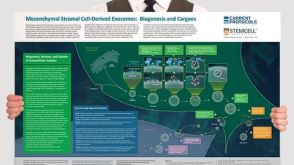 挂图Mesenchymal Stromal Cell-Derived Exosomes: Biogenesis and Cargoes Overview of exosome and microvesicle biogenesis pathways and potential therapeutic implications in the context of mesenchymal stromal cells发布日期: 02/27/2020

 沪公网安备31010102008431号