S. Lara-Reyna et al. ( 2019)
Frontiers in immunology 10 1789
Metabolic Reprograming of Cystic Fibrosis Macrophages via the IRE1alpha Arm of the Unfolded Protein Response Results in Exacerbated Inflammation.
Cystic Fibrosis (CF) is a recessive genetic disorder caused by mutations in the cystic fibrosis transmembrane conductance regulator (CFTR). CFTR mutations cause dysregulation of channel function with intracellular accumulation of misfolded proteins and endoplasmic reticulum (ER) stress,with activation of the IRE1alpha-XBP1 pathway that regulates a subset of unfolded protein response (UPR) genes. This pathway regulates a group of genes that control proinflammatory and metabolic responses in different immune cells; however,the metabolic state of immune cells and the role of this pathway in CF remain elusive. Our results indicate that only innate immune cells from CF patients present increased levels of ER stress,mainly affecting neutrophils,monocytes,and macrophages. An overactive IRE1alpha-XBP1 pathway reprograms CF M1 macrophages toward an increased metabolic state,with increased glycolytic rates and mitochondrial function,associated with exaggerated production of TNF and IL-6. This hyper-metabolic state,seen in CF macrophages,is reversed by inhibiting the RNase domain of IRE1alpha,thereby decreasing the increased glycolic rates,mitochondrial function and inflammation. Altogether,our results indicate that innate immune cells from CF patients are primarily affected by ER stress. Moreover,the IRE1alpha-XBP1 pathway of the UPR is responsible for the hyper-metabolic state seen in CF macrophages,which is associated with the exaggerated inflammatory response. Modulating ER stress,metabolism and inflammation,by targeting IRE1alpha,may improve the metabolic fitness of macrophages,and other immune cells in CF and other immune-related disorders.
View Publication
产品类型:
产品号#:
19655
产品名:
EasySep™ Direct人总淋巴细胞分选试剂盒
R. Lorenzetti et al. (jul 2019)
Journal of autoimmunity 101 145--152
Abatacept modulates CD80 and CD86 expression and memory formation in human B-cells.
BACKGROUND Cytotoxic T lymphocyte antigen-4 (CTLA-4) limits T-cell activation and is expressed on T-regulatory cells. Human CTLA-4 deficiency results in severe immune dysregulation. Abatacept (CTLA-4 Ig) is approved for the treatment of rheumatoid arthritis (RA) and its mechanism of action is attributed to effects on T-cells. It is known that CTLA-4 modulates the expression of its ligands CD80 and CD86 on antigen presenting cells (APC) by transendocytosis. As B-cells express CD80/CD86 and function as APC,we hypothesize that B-cells are a direct target of abatacept. OBJECTIVES To investigate direct effects of abatacept on human B-lymphocytes in vitro and in RA patients. METHODS The effect of abatacept on healthy donor B-cells' phenotype,activation and CD80/CD86 expression was studied in vitro. Nine abatacept-treated RA patients were studied. Seven of these were followed up to 24 months,and two up to 12 months only and treatment response,immunoglobulins,ACPA,RF concentrations,B-cell phenotype and ACPA-specific switched memory B-cell frequency were assessed. RESULTS B-cell development was unaffected by abatacept. Abatacept treatment resulted in a dose-dependent decrease of CD80/CD86 expression on B-cells in vitro,which was due to dynamin-dependent internalization. RA patients treated with abatacept showed a progressive decrease in plasmablasts and serum IgG. While ACPA-titers only moderately declined,the frequency of ACPA-specific switched memory B-cells significantly decreased. CONCLUSIONS Abatacept directly targets B-cells by reducing CD80/CD86 expression. Impairment of antigen presentation and T-cell activation may result in altered B-cell selection,providing a new therapeutic mechanism and a base for abatacept use in B-cell mediated autoimmunity.
View Publication
产品类型:
产品号#:
17954
17954RF
100-0971
产品名:
EasySep™人B细胞分选试剂盒
RoboSep™ 人B细胞分选试剂盒
EasySep™人B细胞分离试剂盒
L. L. Lu et al. ( 2019)
Nature medicine 25 6 977--987
IFN-gamma-independent immune markers of Mycobacterium tuberculosis exposure.
Exposure to Mycobacterium tuberculosis (Mtb) results in heterogeneous clinical outcomes including primary progressive tuberculosis and latent Mtb infection (LTBI). Mtb infection is identified using the tuberculin skin test and interferon-gamma (IFN-gamma) release assay IGRA,and a positive result may prompt chemoprophylaxis to prevent progression to tuberculosis. In the present study,we report on a cohort of Ugandan individuals who were household contacts of patients with TB. These individuals were highly exposed to Mtb but tested negative disease by IFN-gamma release assay and tuberculin skin test,'resisting' development of classic LTBI. We show that 'resisters' possess IgM,class-switched IgG antibody responses and non-IFN-gamma T cell responses to the Mtb-specific proteins ESAT6 and CFP10,immunologic evidence of exposure to Mtb. Compared to subjects with classic LTBI,'resisters' display enhanced antibody avidity and distinct Mtb-specific IgG Fc profiles. These data reveal a distinctive adaptive immune profile among Mtb-exposed subjects,supporting an expanded definition of the host response to Mtb exposure,with implications for public health and the design of clinical trials.
View Publication
产品类型:
产品号#:
17858
17858RF
15025
15065
100-0694
19059
19059RF
产品名:
EasySep™人CD14正选试剂盒II
RoboSep™ 人CD14正选试剂盒II
RosetteSep™人NK细胞富集抗体混合物
RosetteSep™人NK细胞富集抗体混合物
EasySep™人CD14正选试剂盒II
EasySep™人单核细胞富集试剂盒
RoboSep™ 人单核细胞富集试剂盒含滤芯吸头
M. Riopel et al. ( 2019)
Molecular metabolism 20 89--101
CX3CL1-Fc treatment prevents atherosclerosis in Ldlr KO mice.
OBJECTIVE Atherosclerosis is a major cause of cardiovascular disease. Monocyte-endothelial cell interactions are partly mediated by expression of monocyte CX3CR1 and endothelial cell fractalkine (CX3CL1). Interrupting the interaction between this ligand-receptor pair should reduce monocyte binding to the endothelial wall and reduce atherosclerosis. We sought to reduce atherosclerosis by preventing monocyte-endothelial cell interactions through use of a long-acting CX3CR1 agonist. METHODS In this study,the chemokine domain of CX3CL1 was fused to the mouse Fc region to generate a long-acting soluble form of CX3CL1 suitable for chronic studies. CX3CL1-Fc or saline was injected twice a week (30 mg/kg) for 4 months into Ldlr knockout (KO) mice on an atherogenic western diet. RESULTS CX3CL1-Fc-treated Ldlr KO mice showed decreased en face aortic lesion surface area and reduced aortic root lesion size with decreased necrotic core area. Flow cytometry analyses of CX3CL1-Fc-treated aortic wall cell digests revealed a decrease in M1-like polarized macrophages and T cells. Moreover,CX3CL1-Fc administration reduced diet-induced atherosclerosis after switching from an atherogenic to a normal chow diet. In vitro monocyte adhesion studies revealed that CX3CL1-Fc treatment caused fewer monocytes to adhere to a human umbilical vein endothelial cell monolayer. Furthermore,a dorsal window chamber model demonstrated that CX3CL1-Fc treatment decreased in vivo leukocyte adhesion and rolling in live capillaries after short-term ischemia-reperfusion. CONCLUSION These results indicate that CX3CL1-Fc can inhibit monocyte/endothelial cell adhesion as well as reduce atherosclerosis.
View Publication
产品类型:
产品号#:
19861
19861RF
产品名:
EasySep™小鼠单核细胞分选试剂盒
RoboSep™ 小鼠单核细胞分选试剂盒
C. Schleiss et al. (jan 2019)
Scientific reports 9 1 701
BCR-associated factors driving chronic lymphocytic leukemia cells proliferation ex vivo.
A chronic antigenic stimulation is believed to sustain the leukemogenic development of chronic lymphocytic leukemia (CLL) and most of lymphoproliferative malignancies developed from mature B cells. Reproducing a proliferative stimulation ex vivo is critical to decipher the mechanisms of leukemogenesis in these malignancies. However,functional studies of CLL cells remains limited since current ex vivo B cell receptor (BCR) stimulation protocols are not sufficient to induce the proliferation of these cells,pointing out the need of mandatory BCR co-factors in this process. Here,we investigated benefits of several BCR co-stimulatory molecules (IL-2,IL-4,IL-15,IL-21 and CD40 ligand) in multiple culture conditions. Our results demonstrated that BCR engagement (anti-IgM ligation) concomitant to CD40 ligand,IL-4 and IL-21 stimulation allowed CLL cells proliferation ex vivo. In addition,we established a proliferative advantage for ZAP70 positive CLL cells,associated to an increased phosphorylation of ZAP70/SYK and STAT6. Moreover,the use of a tri-dimensional matrix of methylcellulose and the addition of TLR9 agonists further increased this proliferative response. This ex vivo model of BCR stimulation with T-derived cytokines is a relevant and efficient model for functional studies of CLL as well as lymphoproliferative malignancies.
View Publication
产品类型:
产品号#:
19264
15024
15064
17954
17954RF
100-0971
产品名:
EasySep™ Direct人Naïve B细胞分选试剂盒
RosetteSep™人B细胞富集抗体混合物
RosetteSep™人B细胞富集抗体混合物
EasySep™人B细胞分选试剂盒
RoboSep™ 人B细胞分选试剂盒
EasySep™人B细胞分离试剂盒
J. M. Sweere et al. ( 2019)
Science (New York,N.Y.) 363 6434
Bacteriophage trigger antiviral immunity and prevent clearance of bacterial infection.
Bacteriophage are abundant at sites of bacterial infection,but their effects on mammalian hosts are unclear. We have identified pathogenic roles for filamentous Pf bacteriophage produced by Pseudomonas aeruginosa (Pa) in suppression of immunity against bacterial infection. Pf promote Pa wound infection in mice and are associated with chronic human Pa wound infections. Murine and human leukocytes endocytose Pf,and internalization of this single-stranded DNA virus results in phage RNA production. This triggers Toll-like receptor 3 (TLR3)- and TIR domain-containing adapter-inducing interferon-beta (TRIF)-dependent type I interferon production,inhibition of tumor necrosis factor (TNF),and the suppression of phagocytosis. Conversely,immunization of mice against Pf prevents Pa wound infection. Thus,Pf triggers maladaptive innate viral pattern-recognition responses,which impair bacterial clearance. Vaccination against phage virions represents a potential strategy to prevent bacterial infection.
View Publication
产品类型:
产品号#:
19058
19058RF
78206
78206.1
78206.2
18060
18061
07861
07811
100-1525
产品名:
EasySep™人单核细胞富集试剂盒(不去除CD16)
RoboSep™ 人单核细胞富集试剂盒(不去除CD16)含滤芯吸头
重组小鼠GM-CSF (CHO细胞表达)
重组小鼠GM-CSF (CHO细胞表达)
Lymphoprep™
Lymphoprep™
Lymphoprep™
Lymphoprep™
EasySep™人单核细胞富集试剂盒(不去除CD16)
A. A. Titov et al. (jul 2019)
Journal of immunology (Baltimore,Md. : 1950) 203 2 338--348
Metformin Inhibits the Type 1 IFN Response in Human CD4+ T Cells.
In systemic lupus erythematosus,defective clearance of apoptotic debris and activation of innate cells result in a chronically activated type 1 IFN response,which can be measured in PBMCs of most patients. Metformin,a widely used prescription drug for Type 2 diabetes,has a therapeutic effect in several mouse models of lupus through mechanisms involving inhibition of oxidative phosphorylation and a decrease in CD4+ T cell activation. In this study,we report that in CD4+ T cells from human healthy controls and human systemic lupus erythematosus patients,metformin inhibits the transcription of IFN-stimulated genes (ISGs) after IFN-alpha treatment. Accordingly,metformin inhibited the phosphorylation of pSTAT1 (Y701) and its binding to IFN-stimulated response elements that control ISG expression. These effects were independent of AMPK activation or mTORC1 inhibition but were replicated using inhibitors of the electron transport chain respiratory complexes I,III,and IV. This indicates that mitochondrial respiration is required for ISG expression in CD4+ T cells and provides a novel mechanism by which metformin may exert a therapeutic effect in autoimmune diseases.
View Publication
产品类型:
产品号#:
19052
19052RF
15622
15662
产品名:
EasySep™人CD4+ T细胞富集试剂盒
RoboSep™ 人CD4+ T细胞富集试剂盒含滤芯吸头
RosetteSep™人CD4去除抗体混合物
RosetteSep™人CD4去除抗体混合物
K. Yang et al. (dec 2018)
Scientific reports 8 1 17727
T cell-derived lymphotoxin limits Th1 response during HSV-1 infection.
Though lymphotoxin (LT) is highly expressed by type I helper T (Th1) cells,its contribution to CD4+ T cell differentiation during infections and diseases remains a mystery. In HSV-1 infection,we observed that LTbetaR signaling is required to limit the Th1 response. Using bone marrow chimeric mice,mixed-T-cell chimeric mice,and LTbetaR in vivo blockades,we unexpectedly observed that LT,especially T cell-derived LT,played an indispensable role in limiting the Th1 response. The LTbetaR-Ig blockade promoted the Th1 response by increasing infiltration of monocytes and monocyte-derived DCs and up-regulating IL-12 secretion in the lymphoid environment. Our findings identified a novel role for T cell-derived LT in manipulating Th1 differentiation.
View Publication
Zhang L-Z et al. (JUN 2010)
Zhonghua xue ye xue za zhi = Zhonghua xueyexue zazhi 31 6 398--402
[In vitro effects of anti-CD44 monoclonal antibody on the adhesion and migration of chronic myeloid leukemia stem cells.]
OBJECTIVE: To explore the effects of anti-CD44 monoclonal antibody-IM7 on the in vitro adhesion and migration of chronic myeloid leukemia stem cell (CML-LSC) and its mechanism. METHODS: CD34(+)CD38(-)CD123(+) leukemic stem cells (LSC) from 20 newly-diagnosed chronic myeloid leukemia (CML) patients BM cells and CD34(+)CD38(-) hematopoietic stem cells (HSC) from 20 full-term newborn cord blood cells were isolated with EasySep(TM) magnet beads. The CD44 expression of the LSC and HSC was detected by flow cytometry (FCM),and the adhesion and migration ability of the LSC and HSC pre- and post-incubated with IM7 in vitro by MTT assay and transendothelial migration assay,respectively. RESULTS: (1) After incubated with IM7,the LSC and HSC CD44 expression rates were (86.60 ± 2.10)% vs. (25.40 ± 1.70)% (P textless 0.05),respectively. (2) The adhesive ability of the LSC to endothelial cells was decreased markedly after incubated with IM7,the OD value (A(570)) changing from pre-incubation of (0.62 ± 0.11) to post-incubation of (0.34 ± 0.07),while there was little change of A(570) in the HSC group. (3) The migration ability of the LSC group was inhibited evidently after incubated with IM7,the inhibition rate being 46% ∼ 63%,while little change of that in HSC group was detected. (4) The adhesive ability of the LSC group to marrow stromal cells was decreased markedly after incubated with IM7,while little change was found in that of HSC group. CONCLUSION: The anti-CD44 monoclonal antibody-IM7 can effectively inhibit the adhesion and migration abilities of the LSC in vitro,which might provide a theoretical evidence for targeting therapy.
View Publication


 EasySep™小鼠TIL(CD45)正选试剂盒





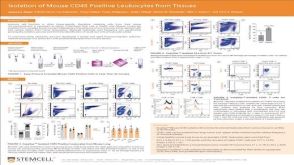 科学海报Isolation of Mouse CD45 Positive Leukocytes from Tissues
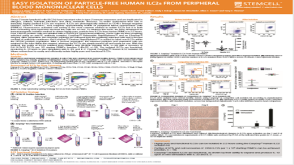 科学海报Easy Isolation of Particle-Free Human ILC2s from Peripheral Blood Mononuclear Cells

 沪公网安备31010102008431号