B. N. Flores et al. (Aug 2025)
Nature Communications 16
Investigational eIF2B activator DNL343 modulates the integrated stress response in preclinical models of TDP-43 pathology and individuals with ALS in a randomized clinical trial
Neuronal TDP-43 aggregates are a hallmark ALS pathology. The integrated stress response (ISR) occurs downstream of TDP-43 pathology and may promote neurodegeneration. Here we demonstrate that a CNS penetrant small molecule eIF2B activator inhibits the ISR in cellular models of ALS and the brain of an inducible mouse model of TDP-43 pathology,where it transiently slowed progression of locomotor deficits and neurodegeneration. ISR activation was observed in ALS patient spinal cord and CSF. The investigational drug DNL343 was advanced into Phase 1 and Phase 1b randomized,double-blind,placebo-controlled trials in healthy and ALS participants,respectively (NCT04268784/NCT05006352); the primary objective in both studies was to investigate the safety and tolerability DNL343. DNL343 demonstrated a half-life supporting once-daily dosing and showed extensive CSF distribution. DNL343 was generally well tolerated and reduced ISR biomarkers in peripheral blood mononuclear cells and CSF of ALS participants. Therefore,DNL343 is a useful investigational drug to explore the effects of ISR inhibition in ALS models and individuals with neurological diseases. Flores et al. show that brain-penetrant eIF2B agonists suppress ISR activation in cellular and mouse models of ALS and reduce ISR biomarkers in humans,enabling further clinical studies of ISR inhibition in individuals with neurological diseases
View Publication
产品类型:
产品号#:
100-0276
100-1130
产品名:
mTeSR™ Plus
mTeSR™ Plus
(Mar 2025)
PLOS One 20 3
Sequences within and upstream of the mouse Ets1 gene drive high level expression in B cells, but are not sufficient for consistent expression in T cells
The levels of transcription factor Ets1 are high in resting B and T cells,but are downregulated by signaling through antigen receptors and Toll-like receptors (TLRs). Loss of Ets1 in mice leads to excessive immune cell activation and development of an autoimmune syndrome and reduced Ets1 expression has been observed in human PBMCs in the context of autoimmune diseases. In B cells,Ets1 serves to prevent premature activation and differentiation to antibody-secreting cells. Given these important roles for Ets1 in the immune response,stringent control of Ets1 gene expression levels is required for homeostasis. However,the genetic regulatory elements that control expression of the Ets1 gene remain relatively unknown. Here we identify a topologically-associating domain (TAD) in the chromatin of B cells that includes the mouse Ets1 gene locus and describe an interaction hub that extends over 100 kb upstream and into the gene body. Additionally,we compile epigenetic datasets to find several putative regulatory elements within the interaction hub by identifying regions of high DNA accessibility and enrichment of active enhancer histone marks. Using reporter constructs,we determine that DNA sequences within this interaction hub are sufficient to direct reporter gene expression in lymphoid tissues of transgenic mice. Further analysis indicates that the reporter construct drives faithful expression of the reporter gene in mouse B cells,but variegated expression in T cells,suggesting the existence of T cell regulatory elements outside this region. To investigate how the downregulation of Ets1 transcription is associated with alterations in the epigenetic landscape of stimulated B cells,we performed ATAC-seq in resting and BCR-stimulated primary B cells and identified four regions within and upstream of the Ets1 locus that undergo changes in chromatin accessibility that correlate to Ets1 gene expression. Interestingly,functional analysis of several putative Ets1 regulatory elements using luciferase constructs suggested a high level of functional redundancy. Taken together our studies reveal a complex network of regulatory elements and transcription factors that coordinate the B cell-specific expression of Ets1.
View Publication
产品类型:
产品号#:
19854
19854RF
产品名:
EasySep™小鼠B细胞分选试剂盒
RoboSep™ 小鼠B细胞分选试剂盒
Fung YL et al. (OCT 2010)
Blood 116 16 3073--9
Recipient T lymphocytes modulate the severity of antibody-mediated transfusion-related acute lung injury.
Transfusion-related acute lung injury (TRALI) is a serious complication of transfusion and has been ranked as one of the leading causes of transfusion-related fatalities. Nonetheless,many details of the immunopathogenesis of TRALI,particularly with respect to recipient factors are unknown. We used a murine model of antibody-mediated TRALI in an attempt to understand the role that recipient lymphocytes might play in TRALI reactions. Intravenous injection of an IgG2a antimurine major histocompatibility complex class I antibody (34-1-2s) into BALB/c mice induced moderate hypothermia and pulmonary granulocyte accumulation but no pulmonary edema nor mortality. In contrast,34-1-2s injections into mice with severe combined immunodeficiency caused severe hypothermia,severe pulmonary edema,and approximately 40% mortality indicating a critical role for T and B lymphocytes in suppressing TRALI reactions. Adoptive transfer of purified CD8(+) T lymphocytes or CD4(+) T cells but not CD19(+) B cells into the severe combined immunodeficiency mice alleviated the antibody-induced hypothermia,lung damage,and mortality,suggesting that T lymphocytes were responsible for the protective effect. Taken together,these results suggest that recipient T lymphocytes play a significant role in suppressing antibody-mediated TRALI reactions. They identify a potentially new recipient mechanism that controls the severity of TRALI reactions.
View Publication
产品类型:
产品号#:
18751
18751RF
18754
18754RF
产品名:
Parish ST et al. (MAR 2010)
Journal of immunology (Baltimore,Md. : 1950) 184 6 2847--54
Adenosine deaminase modulation of telomerase activity and replicative senescence in human CD8 T lymphocytes.
Increased proportions of CD8 T lymphocytes lacking expression of the CD28 costimulatory receptor have been documented during both aging and chronic infection with HIV-1,and their abundance correlates with numerous deleterious clinical outcomes. CD28-negative cells also arise in cell cultures of CD8(+)CD28(+) following multiple rounds of Ag-driven proliferation,reaching the end stage of replicative senescence. The present study investigates the role of a second T cell costimulatory receptor component,adenosine deaminase (ADA),on the process of replicative senescence. We had previously reported that CD28 signaling is required for optimal telomerase upregulation. In this study,we show that the CD8(+)CD28(+) T lymphocytes that are ADA(+) have significantly greater telomerase activity than those that do not express ADA and that ADA is progressively lost as cultures progress to senescence. Because ADA converts adenosine to inosine,cells lacking this enzyme might be subject to prolonged exposure to adenosine,which has immunosuppressive effects. Indeed,we show that chronic exposure of CD8 T lymphocytes to exogenous adenosine accelerates the process of replicative senescence,causing a reduction in overall proliferative potential,reduced telomerase activity,and blunted IL-2 gene transcription. The loss of CD28 expression was accelerated,in part due to adenosine-induced increases in constitutive caspase-3,known to act on the CD28 promoter. These findings provide the first evidence for a role of ADA in modulating the process of replicative senescence and suggest that strategies to enhance this enzyme may lead to novel therapeutic approaches for pathologies associated with increases in senescent CD8 T lymphocytes.
View Publication
Girardot T et al. (OCT 2016)
Journal of immunological methods
An optimized protocol for adenosine triphosphate quantification in T lymphocytes of lymphopenic patients.
In several clinical contexts,the measurement of ATP concentration in T lymphocytes has been proposed as a biomarker of immune status,predictive of secondary infections. However,the use of such biomarker in lymphopenic patients requires some adaptations in the ATP dosage protocol. We used blood from healthy volunteers to determine the optimal experimental settings. We investigated technical aspects such as the type of anticoagulant for blood sampling,the effect of freeze and thaw cycles,the reagent and sample mixing sequence,and the optimal dilution buffer. We also shortened the incubation time to 8h,and even showed that a 30min incubation may be sufficient. To evaluate the ATP rise upon lymphocyte activation,the optimal dose of stimulant was defined to be 4μg/mL of phytohaemagglutinin. Lastly,we determined that the number of T cells needed for this measurement was as low as 50,000,which is compatible with the existing lymphopenia in clinical settings. This optimized protocol appears ready to be assessed in lymphopenic patients to further investigate the interconnection between T lymphocyte metabolism and impaired phenotype and functions.
View Publication
产品类型:
产品号#:
17851
17851RF
15021
15061
85415
85420
85450
85460
86415
86420
86450
86460
100-0692
产品名:
EasySep™人CD3正选试剂盒II
RoboSep™ 人CD3正选试剂盒II
RosetteSep™人T细胞富集抗体混合物
RosetteSep™人T细胞富集抗体混合物
SepMate™-15 (IVD)
SepMate™-15 (IVD)
SepMate™-50 (IVD)
SepMate™-50 (IVD)
SepMate™-15 (RUO)
SepMate™-15 (RUO)
SepMate™-50 (RUO)
SepMate™-50 (RUO)
EasySep™人CD3正选试剂盒II
Carr EL et al. (JUL 2010)
Journal of immunology (Baltimore,Md. : 1950) 185 2 1037--44
Glutamine uptake and metabolism are coordinately regulated by ERK/MAPK during T lymphocyte activation.
Activation of a naive T cell is a highly energetic event,which requires a substantial increase in nutrient metabolism. Upon stimulation,T cells increase in size,rapidly proliferate,and differentiate,all of which lead to a high demand for energetic and biosynthetic precursors. Although amino acids are the basic building blocks of protein biosynthesis and contribute to many other metabolic processes,the role of amino acid metabolism in T cell activation has not been well characterized. We have found that glutamine in particular is required for T cell function. Depletion of glutamine blocks proliferation and cytokine production,and this cannot be rescued by supplying biosynthetic precursors of glutamine. Correlating with the absolute requirement for glutamine,T cell activation induces a large increase in glutamine import,but not glutamate import,and this increase is CD28-dependent. Activation coordinately enhances expression of glutamine transporters and activities of enzymes required to allow the use of glutamine as a Krebs cycle substrate in T cells. The induction of glutamine uptake and metabolism requires ERK function,providing a link to TCR signaling. Together,these data indicate that regulation of glutamine use is an important component of T cell activation. Thus,a better understanding of glutamine sensing and use in T cells may reveal novel targets for immunomodulation.
View Publication
Butein suppresses constitutive and inducible signal transducer and activator of transcription (STAT) 3 activation and STAT3-regulated gene products through the induction of a protein tyrosine phosphatase SHP-1.
The aim of the current study is to determine whether butein (3,4,2',4'-tetrahydroxychalcone) exhibits antiproliferative effects against tumor cells through suppression of the signal transducer and activator of transcription 3 (STAT3) activation pathway. We investigated the effects of butein on constitutive and inducible STAT3 activation,role of tyrosine kinases and phosphatases in STAT3 activation,STAT3-regulated gene products,and growth modulation of tumor cells. We found that this chalcone inhibited both constitutive and interleukin-6-inducible STAT3 activation in multiple myeloma (MM) cells. The suppression was mediated through the inhibition of activation of the upstream kinases c-Src,Janus-like kinase (JAK) 1,and JAK2. Vanadate treatment reversed the butein-induced down-regulation of STAT3 activation,suggesting the involvement of a tyrosine phosphatase. Indeed,we found that butein induced the expression of the tyrosine phosphatase SHP-1 and deletion of SHP-1 gene by small interfering RNA abolished the ability of butein to inhibit STAT3 activation,suggesting the critical role of SHP-1 in the action of this chalcone. Butein down-regulated the expression of STAT3-regulated gene products such as Bcl-xL,Bcl-2,cyclin D1,and Mcl-1,and this led to the suppression of proliferation and induction of apoptosis. Consistent with these results,overexpression of constitutive active STAT3 significantly reduced the butein-induced apoptosis. Moreover,we found that butein significantly potentiated the apoptotic effects of thalidomide and Velcade in MM cells. Overall,these results suggest that butein is a novel blocker of STAT3 activation and thus may have potential in suppression of tumor cell proliferation and reversal of chemoresistance in MM cells.
View Publication
产品类型:
产品号#:
73462
73464
产品名:
Butein
Shannon LA et al. (DEC 2010)
The Journal of biological chemistry 285 50 38781--7
CCR7/CCL21 migration on fibronectin is mediated by phospholipase Cgamma1 and ERK1/2 in primary T lymphocytes.
CCR7 binds to its cognate ligand,CCL21,to mediate the migration of circulating naive T lymphocytes to the lymph nodes. T lymphocytes can bind to fibronectin,a constituent of lymph nodes,via their β1 integrins,which is a primary mechanism of T lymphocyte migration; however,the signaling pathways involved are unclear. We report that rapid (within 2 min) and transient phosphorylation of ERK1/2 is required for T cell migration on fibronectin in response to CCL21. Conversely,prevention of ERK1/2 phosphorylation by inhibition of its kinase,MAPK/MEK,prevented T lymphocyte migration. Previous studies have suggested that phospholipase Cγ1 (PLCγ1) can mediate phosphorylation of ERK1/2,which is required for β1 integrin activation. Paradoxically,we found that inhibition of PLCγ1 phosphorylation by the general PLC inhibitor U73122 was associated with a delayed and reduced phosphorylation of ERK1/2 and reduced migration of T lymphocytes on fibronectin. To further characterize the relationship between ERK1/2 and PLCγ1,we reduced PLCγ1 levels by 85% using shRNA and observed a reduced phosphorylation of ERK1/2 and a significant loss of CCR7-mediated migration of T lymphocytes on fibronectin. In addition,we found that inhibition of ERK1/2 phosphorylation by U0126 resulted in a decreased phosphorylation of PLCγ1,suggesting a feedback loop between ERK1/2 and PLCγ1. Overall,these results suggest that the CCR7 signaling pathway leading to T lymphocyte migration on fibronectin is a β1 integrin-dependent pathway involving transient ERK1/2 phosphorylation,which is modulated by PLCγ1.
View Publication


 EasySep™小鼠TIL(CD45)正选试剂盒





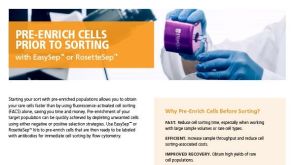 产品手册Cell Enrichment Prior to Cell Sorting


 沪公网安备31010102008431号