A. Holtzinger et al. ( 2015)
Development (Cambridge,England) 142 4253-65
New markers for tracking endoderm induction and hepatocyte differentiation from human pluripotent stem cells.
The efficient generation of hepatocytes from human pluripotent stem cells (hPSCs) requires the induction of a proper endoderm population,broadly characterized by the expression of the cell surface marker CXCR4. Strategies to identify and isolate endoderm subpopulations predisposed to the liver fate do not exist. In this study,we generated mouse monoclonal antibodies against human embryonic stem cell-derived definitive endoderm with the goal of identifying cell surface markers that can be used to track the development of this germ layer and its specification to a hepatic fate. Through this approach,we identified two endoderm-specific antibodies,HDE1 and HDE2,which stain different stages of endoderm development and distinct derivative cell types. HDE1 marks a definitive endoderm population with high hepatic potential,whereas staining of HDE2 tracks with developing hepatocyte progenitors and hepatocytes. When used in combination,the staining patterns of these antibodies enable one to optimize endoderm induction and hepatic specification from any hPSC line.
View Publication
产品类型:
产品号#:
03804
产品名:
ClonaCell™-HY 培养基 D
Pearce DJ and Bonnet D (SEP 2007)
Experimental hematology 35 9 1437--46
The combined use of Hoechst efflux ability and aldehyde dehydrogenase activity to identify murine and human hematopoietic stem cells.
OBJECTIVE: In murine hematopoietic tissue,direct repopulation experiments have demonstrated that the side population (SP) represents a remarkable enrichment of hematopoietic stem cells. Human SP has been phenotyped as negative for lineage antigens as well as CD34. However,in the 9 years since the original publication,no long-term hematopoietic reconstitution has been reported for the adult human SP/CD34(-) subset. Elevated levels of aldehyde dehydrogenase (ALDH) have been demonstrated in murine and human progenitor cells when compared to other hematopoietic cells. METHODS: Here,we report the phenotype of human cord blood SP cells. We established the technique of simultaneous phenotyping,Hoechst exclusion,and ALDH labeling on murine tissues. We then performed the simultaneous analysis of phenotype,SP,and ALDH activity on human cord blood and bone marrow cells. Finally,we analyzed the phenotype and functional potential of human cord blood ALDH(+) cells to determine whether Lin(-)/CD34(-) cells are identified via this technique. RESULTS: We demonstrate that human Lin(-)/CD34(-)/ALDH(+) cells are capable of long-term repopulation. Although the SP technique identifies cells that overlap with the ALDH(+) cell population,this is restricted to the CD34(+) cell subset. CONCLUSION: Hoechst exclusion ability does not seem to be the method of choice for the isolation of human hematopoietic stem cells.
View Publication
产品类型:
产品号#:
01700
01705
01701
01702
产品名:
ALDEFLUOR™ 试剂盒
ALDEFLUOR™ DEAB试剂, 1.5 mM, 1 mL
ALDEFLUOR™检测缓冲液
Stelling MP et al. (MAR 2013)
Glycobiology 23 3 337--345
Matrix-bound heparan sulfate is essential for the growth and pluripotency of human embryonic stem cells
Human embryonic stem (hES) cell production of heparan sulfate influences cell fate and pluripotency. Human ES cells remain pluripotent in vitro through the action of growth factors signaling,and the activity of these factors depends on interaction with specific receptors and also with heparan sulfate. Here,we tested the hypothesis that matrix-associated heparan sulfate is enough to maintain hES cells under low fibroblast growth factor-2 concentration in the absence of live feeder cells. To pursue this goal,we compared hES cells cultured either on coated plates containing live murine embryonic fibroblasts (MEFs) or on a matrix derived from ethanol-fixed MEFs. hES cells were analyzed for the expression of pluripotency markers and the ability to form embryoid bodies. hES cells cultured either on live mouse fibroblasts or onto a matrix derived from fixed fibroblasts expressed similar levels of Oct-4,SOX-2,Nanog,TRA-1-60 and SSEA-4,and they were also able to form cavitated embryoid bodies. Heparan sulfate-depleted matrix lost the ability to support the adherence and growth of hES cells,confirming that this glycosaminoglycan,bound to the extracellular matrix,is enough for the growth and attachment of hES cells. Finally,we observed that the ethanol-fixed matrix decreases by 30% the levels of Neu5Gc in hES cells,indicating that this procedure reduces xeno-contamination. Our data suggest that matrix-bound heparan sulfate is required for the growth and pluripotency of hES cells and that ethanol-fixed MEFs may be used as a live cell"-free substrate for stem cells."
View Publication
产品类型:
产品号#:
05850
05857
05870
05875
85850
85857
85870
85875
产品名:
mTeSR™1
mTeSR™1
Escobedo-Lucea C et al. (MAR 2012)
Stem Cell Reviews and Reports 8 1 170--183
Development of a human extracellular matrix for applications related with stem cells and tissue engineering.
Cortical brain organoid slices (cBOS) for the study of human neural cells in minimal networks
Brain organoids derived from human pluripotent stem cells are a promising tool for studying human neurodevelopment and related disorders. Here,we generated long-term cultures of cortical brain organoid slices (cBOS) grown at the air-liquid interphase from regionalized cortical organoids. We show that cBOS host mature neurons and astrocytes organized in complex architecture. Whole-cell patch-clamp demonstrated subthreshold synaptic inputs and action potential firing of neurons. Spontaneous intracellular calcium signals turned into synchronous large-scale oscillations upon combined disinhibition of NMDA receptors and blocking of GABA A receptors. Brief metabolic inhibition to mimic transient energy restriction in the ischemic brain induced reversible intracellular calcium loading of cBOS. Moreover,metabolic inhibition induced a reversible decline in neuronal ATP as revealed by ATeam1.03 YEMK . Overall,cBOS provide a powerful platform to assess morphological and functional aspects of human neural cells in intact minimal networks and to address the pathways that drive cellular damage during brain ischemia. Subject areas: Neuroscience,Cellular neuroscience,Stem cells research
View Publication
Liang Y et al. (APR 2013)
Chinese journal of cancer 32 4 205--12
The propensity for tumorigenesis in human induced pluripotent stem cells is related with genomic instability.
The discovery of induced pluripotent stem cells(iPSCs) is a promising advancement in the field of regenerative medicine. Previous studies have indicated that the teratoma-forming propensity of iPSCs is variable; however,the relationship between tumorigenic potential and genomic instability in human iPSCs (HiPSCs) remains to be fully elucidated. Here,we evaluated the malignant potential of HiPSCs by using both colony formation assays and tumorigenicity tests. We demonstrated that HiPSCs formed tumorigenic colonies when grown in cancer cell culture medium and produced malignancies in immunodeficient mice. Furthermore,we analyzed genomic instability in HiPSCs using whole-genome copy number variation analysis and determined that the extent of genomic instability was related with both the cells' propensity to form colonies and their potential for tumorigenesis. These findings indicate a risk for potential malignancy of HiPSCs derived from genomic instability and suggest that quality control tests,including comprehensive tumorigenicity assays and genomic integrity validation,should be rigorously executed before the clinical application of HiPSCs. In addition,HiPSCs should be generated through the use of combined factors or other approaches that decrease the likelihood of genomic instability.
View Publication
产品类型:
产品号#:
05850
05857
05870
05875
85850
85857
85870
85875
产品名:
mTeSR™1
mTeSR™1
James D et al. (MAR 2005)
Development (Cambridge,England) 132 6 1273--82
TGFbeta/activin/nodal signaling is necessary for the maintenance of pluripotency in human embryonic stem cells.
Human embryonic stem cells (hESCs) self-renew indefinitely and give rise to derivatives of all three primary germ layers,yet little is known about the signaling cascades that govern their pluripotent character. Because it plays a prominent role in the early cell fate decisions of embryonic development,we have examined the role of TGFbeta superfamily signaling in hESCs. We found that,in undifferentiated cells,the TGFbeta/activin/nodal branch is activated (through the signal transducer SMAD2/3) while the BMP/GDF branch (SMAD1/5) is only active in isolated mitotic cells. Upon early differentiation,SMAD2/3 signaling is decreased while SMAD1/5 signaling is activated. We next tested the functional role of TGFbeta/activin/nodal signaling in hESCs and found that it is required for the maintenance of markers of the undifferentiated state. We extend these findings to show that SMAD2/3 activation is required downstream of WNT signaling,which we have previously shown to be sufficient to maintain the undifferentiated state of hESCs. Strikingly,we show that in ex vivo mouse blastocyst cultures,SMAD2/3 signaling is also required to maintain the inner cell mass (from which stem cells are derived). These data reveal a crucial role for TGFbeta signaling in the earliest stages of cell fate determination and demonstrate an interconnection between TGFbeta and WNT signaling in these contexts.
View Publication
产品类型:
产品号#:
72232
72234
100-1051
产品名:
SB431542(水合物)
SB431542(水合物)
SB431542(水合物)
Kang L et al. ( 2013)
Frontiers in immunology 4 MAY 101
Characterization and ex vivo Expansion of Human Placenta-Derived Natural Killer Cells for Cancer Immunotherapy.
Recent clinical studies suggest that adoptive transfer of donor-derived natural killer (NK) cells may improve clinical outcome in hematological malignancies and some solid tumors by direct anti-tumor effects as well as by reduction of graft versus host disease (GVHD). NK cells have also been shown to enhance transplant engraftment during allogeneic hematopoietic stem cell transplantation (HSCT) for hematological malignancies. The limited ex vivo expansion potential of NK cells from peripheral blood (PB) or umbilical cord blood (UCB) has however restricted their therapeutic potential. Here we define methods to efficiently generate NK cells from donor-matched,full-term human placenta perfusate (termed Human Placenta-Derived Stem Cell,HPDSC) and UCB. Following isolation from cryopreserved donor-matched HPDSC and UCB units,CD56+CD3- placenta-derived NK cells,termed pNK cells,were expanded in culture for up to 3 weeks to yield an average of 1.2 billion cells per donor that were textgreater80% CD56+CD3-,comparable to doses previously utilized in clinical applications. Ex vivo-expanded pNK cells exhibited a marked increase in anti-tumor cytolytic activity coinciding with the significantly increased expression of NKG2D,NKp46,and NKp44 (p textless 0.001,p textless 0.001,and p textless 0.05,respectively). Strong cytolytic activity was observed against a wide range of tumor cell lines in vitro. pNK cells display a distinct microRNA (miRNA) expression profile,immunophenotype,and greater anti-tumor capacity in vitro compared to PB NK cells used in recent clinical trials. With further development,pNK may represent a novel and effective cellular immunotherapy for patients with high clinical needs and few other therapeutic options.
View Publication
产品类型:
产品号#:
07900
19055
19055RF
100-0762
产品名:
DNase I 溶液(1 mg/mL)
EasySep™人NK细胞富集试剂盒
RoboSep™ 人NK细胞富集试剂盒含滤芯吸头
DNase I溶液(1mg /mL)
Chen A et al. (JAN 2014)
Biomaterials 35 2 675--683
Integrated platform for functional monitoring of biomimetic heart sheets derived from human pluripotent stem cells
We present an integrated platform comprised of a biomimetic substrate and physiologically aligned human pluripotent stem cell-derived cardiomyocytes (CMs) with optical detection and algorithms to monitor subtle changes in cardiac properties under various conditions. In the native heart,anisotropic tissue structures facilitate important concerted mechanical contraction and electrical propagation. To recapitulate the architecture necessary for a physiologically accurate heart response,we have developed a simple way to create large areas of aligned CMs with improved functional properties using shrink-wrap film. Combined with simple bright field imaging,obviating the need for fluorescent labels or beads,we quantify and analyze key cardiac contractile parameters. To evaluate the performance capabilities of this platform,the effects of two drugs,E-4031 and isoprenaline,were examined. Cardiac cells supplemented with E-4031 exhibited an increase in contractile duration exclusively due to prolonged relaxation peak. Notably,cells aligned on the biomimetic platform responded detectably down to a dosage of 3nm E-4031,which is lower than the IC50 in the hERG channel assay. Cells supplemented with isoprenaline exhibited increased contractile frequency and acceleration. Interestingly,cells grown on the biomimetic substrate were more responsive to isoprenaline than those grown on the two control surfaces,suggesting topography may help induce more mature ion channel development. This simple and low-cost platform could thus be a powerful tool for longitudinal assays as well as an effective tool for drug screening and basic cardiac research. ?? 2013 Elsevier Ltd.
View Publication
产品类型:
产品号#:
05850
05857
05870
05875
85850
85857
85870
85875
产品名:
mTeSR™1
mTeSR™1
Akopian V et al. (APR 2010)
In vitro cellular & developmental biology. Animal 46 3-4 247--258
Comparison of defined culture systems for feeder cell free propagation of human embryonic stem cells.
There are many reports of defined culture systems for the propagation of human embryonic stem cells in the absence of feeder cell support,but no previous study has undertaken a multi-laboratory comparison of these diverse methodologies. In this study,five separate laboratories,each with experience in human embryonic stem cell culture,used a panel of ten embryonic stem cell lines (including WA09 as an index cell line common to all laboratories) to assess eight cell culture methods,with propagation in the presence of Knockout Serum Replacer,FGF-2,and mouse embryonic fibroblast feeder cell layers serving as a positive control. The cultures were assessed for up to ten passages for attachment,death,and differentiated morphology by phase contrast microscopy,for growth by serial cell counts,and for maintenance of stem cell surface marker expression by flow cytometry. Of the eight culture systems,only the control and those based on two commercial media,mTeSR1 and STEMPRO,supported maintenance of most cell lines for ten passages. Cultures grown in the remaining media failed before this point due to lack of attachment,cell death,or overt cell differentiation. Possible explanations for relative success of the commercial formulations in this study,and the lack of success with other formulations from academic groups compared to previously published results,include: the complex combination of growth factors present in the commercial preparations; improved development,manufacture,and quality control in the commercial products; differences in epigenetic adaptation to culture in vitro between different ES cell lines grown in different laboratories.
View Publication


 EasySep™小鼠TIL(CD45)正选试剂盒





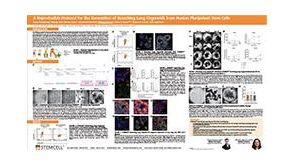 科学海报A Reproducible Protocol for the Generation of Branching Lung Organoids From Human Pluripotent Stem Cells
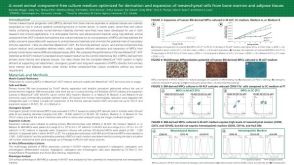 科学海报An Animal Component-Free Chondrogenic Stimulatory Medium for the Efficient Differentiation of Human Mesenchymal Progenitor Cells
 沪公网安备31010102008431号