In herpesvirus infections,the virus persists for life but is contained through T-cell-mediated immune surveillance. How this immune surveillance operates is poorly understood. Recent studies of other persistent infections have indicated that virus persistence is associated with functional deficits in the CD8(+) T-cell response. To test whether this is the case in a herpesvirus infection,we used a mutant murine gammaherpesvirus that is defective in its ability to persist in the host. By comparing the immune response to this virus with a revertant virus that can persist,we were able to dissect the changes in the antiviral CD8(+) T-cell response that are induced by virus persistence. Surprisingly,persistently infected mice controlled a secondary challenge infection more rapidly than nonpersistently infected mice,indicating enhanced rather than diminished effector functions. Consistent with this,virus-specific CD8 T cells from these mice exhibited faster upregulation of the cytotoxic mediator granzyme B. Another unexpected finding was that CD8(+) T cells from neither infection responded efficiently to homeostatic cytokines. The unresponsiveness of the memory cells from the nonpersistently infected mice appears to be linked to the prolonged replication of virus within the lungs. Other changes seen in different chronic infection models were also observed,such as changes in Bcl-2 levels,interleukin-2 production,and the immunodominance hierarchy. These data show persistence of gammaherpesvirus type 68 alters the properties of CD8(+) T cells and illustrates that immune surveillance does not require CD8 T cells with the same attributes as classical" memory CD8(+) T cells."
View Publication
产品类型:
产品号#:
18753
18753RF
产品名:
Hu J et al. (DEC 2006)
Journal of immunology (Baltimore,Md. : 1950) 177 11 8037--45
An HLA-A2.1-transgenic rabbit model to study immunity to papillomavirus infection.
We have established several HLA-A2.1-transgenic rabbit lines to provide a host to study CD8(+) T cell responses during virus infections. HLA-A2.1 protein expression was detected on cell surfaces within various organ tissues. Continuous cultured cells from these transgenic rabbits were capable of presenting both endogenous and exogenous HLA-A2.1-restricted epitopes to an HLA-A2.1-restricted epitope-specific CTL clone. A DNA vaccine containing an HLA-A2.1-restricted human papillomavirus type 16 E7 epitope (amino acid residues 82-90) stimulated epitope-specific CTLs in both PBLs and spleen cells of transgenic rabbits. In addition,vaccinated transgenic rabbits were protected against infection with a mutant cottontail rabbit papillomavirus DNA containing an embedded human papillomavirus type 16 E7/82-90 epitope. Complete protection was achieved using a multivalent epitope DNA vaccine based on epitope selection from cottontail rabbit papillomavirus E1 using MHC class I epitope prediction software. HLA-A2.1-transgenic rabbits will be an important preclinical animal model system to study virus-host interactions and to assess specific targets for immunotherapy.
View Publication
产品类型:
产品号#:
18557
18557RF
产品名:
Lengi AJ et al. (DEC 2006)
Journal of molecular endocrinology 37 3 421--32
17beta-estradiol downregulates interferon regulatory factor-1 in murine splenocytes.
Interferon regulatory factor-1 (IRF-1) is an important transcription factor that mediates interferon-gamma (IFN-gamma)-induced cell-signaling events. In this study,we examined whether 17beta-estradiol alters IRF-1 in splenic lymphocytes,in view of the immunomodulatory effects of this natural female sex hormone including its ability to alter IFN-gamma levels. We find that IRF-1 expression is markedly downregulated in splenocytes or purified T-cells from estrogen-treated mice at all time points studied when compared with their placebo counterparts. This decrease in IRF-1 in splenocytes from estrogen-treated mice is neither due to upregulation of IRF-1-interfering proteins (nucleophosmin or signal transducer and activator of transcription (STAT)-5) nor due to alternatively spliced IRF-1 mRNA. Given that IFN-gamma is a potent inducer of IRF-1,direct addition of recombinant IFN-gamma to splenocytes from either wild-type or IFN-gamma-knockout mice,or the addition of recombinant IFN-gamma to purified T-cells,was expected to stimulate IRF-1 expression. However,robust expression of IRF-1 in cells from estrogen-treated mice was not seen,unlike what was observed in cells from placebo-treated mice. Diminished IFN-gamma induction of IRF-1 in cells from estrogen-treated mice was noticed despite comparable phosphorylated STAT-1 activation. These studies are the first to show that estrogen regulates IFN-gamma-inducible IRF-1 in lymphoid cells,a finding that may have implications to IFN-gamma-regulated immune and vascular diseases.
View Publication
产品类型:
产品号#:
21000
20119
20155
19751
19751RF
产品名:
RoboSep™- S
RoboSep™ 吸头组件抛光剂
RoboSep™分选管套装(9个塑料管)
Carlsten M et al. (FEB 2007)
Cancer research 67 3 1317--25
DNAX accessory molecule-1 mediated recognition of freshly isolated ovarian carcinoma by resting natural killer cells.
Although natural killer (NK) cells are well known for their ability to kill tumors,few studies have addressed the interactions between resting (nonactivated) NK cells and freshly isolated human tumors. Here,we show that human leukocyte antigen class I(low) tumor cells isolated directly from patients with advanced ovarian carcinoma trigger degranulation by resting allogeneic NK cells. This was paralleled by induction of granzyme B and caspase-6 activities in the tumor cells and significant tumor cell lysis. Ovarian carcinoma cells displayed ubiquitous expression of the DNAX accessory molecule-1 (DNAM-1) ligand PVR and sparse/heterogeneous expression of the NKG2D ligands MICA/MICB and ULBP1,ULBP2,and ULBP3. In line with the NK receptor ligand expression profiles,antibody-mediated blockade of activating receptor pathways revealed a dominant role for DNAM-1 and a complementary contribution of NKG2D signaling in tumor cell recognition. These results show that resting NK cells are capable of directly recognizing freshly isolated human tumor cells and identify ovarian carcinoma as a potential target for adoptive NK cell-based immunotherapy.
View Publication
Pereira WdO et al. (OCT 2013)
BMC research notes 6 433
Development of plasma cell myeloma in a B-cell chronic lymphocytic leukemia patient with chromosome 12 trisomy.
BACKGROUND Cancer development results from the progressive accumulation of genomic abnormalities that culminate in the neoplastic phenotype. Cytogenetic alterations,mutations and rearrangements may be considered as molecular legacy which trace the clonal history of the disease. Concomitant tumors are reported and they may derive from a common or divergent founder clone. B-cell chronic lymphocytic leukemia (B-CLL) and plasma cell myeloma (PCM) are both mature B-cell neoplasms,and their concomitancy,albeit rare,is documented. CASE PRESENTATION Here,we described a patient with prior B-CLL with secondary development of PCM. Cytogenetic and multi parametric flow cytometry analyses were performed. The B-CLL population presented chromosome 12 trisomy,unlikely the arisen PCM population. CONCLUSION The close follow up of B-CLL patients is important for early intervention in case of development of other malignancy,such as myeloma. Our observation suggests these two diseases may have arisen from different clones. We understand that the investigation of clonal origin may provide important information regarding therapeutic decisions,and should be considered in concomitant neoplasm.
View Publication
产品类型:
产品号#:
18387
18387RF
产品名:
Beer PA et al. (JAN 2015)
Blood 125 3 504--15
Disruption of IKAROS activity in primitive chronic-phase CML cells mimics myeloid disease progression.
Without effective therapy,chronic-phase chronic myeloid leukemia (CP-CML) evolves into an acute leukemia (blast crisis [BC]) that displays either myeloid or B-lymphoid characteristics. This transition is often preceded by a clinically recognized,but biologically poorly characterized,accelerated phase (AP). Here,we report that IKAROS protein is absent or reduced in bone marrow blasts from most CML patients with advanced myeloid disease (AP or BC). This contrasts with primitive CP-CML cells and BCR-ABL1-negative acute myeloid leukemia blasts,which express readily detectable IKAROS. To investigate whether loss of IKAROS contributes to myeloid disease progression in CP-CML,we examined the effects of forced expression of a dominant-negative isoform of IKAROS (IK6) in CP-CML patients' CD34(+) cells. We confirmed that IK6 disrupts IKAROS activity in transduced CP-CML cells and showed that it confers on them features of AP-CML,including a prolonged increased output in vitro and in xenografted mice of primitive cells with an enhanced ability to differentiate into basophils. Expression of IK6 in CD34(+) CP-CML cells also led to activation of signal transducer and activator of transcription 5 and transcriptional repression of its negative regulators. These findings implicate loss of IKAROS as a frequent step and potential diagnostic harbinger of progressive myeloid disease in CML patients.
View Publication
产品类型:
产品号#:
18056
18056RF
产品名:
Joulia R et al. (JAN 2015)
Nature communications 6 6174
Mast cells form antibody-dependent degranulatory synapse for dedicated secretion and defence.
Mast cells are tissue-resident immune cells that play a key role in inflammation and allergy. Here we show that interaction of mast cells with antibody-targeted cells induces the polarized exocytosis of their granules resulting in a sustained exposure of effector enzymes,such as tryptase and chymase,at the cell-cell contact site. This previously unidentified mast cell effector mechanism,which we name the antibody-dependent degranulatory synapse (ADDS),is triggered by both IgE- and IgG-targeted cells. ADDSs take place within an area of cortical actin cytoskeleton clearance in the absence of microtubule organizing centre and Golgi apparatus repositioning towards the stimulating cell. Remarkably,IgG-mediated degranulatory synapses also occur upon contact with opsonized Toxoplasma gondii tachyzoites resulting in tryptase-dependent parasite death. Our results broaden current views of mast cell degranulation by revealing that human mast cells form degranulatory synapses with antibody-targeted cells and pathogens for dedicated secretion and defence.
View Publication


 EasySep™小鼠TIL(CD45)正选试剂盒





 技术公告从人脐带血分离CD34+细胞
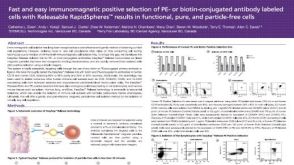 科学海报Fast and Easy Immunomagnetic Positive Selection of PE- or Biotin-Conjugated Antibody Labeled Cells with Releasable RapidSpheres™ Results in Functional, Pure and Particle-Free Cells
 技术公告使用流式细胞术进行交叉配型(FCMX)检测的细胞分选解决方案
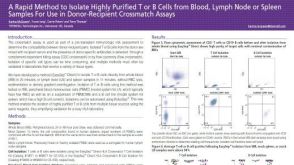 科学海报A Rapid Method to Isolate Highly Purified T or B Cells from Blood, Lymph Node or Spleen Samples For Use in Donor-Recipient Crossmatch Assays
 沪公网安备31010102008431号