Herrmann A et al. (OCT 2010)
Cancer research 70 19 7455--64
Targeting Stat3 in the myeloid compartment drastically improves the in vivo antitumor functions of adoptively transferred T cells.
Improving effector T-cell functions is highly desirable for preventive or therapeutic interventions of diverse diseases. Signal transducer and activator of transcription 3 (Stat3) in the myeloid compartment constrains Th1-type immunity,dampening natural and induced antitumor immune responses. We have recently developed an in vivo small interfering RNA (siRNA) delivery platform by conjugating a Toll-like receptor 9 agonist with siRNA that efficiently targets myeloid and B cells. Here,we show that either CpG triggering combined with the genetic Stat3 ablation in myeloid/B cell compartments or administration of the CpG-Stat3siRNA drastically augments effector functions of adoptively transferred CD8+ T cells. Specifically,we show that both approaches are capable of increasing dendritic cell and CD8(+) T-cell engagement in tumor-draining lymph nodes. Furthermore,both approaches can significantly activate the transferred CD8(+) T cells in vivo,upregulating effector molecules such as perforin,granzyme B,and IFN-γ. Intravital multiphoton microscopy reveals that Stat3 silencing combined with CpG triggering greatly increases killing activity and tumor infiltration of transferred T cells. These results suggest the use of CpG-Stat3siRNA,and possibly other Stat3 inhibitors,as a potent adjuvant to improve T-cell therapies.
View Publication
产品类型:
产品号#:
19753
19753RF
产品名:
(Jun 2024)
Cancer Research Communications 4 6
B7-H3–Targeting Chimeric Antigen Receptors Epstein-Barr Virus–specific T Cells Provides a Tumor Agnostic Off-The-Shelf Therapy Against B7-H3–positive Solid Tumors
AbstractEncouraged by the observations of significant B7-H3 protein overexpression in many human solid tumors compared to healthy tissues,we directed our focus towards targeting B7-H3 using chimeric antigen receptor (CAR) T cells. We utilized a nanobody as the B7-H3–targeting domain in our CAR construct to circumvent the stability issues associated with single-chain variable fragment–based domains. In efforts to expand patient access to CAR T-cell therapy,we engineered our nanobody-based CAR into human Epstein-Barr virus–specific T cells (EBVST),offering a readily available off-the-shelf treatment. B7H3.CAR-armored EBVSTs demonstrated potent in vitro and in vivo activities against multiple B7-H3–positive human tumor cell lines and patient-derived xenograft models. Murine T cells expressing a murine equivalent of our B7H3.CAR exhibited no life-threatening toxicities in immunocompetent mice bearing syngeneic tumors. Further in vitro evaluation revealed that while human T,B,and natural killer cells were unaffected by B7H3.CAR EBVSTs,monocytes were targeted because of upregulation of B7-H3. Such targeting of myeloid cells,which are key mediators of cytokine release syndrome (CRS),contributed to a low incidence of CRS in humanized mice after B7H3.CAR EBVST treatment. Notably,we showed that B7H3.CAR EBVSTs can target B7-H3–expressing myeloid-derived suppressor cells (MDSC),thereby mitigating MDSC-driven immune suppression. In summary,our data demonstrate that our nanobody-based B7H3.CAR EBVSTs are effective as an off-the-shelf therapy for B7-H3–positive solid tumors. These cells also offer an avenue to modulate the immunosuppressive tumor microenvironment,highlighting their promising clinical potential in targeting solid tumors.Significance:Clinical application of EBVSTs armored with B7-H3–targeting CARs offer an attractive solution to translate off-the-shelf CAR T cells as therapy for solid tumors.
View Publication
产品类型:
产品号#:
19851
19851RF
产品名:
EasySep™小鼠T细胞分选试剂盒
RoboSep™ 小鼠T细胞分选试剂盒
C. Shin et al. (Jul 2025)
Molecular Medicine Reports 32 3
Chimeric PD-1 receptor redirects primary T cells against childhood solid tumors but not to PD-1 ligand-positive CD80-coexpressing cells
The clinical application of T cells engineered with chimeric antigen receptors (CARs) for solid tumors is challenging. A major reason for this involves tumor immune evasion mechanisms,including the high expression of immune checkpoint molecules,such as the programmed death 1 (PD-1) ligands PD-L1 and PD-L2. The inducible expression of PD-L1 in tumors has been observed after CAR-T-cell infusion,even in tumors natively not expressing PD-L1. Furthermore,numerous types of pediatric cancer do not have suitable targets for CAR-T-cell therapy. Therefore,the present study aimed to develop novel CAR-T cells that target PD-L1 and PD-L2,and to evaluate their efficacy against pediatric solid tumors. A novel CAR harboring the immunoglobulin V-set domain of the human PD-1 receptor as an antigen binding site (PD-1 CAR-T) was developed without using a single-chain variable fragment. PD-1 CAR-T cells were successfully manufactured by adding an anti-PD-1 antibody,nivolumab,to the ex vivo expansion culture to prevent fratricide during the manufacturing process due to the inducible expression of PD-L1 in activated human T cells. The expression of PD-L1 (and PD-L2 to a lesser extent) was revealed to be highly upregulated in various pediatric solid tumor cells,which displayed no or very low expression initially,on in vitro exposure to interferon-γ and/or tumor necrosis factor-α,which are cytokines secreted by tumor-infiltrating T cells. Furthermore,PD-1 CAR-T cells exhibited strong cytotoxic activity against pediatric solid tumor cells expressing PD-L1 and PD-L2. Conversely,the effect of PD-1 CAR-T cells was significantly attenuated against PD-L1-positive cells coexpressing CD80,suggesting that the toxicity of PD-1 CAR-T cells to normal immune cells,including antigen presenting cells,can be minimized. In conclusion,PD-1 ligands are promising therapeutic targets for pediatric solid tumors. PD-1 CAR-T cells,either alone or in combination with CAR-T cells with other targets,represent a potential treatment option for solid tumors.
View Publication
产品类型:
产品号#:
15021
15061
产品名:
RosetteSep™人T细胞富集抗体混合物
RosetteSep™人T细胞富集抗体混合物
Loo CP et al. (NOV 2016)
Journal of immunology (Baltimore,Md. : 1950)
Blocking Virus Replication during Acute Murine Cytomegalovirus Infection Paradoxically Prolongs Antigen Presentation and Increases the CD8+ T Cell Response by Preventing Type I IFN-Dependent Depletion of Dendritic Cells.
Increasing amounts of pathogen replication usually lead to a proportionate increase in size and effector differentiation of the CD8(+) T cell response,which is attributed to increased Ag and inflammation. Using a murine CMV that is highly sensitive to the antiviral drug famciclovir to modulate virus replication,we found that increased virus replication drove increased effector CD8(+) T cell differentiation,as expected. Paradoxically,however,increased virus replication dramatically decreased the size of the CD8(+) T cell response to two immunodominant epitopes. The decreased response was due to type I IFN-dependent depletion of conventional dendritic cells and could be reproduced by specific depletion of dendritic cells from day 2 postinfection or by sterile induction of type I IFN. Increased virus replication and type I IFN specifically inhibited the response to two immunodominant epitopes that are known to be dependent on Ag cross-presented by DCs,but they did not inhibit the response to inflationary" epitopes whose responses can be sustained by infected nonhematopoietic cells. Our results show that type I IFN can suppress CD8(+) T cell responses to cross-presented Ag by depleting cross-presenting conventional dendritic cells."
View Publication
产品类型:
产品号#:
19853
19853RF
产品名:
EasySep™小鼠CD8+ T细胞分选试剂盒
RoboSep™ 小鼠CD8+ T细胞分选试剂盒
Michie AM et al. (FEB 1996)
Cellular signalling 8 2 97--110
Rapid regulation of PDE-2 and PDE-4 cyclic AMP phosphodiesterase activity following ligation of the T cell antigen receptor on thymocytes: analysis using the selective inhibitors erythro-9-(2-hydroxy-3-nonyl)-adenine (EHNA) and rolipram.
The PDE2,cyclic GMP-stimulated,and the PDE4,cyclic AMP-specific enzymes provide the major,detectable cyclic AMP phosphodiesterase activities in murine thymocytes. In the absence of the cyclic GMP,PDE4 activity predominated (approximately 80% total) but in the presence of low (10 microM) cyclic GMP concentrations,PDE2 activity constituted the major PDE activity in thymocytes (approximately 80% total). The PDE4 selective inhibitor rolipram dose-dependently inhibited thymocyte PDE4 activity (IC50 approximately 65 nM). PDE2 was dose-dependently activated (EC50 approximately 1 microM) by cyclic GMP and inhibited by erythro-9-(2-hydroxy-3-nonyl)-adenine (EHNA) (IC50 approximately 4 microM). EHNA was shown to serve as a selective inhibitor of PDE-2 activity as assessed from studies using separated PDE1,PDE2,PDE3 and PDE4 species from hepatocytes as well as human PDE2 and PDE4 enzymes. EHNA completely ablated the ability of cyclic GMP to activate PDE2 activity,whilst having a much smaller inhibitory effect on the unstimulated PDE2 activity. EHNA exhibited normal Michaelian kinetics of inhibition for the cyclic GMP-stimulated PDE2 activity with Hill plots near unity. Apparent negative co-operative effect were seen in the absence of cyclic GMP with Hill coefficients of approximately 0.3 for inhibition of PDE2 activity. Within 5 min of challenge of thymocytes with the lectin phytohaemagglutinin (PHA) there was a transient decrease (approximately 83%) in PDE-4 activity and in PDE2 activity (approximately 40%). Both anti-TCR antibodies also caused an initial reduction in the PDE4 activity which was followed by a sustained and profound increase in activity. In contrast to that observed with PHA,anti-TCR/CD3 antisera had little effect on PDE2 activity. It is suggested that,dependent upon the intracellular concentrations of cyclic GMP,thymocyte cyclic AMP metabolism can be expected to switch from being under the predominant control of PDE4 activity to that determined predominantly by PDE2 activity. These activities may be rapidly and differentially regulated following ligation of different cell surface receptors.
View Publication
产品类型:
产品号#:
72442
产品名:
EHNA (Hydrochloride)
Kortylewski M et al. (MAR 2009)
Cancer research 69 6 2497--505
Toll-like receptor 9 activation of signal transducer and activator of transcription 3 constrains its agonist-based immunotherapy.
Although toll-like receptor (TLR) agonists,such as CpG,are used as immunotherapeutic agents in clinical trials for cancer and infectious diseases,their effects are limited and the underlying mechanism(s) that restrains CpG efficacy remains obscure. Here,we show that signal transducer and activator of transcription 3 (Stat3) plays a key role in down-modulating immunostimulatory effects of CpG. In the absence of interleukin-6 (IL-6) and IL-10 induction,CpG directly activates Stat3 within minutes through TLR9. Ablating Stat3 in hematopoietic cells results in rapid activation of innate immunity by CpG,with enhanced production of IFN-gamma,tumor necrosis factor-alpha,IL-12,and activation of macrophages,neutrophils,and natural killer cells marked with Stat1 activation. Innate immune responses induced by CpG in mice with a Stat3-ablated hematopoietic system cause potent antitumor effects,leading to eradication of large (textgreater1 cm) B16 melanoma tumors within 72 h. Moreover,ablating Stat3 in myeloid cells increases CpG-induced dendritic cell maturation,T-cell activation,generation of tumor antigen-specific T cells,and long-lasting antitumor immunity. A critical role of Stat3 in mediating immunosuppression by certain cytokines and growth factors in the tumor microenvironment has been recently documented. By demonstrating direct and rapid activation of Stat3 by TLR agonists,we identify a second level of Stat3-mediated immunosuppression. Our results further suggest that targeting Stat3 can drastically improve CpG-based immunotherapeutic approaches.
View Publication
产品类型:
产品号#:
18770
18770RF
18758
18758RF
18768
18768RF
产品名:
Liyanage UK et al. (SEP 2002)
Journal of immunology (Baltimore,Md. : 1950) 169 5 2756--61
Prevalence of regulatory T cells is increased in peripheral blood and tumor microenvironment of patients with pancreas or breast adenocarcinoma.
Regulatory T cells (T(reg)) that prevent autoimmune diseases by suppression of self-reactive T cells may also suppress the immune response against cancer. In mice,depletion of T(reg) by Ab therapy leads to more efficient tumor rejection. T(reg)-mediated suppression of antitumor immune responses may partly explain the poor clinical response to vaccine-based immunotherapy for human cancer. In this study,we measured the prevalence of T(reg) that coexpress CD4 and CD25 in the PBLs,tumor-infiltrating lymphocytes,and regional lymph node lymphocytes from 65 patients with either pancreas or breast cancer. In breast cancer patients (n = 35),pancreas cancer patients (n = 30),and normal donors (n = 35),the prevalence of T(reg) were 16.6% (SE 1.22),13.2% (SE 1.13),and 8.6% (SE 0.71) of the total CD4(+) cells,respectively. The prevalence of T(reg) were significantly higher in breast cancer patients (p textless 0.01) and pancreas cancer patients (p textless 0.01) when compared with normal donors. In tumor-infiltrating lymphocytes and lymph node lymphocytes,the T(reg) prevalence were 20.2% (SE 3.93) and 20.1% (SE 4.3),respectively. T(reg) constitutively coexpressed CTLA-4 and CD45RO markers,and secreted TGF-beta and IL-10 but did not secrete IFN-gamma. When cocultured with activated CD8(+) cells or CD4(+)25(-) cells,T(reg) potently suppressed their proliferation and secretion of IFN-gamma. We conclude that the prevalence of T(reg) is increased in the peripheral blood as well as in the tumor microenvironment of patients with invasive breast or pancreas cancers. These T(reg) may mitigate the immune response against cancer,and may partly explain the poor immune response against tumor Ags.
View Publication
产品类型:
产品号#:
15022
15062
15023
15063
产品名:
RosetteSep™人CD4+ T细胞富集抗体混合物
RosetteSep™人CD4+ T细胞富集抗体混合物
RosetteSep™人CD8+ T细胞富集抗体混合物
RosetteSep™人CD8+ T细胞富集抗体混合物
Pospori C et al. (JUN 2011)
Blood 117 25 6813--24
Specificity for the tumor-associated self-antigen WT1 drives the development of fully functional memory T cells in the absence of vaccination.
Recently,vaccines against the Wilms Tumor antigen 1 (WT1) have been tested in cancer patients. However,it is currently not known whether physiologic levels of WT1 expression in stem and progenitor cells of normal tissue result in the deletion or tolerance induction of WT1-specific T cells. Here,we used an human leukocyte antigen-transgenic murine model to study the fate of human leukocyte antigen class-I restricted,WT1-specific T cells in the thymus and in the periphery. Thymocytes expressing a WT1-specific T-cell receptor derived from high avidity human CD8 T cells were positively selected into the single-positive CD8 population. In the periphery,T cells specific for the WT1 antigen differentiated into CD44-high memory phenotype cells,whereas T cells specific for a non-self-viral antigen retained a CD44(low) naive phenotype. Only the WT1-specific T cells,but not the virus-specific T cells,displayed rapid antigen-specific effector function without prior vaccination. Despite long-term persistence of WT1-specific memory T cells,the animals did not develop autoimmunity,and the function of hematopoietic stem and progenitor cells was unimpaired. This is the first demonstration that specificity for a tumor-associated self-antigen may drive differentiation of functionally competent memory T cells.
View Publication
S. Biradar et al. ( 2022)
Frontiers in immunology 13 881607
The BLT Humanized Mouse Model as a Tool for Studying Human Gamma Delta T Cell-HIV Interactions In Vivo.
Gamma-delta (??) T cells recognize antigens in a major histocompatibility complex (MHC) independent and have cytotoxic capability. Human immunodeficiency virus (HIV) infection reduces the proportion of the V?2 cell subset compared to the V?1 cell subset of ?? T cells in the blood in most infected individuals,except for elite controllers. The capacity of V?2 T cells to kill HIV-infected targets has been demonstrated in vitro,albeit in vivo confirmatory studies are lacking. Here,we provide the first characterization of ?? T cell-HIV interactions in bone marrow-liver-thymus (BLT) humanized mice and examined the immunotherapeutic potential of V?2 T cells in controlling HIV replication in vivo. We demonstrate a reduced proportion of V?2 T cells and an increased proportion of V?1 T cells in HIV-infected BLT humanized mice,like in HIV-positive individuals. HIV infection in BLT humanized mice also impaired the ex vivo expansion of V?2 T cells,like in HIV-positive individuals. Adoptive transfer of activated V?2 T cells did not control HIV replication during cell-associated HIV transmission in BLT humanized mice but instead exacerbated viremia,suggesting that V?2 T cells may serve as early targets for HIV replication. Our findings demonstrate that BLT humanized mice can model ?? T cell-HIV interactions in vivo.
View Publication
产品类型:
产品号#:
17952
19662
17952RF
100-0696
19662RF
产品名:
EasySep™人CD4+ T细胞分选试剂盒
EasySep™ Direct人CD4+ T细胞分选试剂盒
RoboSep™ 人CD4+ T细胞分选试剂盒
EasySep™人CD4+ T细胞分离试剂盒
RoboSep™ Direct人CD4+ T细胞分选试剂盒
Hinrichs CS et al. (OCT 2009)
Proceedings of the National Academy of Sciences of the United States of America 106 41 17469--74
Adoptively transferred effector cells derived from naive rather than central memory CD8+ T cells mediate superior antitumor immunity.
Effector cells derived from central memory CD8(+) T cells were reported to engraft and survive better than those derived from effector memory populations,suggesting that they are superior for use in adoptive immunotherapy studies. However,previous studies did not evaluate the relative efficacy of effector cells derived from naïve T cells. We sought to investigate the efficacy of tumor-specific effector cells derived from naïve or central memory T-cell subsets using transgenic or retrovirally transduced T cells engineered to express a tumor-specific T-cell receptor. We found that naïve,rather than central memory T cells,gave rise to an effector population that mediated superior antitumor immunity upon adoptive transfer. Effector cells developed from naïve T cells lost the expression of CD62L more rapidly than those derived from central memory T cells,but did not acquire the expression of KLRG-1,a marker for terminal differentiation and replicative senescence. Consistent with this KLRG-1(-) phenotype,naïve-derived cells were capable of a greater proliferative burst and had enhanced cytokine production after adoptive transfer. These results indicate that insertion of genes that confer antitumor specificity into naïve rather than central memory CD8(+) T cells may allow superior efficacy upon adoptive transfer.
View Publication
产品类型:
产品号#:
19753
19753RF
产品名:
Uenishi G et al. (DEC 2014)
Stem Cell Reports 3 6 1073--1084
Tenascin C promotes hematoendothelial development and T lymphoid commitment from human pluripotent stem cells in chemically defined conditions
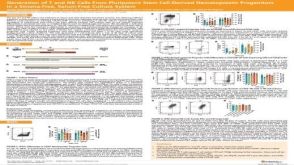
The recent identification of hemogenic endothelium (HE) in human pluripotent stem cell (hPSC) cultures presents opportunities to investigate signaling pathways that are essential for blood development from endothelium and provides an exploratory platform for de novo generation of hematopoietic stem cells (HSCs). However,the use of poorly defined human or animal components limits the utility of the current differentiation systems for studying specific growth factors required for HE induction and manufacturing clinical-grade therapeutic blood cells. Here,we identified chemically defined conditions required to produce HE from hPSCs growing in Essential 8 (E8) medium and showed that Tenascin C (TenC),an extracellular matrix protein associated with HSC niches,strongly promotes HE and definitive hematopoiesis in this system. hPSCs differentiated in chemically defined conditions undergo stages of development similar to those previously described in hPSCs cocultured on OP9 feeders,including the formation of VE-Cadherin(+)CD73(-)CD235a/CD43(-) HE and hematopoietic progenitors with myeloid and T lymphoid potential.
View Publication


 EasySep™小鼠TIL(CD45)正选试剂盒





 科学海报Generation of T and NK Cells From Pluripotent Stem Cell-Derived Hematopoietic Progenitors in a Stroma-Free, Serum-Free Culture System
 沪公网安备31010102008431号