Ode Y et al. (JAN 2018)
Journal of leukocyte biology
CIRP increases ICAM-1+ phenotype of neutrophils exhibiting elevated iNOS and NETs in sepsis.
Sepsis represents uncontrolled inflammation due to an infection. Cold-inducible RNA-binding protein (CIRP) is a stress-induced damage-associated molecular pattern (DAMP). A subset of neutrophils expressing ICAM-1+ neutrophils was previously shown to produce high levels of reactive oxygen species. The role of CIRP for the development and function of ICAM-1+ neutrophils during sepsis is unknown. We hypothesize that CIRP induces ICAM-1 expression in neutrophils causing injury to the lungs during sepsis. Using a mouse model of cecal ligation and puncture (CLP)-induced sepsis,we found increased expression of CIRP and higher frequencies and numbers of ICAM-1+ neutrophils in the lungs. Conversely,the CIRP-/- mice showed significant inhibition in the frequencies and numbers of ICAM-1+ neutrophils in the lungs compared to wild-type (WT) mice in sepsis. In vitro treatment of bone marrow-derived neutrophils (BMDN) with recombinant murine CIRP (rmCIRP) significantly increased ICAM-1+ phenotype in a time- and dose-dependent manner. The effect of rmCIRP on increasing frequencies of ICAM-1+ neutrophils was significantly attenuated in BMDN treated with anti-TLR4 Ab or NF-κB inhibitor compared,respectively,with BMDN treated with isotype IgG or DMSO. The frequencies of iNOS producing and neutrophil extracellular traps (NETs) forming phenotypes in rmCIRP-treated ICAM-1+ BMDN were significantly higher than those in ICAM-1- BMDN. Following sepsis the ICAM-1+ neutrophils in the lungs showed significantly higher levels of iNOS and NETs compared to ICAM-1- neutrophils. We further revealed that ICAM-1 and NETs were co-localized in the neutrophils treated with rmCIRP. CIRP-/- mice showed significant improvement in their survival outcome (78% survival) over that of WT mice (48% survival) in sepsis. Thus,CIRP could be a novel therapeutic target for regulating iNOS producing and NETs forming ICAM-1+ neutrophils in the lungs during sepsis.
View Publication
产品类型:
产品号#:
19762
19762RF
产品名:
EasySep™小鼠中性粒细胞富集试剂盒
RoboSep™ 小鼠中性粒细胞富集试剂盒含滤芯吸头
C. R. Seehus et al. (DEC 2017)
Nature communications 8 1 1900
Alternative activation generates IL-10 producing type 2 innate lymphoid cells.
Type 2 innate lymphoid cells (ILC2) share cytokine and transcription factor expression with CD4+ Th2 cells,but functional diversity of the ILC2 lineage has yet to be fully explored. Here,we show induction of a molecularly distinct subset of activated lung ILC2,termed ILC210. These cells produce IL-10 and downregulate some pro-inflammatory genes. Signals that generate ILC210 are distinct from those that induce IL-13 production,and gene expression data indicate that an alternative activation pathway leads to the generation of ILC210. In vivo,IL-2 enhances ILC210 generation and is associated with decreased eosinophil recruitment to the lung. Unlike most activated ILC2,the ILC210 population contracts after cessation of stimulation in vivo,with maintenance of a subset that can be recalled by restimulation,analogous to T-cell effector cell and memory cell generation. These data demonstrate the generation of a previously unappreciated IL-10 producing ILC2 effector cell population.
View Publication
产品类型:
产品号#:
19860
19860RF
85415
85420
85450
85460
86415
86420
86450
86460
产品名:
EasySep™小鼠Streptavidin RapidSpheres™分选试剂盒
RoboSep™ 小鼠Streptavidin RapidSpheres™分选试剂盒
SepMate™-15 (IVD)
SepMate™-15 (IVD)
SepMate™-50 (IVD)
SepMate™-50 (IVD)
SepMate™-15 (RUO)
SepMate™-15 (RUO)
SepMate™-50 (RUO)
SepMate™-50 (RUO)
Hornick EE et al. (FEB 2018)
Journal of immunology (Baltimore,Md. : 1950) 200 3 1188--1197
Nlrp12 Mediates Adverse Neutrophil Recruitment during Influenza Virus Infection.
Exaggerated inflammatory responses during influenza A virus (IAV) infection are typically associated with severe disease. Neutrophils are among the immune cells that can drive this excessive and detrimental inflammation. In moderation,however,neutrophils are necessary for optimal viral control. In this study,we explore the role of the nucleotide-binding domain leucine-rich repeat containing receptor family member Nlrp12 in modulating neutrophilic responses during lethal IAV infection. Nlrp12-/- mice are protected from lethality during IAV infection and show decreased vascular permeability,fewer pulmonary neutrophils,and a reduction in levels of neutrophil chemoattractant CXCL1 in their lungs compared with wild-type mice. Nlrp12-/- neutrophils and dendritic cells within the IAV-infected lungs produce less CXCL1 than their wild-type counterparts. Decreased CXCL1 production by Nlrp12-/- dendritic cells was not due to a difference in CXCL1 protein stability,but instead to a decrease in Cxcl1 mRNA stability. Together,these data demonstrate a previously unappreciated role for Nlrp12 in exacerbating the pathogenesis of IAV infection through the regulation of CXCL1-mediated neutrophilic responses.
View Publication
V. Fang et al. ( 2017)
Nature immunology 18 1 15--25
Gradients of the signaling lipid S1P in lymph nodes position natural killer cells and regulate their interferon-$\gamma$ response.
The lymph node periphery is an important site for many immunological functions,from pathogen containment to the differentiation of helper T cells,yet the cues that position cells in this region are largely undefined. Here,through the use of a reporter for the signaling lipid S1P (sphingosine 1-phosphate),we found that cells sensed higher concentrations of S1P in the medullary cords than in the T cell zone and that the S1P transporter SPNS2 on lymphatic endothelial cells generated this gradient. Natural killer (NK) cells are located at the periphery of the lymph node,predominantly in the medulla,and we found that expression of SPNS2,expression of the S1P receptor S1PR5 on NK cells,and expression of the chemokine receptor CXCR4 were all required for NK cell localization during homeostasis and rapid production of interferon-$\gamma$ by NK cells after challenge. Our findings elucidate the spatial cues for NK cell organization and reveal a previously unknown role for S1P in positioning cells within the medulla.
View Publication
产品类型:
产品号#:
18556
18556RF
产品名:
Friesen TJ et al. (MAY 2016)
The Journal of Experimental Medicine 213 6 913--920
Recent thymic emigrants are tolerized in the absence of inflammation.
T cell development requires a period of postthymic maturation. Why this is the case has remained a mystery,particularly given the rigors of intrathymic developmental checkpoints,successfully traversed by only ∼5% of thymocytes. We now show that the first few weeks of T cell residence in the lymphoid periphery define a period of heightened susceptibility to tolerance induction to tissue-restricted antigens (TRAs),the outcome of which depends on the context in which recent thymic emigrants (RTEs) encounter antigen. After encounter with TRAs in the absence of inflammation,RTEs exhibited defects in proliferation,diminished cytokine production,elevated expression of anergy-associated genes,and diminished diabetogenicity. These properties were mirrored in vitro by enhanced RTE susceptibility to regulatory T cell-mediated suppression. In the presence of inflammation,RTEs and mature T cells were,in contrast,equally capable of inducing diabetes,proliferating,and producing cytokines. Thus,recirculating RTEs encounter TRAs during a transitional developmental stage that facilitates tolerance induction,but inflammation converts antigen-exposed,tolerance-prone RTEs into competent effector cells.
View Publication
产品类型:
产品号#:
19852
19852RF
19853
19853RF
产品名:
EasySep™小鼠CD4+ T细胞分选试剂盒
RoboSep™ 小鼠CD4+ T细胞分选试剂盒
EasySep™小鼠CD8+ T细胞分选试剂盒
RoboSep™ 小鼠CD8+ T细胞分选试剂盒
Apps R et al. (MAY 2016)
Cell Host & Microbe 19 5 686--95
HIV-1 Vpu Mediates HLA-C Downregulation.
Many pathogens evade cytotoxic T lymphocytes (CTLs) by downregulating HLA molecules on infected cells,but the loss of HLA can trigger NK cell-mediated lysis. HIV-1 is thought to subvert CTLs while preserving NK cell inhibition by Nef-mediated downregulation of HLA-A and -B but not HLA-C molecules. We find that HLA-C is downregulated by most primary HIV-1 clones,including transmitted founder viruses,in contrast to the laboratory-adapted NL4-3 virus. HLA-C reduction is mediated by viral Vpu and reduces the ability of HLA-C restricted CTLs to suppress viral replication in CD4+ cells in vitro. HLA-A/B are unaffected by Vpu,and primary HIV-1 clones vary in their ability to downregulate HLA-C,possibly in response to whether CTLs or NK cells dominate immune pressure through HLA-C. HIV-2 also suppresses HLA-C expression through distinct mechanisms,underscoring the immune pressure HLA-C exerts on HIV. This viral immune evasion casts new light on the roles of CTLs and NK cells in immune responses against HIV.
View Publication
产品类型:
产品号#:
17952
17952RF
100-0696
产品名:
EasySep™人CD4+ T细胞分选试剂盒
RoboSep™ 人CD4+ T细胞分选试剂盒
EasySep™人CD4+ T细胞分离试剂盒
Uhl B et al. (SEP 2016)
Blood
Aged neutrophils contribute to the first line of defense in the acute inflammatory response.
Under steady-state conditions,aged neutrophils are removed from the circulation in bone marrow,liver,and spleen thereby maintaining myeloid cell homeostasis. The fate of these aged immune cells under inflammatory conditions,however,remains largely obscure. Here,we demonstrate that in the acute inflammatory response during endotoxemia aged neutrophils cease returning to the bone marrow and instead rapidly migrate to the site of inflammation. Having arrived in inflamed tissue,aged neutrophils were found to exhibit a higher phagocytic activity as compared to the subsequently recruited non-aged neutrophils. This distinct behavior of aged neutrophils under inflammatory conditions is dependent on specific age-related changes in their molecular repertoire that enable these 'experienced' immune cells to instantly translate inflammatory signals into immune responses. In particular,aged neutrophils engage toll-like receptor-4- and p38 mitogen-activated protein kinases-dependent pathways to induce conformational changes in β2 integrins which allow these phagocytes to effectively accomplish their mission in the front line of the inflammatory response. Hence,ageing in the circulation might represent a critical process for neutrophils that enables these immune cells to properly unfold their functional properties for host defense.
View Publication
产品类型:
产品号#:
19762
19762RF
产品名:
EasySep™小鼠中性粒细胞富集试剂盒
RoboSep™ 小鼠中性粒细胞富集试剂盒含滤芯吸头
Bearoff F et al. (SEP 2016)
Genes and immunity
Natural genetic variation profoundly regulates gene expression in immune cells and dictates susceptibility to CNS autoimmunity.
Regulation of gene expression in immune cells is known to be under genetic control,and likely contributes to susceptibility to autoimmune diseases such as multiple sclerosis (MS). How this occurs in concert across multiple immune cell types is poorly understood. Using a mouse model that harnesses the genetic diversity of wild-derived mice,more accurately reflecting genetically diverse human populations,we provide an extensive characterization of the genetic regulation of gene expression in five different naive immune cell types relevant to MS. The immune cell transcriptome is shown to be under profound genetic control,exhibiting diverse patterns: global,cell-specific and sex-specific. Bioinformatic analysis of the genetically controlled transcript networks reveals reduced cell type specificity and inflammatory activity in wild-derived PWD/PhJ mice,compared with the conventional laboratory strain C57BL/6J. Additionally,candidate MS-GWAS (genome-wide association study candidate genes for MS susceptibility) genes were significantly enriched among transcripts overrepresented in C57BL/6J cells compared with PWD. These expression level differences correlate with robust differences in susceptibility to experimental autoimmune encephalomyelitis,the principal model of MS,and skewing of the encephalitogenic T-cell responses. Taken together,our results provide functional insights into the genetic regulation of the immune transcriptome,and shed light on how this in turn contributes to susceptibility to autoimmune disease.Genes and Immunity advance online publication,22 September 2016; doi:10.1038/gene.2016.37.
View Publication
产品类型:
产品号#:
18954
18954RF
产品名:
EasySep™小鼠CD19正选试剂盒II
RoboSep™ 小鼠CD19正选试剂盒II
Liu D et al. (NOV 2016)
Scientific reports 6 36002
IL-25 attenuates rheumatoid arthritis through suppression of Th17 immune responses in an IL-13-dependent manner.
IL-25,a new member of the IL-17 cytokine family,is involved in type 2 immunity initiation and has been associated with the pathogenesis of rheumatoid arthritis (RA). However,its exact role remains unclear. Here,we aimed to analyse IL-25 expression in the serum and synovial fluid of RA patients and evaluated the correlations between serum IL-25 levels,clinical and laboratory values and inflammation cytokines. Additionally,we investigated whether IL-25 can suppress Th1/Th17 responses involved in RA pathogenesis. We further determined whether IL-25 can alleviate collagen-induced arthritis (CIA) development in mice and the underlying mechanisms using in vitro and in vivo experiments. Our results showed that IL-25 was upregulated in the serum and synovial fluid of RA patients. Increased serum IL-25 levels were associated with disease severity and inflammatory response in RA patients. Furthermore,IL-25 inhibited CD4(+) T-cell activation and differentiation into Th17 cells,without affecting Th1 cells in human RA and CIA models. Administration of IL-25 could attenuate CIA development by Th17 suppression in an IL-13-dependent manner. Our findings indicate that IL-25 plays a potent immunosuppressive role in the pathogenesis of RA and CIA by downregulating Th17 cell response,and thus,may be a potential therapeutic agent for RA.
View Publication
产品类型:
产品号#:
17952
17952RF
19852
19852RF
100-0696
产品名:
EasySep™人CD4+ T细胞分选试剂盒
RoboSep™ 人CD4+ T细胞分选试剂盒
EasySep™小鼠CD4+ T细胞分选试剂盒
RoboSep™ 小鼠CD4+ T细胞分选试剂盒
EasySep™人CD4+ T细胞分离试剂盒
Yeung YA et al. (NOV 2016)
Nature communications 7 13376
Germline-encoded neutralization of a Staphylococcus aureus virulence factor by the human antibody repertoire.
Staphylococcus aureus is both an important pathogen and a human commensal. To explore this ambivalent relationship between host and microbe,we analysed the memory humoral response against IsdB,a protein involved in iron acquisition,in four healthy donors. Here we show that in all donors a heavily biased use of two immunoglobulin heavy chain germlines generated high affinity (pM) antibodies that neutralize the two IsdB NEAT domains,IGHV4-39 for NEAT1 and IGHV1-69 for NEAT2. In contrast to the typical antibody/antigen interactions,the binding is primarily driven by the germline-encoded hydrophobic CDRH-2 motifs of IGHV1-69 and IGHV4-39,with a binding mechanism nearly identical for each antibody derived from different donors. Our results suggest that IGHV1-69 and IGHV4-39,while part of the adaptive immune system,may have evolved under selection pressure to encode a binding motif innately capable of recognizing and neutralizing a structurally conserved protein domain involved in pathogen iron acquisition.
View Publication
产品类型:
产品号#:
19554
19554RF
19666
19669
100-0404
19669RF
产品名:
EasySep™人Pan-B细胞富集试剂盒
RoboSep™ 人Pan-B细胞富集试剂盒
EasySep™ Direct人中性粒细胞分选试剂盒
EasySep™ Direct人单核细胞分选试剂盒
RoboSep™ 人中性粒细胞分选试剂盒
RoboSep™ Direct人单核细胞分选试剂盒
Xue D et al. (NOV 2016)
Journal of immunology (Baltimore,Md. : 1950)
Semaphorin 4C Protects against Allergic Inflammation: Requirement of Regulatory CD138+ Plasma Cells.
The regulatory properties of B cells have been studied in autoimmune diseases; however,their role in allergic diseases is poorly understood. We demonstrate that Semaphorin 4C (Sema4C),an axonal guidance molecule,plays a crucial role in B cell regulatory function. Mice deficient in Sema4C exhibited increased airway inflammation after allergen exposure,with massive eosinophilic lung infiltrates and increased Th2 cytokines. This phenotype was reproduced by mixed bone marrow chimeric mice with Sema4C deficient only in B cells,indicating that B lymphocytes were the key cells affected by the absence of Sema4C expression in allergic inflammation. We determined that Sema4C-deficient CD19(+)CD138(+) cells exhibited decreased IL-10 and increased IL-4 expression in vivo and in vitro. Adoptive transfer of Sema4c(-/-) CD19(+)CD138(+) cells induced marked pulmonary inflammation,eosinophilia,and increased bronchoalveolar lavage fluid IL-4 and IL-5,whereas adoptive transfer of wild-type CD19(+)CD138(+)IL-10(+) cells dramatically decreased allergic airway inflammation in wild-type and Sema4c(-/-) mice. This study identifies a novel pathway by which Th2-mediated immune responses are regulated. It highlights the importance of plasma cells as regulatory cells in allergic inflammation and suggests that CD138(+) B cells contribute to cytokine balance and are important for maintenance of immune homeostasis in allergic airways disease. Furthermore,we demonstrate that Sema4C is critical for optimal regulatory cytokine production in CD138(+) B cells.
View Publication


 EasySep™小鼠TIL(CD45)正选试剂盒





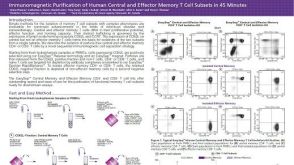 科学海报Immunomagnetic Purification of Human Central and Effector Memory T Cell Subsets in 45 Minutes
 沪公网安备31010102008431号