Activation of the unfolded protein response is associated with impaired granulopoiesis in transgenic mice expressing mutant Elane.
Severe congenital neutropenia (SCN) is an inborn disorder of granulopoiesis that in many cases is caused by mutations of the ELANE gene,which encodes neutrophil elastase (NE). Recent data suggest a model in which ELANE mutations result in NE protein misfolding,induction of endoplasmic reticulum (ER) stress,activation of the unfolded protein response (UPR),and ultimately a block in granulocytic differentiation. To test this model,we generated transgenic mice carrying a targeted mutation of Elane (G193X) reproducing a mutation found in SCN. The G193X Elane allele produces a truncated NE protein that is rapidly degraded. Granulocytic precursors from G193X Elane mice,though without significant basal UPR activation,are sensitive to chemical induction of ER stress. Basal and stress granulopoiesis after myeloablative therapy are normal in these mice. Moreover,inaction of protein kinase RNA-like ER kinase (Perk),one of the major sensors of ER stress,either alone or in combination with G193X Elane,had no effect on basal granulopoiesis. However,inhibition of the ER-associated degradation (ERAD) pathway using a proteosome inhibitor resulted in marked neutropenia in G193X Elane. The selective sensitivity of G913X Elane granulocytic cells to ER stress provides new and strong support for the UPR model of disease patho-genesis in SCN.
View Publication
产品类型:
产品号#:
03231
03434
03444
产品名:
MethoCult™ M3231
MethoCult™ GF M3434
MethoCult™ GF M3434
Rossi L et al. (JUN 2011)
Blood 117 24 6479--88
TIMP-1 deficiency subverts cell-cycle dynamics in murine long-term HSCs.
In addition to the well-recognized role in extracellular matrix remodeling,the tissue inhibitor of metalloproteinases-1 (TIMP-1) has been suggested to be involved in the regulation of numerous biologic functions,including cell proliferation and survival. We therefore hypothesized that TIMP-1 might be involved in the homeostatic regulation of HSCs,whose biologic behavior is the synthesis of both microenvironmental and intrinsic cues. We found that TIMP-1(-/-) mice have decreased BM cellularity and,consistent with this finding,TIMP-1(-/-) HSCs display reduced capability of long-term repopulation. Interestingly,the cell cycle distribution of TIMP-1(-/-) stem cells appears distorted,with a dysregulation at the level of the G(1) phase. TIMP-1(-/-) HSCs also display increased levels of p57,p21,and p53,suggesting that TIMP-1 could be intrinsically involved in the regulation of HSC cycling dynamics. Of note,TIMP-1(-/-) HSCs present decreased levels of CD44 glycoprotein,whose expression has been proven to be controlled by p53,the master regulator of the G(1)/S transition. Our findings establish a role for TIMP-1 in regulating HSC function,suggesting a novel mechanism presiding over stem cell quiescence in the framework of the BM milieu.
View Publication
产品类型:
产品号#:
03434
03444
产品名:
MethoCult™ GF M3434
MethoCult™ GF M3434
Chen LS et al. (JUL 2011)
Blood 118 3 693--702
Mechanisms of cytotoxicity to Pim kinase inhibitor, SGI-1776, in acute myeloid leukemia.
Pim kinases are Ser/Thr kinases with multiple substrates that affect survival pathways. These proteins are overexpressed in acute myeloid leukemia (AML) blasts and we hypothesized that Pim kinase inhibition would affect AML cell survival. Imidazo[1,2-b]pyridazine compound,SGI-1776 inhibits Pim-1,Pim-2 and Pim-3,and was evaluated in AML-cell line,-xenograft model,and -primary blasts. Treatment of AML cells with SGI-1776 results in a concentration-dependent induction of apoptosis and we investigated its effect on Pim kinase functions. Phosphorylation of traditional Pim kinase targets,c-Myc(Ser62) and 4E-BP1 (Thr36/Thr47),were both decreased in actively cycling AML cell lines MV-4-11,MOLM-13 and OCI-AML-3. Levels of antiapoptotic proteins Bcl-2,Bcl-x(L),XIAP,and proapoptotic Bak and Bax were unchanged; however,a significant reduction in Mcl-1 was observed. This was correlated with inhibition of global RNA and protein synthesis and MCL-1 transcript decline after SGI-1776 treatment. These data suggest that SGI-1776 mechanism in AML involves Mcl-1 protein reduction. Consistent with cell line data,xenograft model studies with mice bearing MV-4-11 tumors showed efficacy with SGI-1776. Importantly,SGI-1776 was also cytotoxic in AML primary cells,irrespective of FLT3 mutation status and resulted in Mcl-1 protein decline. Pim kinase inhibition may be a new strategy for AML treatment.
View Publication
产品类型:
产品号#:
04230
产品名:
MethoCult™ H4230
Dixon AS et al. (AUG 2011)
The Journal of biological chemistry 286 31 27751--60
Disruption of Bcr-Abl coiled coil oligomerization by design.
Oligomerization is an important regulatory mechanism for many proteins,including oncoproteins and other pathogenic proteins. The oncoprotein Bcr-Abl relies on oligomerization via its coiled coil domain for its kinase activity,suggesting that a designed coiled coil domain with enhanced binding to Bcr-Abl and reduced self-oligomerization would be therapeutically useful. Key mutations in the coiled coil domain of Bcr-Abl were identified that reduce homo-oligomerization through intermolecular charge-charge repulsion yet increase interaction with the Bcr-Abl coiled coil through additional salt bridges,resulting in an enhanced ability to disrupt the oligomeric state of Bcr-Abl. The mutations were modeled computationally to optimize the design. Assays performed in vitro confirmed the validity and functionality of the optimal mutations,which were found to exhibit reduced homo-oligomerization and increased binding to the Bcr-Abl coiled coil domain. Introduction of the mutant coiled coil into K562 cells resulted in decreased phosphorylation of Bcr-Abl,reduced cell proliferation,and increased caspase-3/7 activity and DNA segmentation. Importantly,the mutant coiled coil domain was more efficacious than the wild type in all experiments performed. The improved inhibition of Bcr-Abl through oligomeric disruption resulting from this modified coiled coil domain represents a viable alternative to small molecule inhibitors for therapeutic intervention.
View Publication
产品类型:
产品号#:
04230
产品名:
MethoCult™ H4230
Yokoyama A et al. (JUL 2011)
Journal of cell science 124 Pt 13 2208--19
Proteolytically cleaved MLL subunits are susceptible to distinct degradation pathways.
The mixed lineage leukemia (MLL) proto-oncogenic protein is a histone-lysine N-methyltransferase that is produced by proteolytic cleavage and self-association of the respective functionally distinct subunits (MLL(N) and MLL(C)) to form a holocomplex involved in epigenetic transcriptional regulation. On the basis of studies in Drosophila it has been suggested that the separated subunits might also have distinct functions. In this study,we used a genetically engineered mouse line that lacked MLL(C) to show that the MLL(N)-MLL(C) holocomplex is responsible for MLL functions in various developmental processes. The stability of MLL(N) is dependent on its intramolecular interaction with MLL(C),which is mediated through the first and fourth plant homeodomain (PHD) fingers (PHD1 and PHD4) and the phenylalanine/tyrosine-rich (FYRN) domain of MLL(N). Free MLL(N) is destroyed by a mechanism that targets the FYRN domain,whereas free MLL(C) is exported to the cytoplasm and degraded by the proteasome. PHD1 is encoded by an alternatively spliced exon that is occasionally deleted in T-cell leukemia,and its absence produces an MLL mutant protein that is deficient for holocomplex formation. Therefore,this should be a loss-of-function mutant allele,suggesting that the known tumor suppression role of MLL may also apply to the T-cell lineage. Our data demonstrate that the dissociated MLL subunits are subjected to distinct degradation pathways and thus not likely to have separate functions unless the degradation mechanisms are inhibited.
View Publication
产品类型:
产品号#:
03231
产品名:
MethoCult™ M3231
X. Cao et al. (jun 2019)
Stem cell reports 12 6 1282--1297
Differentiation and Functional Comparison of Monocytes and Macrophages from hiPSCs with Peripheral Blood Derivatives.
A renewable source of human monocytes and macrophages would be a valuable alternative to primary cells from peripheral blood (PB) in biomedical research. We developed an efficient protocol to derive monocytes and macrophages from human induced pluripotent stem cells (hiPSCs) and performed a functional comparison with PB-derived cells. hiPSC-derived monocytes were functional after cryopreservation and exhibited gene expression profiles comparable with PB-derived monocytes. Notably,hiPSC-derived monocytes were more activated with greater adhesion to endothelial cells under physiological flow. hiPSC-derived monocytes were successfully polarized to M1 and M2 macrophage subtypes,which showed similar pan- and subtype-specific gene and surface protein expression and cytokine secretion to PB-derived macrophages. hiPSC-derived macrophages exhibited higher endocytosis and efferocytosis and similar bacterial and tumor cell phagocytosis to PB-derived macrophages. In summary,we developed a robust protocol to generate hiPSC monocytes and macrophages from independent hiPSC lines that showed aspects of functional maturity comparable with those from PB.
View Publication
产品类型:
产品号#:
04636
产品名:
MethoCult™ SF H4636
M.-N. Doulgkeroglou et al. (jul 2020)
Frontiers in bioengineering and biotechnology 8 811
Automation, Monitoring, and Standardization of Cell Product Manufacturing.
Although regenerative medicine products are at the forefront of scientific research,technological innovation,and clinical translation,their reproducibility and large-scale production are compromised by automation,monitoring,and standardization issues. To overcome these limitations,new technologies at software (e.g.,algorithms and artificial intelligence models,combined with imaging software and machine learning techniques) and hardware (e.g.,automated liquid handling,automated cell expansion bioreactor systems,automated colony-forming unit counting and characterization units,and scalable cell culture plates) level are under intense investigation. Automation,monitoring and standardization should be considered at the early stages of the developmental cycle of cell products to deliver more robust and effective therapies and treatment plans to the bedside,reducing healthcare expenditure and improving services and patient care.
View Publication
Noel JG et al. (OCT 2001)
Inflammation 25 5 339--49
Thermal injury increases the number of eosinophil progenitors in rat spleen and bone marrow.
We have investigated the effects of thermal injury upon myelopoiesis. IL-3,GM-CSF,and IL-5 were used to stimulate myeloid colony formation. IL-3 induces early myeloid progenitors and a more developed myeloid progenitor,the granulocyte-macrophage colony-forming unit (GM-CFU),to multiply and develop into mature myeloid cells. GM-CSF induces GM-CFU to become mature myeloid cells,while IL-5 induces eosinophil progenitors to become mature eosinophils. Stem Cell Factor (SCF) + IL-6 and FLT3 ligand,which have no effect on colony formation by themselves,were used to enhance the effects of IL-3 and GM-CSF,respectively. We found that thermal injury increased the number of early myeloid progenitors and GM-CFU in the spleen with either IL-3 or GM-CSF as a stimulant. Thermal injury increased the number of early myeloid progenitors in the bone marrow when GM-CSF,but not IL-3,was used to stimulate colony growth. Also,thermal injury increased the numbers of eosinophil progenitors in rat spleen and bone marrow and increased splenic levels of IL-5 mRNA.
View Publication
产品类型:
产品号#:
03534
03134
03231
03234
03334
03434
03444
03236
产品名:
MethoCult™ GF M3534
MethoCult™ M3134
MethoCult™ M3231
MethoCult™ M3234
MethoCult™ M3334
MethoCult™ GF M3434
MethoCult™ GF M3434
MethoCult™ SF M3236
Mahtouk K et al. (MAR 2004)
Blood 103 5 1829--37
An inhibitor of the EGF receptor family blocks myeloma cell growth factor activity of HB-EGF and potentiates dexamethasone or anti-IL-6 antibody-induced apoptosis.
We previously found that some myeloma cell lines express the heparin-binding epidermal growth factor-like growth factor (HB-EGF) gene. As the proteoglycan syndecan-1 is an HB-EGF coreceptor as well as a hallmark of plasma cell differentiation and a marker of myeloma cells,we studied the role of HB-EGF on myeloma cell growth. The HB-EGF gene was expressed by bone marrow mononuclear cells in 8 of 8 patients with myeloma,particularly by monocytes and stromal cells,but not by purified primary myeloma cells. Six of 9 myeloma cell lines and 9 of 9 purified primary myeloma cells expressed ErbB1 or ErbB4 genes coding for HB-EGF receptor. In the presence of a low interleukin-6 (IL-6) concentration,HB-EGF stimulated the proliferation of the 6 ErbB1+ or ErbB4+ cell lines,through the phosphatidylinositol 3-kinase/AKT (PI-3K/AKT) pathway. A pan-ErbB inhibitor blocked the myeloma cell growth factor activity and the signaling induced by HB-EGF. This inhibitor induced apoptosis of patients'myeloma cells cultured with their tumor environment. It also increased patients' myeloma cell apoptosis induced by an anti-IL-6 antibody or dexamethasone. The ErbB inhibitor had no effect on the interaction between multiple myeloma cells and stromal cells. It was not toxic for nonmyeloma cells present in patients' bone marrow cultures or for the growth of hematopoietic progenitors. Altogether,these data identify ErbB receptors as putative therapeutic targets in multiple myeloma.
View Publication


 EasySep™小鼠TIL(CD45)正选试剂盒






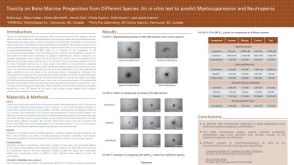 科学海报Toxicity on Bone Marrow Progenitors from Different Species: an In Vitro Test to Predict Myelosuppression and Neutropenia

 沪公网安备31010102008431号