Molinero LL et al. (MAR 2006)
Human immunology 67 3 170--82
Intracellular expression of MICA in activated CD4 T lymphocytes and protection from NK cell-mediated MICA-dependent cytotoxicity.
MICA is a stress-regulated molecule recognized by the NK cell-activating receptor NKG2D. Previously,we demonstrated that MICA is induced on activated T cells but regulation by mitogenic cytokines and its biological consequences remain unexplored. Here,we show that IL-2,IL-4,and IL-15 but not TNF-alpha or IFN-alpha induced MICA expression in T lymphocytes present in peripheral blood mononuclear cells (PBMCs),as assessed by Western blot. IL-2 effect involved Jak3/STAT5,p38 MAPK,p70(56) kinase,Lck/fyn kinases,and NF-kappaB. MICA expression was also observed in Th1 and Th2 cells. However,surface expression was not detected. T lymphocytes present in PBMCs and isolated CD4+ T lymphocytes stimulated with phorbol-12-myristate-13-acetate and ionomycin also induced MICA expression as assessed by Western blot,but only low levels were expressed at the cell surface. Activated but not resting CD4+ T lymphocytes were lysed by IL-15- or IL-2-stimulated NK cells,and susceptibility was increased when HLA class I molecules were blocked. Also,cytokine-stimulated NK cells produced more IFN-gamma after culture with activated CD4+ T lymphocytes. However,the participation of MICA in these responses,if any,was marginal. Confocal microscopy revealed that MICA is retained mostly inside activated CD4+ T cells. Our results suggest that low surface expression of MICA on activated CD4+ T lymphocytes might be a safeguard mechanism to protect them from NK cells in an inflammatory,virus-infected,or tumor microenvironment,where NK and activated CD4+ T cells are recruited.
View Publication
产品类型:
产品号#:
15022
15062
15025
15065
产品名:
RosetteSep™人CD4+ T细胞富集抗体混合物
RosetteSep™人CD4+ T细胞富集抗体混合物
RosetteSep™人NK细胞富集抗体混合物
RosetteSep™人NK细胞富集抗体混合物
Volonté et al. (JAN 2014)
Journal of immunology (Baltimore,Md. : 1950) 192 1 523--532
Cancer-initiating cells from colorectal cancer patients escape from T cell-mediated immunosurveillance in vitro through membrane-bound IL-4.
Cancer-initiating cells (CICs) that are responsible for tumor initiation,propagation,and resistance to standard therapies have been isolated from human solid tumors,including colorectal cancer (CRC). The aim of this study was to obtain an immunological profile of CRC-derived CICs and to identify CIC-associated target molecules for T cell immunotherapy. We have isolated cells with CIC properties along with their putative non-CIC autologous counterparts from human primary CRC tissues. These CICs have been shown to display tumor-initiating/stemness" properties�
View Publication
产品类型:
产品号#:
01700
01705
01702
产品名:
ALDEFLUOR™ 试剂盒
ALDEFLUOR™ DEAB试剂, 1.5 mM, 1 mL
ALDEFLUOR™检测缓冲液
Want AJ et al. (JAN 2012)
Regenerative medicine 7 1 71--84
Large-scale expansion and exploitation of pluripotent stem cells for regenerative medicine purposes: beyond the T flask.
Human pluripotent stem cells will likely be a significant part of the regenerative medicine-driven healthcare revolution. In order to realize this potential,culture processes must be standardized,scalable and able to produce clinically relevant cell numbers,whilst maintaining critical biological functionality. This review comprises a broad overview of important bioprocess considerations,referencing the development of biopharmaceutical processes in an effort to learn from current best practice in the field. Particular focus is given to the recent efforts to grow human pluripotent stem cells in microcarrier or aggregate suspension culture,which would allow geometric expansion of productive capacity were it to be fully realized. The potential of these approaches is compared with automation of traditional T-flask culture,which may provide a cost-effective platform for low-dose,low-incidence conditions or autologous therapies. This represents the first step in defining the full extent of the challenges facing bioprocess engineers in the exploitation of large-scale human pluripotent stem cell manufacture.
View Publication
产品类型:
产品号#:
05850
05857
05870
05875
85850
85857
85870
85875
产品名:
mTeSR™1
mTeSR™1
N. Y. Villa et al. ( 2015)
Blood 125 3778-3788
Myxoma virus suppresses proliferation of activated T lymphocytes yet permits oncolytic virus transfer to cancer cells
Allogeneic hematopoietic cell transplant (allo-HCT) can be curative for certain hematologic malignancies,but the risk of graft-versus-host disease (GVHD) is a major limitation for wider application. Ideally,strategies to improve allo-HCT would involve suppression of T lymphocytes that drive GVHD while sparing those that mediate graft-versus-malignancy (GVM). Recently,using a xenograft model,we serendipitously discovered that myxoma virus (MYXV) prevented GVHD while permitting GVM. In this study,we show that MYXV binds to resting,primary human T lymphocytes but will only proceed into active virus infection after the T cells receive activation signals. MYXV-infected T lymphocytes exhibited impaired proliferation after activation with reduced expression of interferon-?,interleukin-2 (IL-2),and soluble IL-2R?,but did not affect expression of IL-4 and IL-10. MYXV suppressed T-cell proliferation in 2 patterns (full vs partial) depending on the donor. In terms of GVM,we show that MYXV-infected activated human T lymphocytes effectively deliver live oncolytic virus to human multiple myeloma cells,thus augmenting GVM by transfer of active oncolytic virus to residual cancer cells. Given this dual capacity of reducing GVHD plus increasing the antineoplastic effectiveness of GVM,ex vivo virotherapy with MYXV may be a promising clinical adjunct to allo-HCT regimens.
View Publication
产品类型:
产品号#:
19051HLA
19051HLARF
产品名:
EasySep™ HLA T细胞富集试剂盒
RoboSep™ HLA T细胞富集试剂盒含滤芯吸头
X. Wang et al. (apr 2022)
Leukemia 36 4 1015--1024
CD19/BAFF-R dual-targeted CAR T cells for the treatment of mixed antigen-negative variants of acute lymphoblastic leukemia.
Chimeric antigen receptor (CAR) T cells targeting CD19 mediate potent antitumor effects in B-cell malignancies including acute lymphoblastic leukemia (ALL),but antigen loss remains the major cause of treatment failure. To mitigate antigen escape and potentially improve the durability of remission,we developed a dual-targeting approach using an optimized,bispecific CAR construct that targets both CD19 and BAFF-R. CD19/BAFF-R dual CAR T cells exhibited antigen-specific cytokine release,degranulation,and cytotoxicity against both CD19-/- and BAFF-R-/- variant human ALL cells in vitro. Immunodeficient mice engrafted with mixed CD19-/- and BAFF-R-/- variant ALL cells and treated with a single dose of CD19/BAFF-R dual CAR T cells experienced complete eradication of both CD19-/- and BAFF-R-/- ALL variants,whereas mice treated with monospecific CD19 or BAFF-R CAR T cells succumbed to outgrowths of CD19-/BAFF-R+ or CD19+/BAFF-R- tumors,respectively. Further,CD19/BAFF-R dual CAR T cells showed prolonged in vivo persistence,raising the possibility that these cells may have the potential to promote durable remissions. Together,our data support clinical translation of BAFF-R/CD19 dual CAR T cells to treat ALL.
View Publication
产品类型:
产品号#:
17751
18000
17751RF
产品名:
EasySep™ Release人CD3正选试剂盒
EasySep™磁极
RoboSep™ Release人CD3正选试剂盒
(Jul 2025)
Frontiers in Pharmacology 16
Calycosin suppresses the activating effect of granulocyte-macrophage-colony-stimulating factor-producing T helper cells on macrophages in experimental atherosclerosis
BackgroundT cells are contributors to atherosclerosis pathogenesis. Granulocyte-macrophage-colony-stimulating factor (GM-CSF)-producing T helper (ThGM) cells,a specialized helper T cell subset that highly expresses GM-CSF but lacks other helper T cell markers,could exacerbate atherosclerosis development. Calycosin has been reported to suppress atherosclerosis progression. However,the effect of calycosin on ThGM cells is unknown. This study was designed to test the calycosin-induced impact on the pro-atherosclerotic function of ThGM cells in a mouse atherosclerosis model.MethodsApolipoprotein E knockout (ApoE−/−) mice were fed a high-fat diet and calycosin. The phenotype and cytokine expression of aortic ThGM cells were assessed by flow cytometry. Calycosin-derived influences on ThGM cell differentiation,proliferation,and function were determined by flow cytometry,quantitative RT-PCR,Immunoblotting,gene silencing assays,and co-culture with macrophages.ResultsAortic ThGM cell frequency was attenuated after calycosin administration. Live aortic ThGM cells,phenotypically featuring CD4+CCR6−CCR8−CXCR3−CCR10+,showed slower proliferation and weaker macrophage-activating capability in calycosin-treated mice. Besides,calycosin repressed in vitro ThGM cell differentiation and subsequently impaired ThGM cell-mediated macrophage activation,oxidized low-density lipoprotein (Ox-LDL) uptake,and foam cell formation. Importantly,calycosin upregulated nuclear receptor subfamily 4 group A member 3 (NR4A3) in ThGM cells. NR4A3 silencing partially restored the function of calycosin-treated ThGM cells.ConclusionCalycosin inhibits ThGM cell activity to suppress ThGM-cell-mediated activation of pro-atherosclerotic macrophages to ultimately ameliorate atherosclerosis progression. Therefore,we revealed a novel mechanism by which calycosin protects against atherosclerosis.
View Publication
产品类型:
产品号#:
100-0659
产品名:
EasySep™ 小鼠F4/80正选试剂盒
Y. Egawa et al. (May 2024)
Scientific Reports 14
Novel paired CD13-negative (MT-50.1) and CD13-positive (MT-50.4) HTLV-1-infected T-cell lines with differential regulatory T cell-like activity
Adult T-cell leukemia/lymphoma (ATL) occurs after human T-cell leukemia virus type-1 (HTLV-1) infection with a long latency period exceeding several decades. This implies the presence of immune evasion mechanisms for HTLV-1-infected T cells. Although ATL cells have a CD4 + CD25 + phenotype similar to that of regulatory T cells (Tregs),they do not always possess the immunosuppressive functions of Tregs. Factors that impart effective immunosuppressive functions to HTLV-1-infected cells may exist. A previous study identified a new CD13 + Treg subpopulation with enhanced immunosuppressive activity. We,herein,describe the paired CD13 − (designated as MT-50.1) and CD13 + (MT-50.4) HTLV-1-infected T-cell lines with Treg-like phenotype,derived from the peripheral blood of a single patient with lymphoma-type ATL. The cell lines were found to be derived from HTLV-1-infected non-leukemic cells. MT-50.4 cells secreted higher levels of immunosuppressive cytokines,IL-10 and TGF-β,expressed higher levels of Foxp3,and showed stronger suppression of CD4 + CD25 − T cell proliferation than MT-50.1 cells. Furthermore,the CD13 inhibitor bestatin significantly attenuated MT-50.4 cell growth,while it did not for MT-50.1 cells. These findings suggest that CD13 expression may be involved in the increased Treg-like activity of MT-50.4 cells. Hence,MT-50.4 cells will be useful for in-depth studies of CD13 + Foxp3 + HTLV-1-infected cells. Subject terms: Cancer,Microbiology,Oncology
View Publication
产品类型:
产品号#:
10985
产品名:
ImmunoCult™ 树突状细胞培养试剂盒
A. Sivakoses et al. (Mar 2025)
PeerJ 13 1
Triple negative breast cancer cells acquire lymphocyte proteins and genomic DNA during trogocytosis with T cells
Trogocytosis is the process by which a recipient cell siphons small membrane fragments and proteins from a donor cell and can be utilized by cancer cells to avoid immune detection. We observed lymphocyte specific protein expressed by triple negative breast cancer (TNBC) cells via immunofluorescence imaging of patient samples. Image analysis of Cluster of Differentiation 45RA (CD45RA) expression,a naïve T cell specific protein,revealed that all stages of TNBCs express CD45RA. Flow cytometry revealed TNBC cells trogocytose CD45 protein from T cells. We also showed that the acquisition of these lymphoid markers is contact dependent. Confocal and super-resolution imaging further revealed CD45+ spherical structures containing T cell genomic DNA inside TNBC cells after co-culture. Trogocytosis between T cells and TNBC cells altered tumor cell expression of PTPRC,the gene that encodes for CD45. Our results revealed that CD45 is obtained by TNBC cells from T cells via trogocytosis and that TNBC cells express CD45 intracellularly and on the membrane.
View Publication
Donnarumma T et al. (NOV 2016)
Cell reports 17 6 1571--1583
Opposing Development of Cytotoxic and Follicular Helper CD4 T Cells Controlled by the TCF-1-Bcl6 Nexus.
CD4(+) T cells develop distinct and often contrasting helper,regulatory,or cytotoxic activities. Typically a property of CD8(+) T cells,granzyme-mediated cytotoxic T cell (CTL) potential is also exerted by CD4(+) T cells. However,the conditions that induce CD4(+) CTLs are not entirely understood. Using single-cell transcriptional profiling,we uncover a unique signature of Granzyme B (GzmB)(+) CD4(+) CTLs,which distinguishes them from other CD4(+) T helper (Th) cells,including Th1 cells,and strongly contrasts with the follicular helper T (Tfh) cell signature. The balance between CD4(+) CTL and Tfh differentiation heavily depends on the class of infecting virus and is jointly regulated by the Tfh-related transcription factors Bcl6 and Tcf7 (encoding TCF-1) and by the expression of the inhibitory receptors PD-1 and LAG3. This unique profile of CD4(+) CTLs offers targets for their study,and its antagonism by the Tfh program separates CD4(+) T cells with either helper or killer functions.
View Publication
产品类型:
产品号#:
18952
18952RF
产品名:
EasySep™小鼠CD4正选试剂盒II
RoboSep™ 小鼠CD4正选试剂盒II
Vasir B et al. (FEB 2005)
Journal of immunology (Baltimore,Md. : 1950) 174 4 2376--86
Dendritic cells induce MUC1 expression and polarization on human T cells by an IL-7-dependent mechanism.
The MUC1 transmembrane mucin is expressed on the surface of activated human T cells; however,the physiologic signals responsible for the regulation of MUC1 in T cells are not known. The present studies demonstrate that IL-7,but not IL-2 or IL-4,markedly induces MUC1 expression on CD3+ T cells. MUC1 was also up-regulated by IL-15,but to a lesser extent than that found with IL-7. The results show that IL-7 up-regulates MUC1 on CD4+,CD8+,CD25+,CD69+,naive CD45RA+,and memory CD45RO+ T cells. In concert with induction of MUC1 expression by IL-7,activated dendritic cells (DC) that produce IL-7 up-regulate MUC1 on allogeneic CD3+ T cells. DC also induce MUC1 expression on autologous CD3+ T cells in the presence of recall Ag. Moreover,DC-induced MUC1 expression on T cells is blocked by a neutralizing anti-IL-7 Ab. The results also demonstrate that DC induce polarization of MUC1 on T cells at sites opposing the DC-T cell synapse. These findings indicate that DC-mediated activation of Ag-specific T cells is associated with induction and polarization of MUC1 expression by an IL-7-dependent mechanism.
View Publication


 EasySep™小鼠TIL(CD45)正选试剂盒





 新闻STEMCELL Technologies and Immudex Launch New Protocol for Rapid and Gentle Enrichment of Antigen-Specific T Cells
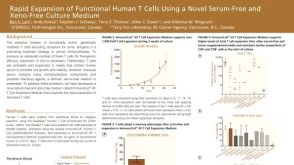 科学海报Rapid Expansion of Functional Human T Cells Using a Novel Serum-Free and Xeno-Free Culture Medium
 沪公网安备31010102008431号