Y. Cai et al. (Oct 2025)
Cell Death & Disease 16 1
YTHDC2 suppresses bladder cancer by inhibiting SOX2-mediated tumor plasticity
Pluripotent cancer stem cells play a pivotal role in inducing phenotypic plasticity across various cancer types,including bladder cancer. This plasticity,crucial for cancer progression,is largely regulated by epigenetic modifications including N6-methyladenosine (m6A) in RNAs. However,the role of the m6A reader protein YTHDC2 in this process remains poorly understood. In this study,we uncovered that the depletion of YTHDC2 significantly increased the pool of bladder cancer stem cells (BCSCs),resulting in a phenotypic shift towards a more invasive subtype of bladder cancer. This shift was characterized by enhanced proliferation,migration,invasion,and self-renewal capabilities of cancer cells,highlighting YTHDC2’s function as a tumor suppressor. Mechanistically,YTHDC2 recognized and bound to m6A-modified SOX2 mRNA,resulting in translational inhibition of SOX2. In conclusion,our study identifies YTHDC2 as a tumor suppressor in bladder cancer through inhibiting SOX2-mediated cell pluripotency and underscores the therapeutic potential of targeting the YTHDC2-SOX2 axis in bladder cancer.
View Publication
产品类型:
产品号#:
01700
产品名:
ALDEFLUOR™ 试剂盒
J. Wang et al. (Dec 2025)
Biomolecules 15 12
Humanized Bone Model Identifies BMP6 as a Multifunctional Regulator in Myeloma Bone Disease
Multiple myeloma (MM) is a plasma cell malignancy that disrupts bone homeostasis by suppressing osteogenesis and promoting osteoclast activity. While most therapeutic interventions to date have focused on targeting tumor cells and reducing osteolysis,we investigate whether osteoinductive strategies can restore bone formation and counteract disease progression. Using a human bone marrow-like scaffold model that enables direct in vivo evaluation of tumor–stroma interactions and human bone formation,we demonstrate that MM-derived mesenchymal stromal cells (MSCs) retain osteogenic potential but are functionally suppressed by MM cells. Transcriptomic profiling of MM-primed MSCs revealed the downregulation of small leucine-rich proteoglycans (SLRPs),ASPN,OGN,and OMD,key mediators of bone morphogenetic protein (BMP) signaling,which governs osteoblast differentiation. Among the BMPs analyzed,BMP6 emerged as a potent inducer of osteogenesis and regulator of the expression of these SLRPs. Notably,BMP6 selectively promoted bone formation without enhancing osteoclastogenesis and attenuated inflammatory and tumor-supportive MSC phenotypes. BMP6 also directly inhibited MM cell proliferation and suppressed IL6-induced growth. These findings highlight BMP6 as a distinct multifunctional regulator warranting further investigation as a potential therapeutic approach,while establishing the humanized model as a valuable platform for dissecting tumor–bone interactions in MM.
View Publication
产品类型:
产品号#:
18000
产品名:
EasySep™磁极
V. M. Jawahar et al. (Jan 2026)
PLOS Biology 24 1
TDP-43-mediated alternative polyadenylation is associated with a reduction in VPS35 and VPS29 expression in frontotemporal dementia
TAR DNA-binding protein 43 (TDP-43) dysfunction is a hallmark of several neurodegenerative diseases,including frontotemporal dementia,amyotrophic lateral sclerosis,and Alzheimer’s disease. Although cryptic exon inclusion is a well-characterized consequence of TDP-43 loss of function,emerging evidence reveals broader roles in RNA metabolism,notably in the regulation of alternative polyadenylation (APA) of disease-relevant transcripts. In the present study,we examined 3′ untranslated region lengthening events in the brains of individuals with frontotemporal lobar degeneration with TDP-43 pathology (FTLD-TDP),focusing on the functional impact of APA dysregulation. To investigate whether TDP-43-mediated APA events occur in the postmortem brain,we measured the 3′ untranslated region length of the retromer component vacuolar protein sorting 35 (VPS35) and the ETS transcription factor (ELK1) in the frontal cortex of a large cohort of FTLD-TDP patients and of healthy controls,and evaluated if these APA events are associated with FTLD-TDP clinical characteristic,markers of TDP-43 pathology [e.g.,hyperphosphorylated TDP-43 and cryptic stathmin-2 RNA],or the expression of VPS35 and VPS29 proteins,the latter being essential to the retromer complex. We identified robust 3′ untranslated region lengthening of VPS35 and ELK1 in FTLD-TDP,which strongly associated with markers of TDP-43 pathology,and ELK1 APA also associated with an earlier age of disease onset. Functionally,VPS35 APA was associated with reduced VPS35 and VPS29 protein expression,and lower VPS35 levels were associated with increased hyperphosphorylated TDP-43 and cryptic stathmin-2 RNA. Together,these data implicate APA dysregulation as a critical downstream consequence of TDP-43 dysfunction and suggest that TDP-43 loss may contribute to retromer impairment through APA-mediated repression of retromer subunits. Recent work has shown that TDP-43 loss in frontotemporal dementia (FTD) induces changes in alternative polyadenylation,but the functional consequences of this are unclear. This study reports that 3′UTR lengthening of VPS35 in FTD patient brain samples correlates with reduced VPS35 and VPS29 protein levels,suggesting that TDP-43 loss induces retromer dysfunction.
View Publication
Modular tissue-in-a-CUBE platform to model blood-brain barrier (BBB) and brain interaction
With the advent of increasingly sophisticated organoids,there is growing demand for technology to replicate the interactions between multiple tissues or organs. This is challenging to achieve,however,due to the varying culture conditions of the different cell types that make up each tissue. Current methods often require complicated microfluidic setups,but fragile tissue samples tend not to fare well with rough handling. Furthermore,the more complicated the human system to be replicated,the more difficult the model becomes to operate. Here,we present the development of a multi-tissue chip platform that takes advantage of the modularity and convenient handling ability of a CUBE device. We first developed a blood-brain barrier-in-a-CUBE by layering astrocytes,pericytes,and brain microvascular endothelial cells in the CUBE,and confirmed the expression and function of important tight junction and transporter proteins in the blood-brain barrier model. Then,we demonstrated the application of integrating Tissue-in-a-CUBE with a chip in simulating the in vitro testing of the permeability of a drug through the blood-brain barrier to the brain and its effect on treating the glioblastoma brain cancer model. We anticipate that this platform can be adapted for use with organoids to build complex human systems in vitro by the combination of multiple simple CUBE units. Development of platform to integrate multiple Tissue-in-a-CUBEs in a chip for tissue-tissue interaction,demonstrated by simulating the testing of the permeability and effect of a cancer drug in a BBB-Brain cancer model.
View Publication
产品类型:
产品号#:
100-0483
100-0484
100-0276
100-1130
产品名:
Hausser Scientificᵀᴹ 明线血球计数板
ReLeSR™
mTeSR™ Plus
mTeSR™ Plus
(Jul 2025)
Molecular Metabolism 99 10
Complete loss of PAX4 causes transient neonatal diabetes in humans
ObjectiveGene discovery studies in individuals with diabetes diagnosed within 6 months of life (neonatal diabetes,NDM) can provide unique insights into the development and function of human pancreatic beta-cells.MethodsWe performed genome sequencing in a cohort of 43 consanguineous individuals with NDM in whom all the known genetic causes had previously been excluded. We used quantitative PCR and RNA-sequencing in CRISPR-edited human induced pluripotent stem cells (iPSCs),and CUT&RUN-sequencing in EndoC-?H1 cells to investigate the effect of PAX4 loss on human pancreatic development.ResultsWe describe the identification of homozygous PAX4 loss-of-function variants in 2 individuals with transient NDM: a p.(Arg126?) stop-gain variant and a c.-352_104del deletion affecting the first 4 PAX4 exons. We confirmed the p.(Arg126?) variant causes nonsense mediated decay in CRISPR-edited iPSC-derived pancreatic endoderm cells. Integrated analysis of CUT&RUN-sequencing in EndoC-?H1 cells and RNA-sequencing in PAX4-depleted islet stem cell models identified genes directly regulated by PAX4 involved in both pancreatic islet development and glucose-stimulated insulin secretion.ConclusionWe report the first human cases of complete loss of PAX4,establishing it as a novel cause of NDM and highlighting its role in human beta cell development. Both probands had transient NDM which remitted in early infancy but relapsed at the ages of 2.4 and 6.7 years,demonstrating that in contrast to mouse models,PAX4 is not essential for the development of human pancreatic beta-cells. Highlights•Homozygous loss-of-function variants in PAX4 are a novel genetic cause of transient neonatal diabetes.•PAX4 directly regulates genes involved in pancreatic beta cell development and glucose-sensitive insulin secretion.•The role of PAX4 in humans differs to that observed in mouse and is not essential for beta cell development.
View Publication
产品类型:
产品号#:
85850
85857
产品名:
mTeSR™1
mTeSR™1
(Jun 2025)
Cellular and Molecular Life Sciences: CMLS 82 1
The ADCY1-mediated cAMP signaling pathway mediates functional effects of montelukast treatment in brain organoids
Montelukast (MTK) is a drug widely used for treating allergic rhinitis and asthma. However,severe neuropsychiatric adverse events related to MTK have been reported,with limited understanding of the underlying mechanisms. Here we leveraged human forebrain organoids (hFOs) and showed that MTK exposure in hFOs downregulated the expression of genes associated with multiple neuronal functions and neuropsychiatric disorders. The following integrative analysis highlighted adenylate cyclase 1 (ADCY1),a main regulator of the cAMP signaling pathway,as a hub gene mediating the functional effects of MTK exposure. We also showed that MTK exposure resulted in a reduction of cAMP and neuroactivities,and caused neural maturation defects. These cellular phenotypes could be recapitulated by treating hFOs with ST034307,a selective ADCY1 inhibitor,or partially rescued by ADCY1 overexpression in hFOs. Together,this study underscored that MTK exposure caused neuropsychiatric effects through inhibiting the ADCY1-mediated cAMP signaling pathway.Supplementary InformationThe online version contains supplementary material available at 10.1007/s00018-025-05764-z.
View Publication
Laminin-associated integrins mediate Diffuse Intrinsic Pontine Glioma infiltration and therapy response within a neural assembloid model
Diffuse Intrinsic Pontine Glioma (DIPG) is a highly aggressive and fatal pediatric brain cancer. One pre-requisite for tumor cells to infiltrate is adhesion to extracellular matrix (ECM) components. However,it remains largely unknown which ECM proteins are critical in enabling DIPG adhesion and migration and which integrin receptors mediate these processes. Here,we identify laminin as a key ECM protein that supports robust DIPG cell adhesion and migration. To study DIPG infiltration,we developed a DIPG-neural assembloid model,which is composed of a DIPG spheroid fused to a human induced pluripotent stem cell-derived neural organoid. Using this assembloid model,we demonstrate that knockdown of laminin-associated integrins significantly impedes DIPG infiltration. Moreover,laminin-associated integrin knockdown improves DIPG response to radiation and HDAC inhibitor treatment within the DIPG-neural assembloids. These findings reveal the critical role of laminin-associated integrins in mediating DIPG progression and drug response. The results also provide evidence that disrupting integrin receptors may offer a novel therapeutic strategy to enhance DIPG treatment outcomes. Finally,these results establish DIPG-neural assembloid models as a powerful tool to study DIPG disease progression and enable drug discovery.Supplementary InformationThe online version contains supplementary material available at 10.1186/s40478-024-01765-4.
View Publication
产品类型:
产品号#:
34811
34815
34821
34825
34850
34860
100-0276
100-1130
产品名:
AggreWell™ 800 24孔板,1个
AggreWell™ 800 24孔板,5个
AggreWell™ 800 6孔板,1个
AggreWell™ 800 6孔板,5个
AggreWell™ 800 24孔板启动套装
AggreWell™ 800 6孔板启动套装
mTeSR™ Plus
mTeSR™ Plus
(Mar 2025)
Journal of Neuroinflammation 22
Bystander neuronal progenitors in forebrain organoids promote protective antiviral responses
Neurotropic viruses are the most common cause of infectious encephalitis and highly target neurons for infection. Our understanding of the intrinsic capacity of neuronal innate immune responses to mediate protective antiviral responses remains incomplete. Here,we evaluated the role of intercellular crosstalk in mediating intrinsic neuronal immunity and its contribution to limiting viral infection. We found that in the absence of viral antagonism,neurons transcriptionally induce robust interferon signaling and can effectively signal to uninfected bystander neurons. Yet,in two-dimensional cultures,this dynamic response did not restrict viral spread. Interestingly,this differed in the context of viral infection in three-dimensional forebrain organoids with complex neuronal subtypes and cellular organization,where we observed protective capacity. We showed antiviral crosstalk between infected neurons and bystander neural progenitors is mediated by type I interferon signaling. Using spatial transcriptomics,we then uncovered regions containing bystander neural progenitors that expressed distinct antiviral genes,revealing critical underpinnings of protective antiviral responses among neuronal subtypes. These findings underscore the importance of interneuronal communication in protective antiviral immunity in the brain and implicate key contributions to protective antiviral signaling.Supplementary InformationThe online version contains supplementary material available at 10.1186/s12974-025-03381-y.
View Publication
Alzheimer’s disease protective allele of Clusterin modulates neuronal excitability through lipid-droplet-mediated neuron-glia communication
BackgroundGenome-wide association studies (GWAS) of Alzheimer’s disease (AD) have identified a plethora of risk loci. However,the disease variants/genes and the underlying mechanisms have not been extensively studied.MethodsBulk ATAC-seq was performed in induced pluripotent stem cells (iPSCs) differentiated various brain cell types to identify allele-specific open chromatin (ASoC) SNPs. CRISPR-Cas9 editing generated isogenic pairs,which were then differentiated into glutamatergic neurons (iGlut). Transcriptomic analysis and functional studies of iGlut co-cultured with mouse astrocytes assessed neuronal excitability and lipid droplet formation.ResultsWe identified a putative causal SNP of CLU that impacted neuronal chromatin accessibility to transcription-factor(s),with the AD protective allele upregulating neuronal CLU and promoting neuron excitability. And,neuronal CLU facilitated neuron-to-glia lipid transfer and astrocytic lipid droplet formation coupled with reactive oxygen species (ROS) accumulation. These changes caused astrocytes to uptake less glutamate thereby altering neuron excitability.ConclusionsFor a strong AD-associated locus near Clusterin (CLU),we connected an AD protective allele to a role of neuronal CLU in promoting neuron excitability through lipid-mediated neuron-glia communication. Our study provides insights into how CLU confers resilience to AD through neuron-glia interactions.Supplementary InformationThe online version contains supplementary material available at 10.1186/s13024-025-00840-1.
View Publication
产品类型:
产品号#:
100-0483
100-0484
100-0276
100-1130
产品名:
Hausser Scientificᵀᴹ 明线血球计数板
ReLeSR™
mTeSR™ Plus
mTeSR™ Plus
(Jul 2024)
Cell reports 43 7
Mechanomemory of nucleoplasm and RNA polymerase II after chromatin stretching by a microinjected magnetic nanoparticle force
SUMMARY Increasing evidence suggests that the mechanics of chromatin and nucleoplasm regulate gene transcription and nuclear function. However,how the chromatin and nucleoplasm sense and respond to forces remains elusive. Here,we employed a strategy of applying forces directly to the chromatin of a cell via a microinjected 200-nm anti-H2B-antibody-coated ferromagnetic nanoparticle (FMNP) and an anti-immunoglobulin G (IgG)-antibody-coated or an uncoated FMNP. The chromatin behaved as a viscoelastic gel-like structure and the nucleoplasm was a softer viscoelastic structure at loading frequencies of 0.1–5 Hz. Protein diffusivity of the chromatin,nucleoplasm,and RNA polymerase II (RNA Pol II) and RNA Pol II activity were upregulated in a chromatin-stretching-dependent manner and stayed upregulated for tens of minutes after force cessation. Chromatin stiffness increased,but the mechanomemory duration of chromatin diffusivity decreased,with substrate stiffness. These findings may provide a mechanomemory mechanism of transcription upregulation and have implications on cell and nuclear functions. Graphical abstract In brief Rashid et al. show that chromatin and nucleoplasm in cells behave as viscoelastic materials. Chromatin stretching mediates the mechanomemory of chromatin and nucleoplasm diffusivity as well as of RNA polymerase II activity. The mechanomemory of RNA polymerase II activity provides a mechanism for sustained transcription upregulation tens of minutes after force cessation.
View Publication
产品类型:
产品号#:
85850
85857
产品名:
mTeSR™1
mTeSR™1
(Aug 2024)
International Journal of Oral Science 16
Caspase-11 mediated inflammasome activation in macrophages by systemic infection of
Clinical studies have shown that Aggregatibacter actinomycetemcomitans (A. actinomycetemcomitans) is associated with aggressive periodontitis and can potentially trigger or exacerbate rheumatoid arthritis (RA). However,the mechanism is poorly understood. Here,we show that systemic infection with A. actinomycetemcomitans triggers the progression of arthritis in mice anti-collagen antibody-induced arthritis (CAIA) model following IL-1β secretion and cell infiltration in paws in a manner that is dependent on caspase-11-mediated inflammasome activation in macrophages. The administration of polymyxin B (PMB),chloroquine,and anti-CD11b antibody suppressed inflammasome activation in macrophages and arthritis in mice,suggesting that the recognition of lipopolysaccharide (LPS) in the cytosol after bacterial degradation by lysosomes and invasion via CD11b are needed to trigger arthritis following inflammasome activation in macrophages. These data reveal that the inhibition of caspase-11-mediated inflammasome activation potentiates aggravation of RA induced by infection with A. actinomycetemcomitans. This work highlights how RA can be progressed by inflammasome activation as a result of periodontitis-associated bacterial infection and discusses the mechanism of inflammasome activation in response to infection with A. actinomycetemcomitans.
View Publication


 EasySep™小鼠TIL(CD45)正选试剂盒





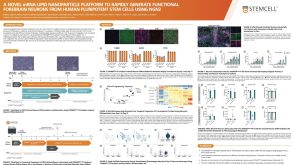 科学海报A Novel mRNA-LNP Platform to Rapidly Generate Functional Forebrain Neurons from hPSCs Using NGN2
 沪公网安备31010102008431号