Li P et al. (JUL 2016)
Nature medicine 22 7 807--11
Stimulating the RIG-I pathway to kill cells in the latent HIV reservoir following viral reactivation.
The persistence of latent HIV proviruses in long-lived CD4(+) T cells despite antiretroviral therapy (ART) is a major obstacle to viral eradication. Because current candidate latency-reversing agents (LRAs) induce HIV transcription,but fail to clear these cellular reservoirs,new approaches for killing these reactivated latent HIV reservoir cells are urgently needed. HIV latency depends upon the transcriptional quiescence of the integrated provirus and the circumvention of immune defense mechanisms. These defenses include cell-intrinsic innate responses that use pattern-recognition receptors (PRRs) to detect viral pathogens,and that subsequently induce apoptosis of the infected cell. Retinoic acid (RA)-inducible gene I (RIG-I,encoded by DDX58) forms one class of PRRs that mediates apoptosis and the elimination of infected cells after recognition of viral RNA. Here we show that acitretin,an RA derivative approved by the US Food and Drug Administration (FDA),enhances RIG-I signaling ex vivo,increases HIV transcription,and induces preferential apoptosis of HIV-infected cells. These effects are abrogated by DDX58 knockdown. Acitretin also decreases proviral DNA levels in CD4(+) T cells from HIV-positive subjects on suppressive ART,an effect that is amplified when combined with suberoylanilide hydroxamic acid (SAHA),a histone deacetylase inhibitor. Pharmacological enhancement of an innate cellular-defense network could provide a means by which to eliminate reactivated cells in the latent HIV reservoir.
View Publication
产品类型:
产品号#:
17952
17952RF
100-0696
产品名:
EasySep™人CD4+ T细胞分选试剂盒
RoboSep™ 人CD4+ T细胞分选试剂盒
EasySep™人CD4+ T细胞分离试剂盒
Pauls SD et al. (JUL 2016)
Journal of immunology (Baltimore,Md. : 1950)
FcγRIIB-Independent Mechanisms Controlling Membrane Localization of the Inhibitory Phosphatase SHIP in Human B Cells.
SHIP is an important regulator of immune cell signaling that functions to dephosphorylate the phosphoinositide phosphatidylinositol 3,4,5-trisphosphate at the plasma membrane and mediate protein-protein interactions. One established paradigm for SHIP activation involves its recruitment to the phospho-ITIM motif of the inhibitory receptor FcγRIIB. Although SHIP is essential for the inhibitory function of FcγRIIB,it also has critical modulating functions in signaling initiated from activating immunoreceptors such as B cell Ag receptor. In this study,we found that SHIP is indistinguishably recruited to the plasma membrane after BCR stimulation with or without FcγRIIB coligation in human cell lines and primary cells. Interestingly,fluorescence recovery after photobleaching analysis reveals differential mobility of SHIP-enhanced GFP depending on the mode of stimulation,suggesting that although BCR and FcγRIIB can both recruit SHIP,this occurs via distinct molecular complexes. Mutagenesis of a SHIP-enhanced GFP fusion protein reveals that the SHIP-Src homology 2 domain is essential in both cases whereas the C terminus is required for recruitment via BCR stimulation,but is less important with FcγRIIB coligation. Experiments with pharmacological inhibitors reveal that Syk activity is required for optimal stimulation-induced membrane localization of SHIP,whereas neither PI3K or Src kinase activity is essential. BCR-induced association of SHIP with binding partner Shc1 is dependent on Syk,as is tyrosine phosphorylation of both partners. Our results indicate that FcγRIIB is not uniquely able to promote membrane recruitment of SHIP,but rather modulates its function via formation of distinct signaling complexes. Membrane recruitment of SHIP via Syk-dependent mechanisms may be an important factor modulating immunoreceptor signaling.
View Publication
产品类型:
产品号#:
19674
19674RF
19764
19764RF
17864
产品名:
EasySep™ Direct人B细胞分选试剂盒
RoboSep™ Direct人B细胞分选试剂盒
EasySep™小鼠浆细胞样DC分选试剂盒
RoboSep™ 小鼠浆细胞样DC分选试剂盒
EasySep™人记忆B细胞分选试剂盒
Godinho-Santos A et al. ( 2016)
Scientific reports 6 30927
CIB1 and CIB2 are HIV-1 helper factors involved in viral entry.
HIV-1 relies on the host-cell machinery to accomplish its replication cycle,and characterization of these helper factors contributes to a better understanding of HIV-host interactions and can identify potential novel antiviral targets. Here we explored the contribution of CIB2,previously identified by RNAi screening as a potential helper factor,and its homolog,CIB1. Knockdown of either CIB1 or CIB2 strongly impaired viral replication in Jurkat cells and in primary CD4+ T-lymphocytes,identifying these proteins as non-redundant helper factors. Knockdown of CIB1 and CIB2 impaired envelope-mediated viral entry for both for X4- and R5-tropic HIV-1,and both cell-free and cell-associated entry pathways were affected. In contrast,the level of CIB1 and CIB2 expression did not influence cell viability,cell proliferation,receptor-independent viral binding to the cell surface,or later steps in the viral replication cycle. CIB1 and CIB2 knockdown was found to reduce the expression of surface molecules implicated in HIV-1 infection,including CXCR4,CCR5 and integrin α4β7,suggesting at least one mechanism through which these proteins promote viral infection. Thus,this study identifies CIB1 and CIB2 as host helper factors for HIV-1 replication that are required for optimal receptor-mediated viral entry.
View Publication
产品类型:
产品号#:
19052
19052RF
15470
15450
15420
15460
15425
15465
15430
15415
产品名:
EasySep™人CD4+ T细胞富集试剂盒
RoboSep™ 人CD4+ T细胞富集试剂盒含滤芯吸头
Lu LL et al. (SEP 2016)
Cell
A Functional Role for Antibodies in Tuberculosis.
While a third of the world carries the burden of tuberculosis,disease control has been hindered by a lack of tools,including a rapid,point-of-care diagnostic and a protective vaccine. In many infectious diseases,antibodies (Abs) are powerful biomarkers and important immune mediators. However,in Mycobacterium tuberculosis (Mtb) infection,a discriminatory or protective role for humoral immunity remains unclear. Using an unbiased antibody profiling approach,we show that individuals with latent tuberculosis infection (Ltb) and active tuberculosis disease (Atb) have distinct Mtb-specific humoral responses,such that Ltb infection is associated with unique Ab Fc functional profiles,selective binding to FcγRIII,and distinct Ab glycosylation patterns. Moreover,compared to Abs from Atb,Abs from Ltb drove enhanced phagolysosomal maturation,inflammasome activation,and,most importantly,macrophage killing of intracellular Mtb. Combined,these data point to a potential role for Fc-mediated Ab effector functions,tuned via differential glycosylation,in Mtb control.
View Publication
产品类型:
产品号#:
18085
18085RF
18058
18058RF
15025
15065
产品名:
RosetteSep™人NK细胞富集抗体混合物
RosetteSep™人NK细胞富集抗体混合物
Pé et al. (OCT 2016)
Nature communications 7 13027
Loss of immune tolerance to IL-2 in type 1 diabetes.
Type 1 diabetes (T1D) is characterized by a chronic,progressive autoimmune attack against pancreas-specific antigens,effecting the destruction of insulin-producing β-cells. Here we show interleukin-2 (IL-2) is a non-pancreatic autoimmune target in T1D. Anti-IL-2 autoantibodies,as well as T cells specific for a single orthologous epitope of IL-2,are present in the peripheral blood of non-obese diabetic (NOD) mice and patients with T1D. In NOD mice,the generation of anti-IL-2 autoantibodies is genetically determined and their titre increases with age and disease onset. In T1D patients,circulating IgG memory B cells specific for IL-2 or insulin are present at similar frequencies. Anti-IL-2 autoantibodies cloned from T1D patients demonstrate clonality,a high degree of somatic hypermutation and nanomolar affinities,indicating a germinal centre origin and underscoring the synergy between cognate autoreactive T and B cells leading to defective immune tolerance.
View Publication
A Cas9 Ribonucleoprotein Platform for Functional Genetic Studies of HIV-Host Interactions in Primary Human T Cells.
New genetic tools are needed to understand the functional interactions between HIV and human host factors in primary cells. We recently developed a method to edit the genome of primary CD4(+) T cells by electroporation of CRISPR/Cas9 ribonucleoproteins (RNPs). Here,we adapted this methodology to a high-throughput platform for the efficient,arrayed editing of candidate host factors. CXCR4 or CCR5 knockout cells generated with this method are resistant to HIV infection in a tropism-dependent manner,whereas knockout of LEDGF or TNPO3 results in a tropism-independent reduction in infection. CRISPR/Cas9 RNPs can furthermore edit multiple genes simultaneously,enabling studies of interactions among multiple host and viral factors. Finally,in an arrayed screen of 45 genes associated with HIV integrase,we identified several candidate dependency/restriction factors,demonstrating the power of this approach as a discovery platform. This technology should accelerate target validation for pharmaceutical and cell-based therapies to cure HIV infection.
View Publication
产品类型:
产品号#:
19052
19052RF
产品名:
EasySep™人CD4+ T细胞富集试剂盒
RoboSep™ 人CD4+ T细胞富集试剂盒含滤芯吸头
Ols ML et al. (OCT 2016)
Immunity
Dendritic Cells Regulate Extrafollicular Autoreactive B Cells via T Cells Expressing Fas and Fas Ligand.
The extrafollicular (EF) plasmablast response to self-antigens that contain Toll-like receptor (TLR) ligands is prominent in murine lupus models and some bacterial infections,but the inhibitors and activators involved have not been fully delineated. Here,we used two conventional dendritic cell (cDC) depletion systems to investigate the role of cDCs on a classical TLR-dependent autoreactive EF response elicited in rheumatoid-factor B cells by DNA-containing immune complexes. Contrary to our hypothesis,cDC depletion amplified rather than dampened the EF response in Fas-intact but not Fas-deficient mice. Further,we demonstrated that cDC-dependent regulation requires Fas and Fas ligand (FasL) expression by T cells,but not Fas expression by B cells. Thus,cDCs activate FasL-expressing T cells that regulate Fas-expressing extrafollicular helper T (Tefh) cells. These studies reveal a regulatory role for cDCs in B cell plasmablast responses and provide a mechanistic explanation for the excess autoantibody production observed in Fas deficiency.
View Publication
产品类型:
产品号#:
19754
19754RF
产品名:
Figueroa G et al. (OCT 2016)
Journal of visualized experiments : JoVE 116
Characterization of Human Monocyte-derived Dendritic Cells by Imaging Flow Cytometry: A Comparison between Two Monocyte Isolation Protocols.
Dendritic cells (DCs) are antigen presenting cells of the immune system that play a crucial role in lymphocyte responses,host defense mechanisms,and pathogenesis of inflammation. Isolation and study of DCs have been important in biological research because of their distinctive features. Although they are essential key mediators of the immune system,DCs are very rare in blood,accounting for approximately 0.1 - 1% of total blood mononuclear cells. Therefore,alternatives for isolation methods rely on the differentiation of DCs from monocytes isolated from peripheral blood mononuclear cells (PBMCs). The utilization of proper isolation techniques that combine simplicity,affordability,high purity,and high yield of cells is imperative to consider. In the current study,two distinct methods for the generation of DCs will be compared. Monocytes were selected by adherence or negatively enriched using magnetic separation procedure followed by differentiation into DCs with IL-4 and GM-CSF. Monocyte and MDDC viability,proliferation,and phenotype were assessed using viability dyes,MTT assay,and CD11c/ CD14 surface marker analysis by imaging flow cytometry. Although the magnetic separation method yielded a significant higher percentage of monocytes with higher proliferative capacity when compared to the adhesion method,the findings have demonstrated the ability of both techniques to simultaneously generate monocytes that are capable of proliferating and differentiating into viable CD11c+ MDDCs after seven days in culture. Both methods yielded textgreater 70% CD11c+ MDDCs. Therefore,our results provide insights that contribute to the development of reliable methods for isolation and characterization of human DCs.
View Publication
产品类型:
产品号#:
19059
19059RF
产品名:
EasySep™人单核细胞富集试剂盒
RoboSep™ 人单核细胞富集试剂盒含滤芯吸头
Papait A et al. (NOV 2016)
Journal of tissue engineering and regenerative medicine
Allogeneic platelet-rich plasma affects monocyte differentiation to dendritic cells causing an anti-inflammatory microenvironment putatively fostering the wound healing.
Autologous platelet rich plasma (PRP) is clinically used to induce repair of different tissues through the release of bioactive molecules. In some patients,the production of an efficient autologous PRP is unfeasible due to their compromised health. We developed an allogeneic PRP mismatched for AB0 and Rh antigens. To broadcast its clinical applications avoiding side effects the outcome of allogeneic PRP on immune response should be defined. Thus,we investigated whether PRP affected the differentiation of peripheral blood monocytes to dendritic cells upon stimulation with granulocyte monocyte colony stimulating factor and interleukin-4. Indeed,these cells are the main players of immune response and tissue repair. PRP inhibited the differentiation of monocytes to CD1a(+) dendritic cells and favored the expansion of phagocytic CD163(+) CD206(+) fibrocyte-like cells. These cells produced inteleukin-10 and prostaglandin-E2,but not interferon-γ,upon stimulation with lipopolysaccharides. Moreover,they promoted the expansion of regulatory CD4(+) CD25(+) FoxP3(+) T cells upon allostimulation or antigen specific priming. Finally,the conditioned medium harvested from monocytes differentiated with PRP triggered a strong chemotactic effect on mesenchymal cells in both scratch and transwell migration assays. These results strongly suggest that allogeneic PRP can foster the differentiation of monocytes to a regulatory anti-inflammatory population possibly favoring wound healing.
View Publication
产品类型:
产品号#:
15022
15062
19155
19155RF
15028
15068
产品名:
RosetteSep™人CD4+ T细胞富集抗体混合物
RosetteSep™人CD4+ T细胞富集抗体混合物
RosetteSep™人单核细胞富集抗体混合物
RosetteSep™人单核细胞富集抗体混合物
Li R et al. (NOV 2016)
Cancer research
Macrophage-secreted TNFα and TGFβ1 Influence Migration Speed and Persistence of Cancer Cells in 3D Tissue Culture via Independent Pathways.
The ability of a cancer cell to migrate through the dense extracellular matrix (ECM) within and surrounding the solid tumor is a critical determinant of metastasis. Macrophages enhance invasion and metastasis in the tumor microenvironment but the basis for their effects are not fully understood. Using a microfluidic 3D cell migration assay,we found that the presence of macrophages enhanced the speed and persistence of cancer cell migration through a 3D extracellular matrix in a matrix metalloproteinases (MMP)-dependent fashion. Mechanistic investigations revealed that macrophage-released TNFα and TGFβ1 mediated the observed behaviors by two distinct pathways. These factors synergistically enhanced migration persistence through a synergistic induction of NF-κB-dependent MMP1 expression in cancer cells. In contrast,macrophage-released TGFβ1 enhanced migration speed primarily by inducing MT1-MMP expression. Taken together,our results reveal new insights into how macrophages enhance cancer cell metastasis,and they identify TNFα and TGFβ1 dual blockade as an anti-metastatic strategy in solid tumors.
View Publication


 EasySep™小鼠TIL(CD45)正选试剂盒




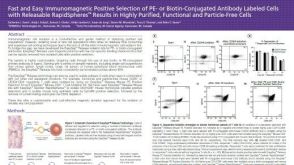 科学海报Positive Selection of PE- or Biotin-Conjugated Antibody Labeled Cells with Releasable Rapidspheres™
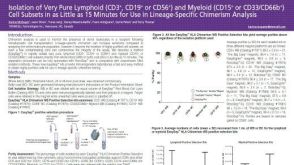 科学海报Isolation of Very Pure Lymphoid (CD3+, CD19+ or CD56+) and Myeloid (CD15+ or CD33/CD66b+) Cell Subsets in as Little as 15 Minutes for Use in Lineage-Specific Chimerism Analysis

 沪公网安备31010102008431号