W. Wang et al. (may 2019)
Nature 569 7755 270--274
CD8+ T cells regulate tumour ferroptosis during cancer immunotherapy.
Cancer immunotherapy restores or enhances the effector function of CD8+ T cells in the tumour microenvironment1,2. CD8+ T cells activated by cancer immunotherapy clear tumours mainly by inducing cell death through perforin-granzyme and Fas-Fas ligand pathways3,4. Ferroptosis is a form of cell death that differs from apoptosis and results from iron-dependent accumulation of lipid peroxide5,6. Although it has been investigated in vitro7,8,there is emerging evidence that ferroptosis might be implicated in a variety of pathological scenarios9,10. It is unclear whether,and how,ferroptosis is involved in T cell immunity and cancer immunotherapy. Here we show that immunotherapy-activated CD8+ T cells enhance ferroptosis-specific lipid peroxidation in tumour cells,and that increased ferroptosis contributes to the anti-tumour efficacy of immunotherapy. Mechanistically,interferon gamma (IFNgamma) released from CD8+ T cells downregulates the expression of SLC3A2 and SLC7A11,two subunits of the glutamate-cystine antiporter system xc-,impairs the uptake of cystine by tumour cells,and as a consequence,promotes tumour cell lipid peroxidation and ferroptosis. In mouse models,depletion of cystine or cysteine by cyst(e)inase (an engineered enzyme that degrades both cystine and cysteine) in combination with checkpoint blockade synergistically enhanced T cell-mediated anti-tumour immunity and induced ferroptosis in tumour cells. Expression of system xc- was negatively associated,in cancer patients,with CD8+ T cell signature,IFNgamma expression,and patient outcome. Analyses of human transcriptomes before and during nivolumab therapy revealed that clinical benefits correlate with reduced expression of SLC3A2 and increased IFNgamma and CD8. Thus,T cell-promoted tumour ferroptosis is an anti-tumour mechanism,and targeting this pathway in combination with checkpoint blockade is a potential therapeutic approach.
View Publication
产品类型:
产品号#:
17953
17953RF
19853
19853RF
100-0710
产品名:
EasySep™人CD8+ T细胞分选试剂盒
RoboSep™ 人CD8+ T细胞分选试剂盒
EasySep™小鼠CD8+ T细胞分选试剂盒
RoboSep™ 小鼠CD8+ T细胞分选试剂盒
EasySep™人CD8+ T细胞分选试剂盒
T. Yamamoto et al. (apr 2019)
Scientific reports 9 1 5917
STING agonists activate latently infected cells and enhance SIV-specific responses ex vivo in naturally SIV controlled cynomolgus macaques.
To achieve a functional cure for HIV,treatment regimens that eradicate latently HIV-infected cells must be established. For this,many groups have attempted to reactivate latently-infected cells to induce cytopathic effects and/or elicit cytotoxic T lymphocyte (CTL)/NK cell-mediated immune responses to kill these cells. We believe that not only the reactivation of latently-infected cells,but also the induction of strong CTL responses,would be required for this. Here,we used typical immune activators that target pattern recognition receptors (PRRs). For our experimental model,we identified eight SIV-infected cynomolgus monkeys that became natural controllers of viremia. Although plasma viral loads were undetectable,we could measure SIV-DNA by qPCR in peripheral blood mononuclear cells (PBMCs). Using these PBMCs,we screened 10 distinct PRR ligands to measure IFN-alpha and IFN-gamma production. Among these,STING ligands,cGAMP and c-di-AMP,and the TLR7/8 agonist R848 markedly increased cytokine levels. Both R848 and STING ligands could reactivate latently-infected cells in both cynomolgus monkeys and human PBMCs in vitro. Furthermore,c-di-AMP increased the frequency of SIV Gag-specific CD8+ T cells including polyfunctional CD8+ T cells,as compared to that in untreated control or R848-treated cells. Together,STING ligands might be candidates for HIV treatment.
View Publication
产品类型:
产品号#:
19052
19052RF
产品名:
EasySep™人CD4+ T细胞富集试剂盒
RoboSep™ 人CD4+ T细胞富集试剂盒含滤芯吸头
Z. Yan et al. (apr 2019)
JCI insight 5
Deficiency of Socs3 leads to brain-targeted EAE via enhanced neutrophil activation and ROS production.
Dysregulation of the JAK/STAT signaling pathway is associated with Multiple Sclerosis (MS) and its mouse model,Experimental Autoimmune Encephalomyelitis (EAE). Suppressors Of Cytokine Signaling (SOCS) negatively regulate the JAK/STAT pathway. We previously reported a severe,brain-targeted,atypical form of EAE in mice lacking Socs3 in myeloid cells (Socs3DeltaLysM),which is associated with cerebellar neutrophil infiltration. There is emerging evidence that neutrophils are detrimental in the pathology of MS/EAE,however,their exact function is unclear. Here we demonstrate that neutrophils from the cerebellum of Socs3DeltaLysM mice show a hyper-activated phenotype with excessive production of reactive oxygen species (ROS) at the peak of EAE. Neutralization of ROS in vivo delayed the onset and reduced severity of atypical EAE. Mechanistically,Socs3-deficient neutrophils exhibit enhanced STAT3 activation,a hyper-activated phenotype in response to G-CSF,and upon G-CSF priming,increased ROS production. Neutralization of G-CSF in vivo significantly reduced the incidence and severity of the atypical EAE phenotype. Overall,our work elucidates that hypersensitivity of G-CSF/STAT3 signaling in Socs3DeltaLysM mice leads to atypical EAE by enhanced neutrophil activation and increased oxidative stress,which may explain the detrimental role of G-CSF in MS patients.
View Publication
产品类型:
产品号#:
19762
19762RF
产品名:
EasySep™小鼠中性粒细胞富集试剂盒
RoboSep™ 小鼠中性粒细胞富集试剂盒含滤芯吸头
C. Yang et al. (may 2019)
The Journal of experimental medicine 216 5 1182--1198
Thyrotropin aggravates atherosclerosis by promoting macrophage inflammation in plaques.
Subclinical hypothyroidism is associated with cardiovascular diseases,yet the underlying mechanism remains largely unknown. Herein,in a common population (n = 1,103),TSH level was found to be independently correlated with both carotid plaque prevalence and intima-media thickness. Consistently,TSH receptor ablation in ApoE-/- mice attenuated atherogenesis,accompanied by decreased vascular inflammation and macrophage burden in atherosclerotic plaques. These results were also observed in myeloid-specific Tshr-deficient ApoE-/- mice,which indicated macrophages to be a critical target of the proinflammatory and atherogenic effects of TSH. In vitro experiments further revealed that TSH activated MAPKs (ERK1/2,p38alpha,and JNK) and IkappaB/p65 pathways in macrophages and increased inflammatory cytokine production and their recruitment of monocytes. Thus,the present study has elucidated the new mechanisms by which TSH,as an independent risk factor of atherosclerosis,aggravates vascular inflammation and contributes to atherogenesis.
View Publication
产品类型:
产品号#:
17858
17858RF
100-0694
产品名:
EasySep™人CD14正选试剂盒II
RoboSep™ 人CD14正选试剂盒II
EasySep™人CD14正选试剂盒II
专家访谈
Martina Poletti
Modeling Host-Microbe Interactions with Intestinal Organoids
Potent Neutralizing Antibodies against SARS-CoV-2 Identified by High-Throughput Single-Cell Sequencing of Convalescent Patients' B Cells.
The COVID-19 pandemic urgently needs therapeutic and prophylactic interventions. Here,we report the rapid identification of SARS-CoV-2-neutralizing antibodies by high-throughput single-cell RNA and VDJ sequencing of antigen-enriched B cells from 60 convalescent patients. From 8,558 antigen-binding IgG1+ clonotypes,14 potent neutralizing antibodies were identified,with the most potent one,BD-368-2,exhibiting an IC50 of 1.2 and 15 ng/mL against pseudotyped and authentic SARS-CoV-2,respectively. BD-368-2 also displayed strong therapeutic and prophylactic efficacy in SARS-CoV-2-infected hACE2-transgenic mice. Additionally,the 3.8 {\AA} cryo-EM structure of a neutralizing antibody in complex with the spike-ectodomain trimer revealed the antibody's epitope overlaps with the ACE2 binding site. Moreover,we demonstrated that SARS-CoV-2-neutralizing antibodies could be directly selected based on similarities of their predicted CDR3H structures to those of SARS-CoV-neutralizing antibodies. Altogether,we showed that human neutralizing antibodies could be efficiently discovered by high-throughput single B cell sequencing in response to pandemic infectious diseases.
View Publication
产品类型:
产品号#:
19054
19054RF
17864
产品名:
EasySep™人B细胞富集试剂盒
RoboSep™ 人B细胞富集试剂盒含滤芯吸头
EasySep™人记忆B细胞分选试剂盒
B. M. Craver et al. (jan 2020)
Blood advances 4 2 312--321
N-acetylcysteine inhibits thrombosis in a murine model of myeloproliferative neoplasm.
Thrombosis is a major cause of mortality in patients with myeloproliferative neoplasms (MPNs),though there is currently little to offer patients with MPN beyond aspirin and cytoreductive therapies such as hydroxyurea for primary prevention. Thrombogenesis in MPN involves multiple cellular mechanisms,including platelet activation and neutrophil-extracellular trap formation; therefore,an antithrombotic agent that targets one or more of these processes would be of therapeutic benefit in MPN. Here,we treated the JAK2V617F knockin mouse model of polycythemia vera with N-acetylcysteine (NAC),a sulfhydryl-containing compound with broad effects on glutathione replenishment,free radical scavenging,and reducing disulfide bonds,to investigate its antithrombotic effects in the context of MPN. Strikingly,NAC treatment extended the lifespan of JAK2V617F mice without impacting blood counts or splenomegaly. Using an acute pulmonary thrombosis model in vivo,we found that NAC reduced thrombus formation to a similar extent as the irreversible platelet inhibitor aspirin. In vitro analysis of platelet activation revealed that NAC reduced thrombin-induced platelet-leukocyte aggregate formation in JAK2V617F mice. Furthermore,NAC reduced neutrophil extracellular trap formation in primary human neutrophils from patients with MPN as well as healthy controls. These results provide evidence that N-acetylcysteine inhibits thrombosis in JAK2V617F mice and provide a pre-clinical rationale for investigating NAC as a therapeutic to reduce thrombotic risk in MPN.
View Publication
产品类型:
产品号#:
19666
100-0404
产品名:
EasySep™ Direct人中性粒细胞分选试剂盒
RoboSep™ 人中性粒细胞分选试剂盒
M. J. Frank et al. (sep 2020)
The Journal of experimental medicine 217 9
Autologous tumor cell vaccine induces antitumor T cell immune responses in patients with mantle cell lymphoma: A phase I/II trial.
Here,we report on the results of a phase I/II trial (NCT00490529) for patients with mantle cell lymphoma who,having achieved remission after immunochemotherapy,were vaccinated with irradiated,CpG-activated tumor cells. Subsequently,vaccine-primed lymphocytes were collected and reinfused after a standard autologous stem cell transplantation (ASCT). The primary endpoint was detection of minimal residual disease (MRD) within 1 yr after ASCT at the previously validated threshold of ≥1 malignant cell per 10,000 leukocyte equivalents. Of 45 evaluable patients,40 (89{\%}) were found to be MRD negative,and the MRD-positive patients experienced early subsequent relapse. The vaccination induced antitumor CD8 T cell immune responses in 40{\%} of patients,and these were associated with favorable clinical outcomes. Patients with high tumor PD-L1 expression after in vitro exposure to CpG had inferior outcomes. Vaccination with CpG-stimulated autologous tumor cells followed by the adoptive transfer of vaccine-primed lymphocytes after ASCT is feasible and safe.
View Publication
产品类型:
产品号#:
17963
17963RF
产品名:
EasySep™人B细胞富集试剂盒II(不去除CD43)
RoboSep™ 人B细胞富集试剂盒II(不去除CD43)
C. L. Gay et al. (mar 2020)
Scientific reports 10 1 5134
Assessing the impact of AGS-004, a dendritic cell-based immunotherapy, and vorinostat on persistent HIV-1 Infection.
Approaches to deplete persistent HIV infection are needed. We investigated the combined impact of the latency reversing agent vorinostat (VOR) and AGS-004,an autologous dendritic cell immunotherapeutic,on the HIV reservoir. HIV+,stably treated participants in whom resting CD4+ T cell-associated HIV RNA (rca-RNA) increased after VOR exposure ex vivo and in vivo received 4 doses of AGS-004 every 3 weeks,followed by VOR every 72 hours for 30 days,and then the cycle repeated. Change in VOR-responsive host gene expression,HIV-specific T cell responses,low-level HIV viremia,rca-RNA,and the frequency of resting CD4+ T-cell infection (RCI) was measured at baseline and after each cycle. No serious treatment-related adverse events were observed among five participants. As predicted,VOR-responsive host genes responded uniformly to VOR dosing. Following cycles of AGS-004 and VOR,rca-RNA decreased significantly in only two participants,with a significant decrease in SCA observed in one of these participants. However,unlike other cohorts dosed with AGS-004,no uniform increase in HIV-specific immune responses following vaccination was observed. Finally,no reproducible decline of RCI,defined as a decrease of {\textgreater}50{\%},was observed. AGS-004 and VOR were safe and well-tolerated,but no substantial impact on RCI was measured. In contrast to previous clinical data,AGS-004 did not induce HIV-specific immune responses greater than those measured at baseline. More efficacious antiviral immune interventions,perhaps paired with more effective latency reversal,must be developed to clear persistent HIV infection.
View Publication
产品类型:
产品号#:
17853
17853RF
100-0699
产品名:
EasySep™人CD8正选试剂盒 II
RoboSep™ 人CD8正选试剂盒 II
EasySep™人CD8阳性选择试剂盒II
M. T. Georgescu et al. ( 2020)
Frontiers in immunology 11 138
Recombinant Factor VIII Fc Inhibits B Cell Activation via Engagement of the Fc$\gamma$RIIB Receptor.
The development of neutralizing antibodies (inhibitors) against factor VIII (FVIII) is a major complication of hemophilia A treatment. The sole clinical therapy to restore FVIII tolerance in patients with inhibitors remains immune tolerance induction (ITI) which is expensive,difficult to administer and not always successful. Although not fully understood,the mechanism of ITI is thought to rely on inhibition of FVIII-specific B cells (1). Its efficacy might therefore be improved through more aggressive B cell suppression. Fc$\gamma$RIIB is an inhibitory Fc receptor that down-regulates B cell signaling when cross-linked with the B cell receptor (BCR). We sought to investigate if recombinant FVIII Fc (rFVIIIFc),an Fc fusion molecule composed of FVIII and the Fc region of immunoglobulin G1 (IgG1) (2),is able to inhibit B cell activation more readily than FVIII. rFVIIIFc was able to bind FVIII-exposed and na{\{i}}ve B cells from hemophilia A mice as well as a FVIII-specific murine B cell hybridoma line (413 cells). An anti-Fc$\gamma$RIIB antibody and FVIII inhibited binding suggesting that rFVIIIFc is able to interact with both Fc$\gamma$RIIB and the BCR. Furthermore incubation of B cells from FVIII-exposed mice and 413 cells with rFVIIIFc resulted in increased phosphorylation of SH-2 containing inositol 5-phosphatase (SHIP) when compared to FVIII. B cells from FVIII-exposed hemophilia A mice also exhibited decreased extracellular signal-regulated kinase (ERK) phosphorylation when exposed to rFVIIIFc. These differences were absent in B cells from na{\"{i}}ve non-FVIII exposed hemophilic mice suggesting an antigen-dependent effect. Finally rFVIIIFc was able to inhibit B cell calcium flux induced by anti-Ig F(ab)2. Our results therefore indicate that rFVIIIFc is able to crosslink Fc$\gamma$RIIB and the BCR of FVIII-specific B cells causing inhibitory signaling in these cells."""
View Publication


 EasySep™小鼠TIL(CD45)正选试剂盒





 专家访谈Martina Poletti Modeling Host-Microbe Interactions with Intestinal Organoids
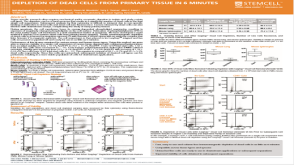 科学海报Depletion of Dead Cells from Primary Tissue in 6 Minutes

 沪公网安备31010102008431号