D. Wang et al. (jun 2022)
Immunology 166 2 169--184
CTLA4Ig/VISTAIg combination therapy selectively induces CD4+ T cell-mediated immune tolerance by targeting the SOCS1 signaling pathway in porcine islet xenotransplantation.
T cell inhibitory receptors can regulate the proliferation or function of T cells by binding to their ligands and present a unique opportunity to manage destructive immune responses during porcine islet xenotransplantation. We applied ex vivo porcine islet xenotransplantation and in vitro mixed lymphocyte-islet reaction models to assess immune checkpoint receptor expression profiles in recipient T cells,investigated whether CTLA4 or VISTA immunoglobulin (Ig) combination therapy alone could suppress porcine islet xenograft rejection and further analyzed its potential immune tolerance mechanism. Recipient T cells expressed moderate to high levels of CTLA4,PD-1,TIGIT and VISTA,and the frequency of CTLA4+ CD4+,TIGIT+ CD4+,VISTA+ CD4+ and VISTA+ CD8+ T cells was positively correlated with porcine islet xenograft survival time in xenotransplant recipients. Combined treatment with CTLA4Ig and VISTAIg selectively inhibited recipient CD4+ T cell hyper-responsiveness and proinflammatory cytokine production and significantly delayed xenograft rejection. SOCS1 deficiency in CD4+ T cells stimulated by xenogeneic islets facilitated hyper-responsiveness and abolished the suppressive effect of combination therapy on recipient T cell-mediated porcine islet damage in vivo and in vitro. Further mechanistic studies revealed that combined treatment significantly induced SOCS1 expression and inhibited the Jak-STAT signalling pathway in wild-type recipient CD4+ T cells stimulated by xenogeneic islets,whereas SOCS1 deficiency resulted in Jak-STAT signalling pathway activation in recipient CD4+ T cells. We demonstrated a major role for CTLA4 and VISTA as key targets in CD4+ T cell hyper-responsiveness and porcine islet xenograft rejection. The selective inhibition of CD4+ T cell immunity by CTLA4Ig/VISTAIg is based on SOCS1-dependent signalling.
View Publication
产品类型:
产品号#:
19852
19853
19852RF
19853RF
产品名:
EasySep™小鼠CD4+ T细胞分选试剂盒
EasySep™小鼠CD8+ T细胞分选试剂盒
RoboSep™ 小鼠CD4+ T细胞分选试剂盒
RoboSep™ 小鼠CD8+ T细胞分选试剂盒
M. Arabpour et al. ( 2022)
Oncoimmunology 11 1 2115618
An adjuvant-containing cDC1-targeted recombinant fusion vaccine conveys strong protection against murine melanoma growth and metastasis.
Type 1 conventional dendritic cells (cDC1) efficiently cross-present antigens that prime cytotoxic CD8+ T cells. cDC1 therefore constitute conceivable targets in cancer vaccine development. We generated recombinant fusion cancer vaccines that aimed to concomitantly deliver tumor antigen and adjuvant to CD103+ migratory cDC1,following intranasal administration. The fusion vaccine constructs comprised a cDC1-targeting anti-CD103 single chain antibody (aCD103) and a cholera toxin A1 (CTA1) subunit adjuvant,fused with MHC class I and II- or class II-restricted tumor cell antigens to generate a CTA1-I/II-aCD103 vaccine and a CTA1-II-aCD103 vaccine. The immunostimulatory and anti-tumor efficacy of these vaccines was evaluated in murine B16F1-ovalbumin (OVA) melanoma models in C57BL/6 J mice. The CTA1-I/II-aCD103 vaccine was most efficacious and triggered robust tumor antigen-specific CD8+ T cell responses along with a Th17-polarized CD4+ T cell response. This vaccine construct reduced the local growth of implanted B16F1-OVA melanomas and efficiently prevented hematogenous lung metastasis after prophylactic and therapeutic vaccination. Anti-tumor effects of the CTA1-I/II-aCD103 vaccine were antigen-specific and long-lasting. These results imply that adjuvant-containing recombinant fusion vaccines that target and activate cDC1 trigger effective anti-tumor immunity to control tumor growth and metastasis.
View Publication
产品类型:
产品号#:
19852
19853
19852RF
19853RF
产品名:
EasySep™小鼠CD4+ T细胞分选试剂盒
EasySep™小鼠CD8+ T细胞分选试剂盒
RoboSep™ 小鼠CD4+ T细胞分选试剂盒
RoboSep™ 小鼠CD8+ T细胞分选试剂盒
T. Manolakou et al. (oct 2022)
Science advances 8 43 eabo5840
ATR-mediated DNA damage responses underlie aberrant B cell activity in systemic lupus erythematosus.
B cells orchestrate autoimmune responses in patients with systemic lupus erythematosus (SLE),but broad-based B cell-directed therapies show only modest efficacy while blunting humoral immune responses to vaccines and inducing immunosuppression. Development of more effective therapies targeting pathogenic clones is a currently unmet need. Here,we demonstrate enhanced activation of the ATR/Chk1 pathway of the DNA damage response (DDR) in B cells of patients with active SLE disease. Treatment of B cells with type I IFN,a key driver of immunity in SLE,induced expression of ATR via binding of interferon regulatory factor 1 to its gene promoter. Pharmacologic targeting of ATR in B cells,via a specific inhibitor (VE-822),attenuated their immunogenic profile,including proinflammatory cytokine secretion,plasmablast formation,and antibody production. Together,these findings identify the ATR-mediated DDR axis as the orchestrator of the type I IFN-mediated B cell responses in SLE and as a potential novel therapeutic target.
View Publication
产品类型:
产品号#:
17954
17954RF
100-0971
产品名:
EasySep™人B细胞分选试剂盒
RoboSep™ 人B细胞分选试剂盒
EasySep™人B细胞分离试剂盒
A. Mart\'inez-Sabadell et al. (dec 2022)
STAR protocols 3 4 101712
Protocol to generate a patient derived xenograft model of acquired resistance to immunotherapy in humanized mice.
Immunotherapy has revolutionized cancer treatment,but preclinical models are required to understand immunotherapy resistance mechanisms underlying patient relapse. This protocol describes how to generate an acquired resistance humanized in vivo model to immunotherapies in patient-derived xenografts (PDX). We detail steps to inject human CD34+ cells into NSG mice,followed by generation of immunoresistant PDX in humanized mice. This approach recapitulates the human immune system,allowing investigators to generate preclinical resistance models to different immunotherapies for identifying the resistant phenotype. For complete details on the use and execution of this protocol,please refer to Mart{\'{i}}nez-Sabadell et al.,2022 and Arenas et al. (2021).
View Publication
产品类型:
产品号#:
18000
19356
19356RF
产品名:
EasySep™磁极
EasySep™可去除血小板的人祖细胞富集试剂盒
RoboSep™ 可去除血小板的人祖细胞富集试剂盒
J. Westerlund et al. ( 2022)
Journal of immunology research 2022 8077281
Suppression of T-Cell Proliferation by Normal Density Granulocytes Led to CD183 Downregulation and Cytokine Inhibition in T-Cells.
Normal density granulocytes (NDGs) can suppress T-cell responses in a similar way as myeloid-derived suppressor cells (MDSCs). In this study,we tested the hypothesis that NDGs from healthy donors preferentially inhibit T helper 1 (Th1) cells and investigated the myeloid-derived suppressive effect in different T-cell populations. We found that NDG-induced suppression of T-cell proliferation was contact dependent,mediated by integrin CD11b,and dependent on NDG-production of reactive oxygen species (ROS). The suppression was rapid and occurred within the first few hours of coculture. The suppression did not influence the CD8+/CD4+ ratio indicating an equal sensitivity in these populations. We further analyzed the CD4+ T helper subsets and found that NDGs induced a loss of Th1 surface marker,CD183,that was unrelated to ligand-binding to CD183. In addition,we analyzed the Th1,Th2,and Th17 cytokine production and found that all cytokine groups were suppressed when T-cells were incubated with NDGs. We therefore concluded that NDGs do not preferentially suppress Th1-cells. Instead,NDGs generally suppress Th cells and cytotoxic T-cells but specifically downregulate the Th1 marker CD183.
View Publication
产品类型:
产品号#:
17957
17951
100-0695
17951RF
17957RF
产品名:
EasySep™人中性粒细胞分选试剂盒
EasySep™人T细胞分选试剂盒
EasySep™人T细胞分选试剂盒
RoboSep™ 人T细胞分选试剂盒
RoboSep™ 人中性粒细胞分选试剂盒
M. F. Eissmann et al. ( 2019)
Nature communications 10 1 2735
IL-33-mediated mast cell activation promotes gastric cancer through macrophage mobilization.
The contribution of mast cells in the microenvironment of solid malignancies remains controversial. Here we functionally assess the impact of tumor-adjacent,submucosal mast cell accumulation in murine and human intestinal-type gastric cancer. We find that genetic ablation or therapeutic inactivation of mast cells suppresses accumulation of tumor-associated macrophages,reduces tumor cell proliferation and angiogenesis,and diminishes tumor burden. Mast cells are activated by interleukin (IL)-33,an alarmin produced by the tumor epithelium in response to the inflammatory cytokine IL-11,which is required for the growth of gastric cancers in mice. Accordingly,ablation of the cognate IL-33 receptor St2 limits tumor growth,and reduces mast cell-dependent production and release of the macrophage-attracting factors Csf2,Ccl3,and Il6. Conversely,genetic or therapeutic macrophage depletion reduces tumor burden without affecting mast cell abundance. Therefore,tumor-derived IL-33 sustains a mast cell and macrophage-dependent signaling cascade that is amenable for the treatment of gastric cancer.
View Publication
产品类型:
产品号#:
05507
产品名:
MesenCult™ 脂肪分化试剂盒 (小鼠)
A. Gamboa et al. (nov 2019)
Scientific reports 9 1 16875
Higher Order Architecture of Designer Peptides Forms Bioinspired 10 nm siRNA Delivery System.
The higher-order architecture observed in biological systems,like viruses,is very effective in nucleic acid transport. The replications of this system has been attempted with both synthetic and naturally occurring polymers with mixed results. Here we describe a peptide/siRNA quaternary complex that functions as an siRNA delivery system. The rational design of a peptide assembly is inspired by the viral capsids,but not derived from them. We selected the collagen peptide (COL) to provide the structural stability and the folding framework,and hybridize it with the cell penetrating peptide (CPP) that allows for effective penetration of biological barriers. The peptide/siRNA quaternary complex forms stoichiometric,10 nm nanoparticles,that show fast cellular uptake ({\textless}30 min),effective siRNA release,and gene silencing. The complex provides capsid-like protection for siRNA against nucleases without being immunostimulatory,or cytotoxic. Our data suggests that delivery vehicles based on synthetic quaternary structures that exhibit higher-order architecture may be effective in improving delivery and release of nucleic acid cargo.
View Publication
产品类型:
产品号#:
05750
产品名:
NeuroCult™ NS-A 基础培养基(人)
R. M. Robinson et al. (jan 2020)
European journal of medicinal chemistry 186 111906
Tuning isoform selectivity and bortezomib sensitivity with a new class of alkenyl indene PDI inhibitor.
Protein disulfide isomerase (PDI,PDIA1) is an emerging therapeutic target in oncology. PDI inhibitors have demonstrated a unique propensity to selectively induce apoptosis in cancer cells and overcome resistance to existing therapies,although drug candidates have not yet progressed to the stage of clinical development. We recently reported the discovery of lead indene compound E64FC26 as a potent pan-PDI inhibitor that enhances the cytotoxic effects of proteasome inhibitors in panels of Multiple Myeloma (MM) cells and MM mouse models. An extensive medicinal chemistry program has led to the generation of a diverse library of indene-containing molecules with varying degrees of proteasome inhibitor potentiating activity. These compounds were generated by a novel nucleophilic aromatic ring cyclization and dehydration reaction from the precursor ketones. The results provide detailed structure activity relationships (SAR) around this indene pharmacophore and show a high degree of correlation between potency of PDI inhibition and bortezomib (Btz) potentiation in MM cells. Inhibition of PDI leads to ER and oxidative stress characterized by the accumulation of misfolded poly-ubiquitinated proteins and the induction of UPR biomarkers ATF4,CHOP,and Nrf2. This work characterizes the synthesis and SAR of a new chemical class and further validates PDI as a therapeutic target in MM as a single agent and in combination with proteasome inhibitors.
View Publication
产品类型:
产品号#:
19052
19052RF
18970
18970RF
产品名:
EasySep™人CD4+ T细胞富集试剂盒
RoboSep™ 人CD4+ T细胞富集试剂盒含滤芯吸头
EasySep™小鼠CD11b正选试剂盒II
RoboSep™ 小鼠CD11b正选试剂盒II
B. Seo et al. ( 2020)
Cell host {\&} microbe 27 1 25--40.e6
Roseburia spp. Abundance Associates with Alcohol Consumption in Humans and Its Administration Ameliorates Alcoholic Fatty Liver in Mice.
Although a link between the gut microbiota and alcohol-related liver diseases (ALDs) has previously been suggested,the causative effects of specific taxa and their functions have not been fully investigated to date. Here,we analyze the gut microbiota of 410 fecal samples from 212 Korean twins by using the Alcohol Use Disorders Identification Test (AUDIT) scales to adjust for host genetics. This analysis revealed a strong association between low AUDIT scores and the abundance of the butyrate-producing genus Roseburia. When Roseburia spp. are administered to ALD murine models,both hepatic steatosis and inflammation significantly improve regardless of bacterial viability. Specifically,the flagellin of R. intestinalis,possibly through Toll-like receptor 5 (TLR5) recognition,recovers gut barrier integrity through upregulation of the tight junction protein Occludin and helps to restore the gut microbiota through elevated expression of IL-22 and REG3$\gamma$. Our study demonstrates that Roseburia spp. improve the gut ecosystem and prevent leaky gut,leading to ameliorated ALDs.
View Publication
C. Quintard et al. (Feb 2024)
Nature Communications 15
A microfluidic platform integrating functional vascularized organoids-on-chip
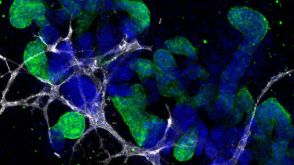
The development of vascular networks in microfluidic chips is crucial for the long-term culture of three-dimensional cell aggregates such as spheroids,organoids,tumoroids,or tissue explants. Despite rapid advancement in microvascular network systems and organoid technologies,vascularizing organoids-on-chips remains a challenge in tissue engineering. Most existing microfluidic devices poorly reflect the complexity of in vivo flows and require complex technical set-ups. Considering these constraints,we develop a platform to establish and monitor the formation of endothelial networks around mesenchymal and pancreatic islet spheroids,as well as blood vessel organoids generated from pluripotent stem cells,cultured for up to 30 days on-chip. We show that these networks establish functional connections with the endothelium-rich spheroids and vascular organoids,as they successfully provide intravascular perfusion to these structures. We find that organoid growth,maturation,and function are enhanced when cultured on-chip using our vascularization method. This microphysiological system represents a viable organ-on-chip model to vascularize diverse biological 3D tissues and sets the stage to establish organoid perfusions using advanced microfluidics. Subject terms: Stem-cell biotechnology,Tissue engineering,Biomedical engineering,Induced pluripotent stem cells,Microfluidics
View Publication
产品类型:
产品号#:
34411
34415
34421
34425
34450
34460
产品名:
AggreWell™ 400 24孔板,1个
AggreWell™400 24孔板,5个
AggreWell™ 400 6孔板,1个
AggreWell™ 400 6孔板,5个
AggreWell™400 24孔板启动套装
AggreWell™ 400 6孔板启动套装
H. Dong et al. (Feb 2024)
Nature Cancer 5 4
Targeting PRMT9-mediated arginine methylation suppresses cancer stem cell maintenance and elicits cGAS-mediated anticancer immunity
Current anticancer therapies cannot eliminate all cancer cells,which hijack normal arginine methylation as a means to promote their maintenance via unknown mechanisms. Here we show that targeting protein arginine N -methyltransferase 9 (PRMT9),whose activities are elevated in blasts and leukemia stem cells (LSCs) from patients with acute myeloid leukemia (AML),eliminates disease via cancer-intrinsic mechanisms and cancer-extrinsic type I interferon (IFN)-associated immunity. PRMT9 ablation in AML cells decreased the arginine methylation of regulators of RNA translation and the DNA damage response,suppressing cell survival. Notably,PRMT9 inhibition promoted DNA damage and activated cyclic GMP-AMP synthase,which underlies the type I IFN response. Genetically activating cyclic GMP-AMP synthase in AML cells blocked leukemogenesis. We also report synergy of a PRMT9 inhibitor with anti-programmed cell death protein 1 in eradicating AML. Overall,we conclude that PRMT9 functions in survival and immune evasion of both LSCs and non-LSCs; targeting PRMT9 may represent a potential anticancer strategy. Subject terms: Cancer,Tumour immunology
View Publication


 EasySep™小鼠TIL(CD45)正选试剂盒






 沪公网安备31010102008431号