N'jai AU et al. (APR 2011)
Molecular pharmacology 79 4 724--34
Acute disruption of bone marrow hematopoiesis by benzo(a)pyrene is selectively reversed by aryl hydrocarbon receptor-mediated processes.
Bone marrow (BM) hematopoietic cells are selectively sensitive to polycyclic aromatic hydrocarbons (PAH) in vivo. 7,12-Dimethylbenz(a)anthracene (DMBA),but not benzo(a)pyrene (BP),depletes BM hematopoietic cells in C57BL/6 mice. This difference is due to a BP-selective aryl hydrocarbon receptor (AhR)-mediated recovery. Colony-forming unit assays show suppression of lymphoid progenitors by each PAH within 6 h but a subsequent recovery,exclusively after BP treatment. Suppression of myeloid progenitors (6 h) occurs only for DMBA. Each progenitor responded equally to DMBA and BP in congenic mice expressing the PAH-resistant AhR (AhR(d)). AhR,therefore,mediates this BP recovery in each progenitor type. These PAH suppressions depend on Cyp1b1-mediated metabolism. Paradoxically,few genes responded to DMBA,whereas 12 times more responded to BP. Progenitor suppression by DMBA,therefore,occurs with minimal effects on the general BM population. Standard AhR-mediated stimulations (Cyp1a1,Cyp1b1,Ahrr) were similar for each PAH and for the specific agonist 2,3,7,8-tetrachlorodibenzo-p-dioxin but were absent in AhR(d) mice. A group of 12 such AhR responses was sustained from 6 to 24 h. A second,larger set of BP responses (chemokines,cytokines,cyclooxygenase 2) differed in two respects; DMBA responses were low and BP responses declined extensively from 6 to 24 h. A third cluster exhibited BP-induced increases in protective genes (Nqo1,GST-mu) that appeared only after 12 h. Conversion of BP to quinones contributes oxidative signaling not seen with DMBA. We propose that genes in this second cluster,which share oxidative signaling and AhR activation,provide the AhR-dependent protection of hematopoietic progenitors seen for BP.
View Publication
Caraher EM et al. (OCT 2000)
Journal of immunological methods 244 1-2 29--40
Flow cytometric analysis of intracellular IFN-gamma, IL-4 and IL-10 in CD3(+)4(+) T-cells from rat spleen.
The application of multi-parameter flow cytometry for the assessment of T-cell and cytokine functioning has been used by several groups for studying human and mouse samples,although little has been reported for the rat. Here we report the optimisation of immunofluorescent staining for cell surface and intracellular antigens using three-colour flow cytometric analysis to measure the frequency of rat CD3(+)4(+) T-cells that produce IFN-gamma,IL-4 and IL-10. In vitro stimulation of IFN-gamma production required incubation of splenocytes with PMA and ionomycin in the presence of the protein transport inhibitor brefeldin A for 6 h. Three stimulation protocols for IL-4 and IL-10 production were evaluated. In vitro priming of splenic T-cells with antibodies against CD3 and CD28 and recombinant cytokines (IL-2 and IL-4) for 5 days followed by restimulation with PMA and ionomycin was required to stimulate cells to produce either IL-4 or IL-10. Brefeldin A was found to be a more suitable protein transport inhibitor than monensin. This method will be useful for analysing the nature of individual rat cytokine-producing cells in a variety of experimental model systems.
View Publication
Alternative splicing of vasohibin-1 generates an inhibitor of endothelial cell proliferation, migration, and capillary tube formation.
OBJECTIVE: In this study,the alternative splicing product of vasohibin 1 (VASH1B) was analyzed in direct comparison to the major isoform (VASH1A) for antiangiogenic effects on endothelial colony forming cells (ECFCs) from peripheral blood and on human umbilical vein endothelial cells (HUVECs). METHODS AND RESULTS: Expression studies in primary human endothelial cells revealed that both vasohibin proteins,hVASH1A and hVASH1B,localized in the nucleus and cytoplasm. Adenoviruses carrying the cDNA for VASH1A/B and purified recombinant proteins were used to study the function of both molecules in ECFCs and HUVECs. Recombinant VASH1A protein did not inhibit cell proliferation,tube formation,or vessel growth in vivo in the chick chorioallantoic membrane (CAM) assay,but promoted endothelial cell migration in vitro. The VASH1B protein had an inhibitory effect on cell proliferation,migration,tube formation,and inhibited blood vessel formation in the CAM assay. Adenoviral overexpression of VASH1B,but not of VASH1A,resulted in inhibition of endothelial cell growth,migration,and capillary formation. Interestingly,overexpression of VASH1A and B induced apoptosis in proliferating human fibroblasts,but did not affect cell growth of keratinocytes. CONCLUSIONS: Our data point out that alternative splicing of the VASH1 pre-mRNA transcript generates a potent antiangiogenic protein.
View Publication
产品类型:
产品号#:
03814
产品名:
ClonaCell™-TCS 培养基
Al-Ali H et al. (MAY 2013)
ACS chemical biology 8 5 1027--36
Rho signaling, ROCK and mDia1, in transformation, metastasis and invasion.
The Rho subgroup of the Rho GTPases consisting of RhoA,RhoB and RhoC induces a specific type of actin cytoskeleton and carry out a variety of functions in the cell. mDia and ROCK are downstream effectors of Rho mediating Rho action on the actin cytoskeleton; mDia produces actin filaments by nucleation and polymerization and ROCK activate myosin to cross-link them for induction of actomyosin bundles and contractility. mDia is potentially linked to Rac activation and membrane ruffle formation through c-Src-induced phosphorylation of focal adhesion proteins,and ROCK antagonizes this mDia action. Thus,cell morphogenesis,adhesion,and motility can be determined by the balance between mDia and ROCK activities. Though they are not oncogenes by themselves,overexpression of RhoA and RhoC are often found in clinical cancers,and RhoC has been repeatedly identified as a gene associated with metastasis. The Rho-ROCK pathway is implicated in Ras-mediated transformation,the amoeboid movement of tumor cells in the three-dimensional matrix,and transmigration of tumor cells through the mesothelial monolayer. On the other hand,the Rho-mDia1 pathway is implicated in Src-mediated remodeling of focal adhesions and migration of tumor cells. There is also an indication that the Rho pathway other than ROCK is involved in Src-mediated induction of podosome and regulation of matrix metalloproteases. Thus,Rho mediates various phenotypes of malignant transformation by Ras and Src through its effectors,ROCK and mDia.
View Publication
产品类型:
产品号#:
73802
73804
产品名:
Rho激酶抑制剂IV (Dihydrochloride)
Rho激酶抑制剂IV (Dihydrochloride)
Kwant-Mitchell A et al. (OCT 2009)
Journal of virology 83 20 10664--76
Mucosal innate and adaptive immune responses against herpes simplex virus type 2 in a humanized mouse model.
Genital herpes,caused by herpes simplex virus type 2 (HSV-2),is one of the most prevalent sexually transmitted diseases worldwide and a risk factor for acquiring human immunodeficiency virus. Although many vaccine candidates have shown promising results in animal models,they have failed to be effective in human trials. In this study,a humanized mouse strain was evaluated as a potential preclinical model for studying human immune responses to HSV-2 infection and vaccination. Immunodeficient mouse strains were examined for their abilities to develop human innate and adaptive immune cells after transplantation of human umbilical cord stem cells. A RAG2(-/-) gammac(-/-) mouse strain with a BALB/c background was chosen as the most appropriate model and was then examined for its ability to mount innate and adaptive immune responses to intravaginal HSV-2 infection and immunization. After primary infection,human cells in the lymph nodes were able to generate a protective innate immune response and produce gamma interferon (IFN-gamma). After intravaginal immunization and infection,human T cells and NK cells were found in the genital tract and iliac lymph nodes. In addition,human T cells in the spleen,lymph nodes,and vaginal tract were able to respond to stimulation with HSV-2 antigens by replicating and producing IFN-gamma. Human B cells were also able to produce HSV-2-specific immunoglobulin G. These adaptive responses were also shown to be protective and reduce local viral replication in the genital tract. This approach provides a means for studying human immune responses in vivo using a small-animal model and may become an important preclinical tool.
View Publication
产品类型:
产品号#:
07806
07906
产品名:
HetaSep™
HetaSep™
Hagn F et al. (JAN 2010)
The Journal of biological chemistry 285 5 3439--50
BclxL changes conformation upon binding to wild-type but not mutant p53 DNA binding domain.
p53 can induce apoptosis through mitochondrial membrane permeabilization by interaction of its DNA binding region with the anti-apoptotic proteins BclxL and Bcl2. However,little is known about the action of p53 at the mitochondria in molecular detail. By using NMR spectroscopy and fluorescence polarization we characterized the binding of wild-type and mutant p53 DNA binding domains to BclxL and show that the wild-type p53 DNA binding domain leads to structural changes in the BH3 binding region of BclxL,whereas mutants fail to induce such effects due to reduced affinity. This was probed by induced chemical shift and residual dipolar coupling data. These data imply that p53 partly achieves its pro-apoptotic function at the mitochondria by facilitating interaction between BclxL and BH3-only proteins in an allosteric mode of action. Furthermore,we characterize for the first time the binding behavior of Pifithrin-mu,a specific small molecule inhibitor of the p53-BclxL interaction,and present a structural model of the protein-ligand complex. A rather unusual behavior is revealed whereby Pifithrin-mu binds to both sides of the protein-protein complex. These data should facilitate the rational design of more potent specific BclxL-p53 inhibitors.
View Publication
产品类型:
产品号#:
72802
72804
产品名:
Pifithrin-mu
Yu J-J et al. (FEB 2010)
Clinical and vaccine immunology : CVI 17 2 215--22
Francisella tularensis T-cell antigen identification using humanized HLA-DR4 transgenic mice.
There is no licensed vaccine against the intracellular pathogen Francisella tularensis. The use of conventional mouse strains to screen protective vaccine antigens may be problematic,given the differences in the major histocompatibility complex (MHC) binding properties between murine and human antigen-presenting cells. We used engineered humanized mice that lack endogenous MHC class II alleles but that express a human HLA allele (HLA-DR4 transgenic [tg] mice) to identify potential subunit vaccine candidates. Specifically,we applied a biochemical and immunological screening approach with bioinformatics to select putative F. tularensis subsp. novicida T-cell-reactive antigens using humanized HLA-DR4 tg mice. Cell wall- and membrane-associated proteins were extracted with Triton X-114 detergent and were separated by fractionation with a Rotofor apparatus and whole-gel elution. A series of proteins were identified from fractions that stimulated antigen-specific gamma interferon (IFN-gamma) production,and these were further downselected by the use of bioinformatics and HLA-DR4 binding algorithms. We further examined the validity of this combinatorial approach with one of the identified proteins,a 19-kDa Francisella tularensis outer membrane protein (designated Francisella outer membrane protein B [FopB]; FTN0119). FopB was shown to be a T-cell antigen by a specific IFN-gamma recall assay with purified CD4(+) T cells from F. tularensis subsp. novicida DeltaiglC-primed HLA-DR4 tg mice and cells of a human B-cell line expressing HLA-DR4 (DRB1*0401) functioning as antigen-presenting cells. Intranasal immunization of HLA-DR4 tg mice with the single antigen FopB conferred significant protection against lethal pulmonary challenge with an F. tularensis subsp. holarctica live vaccine strain. These results demonstrate the value of combining functional biochemical and immunological screening with humanized HLA-DR4 tg mice to map HLA-DR4-restricted Francisella CD4(+) T-cell epitopes.
View Publication
产品类型:
产品号#:
19752
19752RF
产品名:
Specht A et al. (JUL 2010)
Journal of virology 84 14 7300--11
Counteraction of HLA-C-mediated immune control of HIV-1 by Nef.
A host genetic variant (-35C/T) correlates with increased human leukocyte antigen C (HLA-C) expression and improved control of HIV-1. HLA-C-mediated immunity may be particularly protective because HIV-1 is unable to remove HLA-C from the cell surface,whereas it can avoid HLA-A- and HLA-B-mediated immunity by Nef-mediated down-modulation. However,some individuals with the protective -35CC genotype exhibit high viral loads. Here,we investigated whether the ability of HIV-1 to replicate efficiently in the protective" high-HLA-C-expression host environment correlates with specific functional properties of Nef. We found that high set point viral loads (sVLs) were not associated with the emergence of Nef variants that had acquired the ability to down-modulate HLA-C or were more effective in removing HLA-A and HLA-B from the cell surface. However�
View Publication
Postexposure protection of non-human primates against a lethal Ebola virus challenge with RNA interference: a proof-of-concept study.
BACKGROUND We previously showed that small interfering RNAs (siRNAs) targeting the Zaire Ebola virus (ZEBOV) RNA polymerase L protein formulated in stable nucleic acid-lipid particles (SNALPs) completely protected guineapigs when administered shortly after a lethal ZEBOV challenge. Although rodent models of ZEBOV infection are useful for screening prospective countermeasures,they are frequently not useful for prediction of efficacy in the more stringent non-human primate models. We therefore assessed the efficacy of modified non-immunostimulatory siRNAs in a uniformly lethal non-human primate model of ZEBOV haemorrhagic fever. METHODS A combination of modified siRNAs targeting the ZEBOV L polymerase (EK-1 mod),viral protein (VP) 24 (VP24-1160 mod),and VP35 (VP35-855 mod) were formulated in SNALPs. A group of macaques (n=3) was given these pooled anti-ZEBOV siRNAs (2 mg/kg per dose,bolus intravenous infusion) after 30 min,and on days 1,3,and 5 after challenge with ZEBOV. A second group of macaques (n=4) was given the pooled anti-ZEBOV siRNAs after 30 min,and on days 1,2,3,4,5,and 6 after challenge with ZEBOV. FINDINGS Two (66%) of three rhesus monkeys given four postexposure treatments of the pooled anti-ZEBOV siRNAs were protected from lethal ZEBOV infection,whereas all macaques given seven postexposure treatments were protected. The treatment regimen in the second study was well tolerated with minor changes in liver enzymes that might have been related to viral infection. INTERPRETATION This complete postexposure protection against ZEBOV in non-human primates provides a model for the treatment of ZEBOV-induced haemorrhagic fever. These data show the potential of RNA interference as an effective postexposure treatment strategy for people infected with Ebola virus,and suggest that this strategy might also be useful for treatment of other emerging viral infections. FUNDING Defense Threat Reduction Agency.
View Publication
产品类型:
产品号#:
70008
70008.1
70008.2
70008.3
70008.4
70008.5
70008.6
200-0002
200-0001
200-0000
产品名:
冻存的人脐带血CD34+细胞
冻存的人脐带血CD34+细胞
冻存的人脐带血CD34+细胞
冻存的人脐带血CD34+细胞
冻存的人脐带血CD34+细胞
冻存的人脐带血CD34+细胞
冻存的人脐带血CD34+细胞
冻存的人脐带血CD34+细胞
冻存的人脐带血CD34+细胞
Maitra R et al. (AUG 2010)
Journal of immunology (Baltimore,Md. : 1950) 185 3 1485--91
Dendritic cell-mediated in vivo bone resorption.
Osteoclasts are resident cells of the bone that are primarily involved in the physiological and pathological remodeling of this tissue. Mature osteoclasts are multinucleated giant cells that are generated from the fusion of circulating precursors originating from the monocyte/macrophage lineage. During inflammatory bone conditions in vivo,de novo osteoclastogenesis is observed but it is currently unknown whether,besides increased osteoclast differentiation from undifferentiated precursors,other cell types can generate a multinucleated giant cell phenotype with bone resorbing activity. In this study,an animal model of calvaria-induced aseptic osteolysis was used to analyze possible bone resorption capabilities of dendritic cells (DCs). We determined by FACS analysis and confocal microscopy that injected GFP-labeled immature DCs were readily recruited to the site of osteolysis. Upon recruitment,the cathepsin K-positive DCs were observed in bone-resorbing pits. Additionally,chromosomal painting identified nuclei from female DCs,previously injected into a male recipient,among the nuclei of giant cells at sites of osteolysis. Finally,osteolysis was also observed upon recruitment of CD11c-GFP conventional DCs in Csf1r(-/-) mice,which exhibit a severe depletion of resident osteoclasts and tissue macrophages. Altogether,our analysis indicates that DCs may have an important role in bone resorption associated with various inflammatory diseases.
View Publication


 EasySep™小鼠TIL(CD45)正选试剂盒





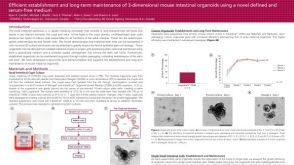 科学海报Efficient Establishment and Long-Term Maintenance of 3-Dimensional Mouse Intestinal Organoids Using a Novel Defined and Serum-Free Medium

 沪公网安备31010102008431号