M. Huhn et al. (may 2020)
Journal of clinical medicine 9 5
Inflammation-Induced Mucosal KYNU Expression Identifies Human Ileal Crohn's Disease.
The widely varying therapeutic response of patients with inflammatory bowel disease (IBD) continues to raise questions regarding the unclarified heterogeneity of pathological mechanisms promoting disease progression. While biomarkers for the differentiation of Crohn's disease (CD) versus ulcerative colitis (UC) have been suggested,specific markers for a CD subclassification in ileal CD versus colonic CD are still rare. Since an altered signature of the tryptophan metabolism is associated with chronic inflammatory disease,we sought to characterize potential biomarkers by focusing on the downstream enzymes and metabolites of kynurenine metabolism. Using immunohistochemical stainings,we analyzed and compared the mucosal tryptophan immune metabolism in bioptic samples from patients with active inflammation due to UC or CD versus healthy controls. Localization-specific quantification of immune cell infiltration,tryptophan-metabolizing enzyme expression and mucosal tryptophan downstream metabolite levels was performed. We found generally increased immune cell infiltrates in the tissue of all patients with IBD. However,in patients with CD,significant differences were found between regulatory T cell and neutrophil granulocyte infiltration in the ileum compared with the colon. Furthermore,we observed decreased kynurenine levels as well as strong kynureninase (KYNU) expression specifically in patients with ileal CD. Correspondingly,significantly elevated levels of the kynurenine metabolite 3-hydroxyanthranilic acid were detected in the ileal CD samples. Highlighting the heterogeneity of the different phenotypes of CD,we identified KYNU as a potential mucosal biomarker allowing the localization-specific differentiation of ileal CD versus colonic CD.
View Publication
产品类型:
产品号#:
17951
17951RF
19058
19058RF
17954
17954RF
100-0695
100-1525
100-0971
产品名:
EasySep™人T细胞分选试剂盒
RoboSep™ 人T细胞分选试剂盒
EasySep™人单核细胞富集试剂盒(不去除CD16)
RoboSep™ 人单核细胞富集试剂盒(不去除CD16)含滤芯吸头
EasySep™人B细胞分选试剂盒
RoboSep™ 人B细胞分选试剂盒
EasySep™人T细胞分选试剂盒
EasySep™人单核细胞富集试剂盒(不去除CD16)
EasySep™人B细胞分离试剂盒
S. John et al. (jul 2020)
Scientific reports 10 1 11377
Bioluminescence for in vivo detection of cell-type-specific inflammation in a mouse model of uveitis.
This study reports the use of cell-type-specific in vivo bioluminescence to measure intraocular immune cell population dynamics during the course of inflammation in a mouse model of uveitis. Transgenic lines expressing luciferase in inflammatory cell subsets (myeloid cells,T cells,and B cells) were generated and ocular bioluminescence was measured serially for 35 days following uveitis induction. Ocular leukocyte populations were identified using flow cytometry and compared to the ocular bioluminescence profile. Acute inflammation is neutrophilic (75{\%} of ocular CD45 + cells) which is reflected by a significant increase in ocular bioluminescence in one myeloid reporter line on day 2. By day 7,the ocular T cell population increases to 50{\%} of CD45 + cells,leading to a significant increase in ocular bioluminescence in the T cell reporter line. While initially negligible ({\textless} 1{\%} of CD45 + cells),the ocular B cell population increases to {\textgreater} 4{\%} by day 35. This change is reflected by a significant increase in the ocular bioluminescence of the B cell reporter line starting on day 28. Our data demonstrates that cell-type-specific in vivo bioluminescence accurately detects changes in multiple intraocular immune cell populations over time in experimental uveitis. This assay could also be useful in other inflammatory disease models.
View Publication
产品类型:
产品号#:
19851
19851RF
18970
18970RF
19854
19854RF
产品名:
EasySep™小鼠T细胞分选试剂盒
RoboSep™ 小鼠T细胞分选试剂盒
EasySep™小鼠CD11b正选试剂盒II
RoboSep™ 小鼠CD11b正选试剂盒II
EasySep™小鼠B细胞分选试剂盒
RoboSep™ 小鼠B细胞分选试剂盒
N. J. Kr\autler et al." (jan 2020)
Cell reports 30 4 997--1012.e6
Quantitative and Qualitative Analysis of Humoral Immunity Reveals Continued and Personalized Evolution in Chronic Viral Infection.
Control of established chronic lymphocytic choriomeningitis virus (LCMV) infection requires the production of neutralizing antibodies,but it remains unknown how the ensemble of antibodies evolves during ongoing infection. Here,we analyze the evolution of antibody responses during acute or chronic LCMV infection,combining quantitative functional assays and time-resolved antibody repertoire sequencing. We establish that antibody responses initially converge in both infection types on a functional and repertoire level,but diverge later during chronic infection,showing increased clonal diversity,the appearance of mouse-specific persistent clones,and distinct phylogenetic signatures. Chronic infection is characterized by a longer-lasting germinal center reaction and a continuous differentiation of plasma cells,resulting in the emergence of higher-affinity plasma cells exhibiting increased antibody secretion rates. Taken together,our findings reveal the emergence of a personalized antibody response in chronic infection and support the concept that maintaining B cell diversity throughout chronic LCMV infection correlates with the development of infection-resolving antibodies.
View Publication
产品类型:
产品号#:
19844
19844RF
产品名:
EasySep™小鼠Pan-B细胞分选试剂盒
RoboSep™ 小鼠Pan-B细胞分选试剂盒
K. Niss et al. (jun 2020)
Cell reports 31 11 107763
Complete Topological Mapping of a Cellular Protein Interactome Reveals Bow-Tie Motifs as Ubiquitous Connectors of Protein Complexes.
The network topology of a protein interactome is shaped by the function of each protein,making it a resource of functional knowledge in tissues and in single cells. Today,this resource is underused,as complete network topology characterization has proved difficult for large protein interactomes. We apply a matrix visualization and decoding approach to a physical protein interactome of a dendritic cell,thereby characterizing its topology with no prior assumptions of structure. We discover 294 proteins,each forming topological motifs called bow-ties" that tie together the majority of observed protein complexes. The central proteins of these bow-ties have unique network properties display multifunctional capabilities are enriched for essential proteins and are widely expressed in other cells and tissues. Collectively the bow-tie motifs are a pervasive and previously unnoted topological trend in cellular interactomes. As such these results provide fundamental knowledge on how intracellular protein connectivity is organized and operates."
View Publication
产品类型:
产品号#:
19860
19860RF
产品名:
EasySep™小鼠Streptavidin RapidSpheres™分选试剂盒
RoboSep™ 小鼠Streptavidin RapidSpheres™分选试剂盒
Y.-L. Su et al. (jan 2020)
Blood 135 3 167--180
Myeloid cell-targeted miR-146a mimic inhibits NF-$\kappa$B-driven inflammation and leukemia progression in vivo.
NF-$\kappa$B is a key regulator of inflammation and cancer progression,with an important role in leukemogenesis. Despite its therapeutic potential,targeting NF-$\kappa$B using pharmacologic inhibitors has proven challenging. Here,we describe a myeloid cell-selective NF-$\kappa$B inhibitor using an miR-146a mimic oligonucleotide conjugated to a scavenger receptor/Toll-like receptor 9 agonist (C-miR146a). Unlike an unconjugated miR146a,C-miR146a was rapidly internalized and delivered to the cytoplasm of target myeloid cells and leukemic cells. C-miR146a reduced expression of classic miR-146a targets (IRAK1 and TRAF6),thereby blocking activation of NF-$\kappa$B in target cells. IV injections of C-miR146a mimic to miR-146a-deficient mice prevented excessive NF-$\kappa$B activation in myeloid cells,and thus alleviated myeloproliferation and mice hypersensitivity to bacterial challenge. Importantly,C-miR146a showed efficacy in dampening severe inflammation in clinically relevant models of chimeric antigen receptor (CAR) T-cell-induced cytokine release syndrome. Systemic administration of C-miR146a oligonucleotide alleviated human monocyte-dependent release of IL-1 and IL-6 in a xenotransplanted B-cell lymphoma model without affecting CD19-specific CAR T-cell antitumor activity. Beyond anti-inflammatory functions,miR-146a is a known tumor suppressor commonly deleted or expressed at reduced levels in human myeloid leukemia. Using The Cancer Genome Atlas acute myeloid leukemia data set,we found an inverse correlation of miR-146a levels with NF-$\kappa$B-related genes and with patient survival. Correspondingly,C-miR146a induced cytotoxic effects in human MDSL,HL-60,and MV4-11 leukemia cells in vitro. The repeated IV administration of C-miR146a inhibited expression of NF-$\kappa$B target genes and thereby thwarted progression of disseminated HL-60 leukemia. Our results show the potential of using myeloid cell-targeted miR-146a mimics for the treatment of inflammatory and myeloproliferative disorders.
View Publication
产品类型:
产品号#:
17684
17684RF
产品名:
EasySep™ PE正选试剂盒 II
RoboSep™ PE正选试剂盒 II
M. N. D. Svensson et al. (jun 2020)
Science advances 6 26 eaba4353
Synoviocyte-targeted therapy synergizes with TNF inhibition in arthritis reversal.
Fibroblast-like synoviocytes (FLS) are joint-lining cells that promote rheumatoid arthritis (RA) pathology. Current disease-modifying antirheumatic agents (DMARDs) operate through systemic immunosuppression. FLS-targeted approaches could potentially be combined with DMARDs to improve control of RA without increasing immunosuppression. Here,we assessed the potential of immunoglobulin-like domains 1 and 2 (Ig1{\&}2),a decoy protein that activates the receptor tyrosine phosphatase sigma (PTPRS) on FLS,for RA therapy. We report that PTPRS expression is enriched in synovial lining RA FLS and that Ig1{\&}2 reduces migration of RA but not osteoarthritis FLS. Administration of an Fc-fusion Ig1{\&}2 attenuated arthritis in mice without affecting innate or adaptive immunity. Furthermore,PTPRS was down-regulated in FLS by tumor necrosis factor (TNF) via a phosphatidylinositol 3-kinase-mediated pathway,and TNF inhibition enhanced PTPRS expression in arthritic joints. Combination of ineffective doses of TNF inhibitor and Fc-Ig1{\&}2 reversed arthritis in mice,providing an example of synergy between FLS-targeted and immunosuppressive DMARD therapies.
View Publication
产品类型:
产品号#:
19765
19765RF
产品名:
EasySep™小鼠Naïve CD4+ T细胞分选试剂盒
RoboSep™ 小鼠Naïve CD4+ T细胞分选试剂盒
M. Trapecar et al. (mar 2020)
Cell systems 10 3 223--239.e9
Gut-Liver Physiomimetics Reveal Paradoxical Modulation of IBD-Related Inflammation by Short-Chain Fatty Acids.
Although the association between the microbiome and IBD and liver diseases is known,the cause and effect remain elusive. By connecting human microphysiological systems of the gut,liver,and circulating Treg and Th17 cells,we created a multi-organ model of ulcerative colitis (UC) ex vivo. The approach shows microbiome-derived short-chain fatty acids (SCFAs) to either improve or worsen UC severity,depending on the involvement of effector CD4 T cells. Using multiomics,we found SCFAs increased production of ketone bodies,glycolysis,and lipogenesis,while markedly reducing innate immune activation of the UC gut. However,during acute T cell-mediated inflammation,SCFAs exacerbated CD4+ T cell-effector function,partially through metabolic reprograming,leading to gut barrier disruption and hepatic injury. These paradoxical findings underscore the emerging utility of human physiomimetic technology in combination with systems immunology to study causality and the fundamental entanglement of immunity,metabolism,and tissue homeostasis.
View Publication
产品类型:
产品号#:
10971
10991
19058
19058RF
72192
72194
70500
70500.1
70500.2
200-0092
17555
17555RF
100-1525
产品名:
ImmunoCult™ 人CD3/CD28 T细胞激活剂
ImmunoCult™ 人CD3/CD28 T细胞激活剂
EasySep™人单核细胞富集试剂盒(不去除CD16)
RoboSep™ 人单核细胞富集试剂盒(不去除CD16)含滤芯吸头
前列腺素E2(Prostaglandin E2)
前列腺素E2(Prostaglandin E2)
EasySep™人初始CD4+ T细胞分选试剂盒II
RoboSep™ 人初始CD4+ T细胞分选试剂盒II
EasySep™人单核细胞富集试剂盒(不去除CD16)
R. Veneziano et al. (jun 2020)
Nature nanotechnology
Role of nanoscale antigen organization on B-cell activation probed using DNA origami.
Vaccine efficacy can be increased by arraying immunogens in multivalent form on virus-like nanoparticles to enhance B-cell activation. However,the effects of antigen copy number,spacing and affinity,as well as the dimensionality and rigidity of scaffold presentation on B-cell activation remain poorly understood. Here,we display the clinical vaccine immunogen eOD-GT8,an engineered outer domain of the HIV-1 glycoprotein-120,on DNA origami nanoparticles to systematically interrogate the impact of these nanoscale parameters on B-cell activation in vitro. We find that B-cell signalling is maximized by as few as five antigens maximally spaced on the surface of a 40-nm viral-like nanoparticle. Increasing antigen spacing up to {\~{}}25-30 nm monotonically increases B-cell receptor activation. Moreover,scaffold rigidity is essential for robust B-cell triggering. These results reveal molecular vaccine design principles that may be used to drive functional B-cell responses.
View Publication
产品类型:
产品号#:
19854
19854RF
产品名:
EasySep™小鼠B细胞分选试剂盒
RoboSep™ 小鼠B细胞分选试剂盒
B. Westerhuis et al. (feb 2020)
Scientific reports 10 1 3152
Specific memory B cell response in humans upon infection with highly pathogenic H7N7 avian influenza virus.
H7 avian influenza viruses represent a major public health concern,and worldwide outbreaks raise the risk of a potential pandemic. Understanding the memory B cell response to avian (H7) influenza virus infection in humans could provide insights in the potential key to human infection risks. We investigated an epizootic of the highly pathogenic A(H7N7) in the Netherlands,which in 2003 led to infection of 89 persons and one fatal case. Subtype-specificity of antibodies were determined for confirmed H7N7 infected individuals (cases) (n = 19),contacts of these cases (n = 21) and a comparison group controls (n = 16),by microarray,using recombinant hemagglutinin (HA)1 proteins. The frequency and specificity of memory B cells was determined by detecting subtype-specific antibodies in the culture supernatants from in vitro stimulated oligoclonal B cell cultures,from peripheral blood of cases and controls. All cases (100{\%}) had high antibody titers specific for A(H7N7)2003 (GMT {\textgreater} 100),whereas H7-HA1 antigen binding was detected in 29{\%} of contacts and 31{\%} of controls,suggesting that some of the H7 reactivity stems from cross reactive antibodies. To unravel homotypic and heterotypic responses,the frequency and specificity of memory B cells were determined in 2 cases. Ten of 123 HA1 reactive clones isolated from the cases bound to only H7- HA1,whereas 5 bound both H7 and other HA1 antigens. We recovered at least four different epitopal reactivities,though none of the H7 reactive antibodies were able to neutralize H7 infections in vitro. Our study serologically confirms the infection with H7 avian influenza viruses,and shows that H7 infection triggers a mixture of strain -specific and cross-reactive antibodies.
View Publication
产品类型:
产品号#:
17854
17854RF
产品名:
EasySep™人CD19正选试剂盒II
RoboSep™ 人CD19正选试剂盒II
H. Xie et al. (jan 2020)
Scientific reports 10 1 766
Silencing of SENP2 in Multiple Myeloma Induces Bortezomib Resistance by Activating NF-$\kappa$B Through the Modulation of I$\kappa$B$\alpha$ Sumoylation.
The proteasome inhibitor bortezomib is the most successfully applied chemotherapeutic drug for treating multiple myeloma. However,its clinical efficacy reduced due to resistance development. The underlying molecular mechanisms of bortezomib resistance are poorly understood. In this study,by combining in silico analysis and sgRNA library based drug resistance screening assay,we identified SENP2 (Sentrin/SUMO-specific proteases-2) as a bortezomib sensitive gene and found its expression highly downregulated in bortezomib resistant multiple myeloma patient's samples. Furthermore,down regulation of SENP2 in multiple myeloma cell line RPMI8226 alleviated bortezomib induced cell proliferation inhibition and apoptosis,whereas,overexpression of SENP2 sensitized these cells to bortezomib treatment. We further demonstrate that knockdown of SENP2 in RPMI8226 cells increased SUMO2 conjugated I$\kappa$B$\alpha$ that resulted in the activation of NF-$\kappa$B. Taken together,we report that silencing of SENP2 and consequent activation of NF-$\kappa$B through the modulation of I$\kappa$B$\alpha$ sumoylation as a novel mechanism inducing bortezomib resistance in multiple myeloma.
View Publication
F. Beguier et al. (aug 2020)
Immunity 53 2 429--441.e8
The 10q26 Risk Haplotype of Age-Related Macular Degeneration Aggravates Subretinal Inflammation by Impairing Monocyte Elimination.
A minor haplotype of the 10q26 locus conveys the strongest genetic risk for age-related macular degeneration (AMD). Here,we examined the mechanisms underlying this susceptibility. We found that monocytes from homozygous carriers of the 10q26 AMD-risk haplotype expressed high amounts of the serine peptidase HTRA1,and HTRA1 located to mononuclear phagocytes (MPs) in eyes of non-carriers with AMD. HTRA1 induced the persistence of monocytes in the subretinal space and exacerbated pathogenic inflammation by hydrolyzing thrombospondin 1 (TSP1),which separated the two CD47-binding sites within TSP1 that are necessary for efficient CD47 activation. This HTRA1-induced inhibition of CD47 signaling induced the expression of pro-inflammatory osteopontin (OPN). OPN expression increased in early monocyte-derived macrophages in 10q26 risk carriers. In models of subretinal inflammation and AMD,OPN deletion or pharmacological inhibition reversed HTRA1-induced pathogenic MP persistence. Our findings argue for the therapeutic potential of CD47 agonists and OPN inhibitors for the treatment of AMD.
View Publication


 EasySep™小鼠TIL(CD45)正选试剂盒





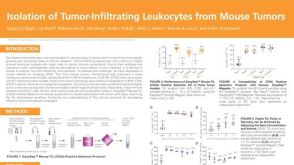 科学海报Isolation of Tumor-Infiltrating Leukocytes from Mouse Tumors
 沪公网安备31010102008431号