CRL3-SPOP ubiquitin ligase complex suppresses the growth of diffuse large B-cell lymphoma by negatively regulating the MyD88/NF-$\kappa$B signaling.
Recurrent oncogenic mutations of MyD88 have been identified in a variety of lymphoid malignancies. Gain-of-function mutations of MyD88 constitutively activate downstream NF-$\kappa$B signaling pathways,resulting in increased cellular proliferation and survival. However,whether MyD88 activity can be aberrantly regulated in MyD88-wild-type lymphoid malignancies remains poorly understood. SPOP is an adaptor protein of CUL3-based E3 ubiquitin ligase complex and frequently mutated genes in prostate and endometrial cancers. In this study,we reveal that SPOP binds to and induces the nondegradative ubiquitination of MyD88 by recognizing an atypical SPOP-binding motif in MyD88. This modification blocks Myddosome assembly and downstream NF-$\kappa$B activation. SPOP is mutated in a subset of lymphoid malignancies,including diffuse large B-cell lymphoma (DLBCL). Lymphoid malignancies-associated SPOP mutants exhibited impaired binding to MyD88 and suppression of NF-$\kappa$B activation. The DLBCL-associated,SPOP-binding defective mutants of MyD88 escaped from SPOP-mediated ubiquitination,and their effect on NF-$\kappa$B activation is stronger than that of wild-type MyD88. Moreover,SPOP suppresses DLBCL cell growth in vitro and tumor xenograft in vivo by inhibiting the MyD88/NF-$\kappa$B signaling. Therefore,SPOP acts as a tumor suppressor in DLBCL. Mutations in the SPOP-MyD88 binding interface may disrupt the SPOP-MyD88 regulatory axis and promote aberrant MyD88/NF-$\kappa$B activation and cell growth in DLCBL.
View Publication
产品类型:
产品号#:
06005
19254
19254RF
产品名:
IntestiCult™ 类器官生长培养基 (小鼠)
EasySep™人Naïve B细胞富集试剂盒
RoboSep™ 人Naïve B细胞富集试剂盒含滤芯吸头
M. Liu et al. (nov 2019)
Leukemia research 86 106225
Treatment of human T-cell acute lymphoblastic leukemia cells with CFTR inhibitor CFTRinh-172.
Our previous studies have demonstrated that a previously unrecognized role of CFTR in hematopoiesis and acute leukemia. Here,we show that CFTR inhibitor CFTR-inh172 possesses ability to inhibit human T-cell acute lymphoblastic leukemia cells. In detail,CFTR-inh172 inhibited cell proliferation,promoted apoptosis and arrested the cell cycle in human T-cell acute lymphoblastic leukemia cell CCRF-CEM,JURKAT and MOLT-4. Furthermore,transcriptome analysis reveals that CFTR-inh172 induces significant alteration of gene expression related to apoptosis and proliferation. These findings demonstrate the potential of CFTR inhibitor CFTR-inh172 in human T-cell acute lymphoblastic leukemia treatment.
View Publication
产品类型:
产品号#:
06005
产品名:
IntestiCult™ 类器官生长培养基 (小鼠)
A. Ly et al. (nov 2019)
Cell reports 29 8 2257--2269.e6
Transcription Factor T-bet in B Cells Modulates Germinal Center Polarization and Antibody Affinity Maturation in Response to Malaria.
Despite the key role that antibodies play in protection,the cellular processes mediating the acquisition of humoral immunity against malaria are not fully understood. Using an infection model of severe malaria,we find that germinal center (GC) B cells upregulate the transcription factor T-bet during infection. Molecular and cellular analyses reveal that T-bet in B cells is required not only for IgG2c switching but also favors commitment of B cells to the dark zone of the GC. T-bet was found to regulate the expression of Rgs13 and CXCR3,both of which contribute to the impaired GC polarization observed in the absence of T-bet,resulting in reduced IghV gene mutations and lower antibody avidity. These results demonstrate that T-bet modulates GC dynamics,thereby promoting the differentiation of B cells with increased affinity for antigen.
View Publication
产品类型:
产品号#:
06005
产品名:
IntestiCult™ 类器官生长培养基 (小鼠)
J. W. Schott et al. (sep 2019)
Molecular therapy. Methods {\&} clinical development 14 134--147
Enhancing Lentiviral and Alpharetroviral Transduction of Human Hematopoietic Stem Cells for Clinical Application.
Ex vivo retroviral gene transfer into CD34+ hematopoietic stem and progenitor cells (HSPCs) has demonstrated remarkable clinical success in gene therapy for monogenic hematopoietic disorders. However,little attention has been paid to enhancement of culture and transduction conditions to achieve reliable effects across patient and disease contexts and to maximize potential vector usage and reduce treatment cost. We systematically tested three HSPC culture media manufactured to cGMP and eight previously described transduction enhancers (TEs) to develop a state-of-the-art clinically applicable protocol. Six TEs enhanced lentiviral (LV) and five TEs facilitated alpharetroviral (ARV) CD34+ HSPC transduction when used alone. Combinatorial TE application tested with LV vectors yielded more potent effects,with up to a 5.6-fold increase in total expression of a reporter gene and up to a 3.8-fold increase in VCN. Application of one of the most promising combinations,the poloxamer LentiBOOST and protamine sulfate,for GMP-compliant manufacturing of a clinical-grade advanced therapy medicinal product (ATMP) increased total VCN by over 6-fold,with no major changes in global gene expression profiles or inadvertent loss of CD34+CD90+ HSPC populations. Application of these defined culture and transduction conditions is likely to significantly improve ex vivo gene therapy manufacturing protocols for HSPCs and downstream clinical efficacy.
View Publication
产品类型:
产品号#:
19254
19254RF
产品名:
EasySep™人Naïve B细胞富集试剂盒
RoboSep™ 人Naïve B细胞富集试剂盒含滤芯吸头
X. Shi et al. (nov 2019)
Molecular therapy : the journal of the American Society of Gene Therapy
Genetically Engineered Cell-Derived Nanoparticles for Targeted Breast Cancer Immunotherapy.
Exosomes are nanosized membranous vesicles secreted by a variety of cells. Due to their unique and pharmacologically important properties,cell-derived exosome nanoparticles have drawn significant interest for drug development. By genetically modifying exosomes with two distinct types of surface-displayed monoclonal antibodies,we have developed an exosome platform termed synthetic multivalent antibodies retargeted exosome (SMART-Exo) for controlling cellular immunity. Here,we apply this approach to human epidermal growth factor receptor 2 (HER2)-expressing breast cancer by engineering exosomes through genetic display of both anti-human CD3 and anti-human HER2 antibodies,resulting in SMART-Exos dually targeting T cell CD3 and breast cancer-associated HER2 receptors. By redirecting and activating cytotoxic T cells toward attacking HER2-expressing breast cancer cells,the designed SMART-Exos exhibited highly potent and specific anti-tumor activity both in vitro and in vivo. This work demonstrates preclinical feasibility of utilizing endogenous exosomes for targeted breast cancer immunotherapy and the SMART-Exos as a broadly applicable platform technology for the development of next-generation immuno-nanomedicines.
View Publication
Robust differentiation of human pluripotent stem cells into mural progenitor cells via transient activation of NKX3.1
Mural cells are central to vascular integrity and function. In this study,we demonstrate the innovative use of the transcription factor NKX3.1 to guide the differentiation of human induced pluripotent stem cells into mural progenitor cells (iMPCs). By transiently activating NKX3.1 in mesodermal intermediates,we developed a method that diverges from traditional growth factor-based differentiation techniques. This approach efficiently generates a robust iMPC population capable of maturing into diverse functional mural cell subtypes,including smooth muscle cells and pericytes. These iMPCs exhibit key mural cell functionalities such as contractility,deposition of extracellular matrix,and the ability to support endothelial cell-mediated vascular network formation in vivo. Our study not only underscores the fate-determining significance of NKX3.1 in mural cell differentiation but also highlights the therapeutic potential of these iMPCs. We envision these insights could pave the way for a broader use of iMPCs in vascular biology and regenerative medicine. Mural progenitor cells are crucial for vascular stability. Here,the authors generate these cells from human pluripotent stem cells using NKX3.1 and show that they can mature into various mural cell types and contribute to blood vessel formation.
View Publication
产品类型:
产品号#:
100-0276
100-1130
产品名:
mTeSR™ Plus
mTeSR™ Plus
(Oct 2024)
eBioMedicine 109 1
Homology-independent targeted insertion-mediated derivation of M1-biased macrophages harbouring Megf10 and CD3? from human pluripotent stem cells
SummaryBackgroundMacrophages engineered with chimeric antigen receptors (CAR) are suitable for immunotherapy based on their immunomodulatory activity and ability to infiltrate solid tumours. However,the production and application of genetically edited,highly effective,and mass-produced CAR-modified macrophages (CAR-Ms) are challenging.MethodsHere,we used homology-independent targeted insertion (HITI) for site-directed CAR integration into the safe-harbour region of human pluripotent stem cells (hPSCs). This approach,together with a simple differentiation protocol,produced stable and highly effective CAR-Ms without heterogeneity.FindingsThese engineered cells phagocytosed cancer cells,leading to significant inhibition of cancer-cell proliferation in vitro and in vivo. Furthermore,the engineered CARs,which incorporated a combination of CD3? and Megf10 (referred to as FRP5M?),markedly enhanced the antitumour effect of CAR-Ms by promoting M1,but not M2,polarisation. FRP5M? promoted M1 polarisation via nuclear factor kappa B (NF-?B),ERK,and STAT1 signalling,and concurrently inhibited STAT3 signalling even under M2 conditions. These features of CAR-Ms modulated the tumour microenvironment by activating inflammatory signalling,inducing M1 polarisation of bystander non-CAR macrophages,and enhancing the infiltration of T cells in cancer spheroids.InterpretationOur findings suggest that CAR-Ms have promise as immunotherapeutics. In conclusion,the guided insertion of CAR containing CD3? and Megf10 domains is an effective strategy for the immunotherapy of solid tumours.FundingThis work was supported by KRIBB Research Initiative Program Grant (KGM4562431,KGM5282423) and a Korean Fund for Regenerative Medicine (KFRM) grant funded by the Korean government (Ministry of Science and ICT,10.13039/501100003625Ministry of Health and Welfare) (22A0304L1-01).
View Publication
产品类型:
产品号#:
05230
100-0483
100-0484
85850
85857
产品名:
STEMdiff™ 三胚层分化试剂盒
Hausser Scientificᵀᴹ 明线血球计数板
ReLeSR™
mTeSR™1
mTeSR™1
(Jan 2025)
Nature Communications 16
Gene-editing in patient and humanized-mice primary muscle stem cells rescues dysferlin expression in dysferlin-deficient muscular dystrophy
Dystrophy-associated fer-1-like protein (dysferlin) conducts plasma membrane repair. Mutations in the DYSF gene cause a panoply of genetic muscular dystrophies. We targeted a frequent loss-of-function,DYSF exon 44,founder frameshift mutation with mRNA-mediated delivery of SpCas9 in combination with a mutation-specific sgRNA to primary muscle stem cells from two homozygous patients. We observed a consistent >60% exon 44 re-framing,rescuing a full-length and functional dysferlin protein. A new mouse model harboring a humanized Dysf exon 44 with the founder mutation,hEx44mut,recapitulates the patients’ phenotype and an identical re-framing outcome in primary muscle stem cells. Finally,gene-edited murine primary muscle stem-cells are able to regenerate muscle and rescue dysferlin when transplanted back into hEx44mut hosts. These findings are the first to show that a CRISPR-mediated therapy can ameliorate dysferlin deficiency. We suggest that gene-edited primary muscle stem cells could exhibit utility,not only in treating dysferlin deficiency syndromes,but also perhaps other forms of muscular dystrophy. Dysferlin-deficient muscular dystrophy is a devastating and untreatable disease. Using Cas9,the authors restored dysferlin in muscle stem cells from patients ex vivo and show proof-of-concept for autologous cell replacement therapies in a new humanized mouse model.
View Publication
产品类型:
产品号#:
85850
85857
产品名:
mTeSR™1
mTeSR™1
(Apr 2024)
Genome Biology 25
Bento: a toolkit for subcellular analysis of spatial transcriptomics data
The spatial organization of molecules in a cell is essential for their functions. While current methods focus on discerning tissue architecture,cell–cell interactions,and spatial expression patterns,they are limited to the multicellular scale. We present Bento,a Python toolkit that takes advantage of single-molecule information to enable spatial analysis at the subcellular scale. Bento ingests molecular coordinates and segmentation boundaries to perform three analyses: defining subcellular domains,annotating localization patterns,and quantifying gene–gene colocalization. We demonstrate MERFISH,seqFISH +,Molecular Cartography,and Xenium datasets. Bento is part of the open-source Scverse ecosystem,enabling integration with other single-cell analysis tools.Supplementary InformationThe online version contains supplementary material available at 10.1186/s13059-024-03217-7.
View Publication


 EasySep™小鼠TIL(CD45)正选试剂盒






 新闻STEMCELL Technologies Announces Acquisition of Cellular Highways
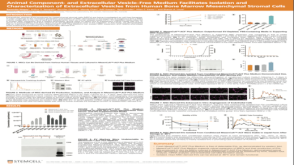 科学海报Animal Component- and Extracellular Vesicle-Free Medium Facilitates Isolation and Characterization of Extracellular Vesicles from Human Bone Marrow Mesenchymal Stromal Cells
 沪公网安备31010102008431号