Stapelberg M et al. (FEB 2014)
Free Radical Biology and Medicine 67 41--50
Indoleamine-2,3-dioxygenase elevated in tumor-initiating cells is suppressed by mitocans
Tumor-initiating cells (TICs) often survive therapy and give rise to second-line tumors. We tested the plausibility of sphere cultures as models of TICs. Microarray data and microRNA data analysis confirmed the validity of spheres as models of TICs for breast and prostate cancer as well as mesothelioma cell lines. Microarray data analysis revealed the Trp pathway as the only pathway upregulated significantly in all types of studied TICs,with increased levels of indoleamine-2,3-dioxygenase-1 (IDO1),the rate-limiting enzyme of Trp metabolism along the kynurenine pathway. All types of TICs also expressed higher levels of the Trp uptake system consisting of CD98 and LAT1 with functional consequences. IDO1 expression was regulated via both transcriptional and posttranscriptional mechanisms,depending on the cancer type. Serial transplantation of TICs in mice resulted in gradually increased IDO1. Mitocans,represented by α-tocopheryl succinate and mitochondrially targeted vitamin E succinate (MitoVES),suppressed IDO1 in TICs. MitoVES suppressed IDO1 in TICs with functional mitochondrial complex II,involving transcriptional and posttranscriptional mechanisms. IDO1 increase and its suppression by VE analogues were replicated in TICs from primary human glioblastomas. Our work indicates that IDO1 is increased in TICs and that mitocans suppress the protein.
View Publication
产品类型:
产品号#:
05750
05751
产品名:
NeuroCult™ NS-A 基础培养基(人)
NeuroCult™ NS-A 扩增试剂盒(人)
Wee S et al. (DEC 2014)
PloS one 9 12 e115698
Selective calcium sensitivity in immature glioma cancer stem cells.
Tumor-initiating cells are a subpopulation in aggressive cancers that exhibit traits shared with stem cells,including the ability to self-renew and differentiate,commonly referred to as stemness. In addition,such cells are resistant to chemo- and radiation therapy posing a therapeutic challenge. To uncover stemness-associated functions in glioma-initiating cells (GICs),transcriptome profiles were compared to neural stem cells (NSCs) and gene ontology analysis identified an enrichment of Ca2+ signaling genes in NSCs and the more stem-like (NSC-proximal) GICs. Functional analysis in a set of different GIC lines regarding sensitivity to disturbed homeostasis using A23187 and Thapsigargin,revealed that NSC-proximal GICs were more sensitive,corroborating the transcriptome data. Furthermore,Ca2+ drug sensitivity was reduced in GICs after differentiation,with most potent effect in the NSC-proximal GIC,supporting a stemness-associated Ca2+ sensitivity. NSCs and the NSC-proximal GIC line expressed a larger number of ion channels permeable to potassium,sodium and Ca2+. Conversely,a higher number of and higher expression levels of Ca2+ binding genes that may buffer Ca2+,were expressed in NSC-distal GICs. In particular,expression of the AMPA glutamate receptor subunit GRIA1,was found to associate with Ca2+ sensitive NSC-proximal GICs,and decreased as GICs differentiated along with reduced Ca2+ drug sensitivity. The correlation between high expression of Ca2+ channels (such as GRIA1) and sensitivity to Ca2+ drugs was confirmed in an additional nine novel GIC lines. Calcium drug sensitivity also correlated with expression of the NSC markers nestin (NES) and FABP7 (BLBP,brain lipid-binding protein) in this extended analysis. In summary,NSC-associated NES+/FABP7+/GRIA1+ GICs were selectively sensitive to disturbances in Ca2+ homeostasis,providing a potential target mechanism for eradication of an immature population of malignant cells.
View Publication
产品类型:
产品号#:
05750
05751
产品名:
NeuroCult™ NS-A 基础培养基(人)
NeuroCult™ NS-A 扩增试剂盒(人)
Wei W et al. (APR 2013)
Proceedings of the National Academy of Sciences 110 15 E1352--E1360
Hypoxia induces a phase transition within a kinase signaling network in cancer cells
Hypoxia is a near-universal feature of cancer,promoting glycolysis,cellular proliferation,and angiogenesis. The molecular mechanisms of hypoxic signaling have been intensively studied,but the impact of changes in oxygen partial pressure (pO2) on the state of signaling networks is less clear. In a glioblastoma multiforme (GBM) cancer cell model,we examined the response of signaling networks to targeted pathway inhibition between 21% and 1% pO2. We used a microchip technology that facilitates quantification of a panel of functional proteins from statistical numbers of single cells. We find that near 1.5% pO2,the signaling network associated with mammalian target of rapamycin (mTOR) complex 1 (mTORC1)--a critical component of hypoxic signaling and a compelling cancer drug target--is deregulated in a manner such that it will be unresponsive to mTOR kinase inhibitors near 1.5% pO2,but will respond at higher or lower pO2 values. These predictions were validated through experiments on bulk GBM cell line cultures and on neurosphere cultures of a human-origin GBM xenograft tumor. We attempt to understand this behavior through the use of a quantitative version of Le Chatelier's principle,as well as through a steady-state kinetic model of protein interactions,both of which indicate that hypoxia can influence mTORC1 signaling as a switch. The Le Chatelier approach also indicates that this switch may be thought of as a type of phase transition. Our analysis indicates that certain biologically complex cell behaviors may be understood using fundamental,thermodynamics-motivated principles.
View Publication
产品类型:
产品号#:
05761
产品名:
用于小鼠和大鼠神经干细胞和祖细胞分化培养的试剂盒
Binder ZA et al. ( 2016)
PloS one 11 3 e0150271
Establishment and Biological Characterization of a Panel of Glioblastoma Multiforme (GBM) and GBM Variant Oncosphere Cell Lines.
OBJECTIVE Human tumor cell lines form the basis of the majority of present day laboratory cancer research. These models are vital to studying the molecular biology of tumors and preclinical testing of new therapies. When compared to traditional adherent cell lines,suspension cell lines recapitulate the genetic profiles and histologic features of glioblastoma multiforme (GBM) with higher fidelity. Using a modified neural stem cell culture technique,here we report the characterization of GBM cell lines including GBM variants. METHODS Tumor tissue samples were obtained intra-operatively and cultured in neural stem cell conditions containing growth factors. Tumor lines were characterized in vitro using differentiation assays followed by immunostaining for lineage-specific markers. In vivo tumor formation was assayed by orthotopic injection in nude mice. Genetic uniqueness was confirmed via short tandem repeat (STR) DNA profiling. RESULTS Thirteen oncosphere lines derived from GBM and GBM variants,including a GBM with PNET features and a GBM with oligodendroglioma component,were established. All unique lines showed distinct genetic profiles by STR profiling. The lines assayed demonstrated a range of in vitro growth rates. Multipotency was confirmed using in vitro differentiation. Tumor formation demonstrated histologic features consistent with high grade gliomas,including invasion,necrosis,abnormal vascularization,and high mitotic rate. Xenografts derived from the GBM variants maintained histopathological features of the primary tumors. CONCLUSIONS We have generated and characterized GBM suspension lines derived from patients with GBMs and GBM variants. These oncosphere cell lines will expand the resources available for preclinical study.
View Publication
产品类型:
产品号#:
05750
05751
产品名:
NeuroCult™ NS-A 基础培养基(人)
NeuroCult™ NS-A 扩增试剂盒(人)
Booth L et al. (JUL 2015)
Journal of cellular physiology 230 7 1661--76
GRP78/BiP/HSPA5/Dna K is a universal therapeutic target for human disease.
The chaperone GRP78/Dna K is conserved throughout evolution down to prokaryotes. The GRP78 inhibitor OSU-03012 (AR-12) interacted with sildenafil (Viagra) or tadalafil (Cialis) to rapidly reduce GRP78 levels in eukaryotes and as a single agent reduce Dna K levels in prokaryotes. Similar data with the drug combination were obtained for: HSP70,HSP90,GRP94,GRP58,HSP27,HSP40 and HSP60. OSU-03012/sildenafil treatment killed brain cancer stem cells and decreased the expression of: NPC1 and TIM1; LAMP1; and NTCP1,receptors for Ebola/Marburg/Hepatitis A,Lassa fever,and Hepatitis B viruses,respectively. Pre-treatment with OSU-03012/sildenafil reduced expression of the coxsakie and adenovirus receptor in parallel with it also reducing the ability of a serotype 5 adenovirus or coxsakie virus B4 to infect and to reproduce. Similar data were obtained using Chikungunya,Mumps,Measles,Rubella,RSV,CMV,and Influenza viruses. OSU-03012 as a single agent at clinically relevant concentrations killed laboratory generated antibiotic resistant E. coli and clinical isolate multi-drug resistant N. gonorrhoeae and MRSE which was in bacteria associated with reduced Dna K and Rec A expression. The PDE5 inhibitors sildenafil or tadalafil enhanced OSU-03012 killing in N. gonorrhoeae and MRSE and low marginally toxic doses of OSU-03012 could restore bacterial sensitivity in N. gonorrhoeae to multiple antibiotics. Thus,Dna K and bacterial phosphodiesterases are novel antibiotic targets,and inhibition of GRP78 is of therapeutic utility for cancer and also for bacterial and viral infections.
View Publication
产品类型:
产品号#:
05750
05751
产品名:
NeuroCult™ NS-A 基础培养基(人)
NeuroCult™ NS-A 扩增试剂盒(人)
Booth L et al. (MAY 2015)
Journal of cellular physiology 230 5 1115--27
PDE5 inhibitors enhance celecoxib killing in multiple tumor types.
The present studies determined whether clinically relevant phosphodiesterase 5 (PDE5) inhibitors interacted with a clinically relevant NSAID,celecoxib,to kill tumor cells. Celecoxib and PDE5 inhibitors interacted in a greater than additive fashion to kill multiple tumor cell types. Celecoxib and sildenafil killed ex vivo primary human glioma cells as well as their associated activated microglia. Knock down of PDE5 recapitulated the effects of PDE5 inhibitor treatment; the nitric oxide synthase inhibitor L-NAME suppressed drug combination toxicity. The effects of celecoxib were COX2 independent. Over-expression of c-FLIP-s or knock down of CD95/FADD significantly reduced killing by the drug combination. CD95 activation was dependent on nitric oxide and ceramide signaling. CD95 signaling activated the JNK pathway and inhibition of JNK suppressed cell killing. The drug combination inactivated mTOR and increased the levels of autophagy and knock down of Beclin1 or ATG5 strongly suppressed killing by the drug combination. The drug combination caused an ER stress response; knock down of IRE1α/XBP1 enhanced killing whereas knock down of eIF2α/ATF4/CHOP suppressed killing. Sildenafil and celecoxib treatment suppressed the growth of mammary tumors in vivo. Collectively our data demonstrate that clinically achievable concentrations of celecoxib and sildenafil have the potential to be a new therapeutic approach for cancer.
View Publication
产品类型:
产品号#:
05750
05751
产品名:
NeuroCult™ NS-A 基础培养基(人)
NeuroCult™ NS-A 扩增试剂盒(人)
Cheng H-W et al. (MAY 2015)
Cell death & disease 6 5 e1753
Identification of thioridazine, an antipsychotic drug, as an antiglioblastoma and anticancer stem cell agent using public gene expression data.
Glioblastoma (GBM) is a common and malignant tumor with a poor prognosis. Glioblastoma stem cells (GSCs) have been reported to be involved in tumorigenesis,tumor maintenance and therapeutic resistance. Thus,to discover novel candidate therapeutic drugs for anti-GBM and anti-GSCs is an urgent need. We hypothesized that if treatment with a drug could reverse,at least in part,the gene expression signature of GBM and GSCs,this drug may have the potential to inhibit pathways essential in the formation of GBM and thereby treat GBM. Here,we collected 356 GBM gene signatures from public databases and queried the Connectivity Map. We systematically evaluated the in vitro antitumor effects of 79 drugs in GBM cell lines. Of the drugs screened,thioridazine was selected for further characterization because it has potent anti-GBM and anti-GSCs properties. When investigating the mechanisms underlying the cytocidal effects of thioridazine,we found that thioridazine induces autophagy in GBM cell lines,and upregulates AMPK activity. Moreover,LC3-II was upregulated in U87MG sphere cells treated with thioridazine. In addition,thioridazine suppressed GBM tumorigenesis and induced autophagy in vivo. We not only repurposed the antipsychotic drug thioridazine as a potent anti-GBM and anti-GSCs agent,but also provided a new strategy to search for drugs with anticancer and anticancer stem cell properties.
View Publication
产品类型:
产品号#:
05750
05751
产品名:
NeuroCult™ NS-A 基础培养基(人)
NeuroCult™ NS-A 扩增试剂盒(人)
Fè et al. ( 2014)
PloS one 9 3 e91519
Comparative expression study of the endo-G protein coupled receptor (GPCR) repertoire in human glioblastoma cancer stem-like cells, U87-MG cells and non malignant cells of neural origin unveils new potential therapeutic targets.
Glioblastomas (GBMs) are highly aggressive,invasive brain tumors with bad prognosis and unmet medical need. These tumors are heterogeneous being constituted by a variety of cells in different states of differentiation. Among these,cells endowed with stem properties,tumor initiating/propagating properties and particularly resistant to chemo- and radiotherapies are designed as the real culprits for tumor maintenance and relapse after treatment. These cells,termed cancer stem-like cells,have been designed as prominent targets for new and more efficient cancer therapies. G-protein coupled receptors (GPCRs),a family of membrane receptors,play a prominent role in cell signaling,cell communication and crosstalk with the microenvironment. Their role in cancer has been highlighted but remains largely unexplored. Here,we report a descriptive study of the differential expression of the endo-GPCR repertoire in human glioblastoma cancer stem-like cells (GSCs),U-87 MG cells,human astrocytes and fetal neural stem cells (f-NSCs). The endo-GPCR transcriptome has been studied using Taqman Low Density Arrays. Of the 356 GPCRs investigated,138 were retained for comparative studies between the different cell types. At the transcriptomic level,eight GPCRs were specifically expressed/overexpressed in GSCs. Seventeen GPCRs appeared specifically expressed in cells with stem properties (GSCs and f-NSCs). Results of GPCR expression at the protein level using mass spectrometry and proteomic analysis are also presented. The comparative GPCR expression study presented here gives clues for new pathways specifically used by GSCs and unveils novel potential therapeutic targets.
View Publication
产品类型:
产品号#:
05750
05751
产品名:
NeuroCult™ NS-A 基础培养基(人)
NeuroCult™ NS-A 扩增试剂盒(人)
Q. Li et al. ( 2018)
Scientific reports 8 1 3531
Scalable Culturing of Primary Human Glioblastoma Tumor-Initiating Cells with a Cell-Friendly Culture System.
Glioblastoma is the most aggressive and deadly brain cancer. There is growing interest to develop drugs that specifically target to glioblastoma tumor-initiating cells (TICs). However,the cost-effective production of large numbers of high quality glioblastoma TICs for drug discovery with current cell culturing technologies remains very challenging. Here,we report a new method that cultures glioblastoma TICs in microscale alginate hydrogel tubes (or AlgTubes). The AlgTubes allowed long-term culturing ({\~{}}50 days,10 passages) of glioblastoma TICs with high growth rate ({\~{}}700-fold expansion/14 days),high cell viability and high volumetric yield ({\~{}}3.0 × 10⁸ cells/mL) without losing the stem cell properties,all offered large advancements over current culturing methods. This method can be applied for the scalable production of glioblastoma TICs at affordable cost for drug discovery.
View Publication
Fernando P et al. (OCT 2005)
FASEB journal : official publication of the Federation of American Societies for Experimental Biology 19 12 1671--3
Neural stem cell differentiation is dependent upon endogenous caspase 3 activity.
Caspase proteases have become the focal point for the development and application of anti-apoptotic therapies in a variety of central nervous system diseases. However,this approach is based on the premise that caspase function is limited to invoking cell death signals. Here,we show that caspase-3 activity is elevated in nonapoptotic differentiating neuronal cell populations. Moreover,peptide inhibition of protease activity effectively inhibits the differentiation process in a cultured neurosphere model. These results implicate caspase-3 activation as a conserved feature of neuronal differentiation and suggest that targeted inhibition of this protease in neural cell populations may have unintended consequences.
View Publication


 EasySep™小鼠TIL(CD45)正选试剂盒




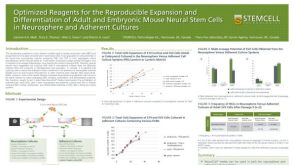 科学海报Optimized Reagents for the Reproducible Expansion and Differentiation of Adult and Embryonic Mouse Neural Stem Cells in Neurosphere and Adherent Cultures

 沪公网安备31010102008431号