A genome-wide CRISPR screen identifies a restricted set of HIV host dependency factors.
Host proteins are essential for HIV entry and replication and can be important nonviral therapeutic targets. Large-scale RNA interference (RNAi)-based screens have identified nearly a thousand candidate host factors,but there is little agreement among studies and few factors have been validated. Here we demonstrate that a genome-wide CRISPR-based screen identifies host factors in a physiologically relevant cell system. We identify five factors,including the HIV co-receptors CD4 and CCR5,that are required for HIV infection yet are dispensable for cellular proliferation and viability. Tyrosylprotein sulfotransferase 2 (TPST2) and solute carrier family 35 member B2 (SLC35B2) function in a common pathway to sulfate CCR5 on extracellular tyrosine residues,facilitating CCR5 recognition by the HIV envelope. Activated leukocyte cell adhesion molecule (ALCAM) mediates cell aggregation,which is required for cell-to-cell HIV transmission. We validated these pathways in primary human CD4(+) T cells through Cas9-mediated knockout and antibody blockade. Our findings indicate that HIV infection and replication rely on a limited set of host-dispensable genes and suggest that these pathways can be studied for therapeutic intervention.
View Publication
产品类型:
产品号#:
19662
19662RF
19052
19052RF
产品名:
EasySep™ Direct人CD4+ T细胞分选试剂盒
RoboSep™ Direct人CD4+ T细胞分选试剂盒
EasySep™人CD4+ T细胞富集试剂盒
RoboSep™ 人CD4+ T细胞富集试剂盒含滤芯吸头
Y. Cheng et al. (feb 2019)
Science immunology 4 32
Multifactorial heterogeneity of virus-specific T cells and association with the progression of human chronic hepatitis B infection.
Associations between chronic antigen stimulation,T cell dysfunction,and the expression of various inhibitory receptors are well characterized in several mouse and human systems. During chronic hepatitis B virus (HBV) infection (CHB),T cell responses are blunted with low frequencies of virus-specific T cells observed,making these parameters difficult to study. Here,using mass cytometry and a highly multiplexed combinatorial peptide-major histocompatibility complex (pMHC) tetramer strategy that allows for the detection of rare antigen-specific T cells,we simultaneously probed 484 unique HLA-A*1101-restricted epitopes spanning the entire HBV genome on T cells from patients at various stages of CHB. Numerous HBV-specific T cell populations were detected,validated,and profiled. T cells specific for two epitopes (HBVpol387 and HBVcore169) displayed differing and complex heterogeneities that were associated with the disease progression,and the expression of inhibitory receptors on these cells was not linearly related with their extent of T cell dysfunction. For HBVcore169-specific CD8+ T cells,we found cellular markers associated with long-term memory,polyfunctionality,and the presence of several previously unidentified public TCR clones that correlated with viral control. Using high-dimensional trajectory analysis of these cellular phenotypes,a pseudo-time metric was constructed that fit with the status of viral infection in corresponding patients. This was validated in a longitudinal cohort of patients undergoing antiviral therapy. Our study uncovers complex relationships of inhibitory receptors between the profiles of antigen-specific T cells and the status of CHB with implications for new strategies of therapeutic intervention.
View Publication
产品类型:
产品号#:
19051
19051RF
19053
19053RF
产品名:
EasySep™人T细胞富集试剂盒
RoboSep™ 人T细胞富集试剂盒含滤芯吸头
EasySep™人CD8+ T细胞富集试剂盒
RoboSep™ 人CD8+ T细胞富集试剂盒含滤芯吸头
C. Gu et al. (jul 2019)
Journal of immunology (Baltimore,Md. : 1950) 203 2 389--399
Signaling Cascade through DC-ASGPR Induces Transcriptionally Active CREB for IL-10 Induction and Immune Regulation.
The types and magnitude of Ag-specific immune responses can be determined by the functional plasticity of dendritic cells (DCs). However,how DCs display functional plasticity and control host immune responses have not been fully understood. In this study,we report that ligation of DC-asialoglycoprotein receptor (DC-ASGPR),a C-type lectin receptor (CLR) expressed on human DCs,resulted in rapid activation of Syk,followed by PLCgamma2 and PKCdelta engagements. However,different from other Syk-coupled CLRs,including Dectin-1,signaling cascade through DC-ASGPR did not trigger NF-kappaB activation. Instead,it selectively activated MAPK ERK1/2 and JNK. Rapid and prolonged phosphorylation of ERK1/2 led to sequential activation of p90RSK and CREB,which consequently bound to IL10 promoter and initiated cytokine expression. In addition,DC-ASGPR ligation activated Akt,which differentially regulated the activities of GSK-3alpha/beta and beta-catenin and further contributed to IL-10 expression. Our observations demonstrate that DC-ASGPR induces IL-10 expression via an intrinsic signaling pathway,which provides a molecular explanation for DC-ASGPR-mediated programing of DCs to control host immune responses.
View Publication
产品类型:
产品号#:
19251
19251RF
19052
19052RF
产品名:
EasySep™人Pan-DC预富集试剂盒
RoboSep™ 人Pan-DC预富集试剂盒含滤芯吸头
EasySep™人CD4+ T细胞富集试剂盒
RoboSep™ 人CD4+ T细胞富集试剂盒含滤芯吸头
Y. Nasser et al. (mar 2019)
Scientific reports 9 1 3710
Activation of Peripheral Blood CD4+ T-Cells in IBS is not Associated with Gastrointestinal or Psychological Symptoms.
Immune activation may underlie the pathogenesis of irritable bowel syndrome (IBS),but the evidence is conflicting. We examined whether peripheral CD4+ T-cells from IBS patients demonstrated immune activation and changes in cytokine production. To gain mechanistic insight,we examined whether immune activation correlated with psychological stress and changing symptoms over time. IBS patients (n = 29) and healthy volunteers (HV; n = 29) completed symptom and psychological questionnaires. IBS patients had a significant increase in CD4+ T-cells expressing the gut homing marker integrin beta7 (p = 0.023) and lymphoid marker CD62L (p = 0.026) compared to HV. Furthermore,phytohaemagglutinin stimulated CD4+ T-cells from IBS-D patients demonstrated increased TNFalpha secretion when compared to HV (p = 0.044). Increased psychological scores in IBS did not correlate with TNFalpha production,while stress hormones inhibited cytokine secretion from CD4+ T-cells of HV in vitro. IBS symptoms,but not markers of immune activation,decreased over time. CD4+ T-cells from IBS-D patients exhibit immune activation,but this did not appear to correlate with psychological stress measurements or changing symptoms over time. This could suggest that immune activation is a surrogate of an initial trigger and/or ongoing parallel peripheral mechanisms.
View Publication
产品类型:
产品号#:
19052
19052RF
产品名:
EasySep™人CD4+ T细胞富集试剂盒
RoboSep™ 人CD4+ T细胞富集试剂盒含滤芯吸头
J. Quancard et al. (mar 2019)
Nature chemical biology 15 3 304--313
An allosteric MALT1 inhibitor is a molecular corrector rescuing function in an immunodeficient patient.
MALT1 paracaspase is central for lymphocyte antigen-dependent responses including NF-kappaB activation. We discovered nanomolar,selective allosteric inhibitors of MALT1 that bind by displacing the side chain of Trp580,locking the protease in an inactive conformation. Interestingly,we had previously identified a patient homozygous for a MALT1 Trp580-to-serine mutation who suffered from combined immunodeficiency. We show that the loss of tryptophan weakened interactions between the paracaspase and C-terminal immunoglobulin MALT1 domains resulting in protein instability,reduced protein levels and functions. Upon binding of allosteric inhibitors of increasing potency,we found proportionate increased stabilization of MALT1-W580S to reach that of wild-type MALT1. With restored levels of stable MALT1 protein,the most potent of the allosteric inhibitors rescued NF-kappaB and JNK signaling in patient lymphocytes. Following compound washout,MALT1 substrate cleavage was partly recovered. Thus,a molecular corrector rescues an enzyme deficiency by substituting for the mutated residue,inspiring new potential precision therapies to increase mutant enzyme activity in other deficiencies.
View Publication
产品类型:
产品号#:
19051
19051RF
产品名:
EasySep™人T细胞富集试剂盒
RoboSep™ 人T细胞富集试剂盒含滤芯吸头
J. Renkawitz et al. (apr 2019)
Nature 568 7753 546--550
Nuclear positioning facilitates amoeboid migration along the path of least resistance.
During metazoan development,immune surveillance and cancer dissemination,cells migrate in complex three-dimensional microenvironments1-3. These spaces are crowded by cells and extracellular matrix,generating mazes with differently sized gaps that are typically smaller than the diameter of the migrating cell4,5. Most mesenchymal and epithelial cells and some-but not all-cancer cells actively generate their migratory path using pericellular tissue proteolysis6. By contrast,amoeboid cells such as leukocytes use non-destructive strategies of locomotion7,raising the question how these extremely fast cells navigate through dense tissues. Here we reveal that leukocytes sample their immediate vicinity for large pore sizes,and are thereby able to choose the path of least resistance. This allows them to circumnavigate local obstacles while effectively following global directional cues such as chemotactic gradients. Pore-size discrimination is facilitated by frontward positioning of the nucleus,which enables the cells to use their bulkiest compartment as a mechanical gauge. Once the nucleus and the closely associated microtubule organizing centre pass the largest pore,cytoplasmic protrusions still lingering in smaller pores are retracted. These retractions are coordinated by dynamic microtubules; when microtubules are disrupted,migrating cells lose coherence and frequently fragment into migratory cytoplasmic pieces. As nuclear positioning in front of the microtubule organizing centre is a typical feature of amoeboid migration,our findings link the fundamental organization of cellular polarity to the strategy of locomotion.
View Publication
产品类型:
产品号#:
19848
19848RF
19659
产品名:
EasySep™小鼠Pan-Naïve T细胞分选试剂盒
RoboSep™ 小鼠Pan-Naïve T细胞分选试剂盒
EasySep™ Direct人Pan-粒细胞分选试剂盒
A. Sofoluwe et al. (nov 2019)
Scientific reports 9 1 16556
ATP amplifies NADPH-dependent and -independent neutrophil extracellular trap formation.
Neutrophils are the first immune cells to kill invading microbes at sites of infection using a variety of processes,including the release of proteases,phagocytosis and the production of neutrophil extracellular traps (NETs). NET formation,or NETosis,is a specific and highly efficient process,which is induced by a variety of stimuli leading to expulsion of DNA,proteases and antimicrobial peptides to the extracellular space. However,uncontrolled NETosis may lead to adverse effects and exert tissue damage in pathological conditions. Here,we show that the ATP channel pannexin1 (Panx1) is functionally expressed by bone marrow-derived neutrophils (BMDNs) of wild-type (WT) mice and that ATP contributes to NETosis induced in vitro by the calcium ionophore A23187 or phorbol 12-myristate 13-acetate (PMA). Interestingly,neutrophils isolated from Panx1-/- mice showed reduced and/or delayed induction of NETosis. Brilliant blue FCF dye (BB-FCF),a Panx1 channel inhibitor,decreased NETosis in wild-type neutrophils to the extent observed in Panx1-/- neutrophils. Thus,we demonstrate that ATP and Panx1 channels contribute to NETosis and may represent a therapeutic target.
View Publication
产品类型:
产品号#:
19851
19851RF
产品名:
EasySep™小鼠T细胞分选试剂盒
RoboSep™ 小鼠T细胞分选试剂盒
M. A. Gray et al. (dec 2020)
Nature chemical biology 16 12 1376--1384
Targeted glycan degradation potentiates the anticancer immune response in vivo.
Currently approved immune checkpoint inhibitor therapies targeting the PD-1 and CTLA-4 receptor pathways are powerful treatment options for certain cancers; however,most patients across cancer types still fail to respond. Consequently,there is interest in discovering and blocking alternative pathways that mediate immune suppression. One such mechanism is an upregulation of sialoglycans in malignancy,which has been recently shown to inhibit immune cell activation through multiple mechanisms and therefore represents a targetable glycoimmune checkpoint. Since these glycans are not canonically druggable,we designed an $\alpha$HER2 antibody-sialidase conjugate that potently and selectively strips diverse sialoglycans from breast cancer cells. In syngeneic breast cancer models,desialylation enhanced immune cell infiltration and activation and prolonged the survival of mice,an effect that was dependent on expression of the Siglec-E checkpoint receptor found on tumor-infiltrating myeloid cells. Thus,antibody-sialidase conjugates represent a promising modality for glycoimmune checkpoint therapy.
View Publication
产品类型:
产品号#:
19055
19255
19255RF
19055RF
产品名:
EasySep™人NK细胞富集试剂盒
EasySep™人Gamma/Delta T细胞分选试剂盒
RoboSep™ 人Gamma/Delta T细胞分选试剂盒
RoboSep™ 人NK细胞富集试剂盒含滤芯吸头
Z. Xiao et al. ( 2020)
Cancer research 80 14 3023--3032
ICOS Is an Indicator of T-cell-Mediated Response to Cancer Immunotherapy.
Immunotherapy is innovating clinical cancer management. Nevertheless,only a small fraction of patient's benefit from current immunotherapies. To improve clinical management of cancer immunotherapy,it is critical to develop strategies for response monitoring and prediction. In this study,we describe inducible T-cell costimulator (ICOS) as a conserved mediator of immune response across multiple therapy strategies. ICOS expression was evaluated by flow cytometry,89Zr-DFO-ICOS mAb PET/CT imaging was performed on Lewis lung cancer models treated with different immunotherapy strategies,and the change in tumor volume was used as a read-out for therapeutic response. ImmunoPET imaging of ICOS enabled sensitive and specific detection of activated T cells and early benchmarking of immune response. A STING (stimulator of interferon genes) agonist was identified as a promising therapeutic approach in this manner. The STING agonist generated significantly stronger immune responses as measured by ICOS ImmunoPET and delayed tumor growth compared with programmed death-1 checkpoint blockade. More importantly,ICOS ImmunoPET enabled early and robust prediction of therapeutic response across multiple treatment regimens. These data show that ICOS is an indicator of T-cell-mediated immune response and suggests ICOS ImmunoPET as a promising strategy for monitoring,comparing,and predicting immunotherapy success in cancer. SIGNIFICANCE: ICOS ImmunoPET is a promising strategy to noninvasively predict and monitor immunotherapy response.See related commentary by Choyke,p. 2975.
View Publication
产品类型:
产品号#:
19851
19851RF
产品名:
EasySep™小鼠T细胞分选试剂盒
RoboSep™ 小鼠T细胞分选试剂盒
挂图
血液相关来源中人细胞类型的比例
List of the frequencies of over 35 cell types in normal human blood-related sources.
Pelletier M et al. (JAN 2010)
Blood 115 2 335--43
Evidence for a cross-talk between human neutrophils and Th17 cells.
Interleukin-17A (IL-17A) and IL-17F are 2 of several cytokines produced by T helper 17 cells (Th17),which are able to indirectly induce the recruitment of neutrophils. Recently,human Th17 cells have been phenotypically characterized and shown to express discrete chemokine receptors,including CCR2 and CCR6. Herein,we show that highly purified neutrophils cultured with interferon-gamma plus lipopolysaccharide produce the CCL2 and CCL20 chemokines,the known ligands of CCR2 and CCR6,respectively. Accordingly,supernatants from activated neutrophils induced chemotaxis of Th17 cells,which was greatly suppressed by anti-CCL20 and anti-CCL2 antibodies. We also discovered that activated Th17 cells could directly chemoattract neutrophils via the release of biologically active CXCL8. Consistent with this reciprocal recruitment,neutrophils and Th17 cells were found in gut tissue from Crohn disease and synovial fluid from rheumatoid arthritis patients. Finally,we report that,although human Th17 cells can directly interact with freshly isolated or preactivated neutrophils via granulocyte-macrophage colony-stimulating factor,tumor necrosis factor-alpha,and interferon-gamma release,these latter cells cannot be activated by IL-17A and IL-17F,because of their lack of IL-17RC expression. Collectively,our results reveal a novel chemokine-dependent reciprocal cross-talk between neutrophils and Th17 cells,which may represent a useful target for the treatment of chronic inflammatory diseases.
View Publication
产品类型:
产品号#:
19309
19309RF
19052
19052RF
19058
19058RF
100-1525
产品名:
EasySep™人定制富集试剂盒
RoboSep™ 人定制富集试剂盒,含滤芯吸头
EasySep™人CD4+ T细胞富集试剂盒
RoboSep™ 人CD4+ T细胞富集试剂盒含滤芯吸头
EasySep™人单核细胞富集试剂盒(不去除CD16)
RoboSep™ 人单核细胞富集试剂盒(不去除CD16)含滤芯吸头
EasySep™人单核细胞富集试剂盒(不去除CD16)
Lin S et al. (SEP 2010)
Journal of virology 84 18 9487--96
HIV infection upregulates caveolin 1 expression to restrict virus production.
Caveolin 1 (Cav-1) is a major protein of a specific membrane lipid raft known as caveolae. Cav-1 interacts with the gp41 of the human immunodeficiency virus (HIV) envelope,but the role of Cav-1 in HIV replication and pathogenesis is not known. In this report,we demonstrate that HIV infection in primary human monocyte-derived macrophages (MDMs),THP-1 macrophages,and U87-CD4 cells results in a dramatic upregulation of Cav-1 expression mediated by HIV Tat. The activity of p53 is essential for Tat-induced Cav-1 expression,as our findings show enhanced phosphorylation of serine residues at amino acid positions 15 and 46 in the presence of Tat with a resulting Cav-1 upregulation. Furthermore,inhibition of p38 mitogen-activated protein kinase (MAPK) blocked phosphorylation of p53 in the presence of Tat. Infection studies of Cav-1-overexpressing cells reveal a significant reduction of HIV production. Taken together,these results suggest that HIV infection enhances the expression of Cav-1,which subsequently causes virus reduction,suggesting that Cav-1 may contribute to persistent infection in macrophages.
View Publication


 EasySep™小鼠TIL(CD45)正选试剂盒





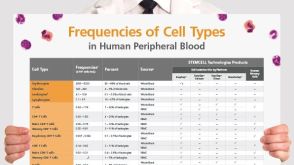 挂图血液相关来源中人细胞类型的比例 List of the frequencies of over 35 cell types in normal human blood-related sources.
 沪公网安备31010102008431号