Valproic acid induces differentiation and inhibition of proliferation in neural progenitor cells via the beta-catenin-Ras-ERK-p21Cip/WAF1 pathway.
BACKGROUND Valproic acid (VPA),a commonly used mood stabilizer that promotes neuronal differentiation,regulates multiple signaling pathways involving extracellular signal-regulated kinase (ERK) and glycogen synthase kinase3beta (GSK3beta). However,the mechanism by which VPA promotes differentiation is not understood. RESULTS We report here that 1 mM VPA simultaneously induces differentiation and reduces proliferation of basic fibroblast growth factor (bFGF)-treated embryonic day 14 (E14) rat cerebral cortex neural progenitor cells (NPCs). The effects of VPA on the regulation of differentiation and inhibition of proliferation occur via the ERK-p21Cip/WAF1 pathway. These effects,however,are not mediated by the pathway involving the epidermal growth factor receptor (EGFR) but via the pathway which stabilizes Ras through beta-catenin signaling. Stimulation of differentiation and inhibition of proliferation in NPCs by VPA occur independently and the beta-catenin-Ras-ERK-p21Cip/WAF1 pathway is involved in both processes. The independent regulation of differentiation and proliferation in NPCs by VPA was also demonstrated in vivo in the cerebral cortex of developing rat embryos. CONCLUSION We propose that this mechanism of VPA action may contribute to an explanation of its anti-tumor and neuroprotective effects,as well as elucidate its role in the independent regulation of differentiation and inhibition of proliferation in the cerebral cortex of developing rat embryos.
View Publication
产品类型:
产品号#:
72292
产品名:
丙戊酸(钠盐)
Cardoso SC et al. (JAN 2011)
PLoS ONE 6 12 e29244
Synchrotron radiation X-ray microfluorescence reveals polarized distribution of atomic elements during differentiation of pluripotent stem cells.
The mechanisms underlying pluripotency and differentiation in embryonic and reprogrammed stem cells are unclear. In this work,we characterized the pluripotent state towards neural differentiated state through analysis of trace elements distribution using the Synchrotron Radiation X-ray Fluorescence Spectroscopy. Naive and neural-stimulated embryoid bodies (EB) derived from embryonic and induced pluripotent stem (ES and iPS) cells were irradiated with a spatial resolution of 20 µm to make elemental maps and qualitative chemical analyses. Results show that these embryo-like aggregates exhibit self-organization at the atomic level. Metallic elements content rises and consistent elemental polarization pattern of P and S in both mouse and human pluripotent stem cells were observed,indicating that neural differentiation and elemental polarization are strongly correlated.
View Publication
产品类型:
产品号#:
05850
05857
05870
05875
85850
85857
85870
85875
产品名:
mTeSR™1
mTeSR™1
Lee JH et al. (MAR 2013)
Oncology reports 29 3 917--924
The combination of sorafenib and radiation preferentially inhibits breast cancer stem cells by suppressing HIF-1$$ expression.
The importance of anticancer stem cell research for breast cancer lies in the possibility of providing new approaches for an improved understanding of anticancer activity and cancer treatment. In this study,we demonstrated that the preclinical therapeutic efficacy of combining the multikinase inhibitor sorafenib with radiation was more effective in hypoxia-exposed breast cancer stem cells. We assessed cell viability and Annexin V to evaluate the combined effect of sorafenib and radiation following exposure to hypoxia. Our results showed that the synergistic cytotoxicity increased tumor cell apoptosis significantly and reduced cell proliferation in MDA-MB-231 and MCF-7 cells under hypoxic conditions compared to sorafenib or radiation alone in vitro. Additionally,the combined treatment induced G2/M cell cycle arrest. Notably,the combination of sorafenib and radiation eliminated CD44+CD24-/low cells preferentially,which highly expressed hypoxia-inducible factor (HIF)-1$$ and effectively inhibited primary and secondary mammosphere formation in MDA-MB-231 cells. A combined effect on MDA-MB‑231 cells in response to hypoxia was shown by inhibiting angiogenesis and metastasis by suppression of HIF-1$$ and matrix metalloproteinase-2 (MMP-2). Collectively,these results indicate that the efficacy of sorafenib combined with radiation for treating human breast cancer cells is synergistic and suggest a new therapeutic approach to prevent breast cancer progression by eliminating breast cancer stem cells.
View Publication
产品类型:
产品号#:
05620
产品名:
MammoCult™ 人源培养基套装
Bertrand G et al. (FEB 2014)
Stem cell reviews 10 1 114--126
Targeting head and neck cancer stem cells to overcome resistance to photon and carbon ion radiation.
Although promising new radiation therapy techniques such as hadrontherapy are currently being evaluated in the treatment of head and neck malignancies,local control of head and neck squamous cell carcinoma (HNSCC) remains low. Here,we investigated the involvement of cancer stem-like cells (CSCs) in a radioresistant HNSCC cell line (SQ20B). Stem-like cells SQ20B/SidePopulation(SP)/CD44(+)/ALDH(high) were more resistant to both photon and carbon ion irradiation compared with non-CSCs. This was confirmed by a BrdU labeling experiment,which suggests that CSCs were able to proliferate and to induce tumorigenicity after irradiation. SQ20B/SP/CD44(+)/ALDH(high) were capable of an extended G2/M arrest phase in response to photon or carbon ion irradiation compared with non-CSCs. Moreover,our data strongly suggest that resistance of CSCs may result from an imbalance between exacerbated self-renewal and proliferative capacities and the decrease in apoptotic cell death triggering. In order to modulate these processes,two targeted pharmacological strategies were tested. Firstly,UCN-01,a checkpoint kinase (Chk1) inhibitor,induced the relapse of G2/M arrest and radiosensitization of SQ20B-CSCs. Secondly,all-trans retinoic acid (ATRA) resulted in an inhibition of ALDH activity,and induction of the differentiation and radiosensitization of SQ20B/SP/CD44(+)/ALDH(high) cells. The combination of ATRA and UCN-01 treatments with irradiation drastically decreased the surviving fraction at 2Gy of SQ20B-CSCs from 0.85 to 0.38 after photon irradiation,and from 0.45 to 0.21 in response to carbon ions. Taken together,our results suggest that the combination of UCN-01 and ATRA represent a promising pharmacological-targeted strategy that significantly sensitizes CSCs to photon or carbon ion radiation.
View Publication
产品类型:
产品号#:
01700
01705
01702
产品名:
ALDEFLUOR™ 试剂盒
ALDEFLUOR™ DEAB试剂, 1.5 mM, 1 mL
ALDEFLUOR™检测缓冲液
Liu L et al. (OCT 2014)
Cell death & disease 5 10 e1471
Enrichment of c-Met+ tumorigenic stromal cells of giant cell tumor of bone and targeting by cabozantinib.
Giant cell tumor of bone (GCTB) is a very rare tumor entity,which is little examined owing to the lack of established cell lines and mouse models and the restriction of available primary cell lines. The stromal cells of GCTB have been made responsible for the aggressive growth and metastasis,emphasizing the presence of a cancer stem cell population. To identify and target such tumor-initiating cells,stromal cells were isolated from eight freshly resected GCTB tissues. Tumorigenic properties were examined by colony and spheroid formation,differentiation,migration,MTT (3-(4,5-dimethylthiazol-2-yl)-2,5-diphenyltetrazolium bromide) assay,immunohistochemistry,antibody protein array,Alu in situ hybridization,FACS analysis and xenotransplantation into fertilized chicken eggs and mice. A sub-population of the neoplastic stromal cells formed spheroids and colonies,differentiated to osteoblasts,migrated to wounded regions and expressed the metastasis marker CXC-chemokine receptor type 4,indicating self-renewal,invasion and differentiation potential. Compared with adherent-growing cells,markers for pluripotency,stemness and cancer progression,including the CSC surface marker c-Met,were enhanced in spheroidal cells. This c-Met-enriched sub-population formed xenograft tumors in fertilized chicken eggs and mice. Cabozantinib,an inhibitor of c-Met in phase II trials,eliminated CSC features with a higher therapeutic effect than standard chemotherapy. This study identifies a c-Met(+) tumorigenic sub-population within stromal GCTB cells and suggests the c-Met inhibitor cabozantinib as a new therapeutic option for targeted elimination of unresectable or recurrent GCTB.
View Publication
产品类型:
产品号#:
05750
05751
产品名:
NeuroCult™ NS-A 基础培养基(人)
NeuroCult™ NS-A 扩增试剂盒(人)
I. D. Ferguson et al. (jul 2022)
Nature communications 13 1 4121
The surfaceome of multiple myeloma cells suggests potential immunotherapeutic strategies and protein markers of drug resistance.
The myeloma surface proteome (surfaceome) determines tumor interaction with the microenvironment and serves as an emerging arena for therapeutic development. Here,we use glycoprotein capture proteomics to define the myeloma surfaceome at baseline,in drug resistance,and in response to acute drug treatment. We provide a scoring system for surface antigens and identify CCR10 as a promising target in this disease expressed widely on malignant plasma cells. We engineer proof-of-principle chimeric antigen receptor (CAR) T-cells targeting CCR10 using its natural ligand CCL27. In myeloma models we identify proteins that could serve as markers of resistance to bortezomib and lenalidomide,including CD53,CD10,EVI2B,and CD33. We find that acute lenalidomide treatment increases activity of MUC1-targeting CAR-T cells through antigen upregulation. Finally,we develop a miniaturized surface proteomic protocol for profiling primary plasma cell samples with low inputs. These approaches and datasets may contribute to the biological,therapeutic,and diagnostic understanding of myeloma.
View Publication
产品类型:
产品号#:
15023
17877
17954
15063
17877RF
17954RF
100-0971
产品名:
RosetteSep™人CD8+ T细胞富集抗体混合物
EasySep™人CD138正选试剂盒 II
EasySep™人B细胞分选试剂盒
RosetteSep™人CD8+ T细胞富集抗体混合物
RoboSep™ 人CD138正选试剂盒 II
RoboSep™ 人B细胞分选试剂盒
EasySep™人B细胞分离试剂盒
D. M. Shaw et al. (jan 2020)
European journal of applied physiology 120 1 191--202
Acute hyperketonaemia alters T-cell-related cytokine gene expression within stimulated peripheral blood mononuclear cells following prolonged exercise.
PURPOSE We investigated the effect of the racemic $\beta$-hydroxybutyrate precursor,R,S-1,3-butanediol (BD),on T-cell-related cytokine gene expression within stimulated peripheral blood mononuclear cells (PBMC) following prolonged,strenuous exercise. METHODS A repeated-measures,randomised,crossover study was conducted in nine healthy,trained male cyclists (age,26.7 ± 5.2 years; VO2peak,63.9 ± 2.5 mL kg-1 min-1). Participants ingested 0.35 g kg-1 of BD or placebo 30 min before and 60 min during 85 min of steady-state (SS) exercise,which preceded a {\~{}} 30 min time-trial (TT) (7 kJ kg-1). Blood samples were collected at pre-supplement,pre-exercise,post-SS,post-TT and 1-h post-TT. Whole blood cultures were stimulated with Staphylococcal enterotoxin B (SEB) for 24 h to determine T-cell-related interleukin (IL)-4,IL-10 and interferon (IFN)-$\gamma$ mRNA expression within isolated PBMCs in vitro. RESULTS Serum cortisol,total circulating leukocyte and lymphocyte,and T-cell subset concentrations were similar between trials during exercise and recovery (all p {\textgreater} 0.05). BD ingestion increased T-cell-related IFN-$\gamma$ mRNA expression compared with placebo throughout exercise and recovery (p = 0.011); however,IL-4 and IL-10 mRNA expression and the IFN-$\gamma$/IL-4 mRNA expression ratio were unaltered (all p {\textgreater} 0.05). CONCLUSION Acute hyperketonaemia appears to transiently amplify the initiation of the pro-inflammatory T-cell-related IFN-$\gamma$ response to an immune challenge in vitro during and following prolonged,strenuous exercise; suggesting enhanced type-1 T-cell immunity at the gene level.
View Publication
产品类型:
产品号#:
19669
19752
19752RF
19753
19753RF
19762
19762RF
产品名:
EasySep™ Direct人单核细胞分选试剂盒
EasySep™小鼠中性粒细胞富集试剂盒
RoboSep™ 小鼠中性粒细胞富集试剂盒含滤芯吸头
(Jan 2025)
PeerJ 13 6213
Targeted correction of megabase-scale CNTN6 duplication in induced pluripotent stem cells and impacts on gene expression
Copy number variations of the human CNTN6 gene,resulting from megabase-scale microdeletions or microduplications in the 3p26.3 region,are frequently implicated in neurodevelopmental disorders such as intellectual disability and developmental delay. However,duplication of the full-length human CNTN6 gene presents with variable penetrance,resulting in phenotypes that range from neurodevelopmental disorders to no visible pathologies,even within the same family. Previously,we obtained a set of induced pluripotent stem cell lines derived from a patient with a CNTN6 gene duplication and from two healthy donors. Our findings demonstrated that CNTN6 expression in neurons carrying the duplication was significantly reduced. Additionally,the expression from the CNTN6 duplicated allele was markedly lower compared to the wild-type allele. Here,we first introduce a system for correcting megabase-scale duplications in induced pluripotent stem cells and secondly analyze the impact of this correction on CNTN6 gene expression. We showed that the deletion of one copy of the CNTN6 duplication did not affect the expression levels of the remaining allele in the neuronal cells.
View Publication
产品类型:
产品号#:
05990
产品名:
用于hESC/hiPSC维持培养的TeSR™-E8™
(Jan 2025)
Nature Immunology 26 1
Antigen experience history directs distinct functional states of CD8+ CAR T cells during the antileukemia response
Although chimeric antigen receptor (CAR) T cells are effective against B-lineage malignancies,post-CAR relapse is common,and efficacy in other tumors is limited. These challenges may be addressed through rational manipulations to control CAR T cell function. Here we examine the impact of cognate T cell antigen experience on subsequent CD8+ CAR T cell activity. Prior antigen encounter resulted in superior effector function against leukemia expressing low target antigen density at the expense of reduced proliferative capacity and susceptibility to dysfunction at limiting CAR doses. Distinctive temporal transcriptomic and epigenetic profiles in naive-derived and memory-derived CAR T cells identified RUNX family transcription factors as potential targets to augment the function of naive-derived CD8+ CAR T cells. RUNX2 overexpression enhanced antitumor efficacy of mouse CAR T cells,dependent on prior cell state,and heightened human CAR T cell functions. Our data demonstrate that prior antigen experience of CAR T cells determines functional attributes and amenability to transcription factor-mediated functional enhancement. Here,Fry and colleagues examine the impact of antigen experience on subsequent CD8+ CAR T cell activity during the antileukemia response and show that RUNX2 overexpression enhances antitumor activity of these cells.
View Publication
Expression of surfactant protein D in airways of asthmatics and interleukin-13 modulation of surfactant protein D in human models of airway epithelium.
BACKGROUND: Surfactant protein D (SP-D),a pattern recognition molecule,has been shown to play roles in host defense such as opsonisation,aggregation of pathogens,and modulation of the inflammatory response. In light of infection-induced exacerbations and damage to the airway epithelium from inflammation,these functions of SP-D make it relevant in the development and pathogenesis of asthma. METHODS: Expression of SP-D was examined in human airway sections and primary airway epithelial cells (AEC) grown in air-liquid interface (ALI) cultures and comparisons were made between those from asthmatic and non-asthmatic donors. ALI cultures of AEC from non-asthmatic donors were examined for SP-D,Mucin 5AC,and cytokeratin-5 expression at different stages of differentiation. Interleukin-13 (IL-13) treatment of airway epithelium and its effect on SP-D expression was studied using ALI and monolayer cultures of primary AEC from non-asthmatic and asthmatic donors. RESULTS: Airway epithelium of asthmatics,compared to that of non-asthmatics,expressed increased levels of SP-D as demonstrated in airway tissue sections (fraction of epithelium 0.66 ± 0.026 vs. 0.50 ± 0.043,p = 0.004) and ALI cultures (fraction of epithelium 0.50 ± 0.08 vs. 0.25 ± 0.07). SP-D expression decreased as ALI cultures differentiated from 7 days to 21 days (fraction of epithelium 0.62 ± 0.04 to 0.23 ± 0.03,p = 0.004). Treatment with IL-13 decreased SP-D expression in both ALI cultures (fraction of epithelium 0.21 ± 0.06 vs. 0.62 ± 0.04,p = 0.0005) and monolayer cultures (protein expression fold change 0.62 ± 0.05) of non-asthmatic AEC; however,IL-13 had no significant effect on SP-D expression in monolayer cultures of asthmatic AEC. Experiments with non-asthmatic monolayer cultures indicate IL-13 exert its effect on SP-D through the IL-13 receptor alpha1 and transcription factor STAT6. CONCLUSIONS: SP-D is expressed differently in airways of asthmatics relative to that of non-asthmatics. This can have implications on the increased susceptibility to infections and altered inflammatory response in asthmatic patients. Future functional studies on the role of SP-D in asthma can provide better insight into defects in the structure and regulation of SP-D.
View Publication
产品类型:
产品号#:
05001
05021
05022
产品名:
PneumaCult™-ALI 培养基
PneumaCult™-ALI 培养基含12 mm Transwell®插件
PneumaCult™-ALI 培养基含6.5 mm Transwell®插件
Zheng X et al. (MAY 2004)
Blood 103 9 3535--43
Gamma-catenin contributes to leukemogenesis induced by AML-associated translocation products by increasing the self-renewal of very primitive progenitor cells.
Acute myeloid leukemia (AML) is characterized by the block of differentiation,deregulated apoptosis,and an increased self-renewal of hematopoietic precursors. It is unclear whether the self-renewal of leukemic blasts results from the cumulative effects of blocked differentiation and impaired apoptosis or whether there are mechanisms directly increasing self-renewal. The AML-associated translocation products (AATPs) promyelocytic leukemia/retinoic acid receptor alpha (PML/RAR alpha),promyelocytic leukemia zinc finger (PLZF)/RAR alpha (X-RAR alpha),and AML-1/ETO block hematopoietic differentiation. The AATPs activate the Wnt signaling by up-regulating gamma-catenin. Activation of the Wnt signaling augments self-renewal of hematopoietic stem cells (HSCs). Therefore,we investigated how AATPs influence self-renewal of HSCs and evaluated the role of gamma-catenin in the determination of the phenotype of HSCs expressing AATPs. Here we show that the AATPs directly activate the gamma-catenin promoter. The crucial role of gamma-catenin in increasing the self-renewal of HSCs upon expression of AATPs is demonstrated by (i) the abrogation of replating efficiency upon hindrance of gamma-catenin expression through RNA interference,and (ii) the augmentation of replating efficiency of HSCs upon overexpression of gamma-catenin itself. In addition,the inoculation of gamma-catenin-transduced HSCs into irradiated recipient mice establishes the clinical picture of AML. These data provide the first evidence that the aberrant activation of Wnt signaling by the AATP decisively contributes to the pathogenesis of AML.
View Publication


 EasySep™小鼠TIL(CD45)正选试剂盒





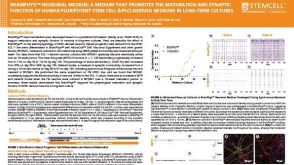 科学海报BrainPhys™ Neuronal Medium: A Medium That Promotes the Maturation and Synaptic Function of Human Pluripotent Stem Cell (hPSC)-Derived Neurons in Long-Term Cultures
 沪公网安备31010102008431号